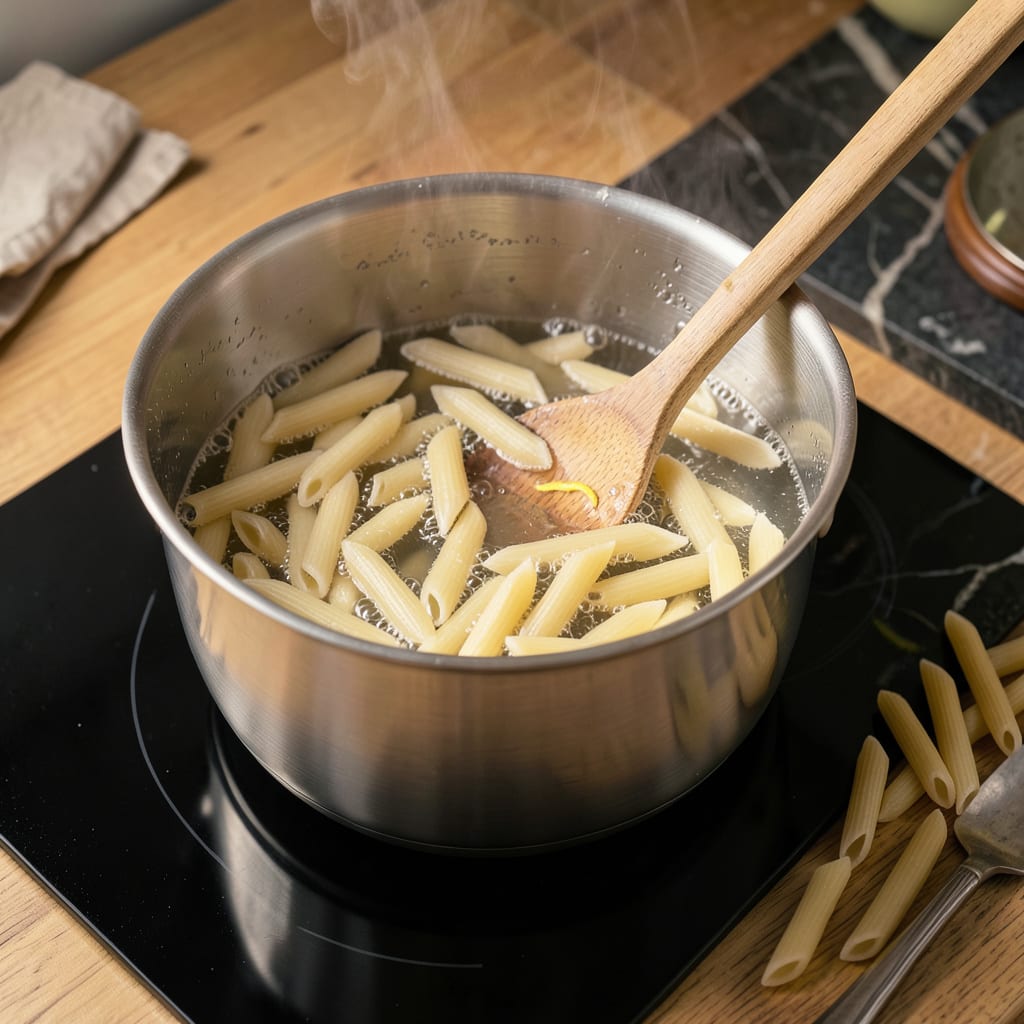
Let me save you from mushy, sticky pasta disasters. Boiling penne perfectly is all about three things: plenty of water, the right timing, and a watchful eye. I’ve burned through more undercooked and overcooked batches than I care to admit before nailing this method. The difference between al dente and pasta glue comes down to simple but precise steps.
Here’s the thing—most people use too little water and add pasta too soon. You need 4 quarts of water per pound of penne (that’s a big pot) and salt that tastes like the sea. The water should be at a rolling boil before the pasta goes in, and you’ll stir immediately to prevent sticking. No oil in the water—that’s a myth that does more harm than good.
Perfect penne has just the right bite—firm but not crunchy, with no raw core. Start checking 2 minutes before the package says it’s done. When you bite a piece, you should see a tiny white dot at the center that disappears as you chew. That’s your al dente sweet spot, and it’s worth every second of attention.
Drain it fast but save some of that starchy water—it’s liquid gold for sauces. A quick toss with olive oil keeps it from clumping if you’re not saucing immediately. Now you’ve got the foundation for anything from simple aglio e olio to hearty baked dishes. Let’s get that water boiling.
📚 In This Guide
- What You’ll Need
- Instructions
- Tips and Common Mistakes
What Youll Need
- ● Penne pasta – 8 oz (225g) for 2 servings (or 16 oz/450g for 4). Tip: Check the package for cook time—it varies by brand!
- ● Water – 4–6 quarts (1 gallon) per pound of pasta. More water = less sticking!
- ● Salt – 1–2 tbsp (15–30g) per gallon of water. Trust us, it makes a difference! 🧂
- ● Large pot – 5–6 quart capacity (with a lid) to give pasta room to move.
- ● Wooden spoon or tongs – For stirring and testing doneness.
- ● Colander – To drain pasta quickly (mesh or perforated).
- ● Olive oil – 1 tsp (5ml) to prevent sticking (only if not saucing immediately).
- ● Timer – Your phone works! ⏱️
- ● Kitchen scale – For precise pasta measurements (if you’re a perfectionist).
Instructions
Perfect penne starts with proper technique—here’s exactly how to get it right every time.
Choose the Right Pot and Water
Select a large pot that can comfortably hold the penne with plenty of room to move. For 4 servings, I use a 4-5 quart pot—this gives the pasta space to cook evenly without sticking together. Fill it with 4-6 quarts of cold water; you need enough water to fully submerge the pasta and prevent temperature drops when you add it.
The water should taste like the sea when you salt it. I add 1-2 tablespoons of salt to the water—this is your only chance to season the pasta itself. Don’t worry about over-salting; most of it stays in the water. Bring the water to a full, rolling boil over high heat before adding the pasta.
Add the Penne and Stir Immediately
Once the water reaches a vigorous boil, add the penne all at once. I like to hold the box close to the water and pour it in quickly to avoid splashing. Stir immediately with a long-handled spoon or tongs to prevent the pasta from sticking to the bottom or clumping together.
Keep stirring for the first 30-60 seconds until the water returns to a full boil. You’ll notice the pasta softens slightly and starts to move more freely in the water. This initial stir is crucial—it separates the pieces and ensures even cooking. Don’t walk away during this step.
Cook Until Al Dente
Once the water returns to a boil, reduce the heat slightly to maintain a steady, gentle boil. Cook the penne uncovered, stirring occasionally to prevent sticking. I start testing for doneness at about 9 minutes by fishing out a piece and biting into it.
You’re looking for pasta that’s tender but still offers slight resistance when you bite—this is “al dente.” The center should have a tiny white dot, no more than 1/16-inch wide. If you’re unsure, remember that pasta continues cooking slightly after you drain it, so it’s better to err on the slightly underdone side.
Reserve Pasta Water and Drain Properly
Before draining, scoop out 1 cup of the starchy pasta water and set it aside. This liquid gold helps sauces cling to your pasta later. I use a heatproof measuring cup right in the pot to make this easy. Then drain the pasta immediately in a colander.
Don’t rinse the pasta—this washes away the starches that help sauce adhere. Instead, give the colander a good shake to remove excess water. The pasta should be slightly steaming but not dripping wet. If you’re not using it immediately, toss it with a drizzle of olive oil to prevent sticking.
Finish with Sauce While Hot
Transfer the drained penne to your serving bowl or directly into your sauce. I always combine pasta and sauce while both are hot—this allows the pasta to absorb flavors better. Add a splash of the reserved pasta water and toss vigorously for 30-60 seconds to create a silky emulsion.
The pasta should glisten with sauce, not be swimming in it. If it looks dry, add more pasta water 1 tablespoon at a time until you reach the perfect consistency. Serve immediately while the pasta is at its peak texture—hot, perfectly al dente, and ready to enjoy.
Tips and Common Mistakes
Mastering perfect penne comes down to a few key details that most home cooks overlook.
Water Ratio Secret: The 4-6 quarts of water specified in Step 1 isn’t arbitrary—this volume ensures the pasta has room to move and maintains boiling temperature when added. I’ve found that using less water causes the temperature to drop too much, resulting in gummy pasta that sticks together. Trust me, the extra water makes cleanup easier too since the starch disperses better.
Salt Timing Matters: Add the 1-2 tablespoons of salt only after the water reaches a full rolling boil, right before adding the pasta. This timing prevents the salt from settling at the bottom of the pot and potentially pitting your cookware. The high heat helps dissolve the salt completely, ensuring even seasoning of your penne.
Stirring Technique: During that critical 30-60 seconds of stirring in Step 2, use a gentle folding motion rather than aggressive stirring. This prevents the penne tubes from filling with water, which would make them cook unevenly. I like to use tongs for this—they grip the pasta better than a spoon and help separate any pieces that start to clump.
Al Dente Test: When checking for doneness at 9 minutes in Step 3, cut a piece of penne in half to examine the center. That tiny 1/16-inch white dot should be firm but not chalky. If you’re unsure, remember the pasta will cook another 10-15% in the sauce, so it’s better to pull it out slightly underdone than overdone.
Pro Tips for Boil Penne Pasta
- Mastering perfect penne comes down to a few key details that most home cooks overlook.
- Water Ratio Secret: The 4-6 quarts of water specified in Step 1 isn’t arbitrary—this volume ensures the pasta has roo…
- Salt Timing Matters: Add the 1-2 tablespoons of salt only after the water reaches a full rolling boil, right before a…
Frequently Asked Questions
How long does penne pasta take to boil?
Most penne pasta cooks in 10–12 minutes in boiling water. Start testing at 9 minutes for al dente texture—it should be tender but slightly firm when bitten. Check the package instructions, as whole wheat or gluten-free penne may need 1–2 minutes extra.
Do I need to add oil to the water when boiling penne?
Nope! Oil doesn’t prevent sticking—it just makes the water greasy and can keep sauce from clinging to the pasta. Instead, use a large pot (4–6 quarts of water per pound) and stir occasionally to avoid clumps. Stirring is your best friend!
Can I cook penne in a microwave or Instant Pot?
Yes! For the microwave, use a large bowl, cover penne with water + 1 inch, and cook on high for 4–6 minutes, stirring halfway. In an Instant Pot, use a 1:1 pasta-to-water ratio, seal, and cook on high pressure for 4–5 minutes, then quick-release.
Why is my penne pasta gummy or mushy?
Overcooking or not enough water are the usual culprits. Use plenty of water (1 gallon per pound) and taste-test early. If it’s already mushy, drain immediately and rinse with cold water to stop cooking. For gummy pasta, stir more often while boiling!
Should I rinse penne after boiling?
Only if you’re making a cold pasta salad—rinsing stops cooking and removes excess starch. For hot dishes, skip rinsing! The starch helps sauce stick better. Just drain well and toss with sauce right away. vs.
Boiling penne pasta perfectly is all about timing, salt, and a watchful eye—now you’ve got the tools to nail al dente every time! 🎉 Whether you’re whipping up a quick weeknight dinner or prepping for a fancy dish, these simple steps ensure your pasta is restaurant-worthy without the fuss.
Ready to put your skills to the test? Try pairing your freshly boiled penne with a homemade sauce or toss it into a baked casserole. Happy cooking—your next pasta masterpiece awaits! 🍝

Trained in classic French technique but raised on slow-cooked ribs and spicy rubs, she blends culinary skill with smoke and soul.
- Recipe for Boneless Pork Chops in Cast Iron Skillet: Sear and Baste to Juicy Perfection - October 3, 2026
- Recipe for Boneless Cross Rib Roast: Slow-Roasted Beef with Herb Crust - October 3, 2026
- Hamburgers in Sauce Recipe Crock Pot: Slow-Cooked Savory Delight - October 3, 2026