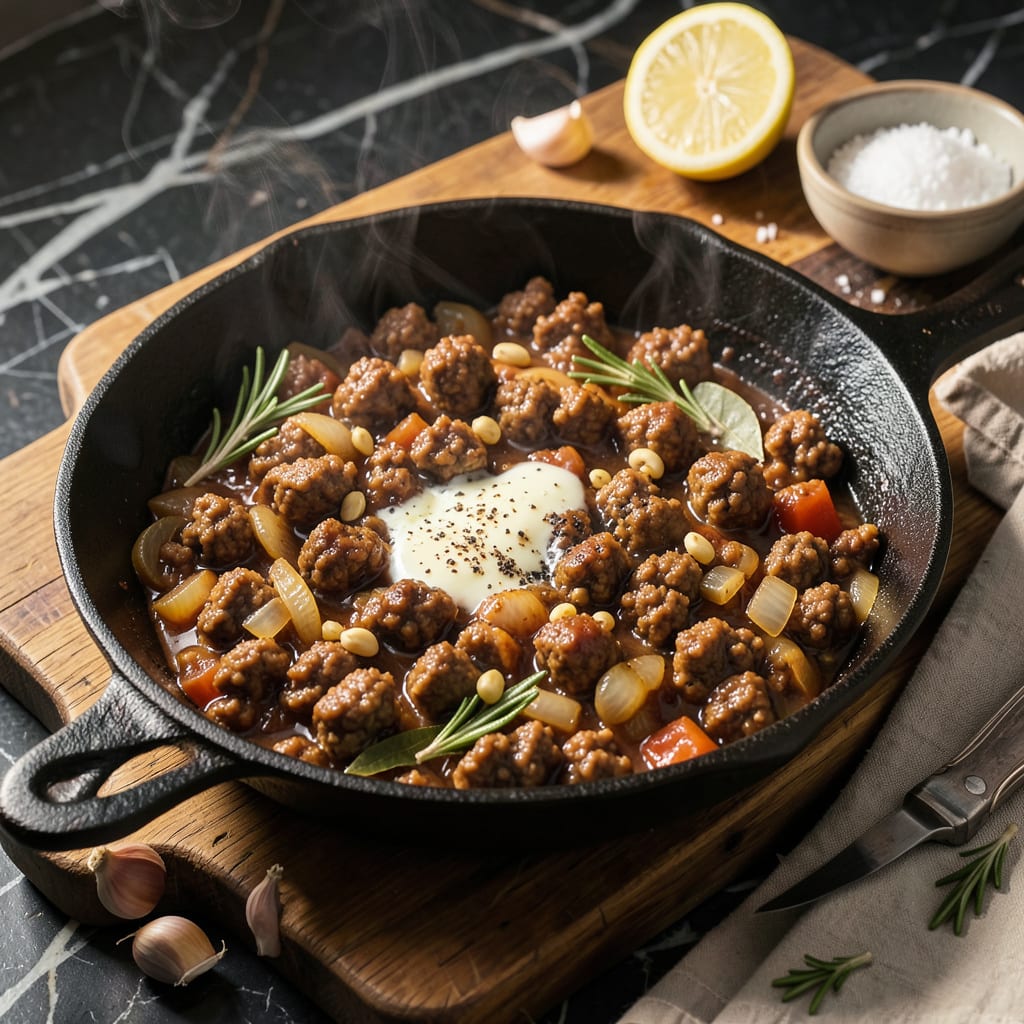
Let me tell you something—browning meat for spaghetti isn’t just about cooking it through. It’s about building layers of flavor that’ll make your sauce taste like it simmered all day. I’ve been perfecting this technique since my first apartment kitchen disasters, and the difference between properly browned meat and just “cooked” meat is night and day.
The secret starts with choosing the right meat. I always go for 80/20 ground beef or a pork/beef blend because that fat content creates the perfect Maillard reaction—you know, that deep brown crust that packs serious flavor. And here’s the thing: you need a screaming hot skillet (medium-high heat) and patience. Don’t rush it or you’ll end up with gray, steamed meat instead of those beautiful caramelized bits.
Timing matters too. I never add salt until after the meat has developed color, and I hold off on aromatics until the very end. This prevents the meat from releasing too much moisture too soon. The goal is meat that’s deeply browned with crispy edges—not just cooked through. When it’s done right, you’ll see those perfect little browned bits stuck to the pan that’ll dissolve into your sauce later.
This technique is what separates good spaghetti from the kind that makes people ask for seconds. Master this step, and you’re already halfway to an incredible pasta dish. Trust me, once you nail this browning method, you’ll never go back to just “cooking” your meat again.
📚 In This Guide
- What You’ll Need
- Instructions
- Tips and Common Mistakes
What Youll Need
- ○ Ground meat: 1–1.5 lbs of 80/20 ground beef (for best flavor) or a mix of ground beef and Italian sausage (optional for extra richness).
- ● Cooking oil: 1–2 tbsp of olive oil, vegetable oil, or avocado oil (high smoke point preferred).
- ● Seasonings: 1 tsp salt, ½ tsp black pepper, 1 tsp garlic powder, and 1 tsp Italian seasoning (or dried oregano + basil).
- ○ Aromatics (optional but recommended): ½ cup finely diced onion and 2–3 minced garlic cloves for depth.
- ● Tools: Large skillet or cast-iron pan (10–12 inches, heavy-bottomed for even browning).
- ● Wooden spoon or spatula (to break up meat).
- ○ Meat thermometer (optional, to check doneness—160°F for beef).
- ● Paper towels (to blot excess grease if needed).
- ● Prep: A cutting board + sharp knife (for aromatics) and a bowl to hold prepped ingredients.
Instructions
Here’s the foolproof method I use every time to get perfectly browned meat that takes your spaghetti sauce to the next level.
Choose the Right Meat and Prep It Properly
For the best flavor and texture, I always use ground beef with 80/20 fat ratio—that 20% fat is crucial for developing rich flavor and preventing dry meat. If you’re feeling adventurous, try a 50/50 mix of ground beef and pork for even deeper flavor complexity.
Before cooking, I like to let the meat sit at room temperature for 15-20 minutes. This ensures even browning rather than steaming, which happens when cold meat hits a hot pan. Gently break up the meat with your hands—don’t compact it or you’ll end up with dense, chewy pieces in your sauce.
Heat Your Pan Correctly for Maximum Browning
Place a large, heavy skillet (cast iron works best) over medium-high heat and let it get properly hot for 2-3 minutes. You’ll know it’s ready when a drop of water sizzles and evaporates immediately upon contact. This high heat is essential for creating that beautiful brown crust we’re after.
Don’t add any oil to the pan—the fat in the meat will render out and provide all the lubrication you need. In fact, adding oil would actually prevent proper browning by creating a barrier between the meat and the hot surface. You should hear a satisfying sizzle the moment the meat hits the pan.
Brown the Meat in Batches Without Overcrowding
Add the meat to the hot pan, spreading it out in a single layer. Here’s the secret: don’t touch it for at least 2 minutes. Let it develop a deep brown crust on the bottom before breaking it up. You’ll see the edges start to turn color—that’s your signal that the Maillard reaction is working its magic.
Once you’ve got that initial sear, break up the meat with a wooden spoon and continue cooking, stirring occasionally, for 5-7 minutes total. The meat should be deep brown with crispy bits throughout—not gray and steamed. If your pan gets too crowded, cook in batches to avoid steaming the meat instead of browning it.
Drain Excess Fat and Build Flavor Foundations
After browning, tilt the pan and spoon out most of the rendered fat, leaving about 1 tablespoon behind. This small amount will carry all the browned flavor bits (called fond) into your sauce. Return the pan to medium heat and add your aromatics—typically diced onions and minced garlic.
Cook the aromatics for 3-4 minutes until softened and fragrant. As they cook, use your spoon to scrape up all those delicious browned bits from the bottom of the pan. This deglazing process incorporates all that concentrated meat flavor into your sauce base, creating a depth of flavor that can’t be achieved any other way.
Incorporate Into Your Sauce for Maximum Flavor
Now that you’ve got beautifully browned meat and aromatic vegetables, it’s time to build your sauce. Add your tomato products (crushed tomatoes, paste, or sauce) and seasonings. The browned meat will continue to develop flavor as it simmers in the acidic tomato base.
Let the sauce simmer for at least 20-30 minutes to allow all the flavors to meld together. You’ll notice the meat becomes even more tender and absorbs the sauce flavors beautifully. Taste and adjust seasoning as needed—remember, the browned meat adds saltiness, so you might need less additional salt than you expect.
Tips and Common Mistakes
Here’s what I’ve learned through years of perfecting this technique—small details that make a huge difference in your final sauce.
The Heat Factor: That 15-20 minutes of resting time in Step 1 isn’t just a suggestion—it’s critical! Cold meat straight from the fridge will steam instead of sear when it hits the hot pan, giving you gray, bland meat instead of that beautiful brown crust. I set my meat on the counter while I prep my other ingredients to ensure it comes to room temperature naturally.
Breakthrough Moment: In Step 3, when you’re told to leave the meat undisturbed for 2 minutes, trust me on this—don’t peek! That initial sear creates the foundation for all the flavor. I learned this the hard way after years of constantly stirring and wondering why my meat never developed that deep, rich color. The Maillard reaction needs that uninterrupted contact with the hot pan to work its magic.
Technique Tip: For the 5-7 minutes total browning time, here’s what nobody tells you—listen to your meat! It should sizzle consistently throughout cooking. If the sizzling stops, your pan isn’t hot enough and you’re steaming instead of browning. I keep my heat at that sweet spot between medium-high and high to maintain that perfect sizzle.
Flavor Foundation: When you’re cooking your aromatics for 3-4 minutes in Step 4, don’t rush this step! Those few minutes are when all those beautiful browned bits (fond) dissolve into your onions and garlic. I use a flat wooden spoon to really scrape the pan bottom aggressively—this is where your sauce gets its soul.
Pro Tips for Brown Meat For Spaghetti
- Here’s what I’ve learned through years of perfecting this technique—small details that make a huge difference in your…
- The Heat Factor: That 15-20 minutes of resting time in Step 1 isn’t just a suggestion—it’s critical! Cold meat straig…
- Breakthrough Moment: In Step 3, when you’re told to leave the meat undisturbed for 2 minutes, trust me on this—don’t …
Frequently Asked Questions
How long should I brown the meat for spaghetti sauce?
Brown ground beef or pork for 3-5 minutes per side (or until fully cooked through at 160°F). For chunkier cuts like stew meat, sear 2-3 minutes per side for a deep crust. Pro tip: Don’t rush—patience builds flavor!
Can I skip browning the meat and just boil it in the sauce?
Technically yes, but you’ll lose major flavor! Browning creates the Maillard reaction (aka delicious caramelized bits) that boosts depth. Boiling = bland; searing = restaurant-worthy sauce.
What’s the best oil for browning meat for spaghetti?
Use oils with a high smoke point: olive oil (for flavor), avocado oil, or vegetable oil. Avoid butter—it burns easily. 1-2 tbsp is plenty to coat the pan without greasiness.
Why is my meat steaming instead of browning?
Too much moisture! Pat meat dry with paper towels before cooking, and avoid overcrowding the pan. Work in batches if needed—steam = soggy, sear = crispy!
Can I brown frozen meat directly, or should I thaw it first?
Always thaw first! Frozen meat releases water, preventing a good sear. Thaw in the fridge overnight or use the microwave’s defrost setting for faster prep.
Now you’ve got the golden secret to perfectly browned meat—the backbone of a rich, deeply flavored spaghetti sauce! 🎉 With the right heat, patience, and a few pro tips, you’ll lock in that savory maillard magic every time. Don’t stop here—toss that meat into your favorite sauce and let the flavors meld for a meal that’ll have everyone asking for seconds.
Ready to take it further? Try experimenting with herb-infused oils or wine deglazing next—your taste buds will thank you!

Trained in classic French technique but raised on slow-cooked ribs and spicy rubs, she blends culinary skill with smoke and soul.
- Recipe for Boneless Pork Chops in Cast Iron Skillet: Sear and Baste to Juicy Perfection - October 3, 2026
- Recipe for Boneless Cross Rib Roast: Slow-Roasted Beef with Herb Crust - October 3, 2026
- Hamburgers in Sauce Recipe Crock Pot: Slow-Cooked Savory Delight - October 3, 2026