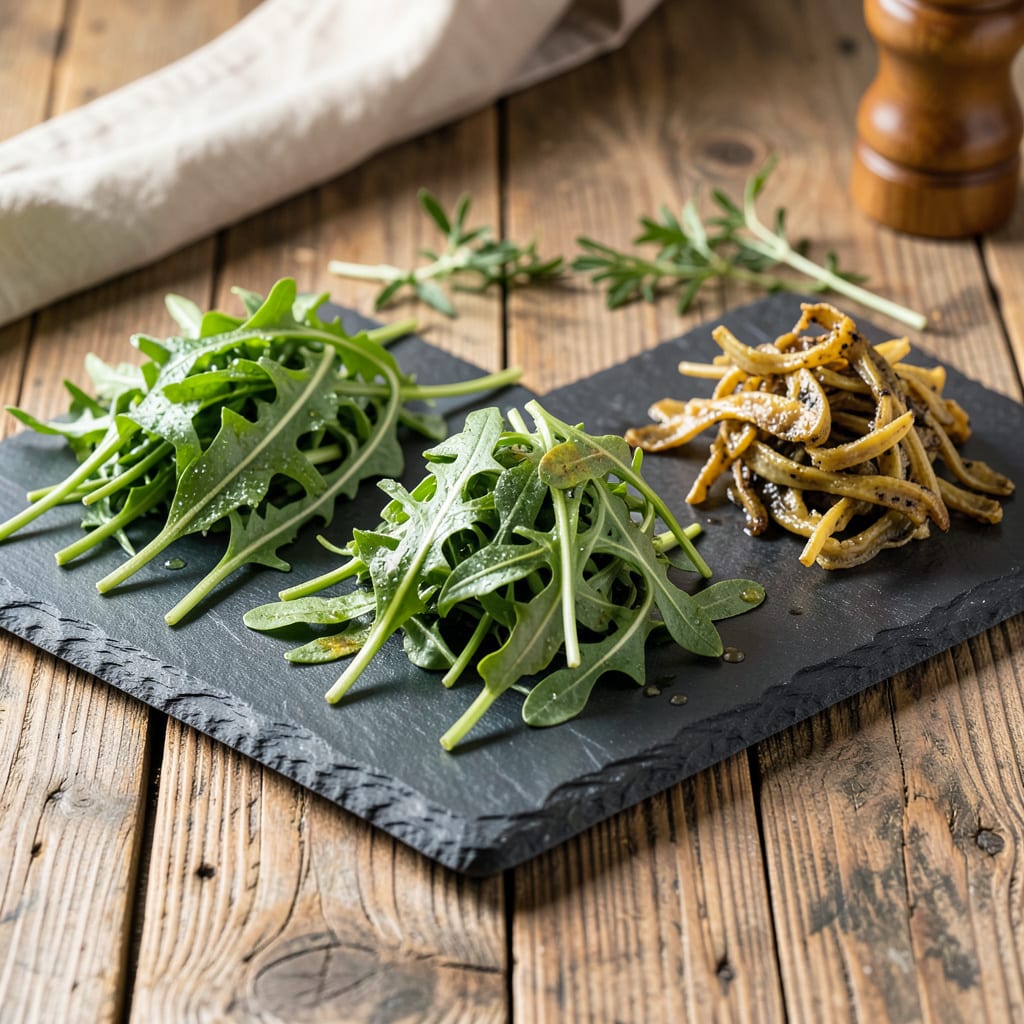
Fresh arugula should be bright green and crisp. Discard it if it turns yellow or brown, develops a slimy texture, or emits a sour, musty, or off odor. Wilted leaves with dark spots also indicate spoilage.
I always check arugula like a chef inspecting fresh herbs—color and texture tell the whole story. The moment those vibrant green leaves start dulling or feeling limp, you’re in the danger zone. 🔥 What many don’t realize is that arugula spoils faster than heartier greens because its delicate leaves can’t handle excess moisture or air exposure. I’ve seen perfect-looking bunches turn overnight when stored improperly, which is why I treat it like fresh basil—with care and attention to airflow.
💡 In This Article
- Visual and Textural Signs of Spoiled Arugula
- Storing Arugula to Extend Freshness and Prevent Spoilage
Visual and Textural Signs of Spoiled Arugula
When arugula starts to turn, oxidation is the first culprit you’ll notice. Those vibrant emerald leaves begin losing chlorophyll, shifting to dull yellow or brown hues—especially around the edges. 🔥 Fresh arugula should snap crisply when bent, but spoiled leaves become limp and bend like overcooked pasta.
The cell walls break down as enzymes activate, releasing moisture that creates that telltale slimy film you never want to see.
Texture changes happen fast because arugula has thin, delicate leaves with high water content (about 90%). Compare fresh arugula’s peppery crunch to spoiled leaves that feel mushy or sticky between your fingers. Dark spots appear when cellular damage occurs—often from bruising or excess moisture trapped in storage.
I’ve found that leaves stored in plastic bags develop these blackened areas within 2-3 days due to trapped ethylene gas accelerating decay.
The real danger comes from bacterial growth, which thrives in that slimy environment. At room temperature, bacteria can double every 20 minutes on spoiled greens. That’s why that sour, almost vinegary smell develops—it’s lactic acid bacteria breaking down the plant sugars. 💥 Fresh arugula should smell slightly peppery and green, never funky or fermented.
Trust your nose here; if it smells off, it absolutely is.
Pro tip: Check the stems too. While leaves might look okay, slimy or discolored stems mean the entire bunch is compromised. The stems contain more moisture and spoil first, acting like your early warning system.
I always give arugula the “stem test” before buying—if the cut ends look brown or mushy, I leave that bunch behind. This simple check has saved me from many disappointing salads.
Temperature abuse speeds up all these processes dramatically. Arugula left at room temperature for more than 2 hours starts showing signs of spoilage. 🌡️ The ideal storage temperature is between 34-36°F—just above freezing—where enzymatic activity slows by about 50%.
That’s why your fridge’s crisper drawer (which maintains higher humidity and slightly cooler temps) is the best defense against premature spoilage.
Compare fresh and spoiled arugula side by side and you’ll see:
- Color: Bright green vs. yellow/brown patches
- Texture: Crisp snap vs. limp/mushy feel
- Smell: Peppery freshness vs. sour/fermented odor
- Stems: Firm white ends vs. brown/slimy bases
Remember that baby arugula spoils even faster than mature leaves due to its higher surface-area-to-volume ratio.
Those tiny leaves lose moisture and oxidize more quickly, which is why I recommend using baby arugula within 3-4 days of purchase, while regular arugula can last 5-7 days when stored properly. ✨

Trained in classic French technique but raised on slow-cooked ribs and spicy rubs, she blends culinary skill with smoke and soul.
- Recipe for Boneless Pork Chops in Cast Iron Skillet: Sear and Baste to Juicy Perfection - October 3, 2026
- Recipe for Boneless Cross Rib Roast: Slow-Roasted Beef with Herb Crust - October 3, 2026
- Hamburgers in Sauce Recipe Crock Pot: Slow-Cooked Savory Delight - October 3, 2026