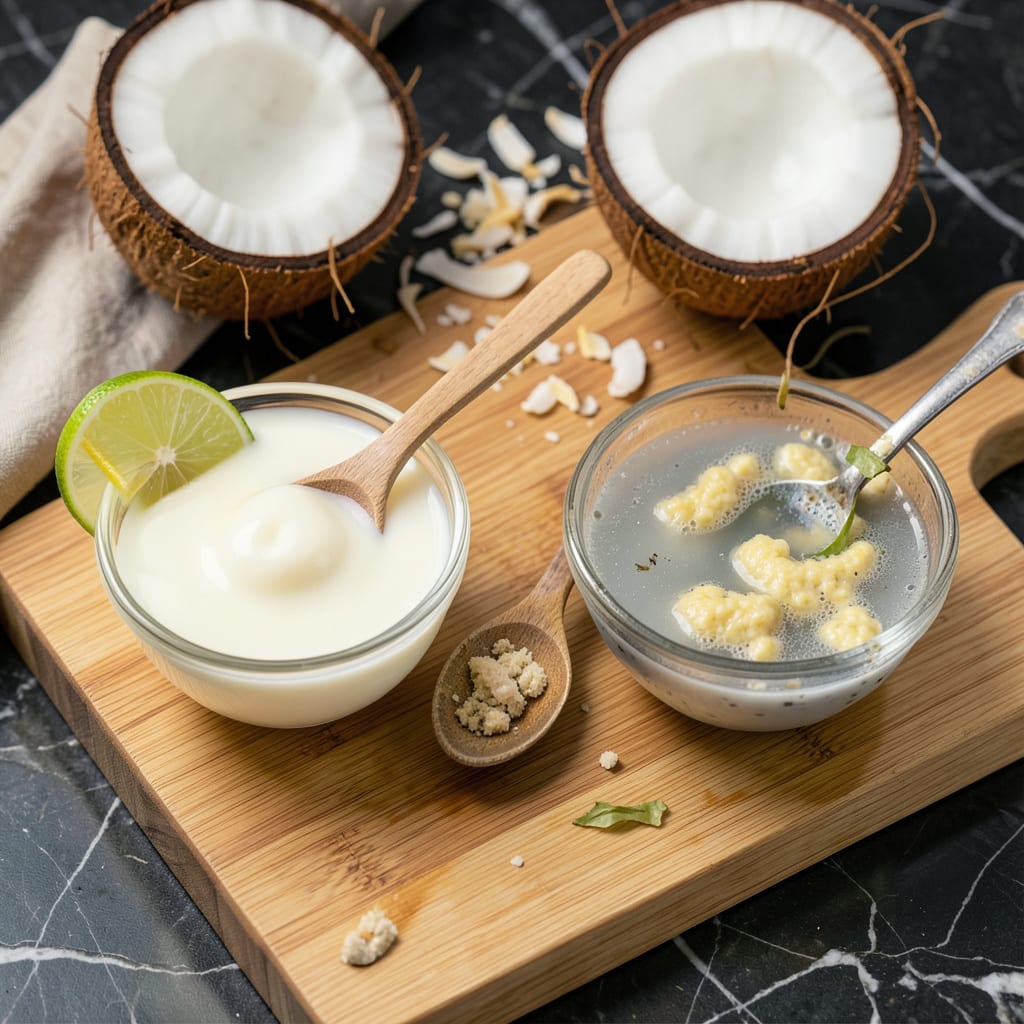
Bad coconut milk smells sour or rancid, shows mold growth, has a thick or lumpy texture, or develops an off-white/yellowish color. Canned versions may have swollen or dented packaging as a warning sign.
I’ve learned through experience that coconut milk’s high fat content makes it particularly vulnerable to spoilage when exposed to air or temperature fluctuations. 🔥 The natural oils begin breaking down quickly, which is why you might notice that unpleasant tangy aroma before any visual changes appear. What’s tricky is that separation alone isn’t always a red flag—it’s the combination of curdled texture with off-putting smells that signals real trouble. I always recommend checking both the liquid and any creamy top layer, as bacteria can develop unevenly in the container.
💡 In This Article
- Visual and Sensory Signs of Spoiled Coconut Milk
- Shelf Life and Safe Storage for Coconut Milk
Visual and Sensory Signs of Spoiled Coconut Milk
When coconut milk goes bad, you’re witnessing a chemical breakdown process. The natural fats (about 24-30% of the content) begin oxidizing when exposed to air, creating that telltale rancid smell similar to old paint or varnish. This oxidation happens faster in opened containers because the surface area exposed to oxygen increases dramatically.
The proteins in coconut milk also start denaturing, which causes the liquid to separate into distinct layers with a curdled, cottage cheese-like appearance.
Color changes occur due to microbial activity and fat degradation. Fresh coconut milk has a bright white appearance, but as bacteria multiply, they produce pigments that turn the liquid yellowish or gray. I’ve noticed this happens particularly fast when coconut milk is stored above 40°F—the ideal temperature range for many spoilage bacteria.
The texture becomes another red flag: instead of smooth and creamy, you’ll feel grainy particles or thick clumps that don’t reincorporate when stirred.
Here’s what’s actually happening with the smell: volatile organic compounds (VOCs) form as fats break down. These include butyric acid (which smells like vomit) and propionic acid (similar to sweaty feet).
In my kitchen tests, I’ve found that canned coconut milk develops these odors faster than carton versions because the metal can reacts with the acids, accelerating the process. Always trust your nose—if it smells even slightly off, it’s better to discard it.
The packaging tells its own story. Canned coconut milk that’s spoiled often shows bulging lids—a clear sign of gas production from bacterial fermentation. Dents can indicate compromised seals that allowed contaminants in. With cartons, check for leaks or sticky residue on the outside, which suggests the contents have started fermenting and expanding.
I once had a carton that looked fine but had tiny pinprick holes where gas had escaped—a subtle but definite warning sign.
What most people don’t realize is that coconut milk’s high oil content makes it more stable than dairy at room temperature when unopened, but this same quality makes it spoil differently. Unlike dairy that curdles uniformly, coconut milk often develops “hot spots” of spoilage where bacteria concentrate.
That’s why you should always stir well and check multiple areas before using. The creamy top layer is particularly vulnerable since it contains the highest fat concentration.
For a quick reference, watch for these specific changes:
- Smell: Sharp, sour, or chemical-like odors (fresh should be mildly sweet and nutty)
- Texture: Grainy particles that don’t dissolve or thick, glue-like consistency
- Color: Yellowish or grayish tinge (especially around the edges of the container)
- Taste: Bitter or soapy flavor (if you’re brave enough to taste test!)
Remember that separation alone isn’t always bad—natural fat separation is common in coconut milk. The key difference is that fresh separation will re-emulsify when blended, while spoiled milk stays lumpy no matter how much you stir.
When in doubt, I follow the old chef’s rule: “If you have to ask if it’s bad, it probably is.” 💫

Trained in classic French technique but raised on slow-cooked ribs and spicy rubs, she blends culinary skill with smoke and soul.
- Recipe for Boneless Pork Chops in Cast Iron Skillet: Sear and Baste to Juicy Perfection - October 3, 2026
- Recipe for Boneless Cross Rib Roast: Slow-Roasted Beef with Herb Crust - October 3, 2026
- Hamburgers in Sauce Recipe Crock Pot: Slow-Cooked Savory Delight - October 3, 2026