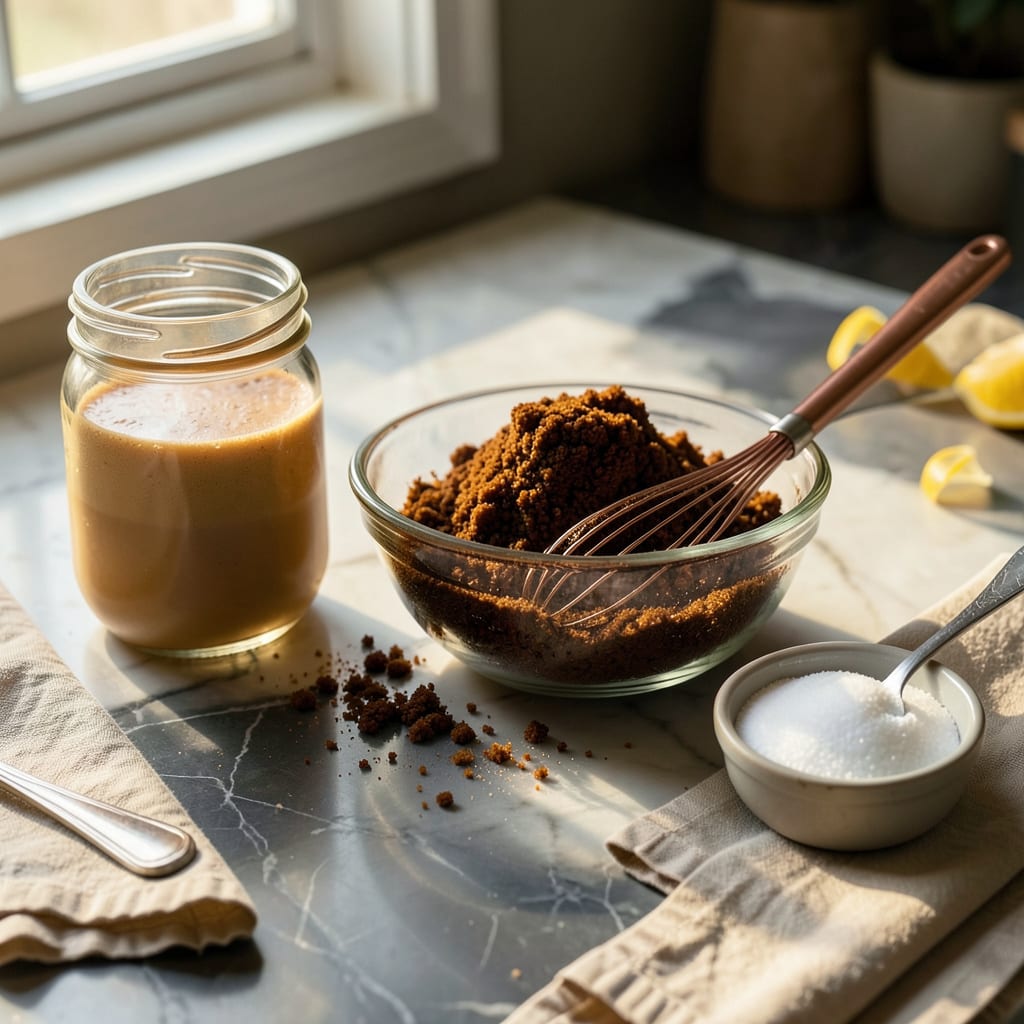
Ever found yourself mid-recipe only to realize you’re out of light brown sugar? Don’t panic—I’ve been there more times than I’d like to admit. Here’s the thing: you can easily transform dark brown sugar into light brown sugar with one simple trick. No special equipment, no fancy techniques, just a quick kitchen fix that’ll save your baking project.
All you need is dark brown sugar and a bit of granulated sugar to lighten it up. The ratio is straightforward: for every cup of dark brown sugar, mix in 1 tablespoon of granulated sugar. That’s it. This small adjustment balances the molasses content, giving you that perfect light brown sugar consistency without altering the recipe’s intended flavor.
I discovered this trick during a holiday baking marathon when I was halfway through a batch of chocolate chip cookies. Now I keep it in my back pocket for those “oops” moments. The result is identical to store-bought light brown sugar—same texture, same sweetness, same ability to create perfectly chewy cookies or smooth caramel sauces.
Best part? This transformed sugar stores exactly like regular brown sugar. Just keep it in an airtight container, and you’re good to go for weeks. Whether you’re making cookies, cakes, or sauces, this quick fix ensures you’ll never be stuck without the right ingredient again.
📚 In This Guide
- What You’ll Need
- Instructions
- Tips and Common Mistakes
What Youll Need
- ● Dark brown sugar – 1 cup (or your desired amount; ensure it’s fresh and lump-free).
- ● Granulated white sugar – ½ to 1 cup (adjust based on how light you want the result).
- ● Mixing bowl – Medium-sized, preferably non-reactive (glass or stainless steel).
- ● Whisk or fork – For blending sugars evenly (a stand mixer or food processor works too for larger batches!).
- ● Airtight container – To store your homemade light brown sugar (keeps it soft for weeks!).
- ● Sifter or fine-mesh strainer – For extra-smooth texture if your brown sugar is clumpy. 🌟
- ● Measuring cups/spoons – For precision (or eyeball it if you’re a rebel!).
- ● Bread slice or marshmallow – A trick to keep stored sugar soft (place one in the container!).
Instructions
This simple process takes just minutes and gives you perfect light brown sugar with ingredients you already have.
Measure Your Dark Brown Sugar
Start with the amount of dark brown sugar you need to convert. For every 1 cup of light brown sugar your recipe calls for, measure out 1 cup of dark brown sugar. I like to use a dry measuring cup and level it off with a straight edge for accuracy.
Place the measured dark brown sugar in a medium mixing bowl. Make sure your bowl is completely dry—any moisture will affect the texture of your final product. The dark brown sugar will look richer in color and have a slightly stickier texture than what you’re aiming for.
Add Granulated White Sugar
For each 1 cup of dark brown sugar, you’ll need to add 1 tablespoon of granulated white sugar. This small amount is just enough to lighten both the color and the molasses flavor without making it taste like regular white sugar.
Sprinkle the white sugar evenly over the dark brown sugar in the bowl. Don’t stir yet—just let it sit on top. The white sugar crystals will help absorb some of the molasses content from the dark brown sugar, creating that perfect light brown sugar balance we’re after.
Mix Thoroughly Until Uniform
Now comes the important part: mixing until completely combined. Use a fork or a whisk to blend the sugars together thoroughly. You’ll notice the color gradually lightening as you mix—keep going until you can’t see any streaks of white sugar and the mixture is a consistent light brown color.
This should take about 2-3 minutes of vigorous mixing. I like to press the mixture against the side of the bowl with the back of my fork to break up any clumps. The texture should be slightly less sticky than your original dark brown sugar, with a color that resembles store-bought light brown sugar.
Test and Adjust if Needed
Take a small pinch of your mixture and taste it. It should have a mild molasses flavor—noticeable but not overpowering. If it still tastes too strong (like dark brown sugar), add another ½ tablespoon of white sugar and mix again.
For color reference, hold your mixture next to store-bought light brown sugar if you have some. They should be nearly identical in shade. If your mixture looks slightly darker, that’s okay—it will lighten a bit more as it sits. The flavor balance is actually more important than the exact color match.
Store Properly for Future Use
Transfer your homemade light brown sugar to an airtight container. I prefer glass jars with tight-fitting lids to keep out moisture. If you notice any clumps forming later, simply break them up with a fork before using.
Your converted light brown sugar will keep indefinitely at room temperature, just like regular brown sugar. For best results, use it within 2-3 months for optimal flavor and texture. Now you’re ready to use it in any recipe calling for light brown sugar!
Tips and Common Mistakes
These quick tricks will help you achieve perfect results every time you convert dark to light brown sugar.
Mixing Technique: When you reach Step 3, don’t rush the 2-3 minutes of mixing. I’ve found that using a whisk works better than a fork for breaking up clumps and ensuring even distribution. Press the mixture against the bowl sides as suggested – this really helps blend the sugars thoroughly without leaving streaks.
Texture Check: After mixing, your sugar should feel slightly less sticky than the original dark brown sugar but not dry. If it feels too dry after the 2-3 minutes, you may have added too much white sugar. In that case, add just ½ teaspoon of dark brown sugar and mix again briefly.
Color Reference: For Step 4, if you don’t have store-bought light brown sugar for comparison, think of the color as similar to light caramel or wet sand. Remember that the color will lighten slightly as it sits, so don’t over-adjust based on initial appearance. The flavor test is actually more important than perfect color matching.
Storage Solution: When storing your converted sugar as mentioned in Step 5, add a small piece of bread to the container. This helps maintain the right moisture level and prevents clumping. The bread will dry out instead of your sugar hardening, keeping it ready to use for those 2-3 months.
Pro Tips for Make Light Brown Sugar From Dark Brown Sugar
- These quick tricks will help you achieve perfect results every time you convert dark to light brown sugar.
- Mixing Technique: When you reach Step 3, don’t rush the 2-3 minutes of mixing. I’ve found that using a whisk works be…
- Texture Check: After mixing, your sugar should feel slightly less sticky than the original dark brown sugar but not d…
Frequently Asked Questions
Can I use white sugar instead of lightening dark brown sugar?
Yes! If you’re in a pinch, mix 1 cup white sugar + 1 tbsp molasses to mimic light brown sugar. It won’t be identical, but it works for most recipes. Dark brown sugar just has more molasses—so lightening it saves you from buying extra ingredients!
How long does it take to lighten dark brown sugar?
About 5–10 minutes, depending on the method. Spreading it on a tray to dry (or mixing in a bit of white sugar) is the fastest. If using a food processor, pulse in 30-second bursts until evenly colored. No fancy tools? A fork and bowl work too!
Will lightened brown sugar taste different in recipes?
Slightly! Light brown sugar has a milder molasses flavor. If your recipe relies on deep caramel notes (like gingerbread), the taste may be less intense. For cookies or glaze, most won’t notice—just a hint of difference!
What if my sugar gets too dry or clumpy?
No stress! Add ½ tsp molasses or water and knead it back to life. Store in an airtight container with a bread slice (it adds moisture!). If it’s rock-hard, microwave for 10–15 seconds with a damp paper towel. Pro tip: Keep a terra cotta sugar saver in your pantry!
Can I reverse the process and make dark brown sugar from light?
Just add 1 tbsp molasses per 1 cup light brown sugar and mix well. Want it darker? Add more molasses gradually. It’s the same sugar—just with more (or less) molasses magic!
Turning dark brown sugar into a lighter version is simpler than you might think! With just a few basic ingredients and a little patience, you can customize your sugar’s color and flavor to fit any recipe. Whether you’re baking cookies, whipping up a glaze, or sweetening your coffee, this trick ensures you’ll never run out of the right sugar again.
Now that you’ve mastered this kitchen hack, why not put it to the test? Try it in your next batch of chocolate chip cookies or a homemade caramel sauce—your taste buds will thank you! 🍪✨

Trained in classic French technique but raised on slow-cooked ribs and spicy rubs, she blends culinary skill with smoke and soul.
- Recipe for Boneless Pork Chops in Cast Iron Skillet: Sear and Baste to Juicy Perfection - October 3, 2026
- Recipe for Boneless Cross Rib Roast: Slow-Roasted Beef with Herb Crust - October 3, 2026
- Hamburgers in Sauce Recipe Crock Pot: Slow-Cooked Savory Delight - October 3, 2026