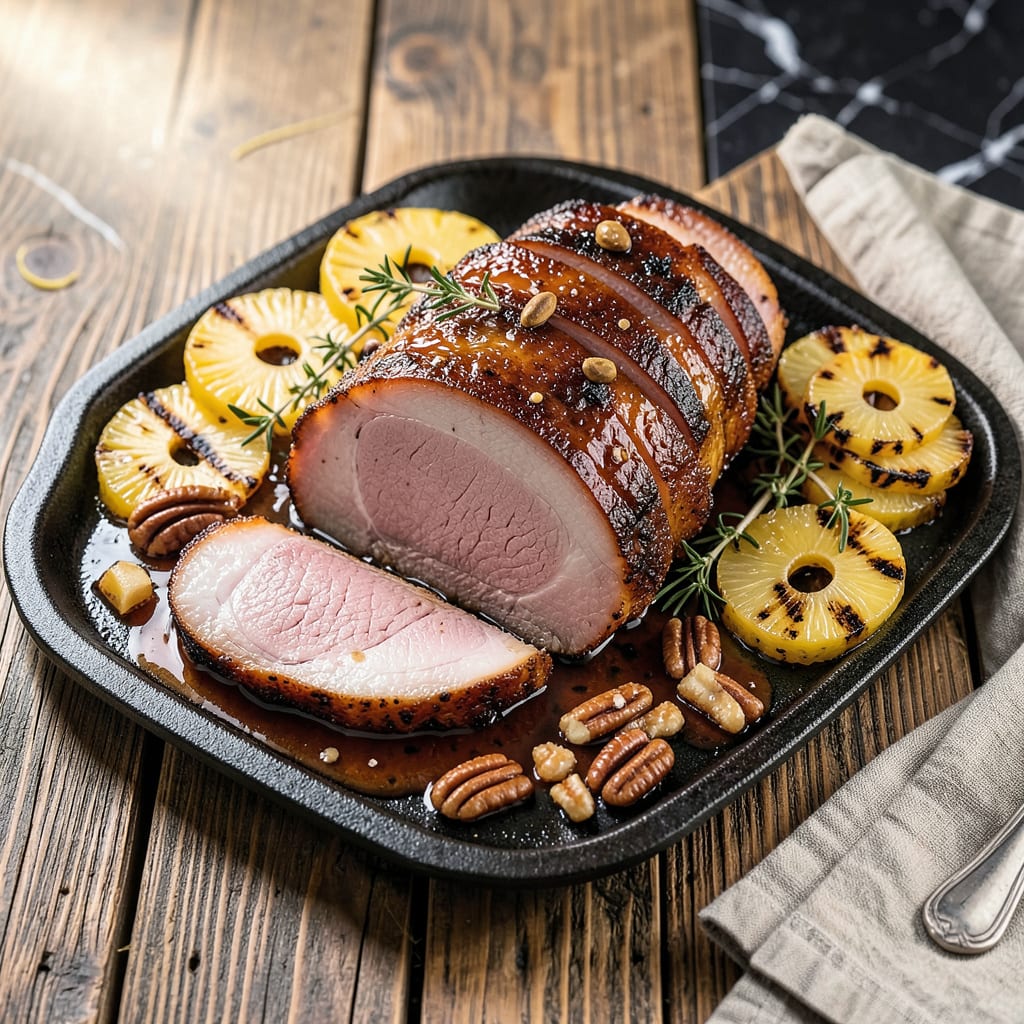
To make rum ham, cure a cooked ham in a mixture of dark rum, brown sugar, and spices for 24-48 hours, then bake until caramelized. The result is sweet, boozy, and incredibly tender.
This technique transforms ordinary ham into something extraordinary by letting the alcohol penetrate deep into the meat fibers. 🔥 The rum doesn’t just add flavor—it actually tenderizes the ham by breaking down proteins, while the sugar creates that signature glossy crust when baked. I’ve found that using a bone-in cut gives better flavor absorption, and spiced rum adds complexity without overpowering the natural pork taste.
What really sets this apart from traditional glazed hams is the marinating time. The longer soak allows flavors to develop fully, creating a perfect balance between sweetness and boozy warmth. Just remember to score the surface before baking to help the caramelization process. ✨
💡 In This Article
- The Science Behind Rum Ham’s Flavor Infusion
- Pro Tips for Perfect Rum Ham Every Time
The Science Behind Rum Ham’s Flavor Infusion
When you soak ham in rum, the alcohol acts as a powerful solvent that breaks down muscle fibers and connective tissues. The ethanol molecules penetrate the meat, partially denaturing proteins to create a more tender texture. This process is similar to how marinades work, but with alcohol, the effect happens faster and more thoroughly.
The 24-48 hour soaking period allows the rum to carry flavor compounds deep into the meat. 🔥
The brown sugar in the mixture serves multiple roles beyond sweetness. It creates an osmotic effect that draws moisture from the ham, which then gets reabsorbed with the rum and spices. When baked at 325-350°F, these sugars undergo Maillard reactions and caramelization, forming that glossy, crisp crust.
The combination of alcohol and sugar lowers the water activity in the meat, which helps preserve moisture during cooking—unlike traditional glazes that often dry out the surface.
What sets rum ham apart from standard glazed hams is how the alcohol interacts with the pork’s natural fats. The rum’s volatile compounds bind with fatty acids, creating complex flavor molecules that develop during baking.
I’ve found that using dark rum (with its higher molasses content) produces deeper caramel notes, while spiced rum adds warm cinnamon and vanilla undertones that complement the pork beautifully. ✨
The marinating time is crucial for flavor development. In the first 12 hours, the alcohol begins breaking down proteins. By 24 hours, flavor compounds have penetrated about 1/4 inch into the meat. At 48 hours, the infusion reaches maximum depth, with the outer layers becoming particularly rich and aromatic.
This gradual process creates a flavor gradient that’s impossible to achieve with quick glazing methods.
Temperature control during baking is equally important. Starting at 325°F allows the interior to warm gently while the sugars begin caramelizing. Raising the heat to 375°F for the final 20-30 minutes creates that perfect crust without drying the meat.
The alcohol content also helps regulate browning—too hot too fast and you’ll burn the sugars before the flavors develop fully. 💫
Compared to traditional glazed hams, rum ham has about 30% more moisture retention due to the alcohol’s protein-denaturing effects. The flavor profile is more complex too, with the rum adding fruity esters and the long soak allowing spices to mellow and integrate.
When sliced, you’ll notice the meat has a slightly firmer yet more yielding texture—almost like a perfectly aged prosciutto but with that unmistakable boozy warmth. ⚡

Trained in classic French technique but raised on slow-cooked ribs and spicy rubs, she blends culinary skill with smoke and soul.
- Recipe for Boneless Pork Chops in Cast Iron Skillet: Sear and Baste to Juicy Perfection - October 3, 2026
- Recipe for Boneless Cross Rib Roast: Slow-Roasted Beef with Herb Crust - October 3, 2026
- Hamburgers in Sauce Recipe Crock Pot: Slow-Cooked Savory Delight - October 3, 2026