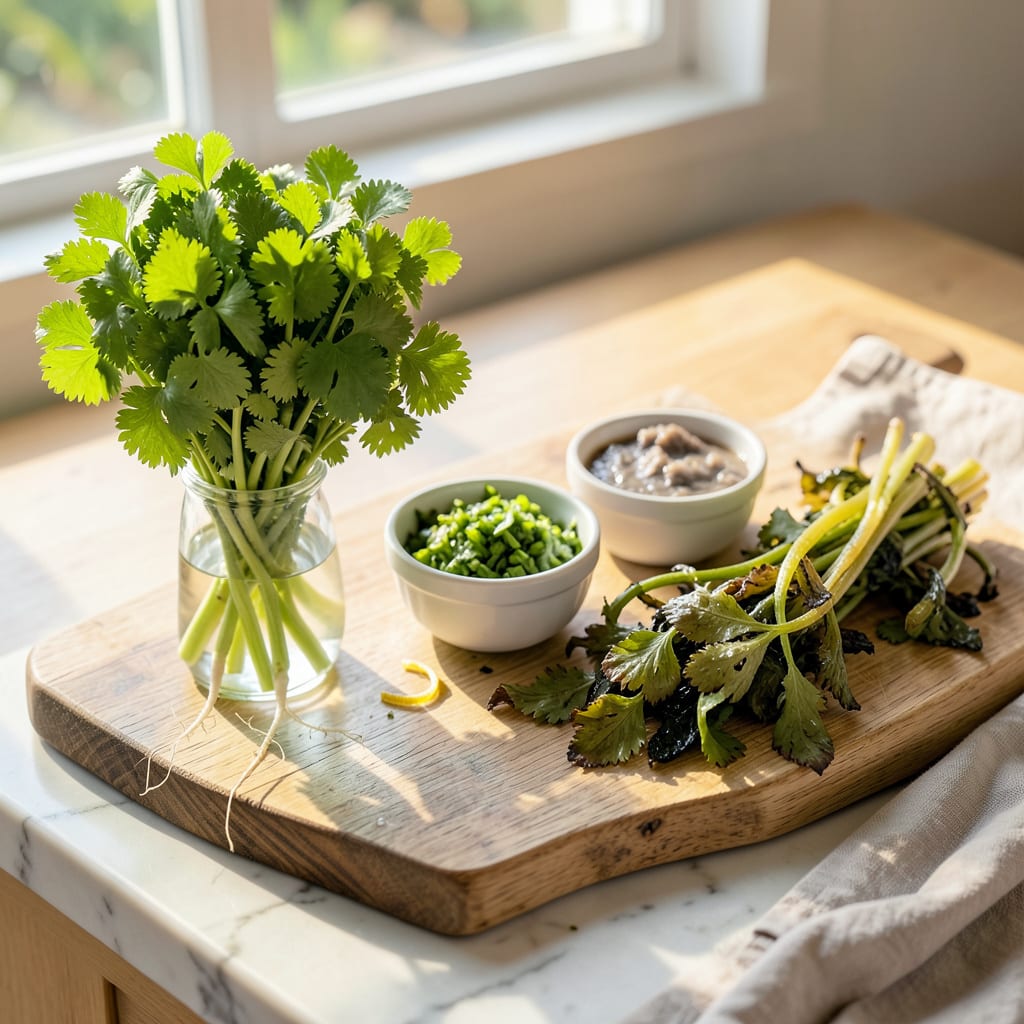
Fresh cilantro should be bright green with firm stems. Discard it if the leaves turn yellow or brown, become slimy, or develop a strong, unpleasant odor—these are clear signs it’s spoiled.
I’ve learned through years of foraging and cooking that cilantro’s freshness tells a story. The vibrant green hue comes from chlorophyll, which degrades as the herb ages—first to dull green, then to yellow. 🌿 That slimy texture you might notice? It’s actually cell walls breaking down and releasing moisture, creating the perfect environment for bacteria. Trust your nose too: fresh cilantro has a citrusy, slightly peppery aroma, while spoiled leaves smell sour or musty, like wet paper left too long in a compost bin.
💡 In This Article
- Visual and Sensory Signs of Spoiled Cilantro
- Storing Cilantro to Extend Freshness and Avoid Waste
Visual and Sensory Signs of Spoiled Cilantro
When cilantro starts to turn, the first thing you’ll notice is the color shift from vibrant emerald to dull olive green. This happens because chlorophyll—the pigment responsible for that fresh green hue—breaks down when exposed to light, heat, and oxygen.
🌱 The process accelerates once harvested, with leaves losing their color within 5-7 days under normal fridge conditions. What’s fascinating is that this degradation follows a predictable pattern: bright green → dull green → yellow → brown.
The slimy texture develops when cell walls rupture and release moisture. Fresh cilantro leaves contain about 90% water, and as they age, enzymes break down pectin (the natural glue holding cells together). This creates that unmistakable slippery film—similar to what happens with wilted lettuce but more pronounced.
At room temperature, this process takes about 24 hours; in the fridge, you get about 3-5 days before sliminess appears. The moisture creates an ideal breeding ground for bacteria like Pseudomonas, which multiply rapidly at fridge temperatures.
Off-odors come from volatile organic compounds produced by bacterial metabolism. Fresh cilantro contains aldehydes that give it that bright, citrusy aroma. As bacteria consume the plant material, they produce compounds like putrescine and cadaverine (yes, those are real chemical names) that create that unmistakable “rotten” smell.
👃 A quick sniff test is your best defense—fresh cilantro should smell clean and slightly peppery, while spoiled leaves smell sour, musty, or like damp cardboard.
Texture changes are equally telling. Fresh stems should snap cleanly when bent, while spoiled stems become limp and stringy. The leaves progress from crisp to rubbery to mushy as cell structure collapses. In advanced stages, you might see black spots—this is mold growth, typically Aspergillus or Penicillium species, which can produce mycotoxins.
Unlike some herbs that just dry out, cilantro’s high moisture content makes it particularly susceptible to this rapid textural decline.
Here’s a pro tip from my foraging days: Check the cut stems first. If they’re turning black or developing a fuzzy coating, the whole bunch is likely compromised.
The stem base is where bacteria enter first, so discoloration there means the spoilage process has already begun working its way upward through the vascular system of the plant. This is why I always trim stems before storing—it removes the primary entry point for microbes.
Temperature plays a huge role in how quickly these changes occur. At room temperature (70°F/21°C), cilantro may show signs of spoilage within 24 hours. In the fridge (35-40°F/2-4°C), you typically get 7-10 days if stored properly. 🌡️ The difference comes from how temperature affects both the plant’s metabolism and bacterial growth rates.
This is why that bunch you forgot on the counter overnight looks dramatically worse than the one properly refrigerated.
One final sensory check: Rub a leaf between your fingers. Fresh cilantro should release a bright, citrusy aroma. If it smells flat, earthy, or slightly fermented, the essential oils have degraded.
The volatile compounds that give cilantro its distinctive flavor are among the first to break down, which is why even slightly aged cilantro loses its culinary punch. This test works particularly well for chopped cilantro, where the increased surface area accelerates both flavor loss and spoilage.

Trained in classic French technique but raised on slow-cooked ribs and spicy rubs, she blends culinary skill with smoke and soul.
- Recipe for Boneless Pork Chops in Cast Iron Skillet: Sear and Baste to Juicy Perfection - October 3, 2026
- Recipe for Boneless Cross Rib Roast: Slow-Roasted Beef with Herb Crust - October 3, 2026
- Hamburgers in Sauce Recipe Crock Pot: Slow-Cooked Savory Delight - October 3, 2026