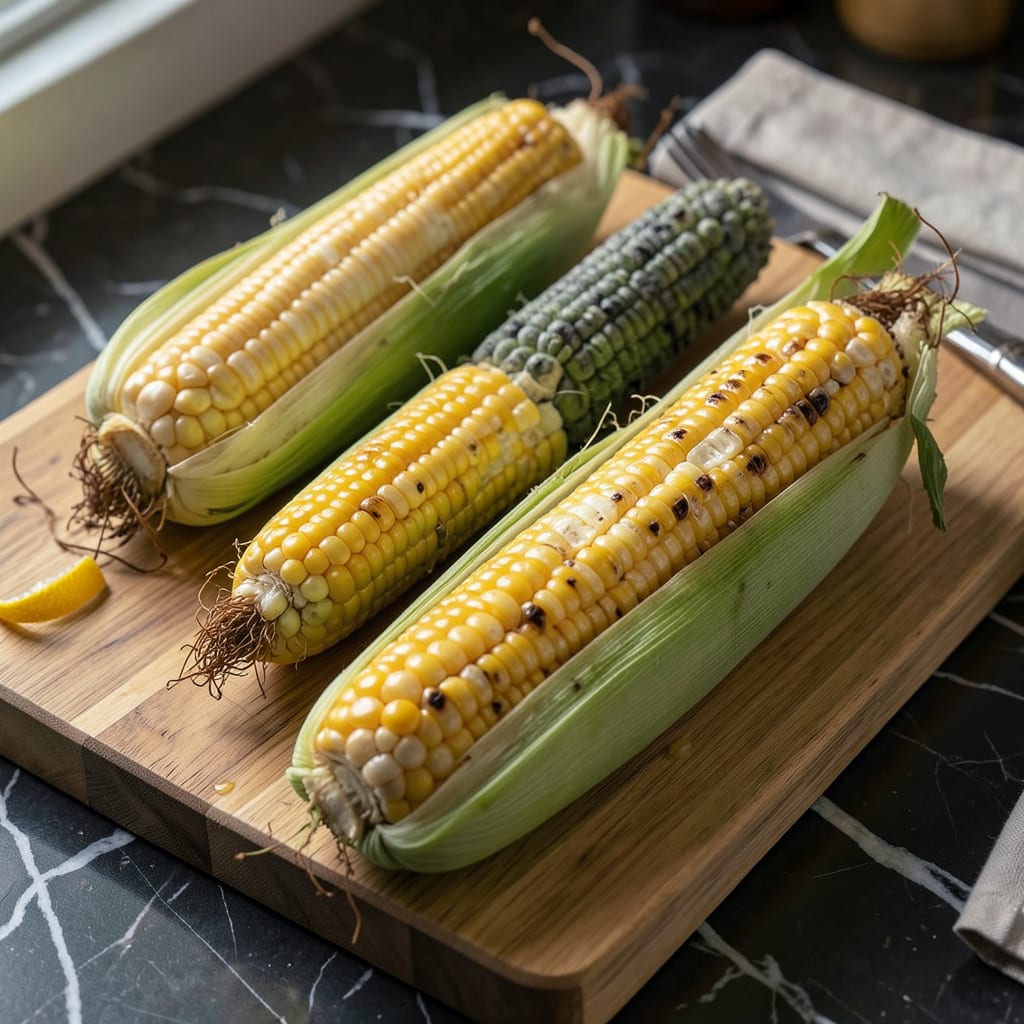
Bad corn on the cob has a slimy or mushy texture, dark brown or black kernels, a sour or fermented smell, and may show mold growth. Fresh corn should feel firm, have plump kernels, and smell slightly sweet.
I’ve found that corn tells you everything you need to know through its husk and kernels. 🔥 When the husk feels damp or sticky rather than dry and papery, that’s your first warning sign—it means moisture has started breaking down the natural sugars inside. The kernels themselves should resist slight pressure; if they dent like an overripe peach or ooze liquid when pressed, bacteria have already begun their work. Even the silk (those stringy threads) changes character—fresh silk is moist and golden, while spoiled silk turns brittle or develops dark, slimy patches where mold loves to take hold.
💡 In This Article
- Visual and Textural Signs of Spoiled Corn on the Cob
- Smell Tests and Storage Tips to Keep Corn Fresh Longer
Visual and Textural Signs of Spoiled Corn on the Cob
When corn begins to spoil, the kernels undergo dramatic changes you can spot immediately. Fresh kernels should be plump and glossy with a vibrant yellow or white hue. As spoilage sets in, they’ll develop dark spots—starting as small brown freckles and progressing to inky black patches.
This discoloration happens because enzymes break down cell walls, releasing pigments that oxidize when exposed to air. 🔥
The texture transformation is equally telling. Perfect corn kernels should feel firm with a slight snap when pressed. Spoiled kernels become either mushy (like overcooked oatmeal) or rubbery (resembling old chewing gum). This happens because pectin—the natural glue holding plant cells together—degrades as bacteria multiply.
I’ve seen cases where pressing a bad kernel leaves a watery residue on your finger, which is actually cellular fluid leaking from ruptured membranes.
Don’t overlook the husk’s condition either. A fresh husk should be tightly wrapped with a dry, papery feel. Spoiled corn often has husks that feel damp or even slimy to the touch—this moisture comes from the kernels breaking down internally.
The silk threads provide another clue: fresh silk is golden and slightly sticky, while spoiled silk turns brown, brittle, or develops fuzzy mold colonies that look like tiny cotton balls. ✨
Mold patterns deserve special attention. Natural corn silk has a uniform, thread-like appearance. Mold, however, creates distinct fuzzy patches that can be white, green, or even pink. These colonies typically start at the base where the cob meets the husk, spreading upward as spores multiply.
The most dangerous molds produce mycotoxins that can’t be washed away—when you see these, the entire cob should be discarded immediately. 💫
Here’s what most people miss: the cob itself changes too. A fresh cob feels heavy for its size and makes a solid “thunk” when tapped. Spoiled cobs sound hollow and feel noticeably lighter as moisture evaporates.
The base where the cob was attached to the stalk may also darken or develop soft spots—this is where bacteria often enter first, working their way upward through the vascular system. 🌟
Temperature accelerates all these changes dramatically. Corn left at room temperature (70°F+) can show visible spoilage in just 24 hours, while refrigerated corn (35-40°F) may last 3-5 days. The cold slows microbial growth but doesn’t stop it completely—that’s why even refrigerated corn eventually develops that telltale sour aroma as lactic acid bacteria take over. ⚡

Trained in classic French technique but raised on slow-cooked ribs and spicy rubs, she blends culinary skill with smoke and soul.
- Recipe for Boneless Pork Chops in Cast Iron Skillet: Sear and Baste to Juicy Perfection - October 3, 2026
- Recipe for Boneless Cross Rib Roast: Slow-Roasted Beef with Herb Crust - October 3, 2026
- Hamburgers in Sauce Recipe Crock Pot: Slow-Cooked Savory Delight - October 3, 2026