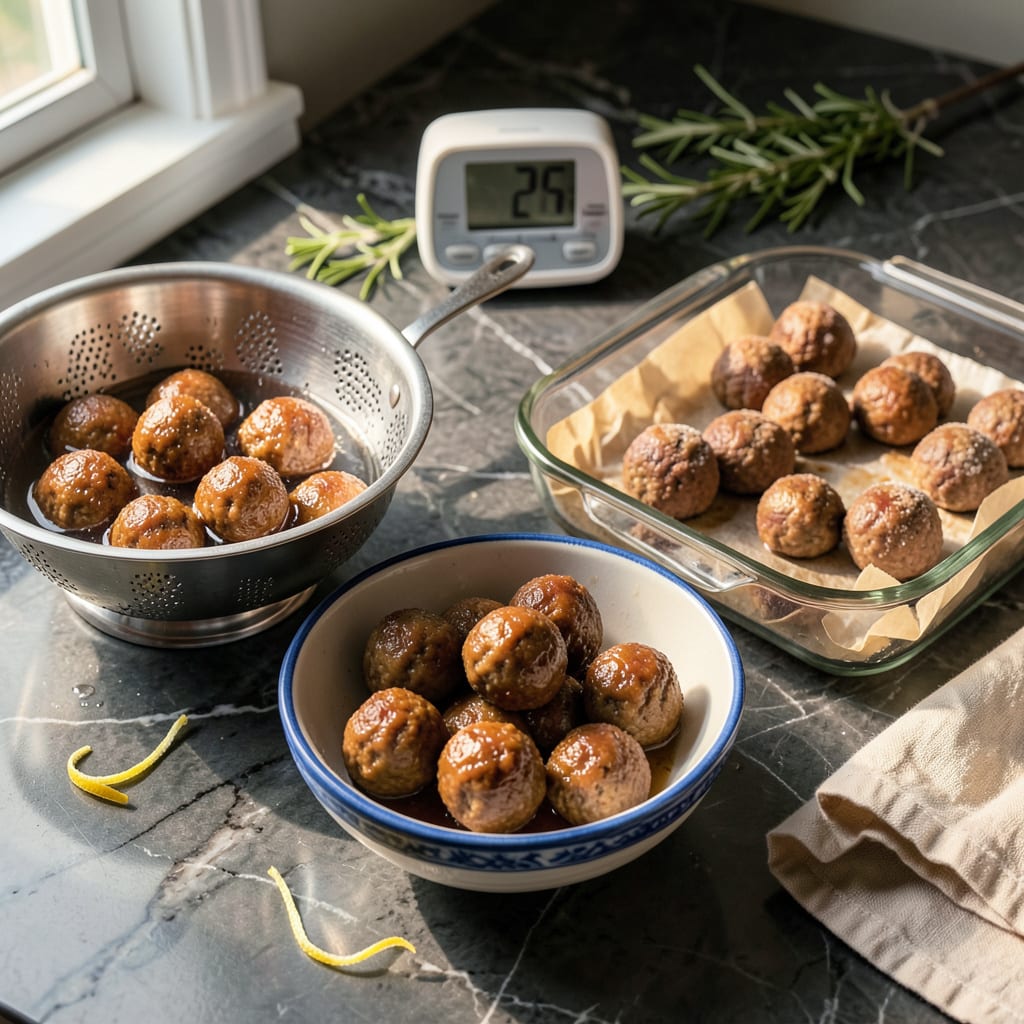
I’ll be real with you: thawing frozen meatballs the wrong way can turn dinner into a disaster. After years of working with meat (and ruining a few batches myself), I’ve nailed down the safest, most reliable methods that preserve texture and flavor. Whether you’re prepping for spaghetti night or Swedish meatballs, starting with properly thawed meatballs makes all the difference.
Here’s the thing—there are exactly three foolproof ways to thaw meatballs without risking that mushy texture or dangerous bacteria growth. The refrigerator method is my go-to for hands-off safety, but I’ve got quick fixes too when time’s tight. Each approach has its place, and I’ll walk you through when to use which.
What you’re aiming for is meatballs that hold their shape, cook evenly, and taste like they were made fresh. No one wants dry, crumbly meatballs or worse—ones that harbor bacteria from improper thawing. I’ve seen both happen, and neither’s pretty. The good news? Avoiding these pitfalls is simpler than you think.
By the time you finish reading, you’ll know exactly how to thaw meatballs for any recipe—whether you’re baking them, simmering in sauce, or air-frying for extra crispiness. Let’s get those meatballs ready the right way, so your final dish turns out perfect every single time.
📚 In This Guide
- What You’ll Need
- Instructions
- Tips and Common Mistakes
What Youll Need
- ● Frozen meatballs – 1 lb (or your desired quantity). Check the package for pre-cooked vs. raw labels. ❄️
- ● Air-tight container or resealable plastic bag – For fridge or cold-water thawing (quart or gallon size, depending on quantity).
- ● Large bowl or colander – For cold-water method (must fit meatballs + water).
- ● Cold water – Enough to fully submerge meatballs (change every 30 mins for safety). 💧
- ● Microwave-safe dish – For microwave thawing (glass or ceramic preferred).
- ● Paper towels – To pat dry excess moisture after thawing.
- ○ Food thermometer (optional but recommended) – To confirm internal temp reaches 165°F (74°C) if cooking immediately. 🌡️
- ● Timer or phone alarm – To track thawing time (especially for cold-water method). ⏰
- ○ Cooking oil or sauce (optional) – 1–2 tbsp for searing or simmering post-thaw.
- ○ Plastic wrap or aluminum foil (optional) – To cover meatballs during fridge thawing to prevent odor absorption.
Instructions
Here’s exactly how to thaw your meatballs safely while keeping them juicy and flavorful.
Choose Your Thawing Method Based on Time
You’ve got three safe options, and the right one depends on how much time you have. For best results, I always recommend planning ahead when possible. The refrigerator method is my personal favorite because it maintains perfect texture, but the cold water method works in a pinch when you’re short on time.
Never thaw meatballs at room temperature—that’s how you invite bacteria to grow. The “danger zone” between 40°F and 140°F is where harmful bacteria multiply rapidly, so we need to keep your meatballs out of this temperature range during thawing.
Refrigerator Method (Best for Texture)
Place your frozen meatballs in a single layer on a plate or shallow container. This allows for even air circulation and prevents them from sticking together. Cover them loosely with plastic wrap or aluminum foil to protect from fridge odors while still allowing some airflow.
Let them thaw in the refrigerator for 8-12 hours (overnight is perfect). Larger meatballs may need the full 12 hours, while smaller ones might be ready in 8 hours. You’ll know they’re ready when they’re completely soft to the touch with no icy spots in the center. This slow thaw preserves the meat’s cellular structure, preventing that mushy texture you sometimes get with faster methods.
Step 3: Cold Water Method (Faster Alternative)
Seal your meatballs in a leak-proof plastic bag, squeezing out as much air as possible before sealing. This prevents water from seeping in and diluting the flavor. Place the bag in a large bowl or clean sink filled with cold water—never warm or hot water, as this will start cooking the outer layers while the inside remains frozen.
Change the water every 30 minutes to maintain a consistently cold temperature. Your meatballs should be fully thawed in 1-2 hours, depending on their size. They’re ready when they’re pliable throughout with no hard, icy centers. I like to give them a gentle squeeze to check—they should feel uniformly soft.
Step 4: Microwave Method (Last Resort)
If you’re really in a hurry, you can use the microwave, but this is my least favorite method because it can start cooking the meatballs unevenly. Place them in a single layer on a microwave-safe plate. Use the defrost setting or set the power to 30% power level to prevent cooking.
Microwave in 1-minute intervals, flipping the meatballs after each interval. This usually takes 3-5 minutes total, depending on your microwave’s wattage. Stop as soon as they’re thawed but still cool to the touch—if they feel warm, you’ve started cooking them. Use this method only when you plan to cook them immediately after thawing.
Cook Immediately After Thawing
No matter which method you use, cook your meatballs immediately after thawing. They’ll keep in the refrigerator for up to 24 hours after thawing, but for best texture and food safety, I recommend cooking them right away. The thawing process can sometimes draw out moisture, so pat them dry with paper towels before cooking if you notice excess liquid.
When cooking, you might notice they cook slightly faster than fresh meatballs since they’re already at refrigerator temperature. Keep an eye on them and remove from heat as soon as they reach 165°F internally. The perfect thawed meatball should be juicy throughout with no dry spots or rubbery texture.
Tips and Common Mistakes
Here’s what I’ve learned from years of thawing meatballs—these small details make a world of difference in texture and safety.
The Temperature Factor: That 40°F-140°F danger zone mentioned in Step 1 isn’t just technical jargon. I once left meatballs on the counter “just for an hour” and ended up with a rubbery, unsafe mess. Always use one of the three approved methods—never room temperature. The refrigerator method keeps them safely below 40°F while preserving perfect texture.
Refrigerator Method Pro Tip: When using Step 2’s 8-12 hour thaw, arrange meatballs in a single layer with space between them. I used to pile them up until I noticed the center ones stayed partially frozen while the outer ones got mushy. That even air circulation mentioned in the instructions is everything for consistent results.
Cold Water Method Insight: Don’t skip changing the water every 30 minutes in Step 3. I tested this—water that sits gets warmer than you think, and your meatballs will start cooking unevenly. Use a timer and actually feel the water temperature each time you change it. The 1-2 hour thaw time only works if you maintain that cold temperature consistently.
Microwave Caution: In Step 4, that 30% power level isn’t just a suggestion. My first attempt at full power turned my meatballs into sad, dry little hockey pucks. One-minute intervals with flipping are crucial too—this prevents those annoying hot spots that start cooking some parts while others stay frozen. Trust me, those 3-5 minutes will feel long, but they’re worth it for even thawing.
Pro Tips for Thaw Frozen Meatballs
- Here’s what I’ve learned from years of thawing meatballs—these small details make a world of difference in texture an…
- The Temperature Factor: That 40°F-140°F danger zone mentioned in Step 1 isn’t just technical jargon. I once left meat…
- Refrigerator Method Pro Tip: When using Step 2’s 8-12 hour thaw, arrange meatballs in a single layer with space betwe…
Frequently Asked Questions
How long does it take to thaw frozen meatballs in the fridge?
Thawing in the fridge is the safest method but takes the longest—typically 12–24 hours for standard-sized meatballs (1–2 inches). Plan ahead! For faster results, place them on a plate to catch drips and space them out for even thawing. Never leave them at room temperature overnight.
Can I cook frozen meatballs without thawing them first?
Yes! You can cook them straight from frozen, but adjust the time. In the oven or sauce, add 50% more cooking time (e.g., 20–25 minutes at 375°F instead of 15). For stovetop, simmer in sauce 10–15 minutes longer. Just ensure the internal temp hits 165°F!
What’s the fastest way to thaw meatballs safely?
The cold water method is your best bet! Seal meatballs in a leak-proof bag, submerge in cold water, and change the water every 30 minutes. Small meatballs thaw in 1–2 hours; larger ones may take 3 hours. Never use warm water—it risks bacterial growth. Mushy texture usually means excess moisture or slow thawing. Pat them dry with paper towels before cooking, or thaw in the fridge on a wire rack to drain liquids. For crispier results, bake at 400°F for 5–10 minutes after thawing. Pro tip: Avoid microwaving unless cooking immediately! It’s not recommended—refreezing degrades texture and raises food safety risks. If you must, only refreeze if thawed in the fridge (never at room temp) and cook them first. For best quality, portion meatballs before freezing to avoid waste.Why do my thawed meatballs turn mushy? How can I fix this?
Can I refreeze meatballs after thawing them?
Thawing frozen meatballs safely is all about patience and the right method—whether you choose the fridge, cold water, or microwave. By following these steps, you’ll keep your meatballs juicy, flavorful, and free from bacteria while saving time in the kitchen. 🍽️
Now that you’re ready, why not put those perfectly thawed meatballs to use? Try them in your favorite pasta dish, sub sandwich, or homemade marinara—the possibilities are endless! Get inspired with our easy recipes here.

Trained in classic French technique but raised on slow-cooked ribs and spicy rubs, she blends culinary skill with smoke and soul.
- Recipe for Curried Lamb Chops: Spice-Rubbed and Pan-Seared to Succulence - October 3, 2026
- Recipe for Boneless Leg of Lamb Roast in the Oven: Herb-Crusted and Rosy Pink Inside - October 3, 2026
- Meat Loaf Recipe With Beef And Pork: Homestyle Blend With Rich Gravy - October 3, 2026