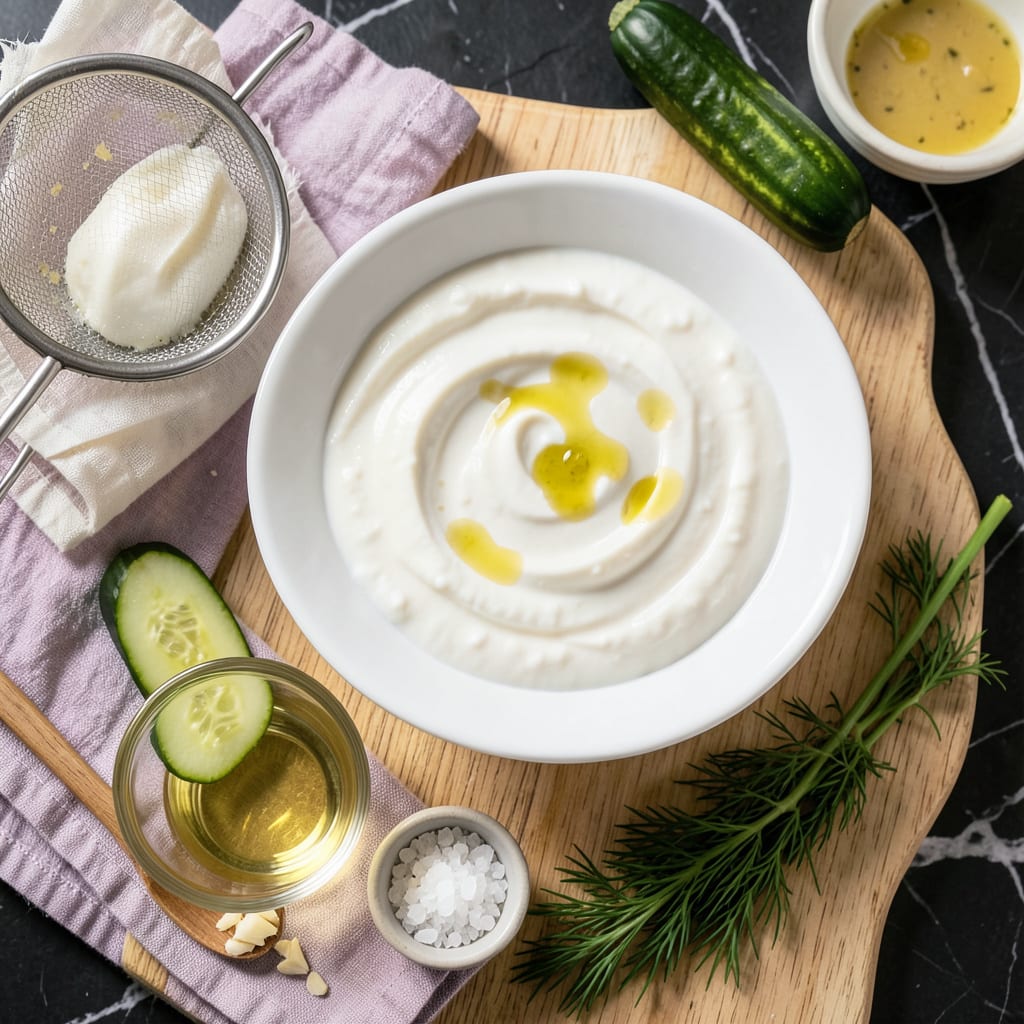
I’ll be real with you: nothing ruins good tzatziki faster than a watery, sad puddle instead of that thick, creamy dip you were craving. After burning through more batches than I’d like to admit (and nearly giving up on homemade versions entirely), I finally cracked the code for achieving that perfect, spoonable consistency—every single time.
The secret isn’t some fancy ingredient or complicated technique. It’s about understanding what makes tzatziki break in the first place and fixing it at the source. We’re talking simple adjustments like properly straining your yogurt (game-changer), mastering cucumber prep, and knowing exactly when to add a thickener if needed. No more soggy pita chips or runny gyro toppings.
What you’ll end up with is that restaurant-style tzatziki you thought only professionals could pull off—creamy, rich, and thick enough to cling to your spoon. The kind that makes store-bought versions taste like flavored water in comparison. And the best part? These methods work whether you’re fixing a batch that’s already too thin or starting from scratch.
Fair warning: once you nail this technique, you’ll never accept watery tzatziki again. Let’s fix that sauce for good.
📚 In This Guide
- What You’ll Need
- Instructions
- Tips and Common Mistakes
What Youll Need
- ● 1–2 cups plain Greek yogurt (full-fat for best results; strained if using regular yogurt)
- ● 1 medium cucumber (English or Persian preferred; peeled and deseeded)
- ● 1–2 cloves garlic (minced or pressed)
- ● 1–2 tbsp extra-virgin olive oil (high-quality for flavor)
- ● 1 tbsp fresh lemon juice (or white vinegar)
- ● 1 tsp salt (plus extra for drawing out cucumber moisture)
- ● ½ tsp black pepper (freshly ground)
- ○ 1 tbsp fresh dill or mint (chopped; optional but recommended)
- ● Fine-mesh strainer or cheesecloth (for straining yogurt/cucumber)
- ● Mixing bowl (medium-sized)
- ● Box grater or food processor (for cucumber)
- ● Spoon or rubber spatula (for mixing)
- ○ Optional: Paper towels (to pat-dry cucumber)
- ● 30–60 minutes of chilling time (for flavors to meld)
- ● Patience for straining (key for thickness!)
Instructions for Thickening Tzatziki Sauce
Here’s my foolproof method to transform watery tzatziki into that rich, creamy dip you love from restaurants.
Strain the Yogurt Properly
Start by placing your yogurt in a fine-mesh strainer lined with cheesecloth or a clean kitchen towel. I like to use full-fat Greek yogurt for the creamiest results, but even this can release excess liquid. Set the strainer over a bowl and let it drain in the refrigerator for at least 2 hours, or preferably overnight.
You’ll be amazed at how much liquid collects in the bowl below. This simple step removes the whey that makes tzatziki runny. Don’t rush it—patience here means thicker, richer sauce later. For best results, I recommend using about 16 ounces of yogurt for a standard batch.
Remove Excess Moisture from Cucumber
Grate your cucumber using the large holes of a box grater, then transfer it to a clean kitchen towel. Gather the corners and twist tightly over the sink, squeezing out every drop of liquid. I’m always surprised by how much water comes out of cucumbers—this is the main culprit behind watery tzatziki.
For even better results, you can salt the grated cucumber first. Sprinkle with ½ teaspoon salt, let it sit for 10 minutes, then squeeze. The salt draws out additional moisture. Just remember to taste your final sauce before adding more salt—you might not need as much after this step.
Combine Ingredients Gently
In a mixing bowl, combine your thickened yogurt with the drained cucumber. Add 2-3 minced garlic cloves, 1 tablespoon lemon juice, and 1 tablespoon extra-virgin olive oil. Here’s the secret: fold everything together gently with a spatula instead of stirring vigorously.
Overmixing can break down the yogurt’s structure and release more liquid. I like to add the ingredients in stages, folding just until combined. Taste as you go—you might want to adjust the lemon juice or garlic to your preference. The sauce should look thick and creamy, not soupy.
Chill and Thicken Further
Transfer your tzatziki to a serving bowl and refrigerate for at least 1 hour before serving. This chilling time allows the flavors to meld and the sauce to thicken even more. I’ve found that the texture improves dramatically after this resting period.
If you’re in a hurry, you can speed up this process by placing the bowl in the freezer for 20-30 minutes, stirring once halfway through. Just don’t forget about it—the edges can freeze if left too long. The ideal consistency should coat the back of a spoon and hold its shape when you drag a finger through it.
Adjust and Serve
After chilling, give your tzatziki a final stir. If it’s still not as thick as you’d like, you can add a small amount of finely crumbled feta cheese—about 2 tablespoons does the trick without overpowering the flavor. This adds richness and helps bind the sauce.
Serve your thick, creamy tzatziki with warm pita bread, fresh vegetables, or as a sauce for grilled meats. The texture should be luscious and spoonable, not runny. Remember that it will continue to thicken slightly as it sits, so it’s better to err on the side of slightly thicker than you think you want—it will be perfect by serving time.
Tips and Common Mistakes
Let me share what I’ve learned from making tzatziki hundreds of times—these small details make all the difference between runny and restaurant-quality.
Straining Success: The 2-hour minimum straining time in Step 1 is non-negotiable for truly thick tzatziki. I’ve found that overnight straining (about 8-12 hours) removes even more whey, giving you that ultra-creamy texture you find in Greek restaurants. Use a fine-mesh strainer lined with two layers of cheesecloth for best results—the extra layer catches more liquid.
Cucumber Technique: When salting your cucumber in Step 2, don’t skip the 10-minute waiting period. This isn’t just about removing moisture—it actually changes the cucumber’s texture. After salting, you’ll notice the grated pieces become slightly translucent and softer, which helps them blend seamlessly into the yogurt rather than staying crunchy.
Mixing Method: In Step 3, the gentle folding technique is everything. I use a silicone spatula and fold in a figure-eight motion, lifting from the bottom of the bowl. This incorporates air while keeping the yogurt’s structure intact. If you stir vigorously, you’ll break down the yogurt proteins and release more liquid, undoing all your straining work.
Chilling Wisdom: That 1-hour chill time in Step 4 isn’t just for flavor—it’s when the magic happens. The cold temperature causes the yogurt proteins to contract slightly, making the sauce even thicker. If you’re short on time, the 20-30 minute freezer method works, but watch closely after 20 minutes and stir immediately if you see any ice crystals forming at the edges.
Pro Tips for Thicken Tzatziki Sauce
- Let me share what I’ve learned from making tzatziki hundreds of times—these small details make all the difference bet…
- Straining Success: The 2-hour minimum straining time in Step 1 is non-negotiable for truly thick tzatziki. I’ve found…
- Cucumber Technique: When salting your cucumber in Step 2, don’t skip the 10-minute waiting period. This isn’t just ab…
Frequently Asked Questions
Can I use Greek yogurt straight from the fridge to thicken tzatziki?
Yes, but for best results, strain it first! Cold yogurt holds more moisture, so draining it in a cheesecloth or fine-mesh strainer for 30–60 minutes removes excess liquid. Skip this step if you’re short on time—just expect a slightly thinner consistency.
How long does it take for tzatziki to thicken after adding ingredients?
Patience is key! After mixing, refrigerate your tzatziki for at least 2 hours (overnight is ideal). This lets flavors meld and the yogurt firm up. Stirring occasionally helps, but avoid overmixing—it can break the creamy texture.
What’s the best substitute if I don’t have Greek yogurt?
Try labneh (strained Middle Eastern yogurt) for a tangy, thick base. For dairy-free options, blend coconut yogurt with a splash of lemon juice or use cashew cream. Note: Alternatives may alter taste slightly, so adjust seasoning to match!
Why is my tzatziki still watery after straining?
Common culprits: over-grated cucumber (release too much water) or not salting it first. Fix it by squeezing cucumber thoroughly in a towel before adding, or mix in 1 tsp cornstarch for instant thickness. Avoid adding flour—it can make the sauce grainy.
Can I freeze tzatziki to thicken it later?
Freezing isn’t ideal—it separates yogurt and makes the texture grainy. Instead, make it fresh and store in the fridge for up to 5 days. If it thins over time, stir in a spoonful of fresh Greek yogurt to revive it!
Now you’ve got the secrets to perfectly thick, creamy tzatziki every time! 🎉 Whether you strain the yogurt, adjust the cucumber, or add a thickener, the key is balance—just like your favorite Greek restaurant makes it. Don’t be afraid to tweak the texture to match your taste.
Ready to dive in? Grab your ingredients and whip up a batch today—your pita, gyros, or veggie platter will thank you! For extra inspiration, try pairing it with homemade falafel or grilled meats next.

Trained in classic French technique but raised on slow-cooked ribs and spicy rubs, she blends culinary skill with smoke and soul.
- Recipe for Boneless Pork Chops in Cast Iron Skillet: Sear and Baste to Juicy Perfection - October 3, 2026
- Recipe for Boneless Cross Rib Roast: Slow-Roasted Beef with Herb Crust - October 3, 2026
- Hamburgers in Sauce Recipe Crock Pot: Slow-Cooked Savory Delight - October 3, 2026