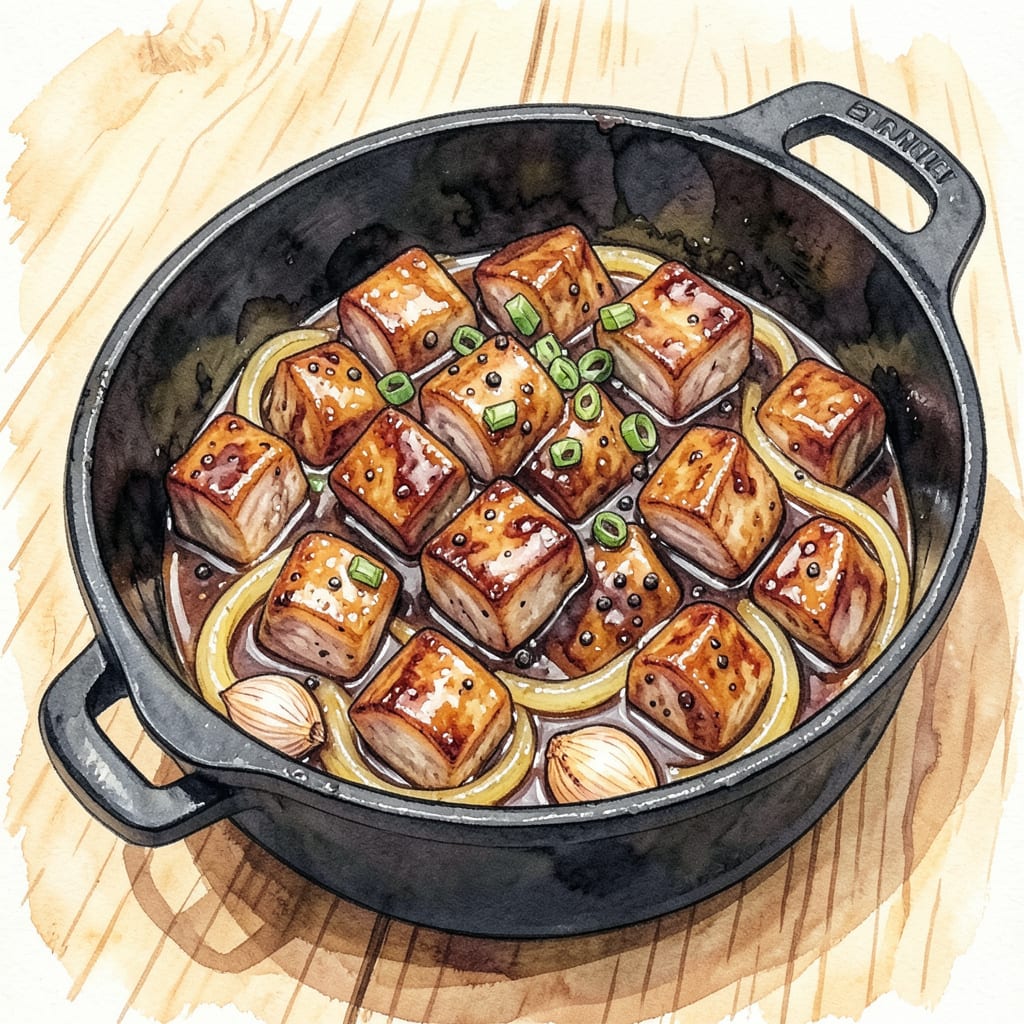
Filipino humba pata transforms tough pork belly into fall-apart tender meat through slow braising in a complex soy-vinegar-sugar marinade. This Visayan adobo variant balances sweet, salty, and tangy flavors in every bite, creating a dish that’s both comforting and deeply flavorful.
The secret lies in patient cooking—first marinating the pork to infuse flavors, then braising until the meat becomes fork-tender while the sauce reduces to a glossy glaze. Served over steamed rice with pickled vegetables, this recipe delivers restaurant-quality results with simple ingredients and traditional technique.
Ingredients for Humba Pata
This traditional Filipino braise combines pork belly with pantry staples to create a complex, caramelized masterpiece of sweet, salty, and tangy flavors.
| Ingredient | Amount | Notes |
|---|---|---|
| Pork Belly 🥓 | 2 lb | Cut into 2-inch cubes, skin-on |
| Soy Sauce 🫙 | ¾ cup | Use Filipino brand like Silver Swan |
| Cane Vinegar 🍶 | ½ cup | Or substitute apple cider vinegar |
| Brown Sugar 🍚 | ½ cup | Dark brown preferred for depth |
| Garlic Cloves 🧄 | 10 cloves | Minced for maximum flavor infusion |
| Yellow Onion 🧅 | 1 whole | Large, sliced into rings |
| Bay Leaves 🌿 | 3 pieces | Dried, whole leaves |
| Black Peppercorns 🌶️ | 1 tbsp | Whole, lightly crushed |
| Star Anise Pods ⭐ | 2 pieces | Whole pods for aromatic depth |
| Vegetable Oil 🫒 | 2 tbsp | For initial searing process |
| Water 💧 | 1 cup | For braising liquid balance |
| Steamed White Rice 🍚 | 4 cups | Cooked, for serving |
| Pickled Vegetables 🥒 | 1 cup | Atchara or quick-pickled radishes |
[recipe_ingredient_scaler]
The pork belly quality determines the final texture. Optimal results require well-marbled, skin-on pork belly cut into uniform 2-inch cubes. Professional kitchens source from Asian specialty markets where the meat-to-fat ratio is ideal for braising. The soy sauce should be Filipino-style (Silver Swan or Datu Puti) for authentic umami depth. Cane vinegar provides the signature tang, though apple cider vinegar may substitute in a pinch. Star anise and bay leaves must be fresh—stale spices lose their aromatic potency during the long cooking process.
Substitutions require careful balance to maintain the dish’s character. Pork shoulder may replace belly but lacks the fat content for unctuous texture. Coconut sugar offers a deeper caramel note than brown sugar. For the vinegar component, rice vinegar at half the quantity prevents overpowering acidity. Garlic and onion quantities may be adjusted by 20% without compromising flavor structure. The black peppercorns should remain whole to infuse gradually—pre-ground loses volatility during extended cooking. Vegetable broth can replace water for enhanced base flavor.
Storage demands attention to preserve texture and safety. Cooked humba keeps 5 days refrigerated in its braising liquid, with flavors intensifying daily. Freezing is viable for 3 months, though the pork texture softens slightly upon thawing. Reheat gently in a covered pot with added water to prevent drying. The braising liquid reduces to a glaze consistency when properly stored—never discard this precious sauce. Serve with freshly steamed rice to absorb the complex, reduced flavors.
Why You’ll Love This Recipe
- One-Pot Magic: I love that this humba pata comes together in a single pot—no juggling pans or complicated steps. Just layer the pork belly with garlic, soy sauce, vinegar, and brown sugar, then let it simmer while the flavors meld into something ridiculously good.
- Sweet-Savory Obsession: That first bite where the caramelized brown sugar meets the tangy cane vinegar and rich pork belly? It’s the kind of flavor balance I crave. The garlic cloves soften into this sweet, sticky sauce that clings to every piece—honestly, I could eat it straight from the pot.
- Budget-Friendly Luxury: Pork belly feels indulgent, but it’s way more affordable than you’d think—especially when stretched over multiple meals. A little goes a long way with the bold flavors here. Plus, the ingredients are pantry staples I always have on hand, so it’s my go-to when I want something special without a grocery run.
Step-by-Step Instructions for Humba Pata
This method transforms pork belly into tender, caramelized perfection with balanced sweet and tangy notes.
Step 1: Sear the Pork Belly for Depth
Heat the 2 tablespoons vegetable oil in a large Dutch oven over medium-high heat until shimmering. Add the 2 lb pork belly cubes in a single layer, skin-side down. Sear undisturbed for 5-7 minutes until the skin develops a deep golden crust and fat begins to render.
You’ll notice the pork belly releases easily from the pot when properly seared. Flip the pieces and sear the remaining sides for another 3-4 minutes until evenly browned. This step creates the flavor foundation through Maillard reaction while rendering some fat for the braising liquid.
Step 2: Build the Aromatic Base
Reduce heat to medium and add the 10 cloves garlic cloves and 1 whole yellow onion to the pot. Sauté for 2-3 minutes until the garlic turns light golden and the onion begins to soften. Be careful not to burn the garlic as it will turn bitter.
Add the 0.5 cup brown sugar and cook for 1 minute, stirring constantly until the sugar melts and begins to caramelize. The mixture should become glossy and slightly sticky. This caramelization creates the signature deep, sweet undertones of the dish.
Step 3: Deglaze and Braise
Pour in the 0.75 cup soy sauce and 0.5 cup cane vinegar, using a wooden spoon to scrape up all the browned bits from the bottom of the pot. Add the 3 pieces bay leaves, 1 tbsp black peppercorns, 2 pieces star anise pods, and 1 cup water.
Return the pork belly to the pot, ensuring the pieces are mostly submerged in the liquid. Bring to a gentle simmer, then reduce heat to low. Cover and braise for 1.5-2 hours, turning the pork occasionally, until the meat is fork-tender and the sauce has reduced by about half.
Step 4: Reduce and Glaze
Remove the lid and increase heat to medium. Simmer uncovered for 15-20 minutes, basting the pork occasionally, until the sauce reduces to a thick, glossy consistency that coats the back of a spoon. The pork should be deeply caramelized with a sticky glaze.
Taste and adjust seasoning if needed, though the soy sauce typically provides sufficient saltiness. The finished sauce should balance sweet, salty, and tangy notes with a slight viscosity that clings to the pork. Remove the bay leaves and star anise pods before serving.
Step 5: Serve with Traditional Accompaniments
Transfer the humba pata to a serving platter, spooning the thickened sauce over the top. Serve immediately with 4 cups steamed white rice to soak up the rich sauce, accompanied by 1 cup pickled vegetables to cut through the richness.
The pork should be meltingly tender with layers of flavor from the caramelization, braising, and aromatic spices. The skin should remain slightly chewy while the fat layers have rendered into the sauce, creating a luxurious mouthfeel with each bite.
Best Sauces and Condiments for This Dish
Classic Vinegar Dip
The simplest yet most authentic pairing is a tangy vinegar dip called suka’t sili. Mix ¼ cup cane vinegar with 1 minced Thai chili, ½ tsp black pepper, and a pinch of salt. The sharp acidity cuts through the pork’s richness while enhancing its caramelized flavors. I always keep this on the table for guests to adjust their bite. 🌶️
Garlic-Fried Rice
Elevate your steamed white rice by transforming it into sinangag—Filipino garlic fried rice. Sauté 4 cups day-old rice with 3 tbsp minced garlic in 2 tbsp pork fat (rendered from the humba) until crispy. The garlic’s nuttiness complements the braised pork beautifully, and using the pork fat ties everything together.
Spicy Coconut Sauce
For a creamy contrast, blend ½ cup coconut milk with 1 tbsp humba sauce, 1 tsp chili flakes, and ½ tsp lime zest. Simmer until slightly thickened—this adds a tropical richness that balances the dish’s saltiness. I discovered this pairing at a coastal lúlo restaurant, and it’s been my secret weapon ever since.
Quick-Pickled Atchara
While store-bought pickled vegetables work, homemade atchara takes it further. Thinly slice 1 cup green papaya and ½ carrot, then quick-pickle in ½ cup rice vinegar, 2 tbsp sugar, and ½ tsp salt for 30 minutes. The crunch and brightness provide perfect textural contrast to the tender pork.
Chili-Garlic Oil
A drizzle of siling labuyo oil adds fiery depth. Infuse ½ cup vegetable oil with 3 crushed bird’s eye chilies and 2 garlic cloves over low heat for 10 minutes. Strain and drizzle sparingly—the heat builds gradually. I learned this trick from a street food vendor in Cebu who swore by its ability to “wake up” any dish. ⚡
Calamansi Glaze
For a citrusy finish, reduce ¼ cup calamansi juice (or lime) with 1 tbsp humba sauce and 1 tsp honey until syrupy. Brush this glaze over the pork before serving. The tartness cuts through the fat while the honey enhances the caramelization. This is my go-to when I want to impress guests with restaurant-quality plating.
Nutrition Facts

Trained in classic French technique but raised on slow-cooked ribs and spicy rubs, she blends culinary skill with smoke and soul.
- Recipe for Boneless Pork Chops in Cast Iron Skillet: Sear and Baste to Juicy Perfection - October 3, 2026
- Recipe for Boneless Cross Rib Roast: Slow-Roasted Beef with Herb Crust - October 3, 2026
- Hamburgers in Sauce Recipe Crock Pot: Slow-Cooked Savory Delight - October 3, 2026