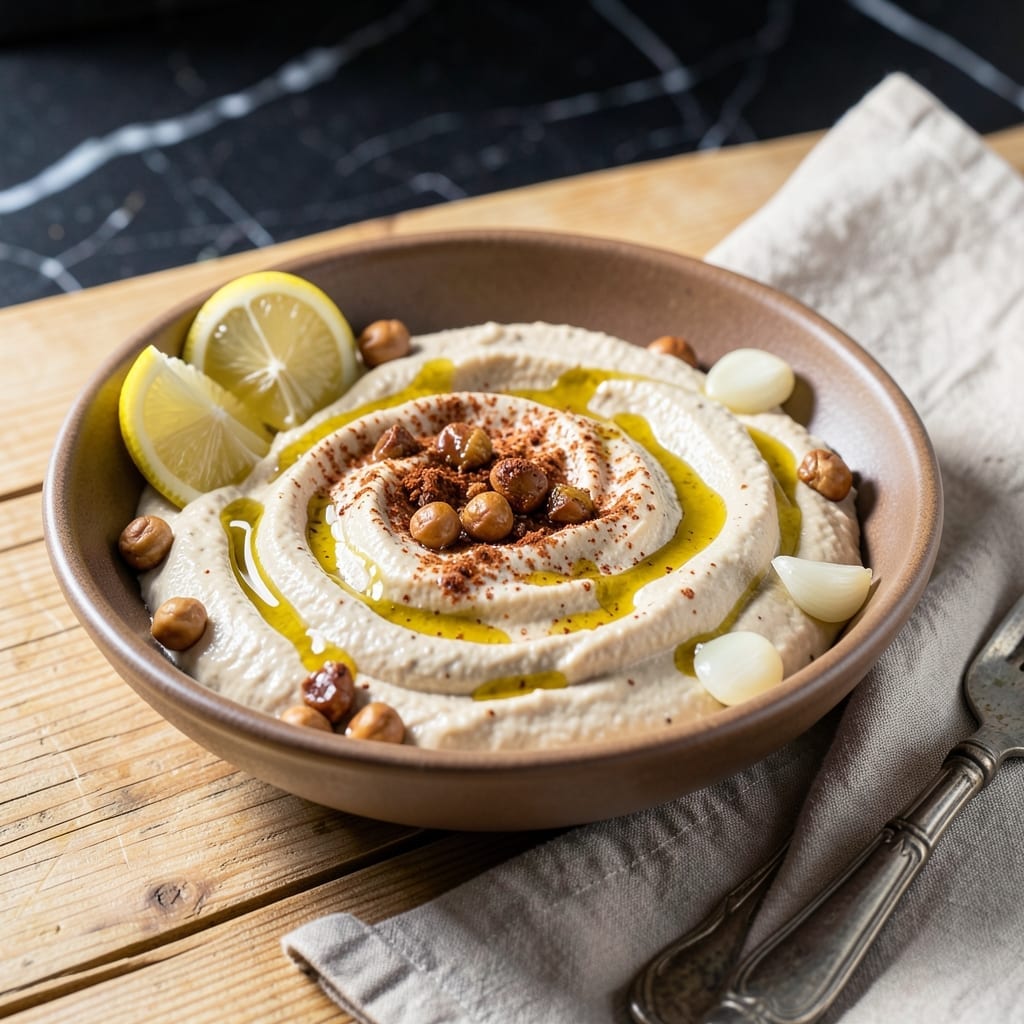
I developed this tahini-free hummus after realizing how many people avoid making it due to sesame allergies or ingredient availability. The secret to achieving that ultra-creamy texture lies in a simple technique.
By using ice water and a touch of baking soda, this version delivers the smooth, velvety consistency you expect from traditional hummus without compromising on flavor.
Ingredients for Hummus Recipe No Tahini
Pantry staples plus a few fresh touches make this ultra-creamy dip possible. Nothing complicated here.
| Ingredient | Amount | Notes |
|---|---|---|
| Dried Chickpeas 🌿 | 1 cup | Soaked overnight, drained |
| Baking Soda 🧂 | ¼ tsp | For creamy texture |
| Ice Water 💧 | ½ cup | Chilled for blending |
| Lemon Juice 🍋 | 3 tbsp | Freshly squeezed preferred |
| Garlic Cloves 🧄 | 2 cloves | Peeled and minced |
| Extra-Virgin Olive Oil 🫒 | ¼ cup | Plus extra for drizzling |
| Ground Cumin 🌶️ | 1 tsp | Toasted for depth |
| Sea Salt 🧂 | ¾ tsp | Adjust to taste |
| Paprika 🌶️ | ½ tsp | Smoked or sweet variety |
| Fresh Parsley 🌿 | 2 tbsp | Chopped, for garnish |
| Canned Chickpeas 🥫 | 1 can | 15 oz, drained and rinsed |
[recipe_ingredient_scaler]
The chickpeas are everything here. Dried chickpeas give the creamiest texture (soak them overnight), but canned works in a pinch—just rinse well. I grab mine from Whole Foods in bulk, but any grocery store’s organic section has good options. Look for plump, uniform beans with no cracks. The baking soda is the magic touch—don’t skip it, even if it seems weird.
No tahini? No problem. The ice water trick replaces it perfectly. Short on cumin? Coriander or a pinch of curry powder can fill in. Fresh lemon juice is non-negotiable (bottled tastes like regret), but if you’re desperate, apple cider vinegar at half the amount works. For extra richness, a spoon of cashew butter blends in seamlessly (and no one will know).
This keeps beautifully—5 days in the fridge, 3 months frozen. Store in an airtight container with a thin layer of olive oil on top to prevent drying. The flavors deepen overnight, so it’s even better the next day. Ideal for make-ahead entertaining.
Why You’ll Love This Recipe
- No Fuss Soak: I just toss the dried chickpeas with baking soda and let them sit overnight—no complicated steps.
- Bright and Zesty: The lemon juice and garlic give it that tangy kick I crave in every bite.
- Meal Prep Hero: I make a big batch on Sunday and it lasts all week for lunches and snacks.
- Pantry Staples: Honestly, I always have these ingredients on hand, so it’s a last-minute lifesaver.
Step-by-Step Instructions for Hummus Without Tahini
This method delivers that ultra-smooth texture you crave without the sesame.
Step 1: Prepare the Chickpeas for Blending
Drain and rinse the canned chickpeas thoroughly under cold water. I always give them an extra shake in the colander to remove any excess starch, which can make your dip gummy. Transfer the chickpeas to a saucepan and add the baking soda.
Cover with water by about 2 inches and bring to a boil over medium-high heat. Boil vigorously for 3 minutes—this step is crucial for breaking down the chickpeas’ skins and creating that velvety texture. You’ll notice the water turning slightly foamy as the baking soda works its magic.
Drain immediately and rinse under cold water for 30 seconds to stop the cooking process. The chickpeas should now feel slightly softer and look a bit paler than when you started.
Step 2: Blend the Base Ingredients
In a food processor, combine the prepared chickpeas, lemon juice, minced garlic cloves, ground cumin, and sea salt. Pulse for 30 seconds until the mixture resembles coarse sand. Scrape down the sides with a spatula—this ensures even blending.
With the processor running, slowly drizzle in the ice water through the feed tube. This is the secret to ultra-creamy hummus without tahini. The cold water helps emulsify the mixture, creating a smooth, luscious texture. Blend for 1-2 minutes until completely smooth, stopping to scrape the sides as needed.
Step 3: Emulsify with Olive Oil
With the food processor still running, gradually pour in the extra-virgin olive oil in a thin, steady stream. This slow incorporation is key to creating a stable emulsion that won’t separate. Blend for another 1-2 minutes until the hummus becomes pale and magnificently creamy.
Taste and adjust the seasoning if needed. The hummus should have a bright, tangy flavor from the lemon juice with a subtle warmth from the cumin. If it’s too thick, add a splash more ice water and blend until you reach your desired consistency.
Step 4: Finish and Serve
Transfer the hummus to a serving bowl. Use the back of a spoon to create those classic swirls on top. Drizzle with a little extra extra-virgin olive oil and sprinkle with paprika. This adds a pop of color and a hint of smoky flavor that complements the creamy dip perfectly.
Garnish with the chopped fresh parsley for a touch of freshness. Serve immediately with warm pita bread, fresh vegetables, or as a spread on sandwiches. For best texture, let it sit at room temperature for 30 minutes before serving to allow the flavors to meld together.
Pro Tips For Making Hummus Recipe No Tahini
- Soak Chickpeas Overnight: I learned this the hard way—dried chickpeas need a full 12-hour soak in plenty of water to soften enough for smooth hummus, no exceptions.
- Use Ice Water: About 1/4 cup of ice water while blending makes a real difference in getting that creamy texture without tahini.
- Skip Canned Chickpeas: After burning through a few cans, I finally figured out dried chickpeas taste fresher and blend smoother for this recipe.
- Balance Lemon Early: Add lemon juice gradually—start with 2 tablespoons, taste, then adjust, because too much can make the hummus bitter.
Common Mistakes When Making This Dish
Skipping the Soak
If using dried chickpeas, never skip the overnight soak. This softens them enough to blend smoothly and prevents a gritty texture. I once tried a quick-soak method and ended up with hummus that felt like sandpaper. 💡
Overcooking Chickpeas
Boiling the chickpeas with baking soda for longer than 3 minutes can make them mushy and bitter. The goal is to soften their skins, not turn them to mush. Watch for the water to turn foamy, then drain immediately.
Using Warm Water
Always use ice-cold water when blending—warm water prevents proper emulsification. I keep a glass of water in the freezer while prepping so it’s ready to go. This small step makes a huge difference in creaminess.
Adding Oil Too Fast
Drizzling the olive oil too quickly breaks the emulsion, resulting in oily hummus. Pour it in a thin, steady stream while blending. I use a measuring cup with a spout for better control over the ¼ cup.
Forgetting to Scrape
Stop and scrape the food processor bowl 2-3 times during blending. Chickpeas tend to cling to the sides, and leaving them there means uneven texture. A rubber spatula works best for this.
Over-Seasoning Early
Wait until the end to adjust salt and spices. The flavors concentrate as the hummus blends, so what tastes perfect at first might become overpowering. I always taste after the oil is fully emulsified.
Nutrition Facts
Frequently Asked Questions
Why use baking soda in this recipe?
The baking soda helps break down the chickpeas’ skins, creating a smoother texture. It’s a key step for achieving that velvety consistency without tahini.
Can I use a blender instead of a food processor?
Yes, but scrape the sides often as blenders trap chickpeas at the bottom. A high-speed blender works best for ultra-creamy results.
How long will this keep in the fridge?
Store in an airtight container with olive oil on top for up to 5 days. The flavors actually improve overnight!
What can I substitute for lemon juice?
In a pinch, use apple cider vinegar at half the amount. Fresh lemon is ideal for that bright, tangy flavor though.

Trained in classic French technique but raised on slow-cooked ribs and spicy rubs, she blends culinary skill with smoke and soul.
- Recipe for Boneless Pork Chops in Cast Iron Skillet: Sear and Baste to Juicy Perfection - October 3, 2026
- Recipe for Boneless Cross Rib Roast: Slow-Roasted Beef with Herb Crust - October 3, 2026
- Hamburgers in Sauce Recipe Crock Pot: Slow-Cooked Savory Delight - October 3, 2026