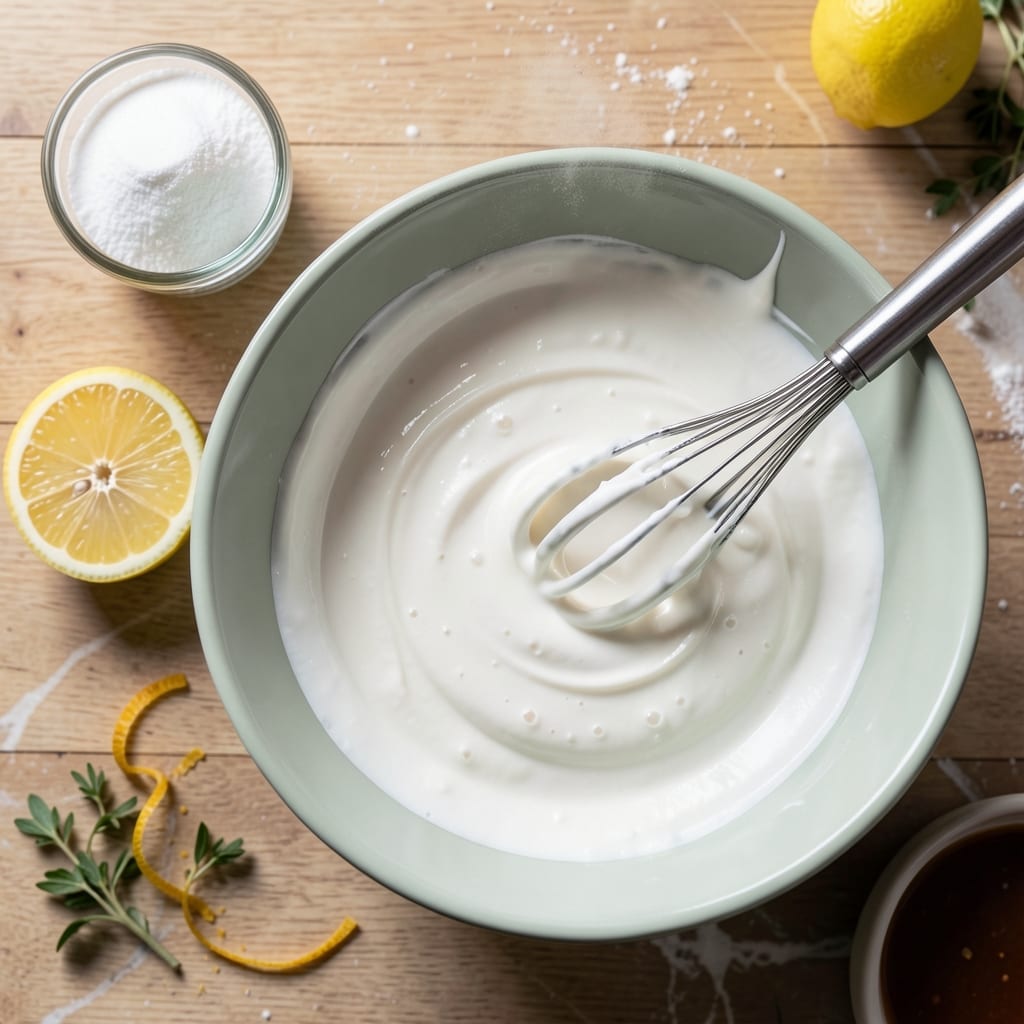
This icing delivers the perfect balance of strength and beauty for gingerbread construction. The secret lies in the precise ratio of powdered sugar to liquid, creating a paste that holds walls firmly while maintaining a snow-white finish.
Unlike runny versions, this recipe produces a thick consistency ideal for piping details and structural support. It dries hard enough to secure your house while remaining smooth enough for decorative touches.
Ingredients for Icing Recipe for a Gingerbread House
Seven ingredients create sturdy, snow-white icing for gingerbread construction with perfect structural integrity.
| Ingredient | Amount | Notes |
|---|---|---|
| Powdered Sugar 🍚 | 4 cups | Sifted for smooth texture |
| Egg Whites 🥚 | 3 whole | Fresh or pasteurized, room temperature |
| Cream of Tartar 🧂 | ½ tsp | Stabilizes the icing |
| Vanilla Extract 🌿 | 1 tsp | Pure extract for best flavor |
| Lemon Juice 🍋 | 1 tbsp | Freshly squeezed preferred |
| Salt 🧂 | ¼ tsp | Fine grain, enhances flavor |
| Water 💧 | 1 tbsp | As needed for consistency |
[recipe_ingredient_scaler]
The powdered sugar must be fresh and lump-free—old sugar can yield grainy results. Domino or C&H brands are reliable for consistent texture. Room temperature egg whites whip more efficiently; pasteurized versions from Eggland’s Best work if avoiding raw eggs. Cream of tartar is non-negotiable for stability, though white vinegar in a pinch can substitute at half the amount.
No cream of tartar? White vinegar or lemon juice at half the quantity maintains structure. Vanilla can be omitted, but it adds depth to the flavor. For a brighter taste, increase lemon juice to 1.5 tablespoons. If the icing seems too thick, add water one teaspoon at a time—consistency is key for piping and holding gingerbread pieces.
Store in an airtight container at room temperature for 2-3 days. For longer storage, refrigerate for up to 1 week. The icing dries rock-hard, so keep unused portions covered with a damp cloth to prevent crusting before use.
Why You’ll Love This Recipe
- Five Ingredients Only: I just dump powdered sugar, egg whites, cream of tartar, vanilla, and lemon juice in a bowl—no last-minute grocery runs.
- Bright, Clean Taste: The lemon juice cuts the sweetness perfectly, and the vanilla adds that cozy warmth I crave in gingerbread.
- Holiday MVP: I use this for gingerbread houses, cookie decorating, even piping snowflakes on cupcakes—it pipes like a dream.
- Stores Like Magic: Leftovers keep in the fridge for a week. I’ll be real: I’ve even used it straight from the bowl for a quick sugar fix.
Step-by-Step Instructions for Icing a Gingerbread House
This method ensures a sturdy, snow-white finish that holds gingerbread pieces securely together.
Step 1: Combine Egg Whites and Cream of Tartar
In a clean, grease-free mixing bowl, combine the 3 whole Egg Whites with the 0.5 tsp Cream of Tartar. The cream of tartar acts as a stabilizer, ensuring the icing maintains its structure and doesn’t collapse under the weight of gingerbread pieces.
Beat the mixture on medium speed until frothy and slightly thickened, about 2-3 minutes. You’ll notice the egg whites begin to hold soft peaks—this is your cue that the base is ready for the next ingredients.
Step 2: Incorporate Powdered Sugar Gradually
With the mixer running on low speed, gradually add the 4 cups Powdered Sugar, about ½ cup at a time. This slow incorporation prevents clumping and ensures a smooth, lump-free consistency.
After all the powdered sugar is added, increase the speed to medium-high and beat for 3-5 minutes until the icing is thick and glossy. The mixture should hold stiff peaks when the beaters are lifted—a critical test for structural stability.
Step 3: Add Flavorings and Adjust Consistency
Add the 1 tsp Vanilla Extract, 1 tbsp Lemon Juice, and 0.25 tsp Salt to the bowl. The vanilla and lemon juice enhance the flavor profile, while the salt balances the sweetness of the powdered sugar.
Mix on low speed for 30 seconds until fully combined. If the icing is too thick for piping, add the 1 tbsp Water, 1 teaspoon at a time, until it reaches the desired consistency. For gingerbread house construction, the icing should be thick enough to hold its shape when piped but still pliable.
Step 4: Test and Use Immediately
To ensure the icing is ready, pipe a small test line on parchment paper. It should hold its shape without spreading. If it’s too runny, beat in additional powdered sugar, 1 tablespoon at a time, until the desired stiffness is achieved.
Transfer the icing to a piping bag fitted with a small round tip. Use immediately to assemble your gingerbread house—the icing will begin to set within 10-15 minutes, so work efficiently. For best results, apply a thin layer to the edges of the gingerbread pieces and press them together firmly, holding for 30 seconds to create a strong bond.
Pro Tips For Making Icing Recipe For A Gingerbread House
- Sift the Sugar: Always sift your powdered sugar first—I learned this the hard way after my first icing turned lumpy and refused to pipe cleanly.
- Whip to Stiff Peaks: Beat the egg whites and cream of tartar until they hold stiff peaks before adding sugar; otherwise, your icing won’t set hard enough to hold the house together.
- Skip the Substitutes: Cream of tartar isn’t optional here; it stabilizes the meringue so your walls don’t collapse overnight.
- Add Lemon Last: Fold in the lemon juice at the very end—adding it too early can break down the meringue and make the icing too runny to hold its shape.
Flavor Customization for This Dish
Citrus Twist
Boost the brightness by adding 1 tbsp orange zest or 1 tsp lime zest along with the lemon juice. The citrus oils bring a vibrant, fresh flavor that pairs beautifully with gingerbread’s warmth. I love how it makes the icing taste less sweet.
Spiced Warmth
For a cozy twist, mix in ½ tsp ground cinnamon or ¼ tsp ground nutmeg with the powdered sugar. These spices complement gingerbread’s molasses notes perfectly. A pinch of ground cloves adds depth without overpowering the icing. 💛
Almond Flavor
Replace the vanilla with ½ tsp almond extract for a nutty, marzipan-like taste. This works especially well if your gingerbread has almond flour. Use sparingly—almond extract is potent and can dominate if overused.
Coconut Dream
Add ½ cup unsweetened shredded coconut to the finished icing for texture and a tropical note. The coconut softens slightly as the icing dries, creating an interesting contrast. Press extra coconut flakes onto wet icing for a snowy effect.
Chocolate Swirl
Divide the icing in half and mix 2 tbsp cocoa powder into one portion. Pipe both colors together for a marbled look. The chocolate version works great for roof tiles or chimney details on your gingerbread house. 🔥
Colorful Fun
Tint portions with gel food coloring for festive details. Use toothpicks to add color gradually to avoid thinning the icing. Red and green make classic holiday accents, while pastels work for spring-themed houses.
Nutrition Facts
Frequently Asked Questions
How long does this icing take to dry completely?
It typically sets within 15-20 minutes but needs 1-2 hours to harden fully. For best results, let your gingerbread house sit overnight to ensure maximum strength.
Can I use meringue powder instead of egg whites?
Yes! Replace 3 egg whites with 3 tbsp meringue powder mixed with 6 tbsp water. This creates a stable, safe alternative with similar texture and hold.
Why did my icing turn yellow?
This usually happens with overbeating or using old powdered sugar. To prevent it, beat just until stiff peaks form and use fresh, sifted sugar. A tiny drop of blue food coloring can help neutralize any tint.
Is this recipe safe for raw egg concerns?
For safety, use pasteurized egg whites or the meringue powder alternative. Both options eliminate salmonella risk while maintaining the same sturdy texture.

Trained in classic French technique but raised on slow-cooked ribs and spicy rubs, she blends culinary skill with smoke and soul.
- Recipe for Boneless Pork Chops in Cast Iron Skillet: Sear and Baste to Juicy Perfection - October 3, 2026
- Recipe for Boneless Cross Rib Roast: Slow-Roasted Beef with Herb Crust - October 3, 2026
- Hamburgers in Sauce Recipe Crock Pot: Slow-Cooked Savory Delight - October 3, 2026