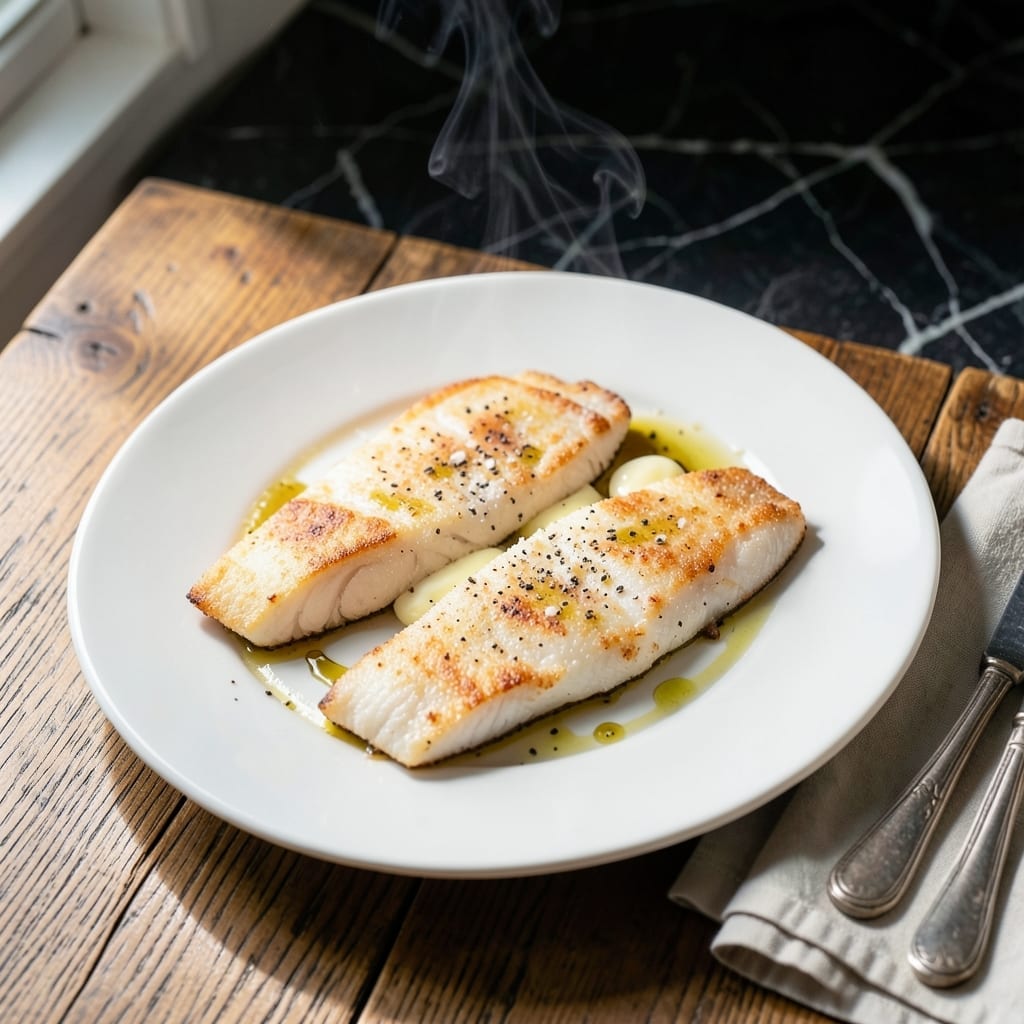
This flounder recipe delivers light and flaky fish with minimal effort. The key is a hot pan and precise timing to achieve that perfect delicate texture.
Simple ingredients and a quick cook time make this dish elegant enough for company but easy enough for a weeknight. The result is tender, buttery fish that melts in your mouth.
Ingredients for Ina Garten Flounder
Minimal ingredients for maximum elegance. Flounder shines with just butter, lemon, and herbs.
| Ingredient | Amount | Notes |
|---|---|---|
| Flounder Fillets 🐟 | 1 ½ lb | Skinless, boneless, fresh or thawed |
| All-Purpose Flour 🌾 | ½ cup | For light dredging |
| Kosher Salt 🧂 | 1 ½ tsp | Diamond Crystal preferred |
| Freshly Ground Black Pepper 🌶️ | ½ tsp | Coarse grind for texture |
| Unsalted Butter 🧈 | 4 tbsp | European-style for richness |
| Extra-Virgin Olive Oil 🫒 | 2 tbsp | For pan searing |
| Fresh Lemon 🍋 | 1 whole | Zested and juiced |
| Garlic Cloves 🧄 | 2 cloves | Minced for aroma |
| Fresh Parsley 🌿 | 2 tbsp | Chopped, for garnish |
| Dry White Wine 🍷 | ¼ cup | Sauvignon Blanc or Pinot Grigio |
| Capers 🫒 | 1 tbsp | Drained, for briny finish |
[recipe_ingredient_scaler]
The flounder is the star here. Fresh wild-caught is ideal, but frozen works if thawed properly (overnight in the fridge, never on the counter). Look for fillets that are uniform in thickness—about 1/2-inch—so they cook evenly. Whole Foods or a trusted fishmonger will have the best selection. Avoid anything with a fishy smell; it should smell like the ocean, not a fishing boat.
No white wine? Substitute chicken broth with a squeeze of lemon. Out of capers? Chopped green olives add a similar briny note. The butter can be swapped for olive oil, but you’ll lose some richness. For extra flavor, add a sprig of fresh thyme or dill to the pan while cooking. The parsley garnish is optional but adds a pop of color.
Flounder is best cooked immediately, but you can prep the fillets (pat dry, season) up to 2 hours ahead. Store in the fridge uncovered so they stay dry. Leftovers? They’ll keep for 1-2 days but are best enjoyed fresh. Reheat gently in a warm oven to avoid drying out.
Why You’ll Love This Recipe
- 20-Minute Meal: I can go from fridge to table faster than my kids can argue over who sits where. Just flour, season, and pan-fry the flounder in butter—done.
- Buttery Perfection: That crisp golden crust with tender flounder inside? The butter does all the heavy lifting.
- Weeknight Hero: Honestly, it’s my Tuesday night lifesaver—fancy enough for guests, simple enough for a solo dinner.
- Budget-Friendly Luxe: Flounder feels like a splurge but costs less than salmon, and a little goes a long way.
Step-by-Step Instructions for Light and Flaky Flounder
Here’s the method. Straightforward, tested, works every time.
Step 1: Season and Dredge the Fillets
Pat the 1.5 lb Flounder Fillets dry with paper towels—this is crucial for achieving that delicate, crisp coating. Season both sides evenly with the 1.5 tsp Kosher Salt and 0.5 tsp Freshly Ground Black Pepper. The coarse grind adds texture to each bite.
Dredge each fillet lightly in the 0.5 cup All-Purpose Flour, shaking off any excess. You want just enough to create a whisper-thin coating that will turn golden in the pan. This step ensures the flounder stays intact during cooking and develops a subtle crunch.
Step 2: Sear the Fillets in Hot Oil
Heat the 2 tbsp Extra-Virgin Olive Oil in a large skillet over medium-high heat until it shimmers. Add the dredged flounder fillets and cook undisturbed for 2-3 minutes per side. The fillets are ready to flip when the edges turn opaque and the bottom is light golden brown.
Don’t overcrowd the pan—cook in batches if necessary to maintain the oil temperature. Transfer the cooked fillets to a warm plate and tent loosely with foil to keep them warm while you make the sauce.
Step 3: Build the Lemon-Garlic Pan Sauce
Reduce the heat to medium and add the 4 tbsp Unsalted Butter to the same skillet. Once melted, add the minced 2 cloves Garlic Cloves and cook for 30 seconds until fragrant but not browned. Pour in the 0.25 cup Dry White Wine and scrape up any browned bits from the bottom of the pan.
Let the wine simmer for 2-3 minutes until it reduces by half. Stir in the 1 tbsp Capers and the juice from the 1 whole Fresh Lemon. The sauce should be slightly thickened and glossy, coating the back of a spoon.
Step 4: Finish and Garnish
Return the flounder fillets to the skillet, spooning the sauce over each one. Let them warm through for 1-2 minutes—just enough to marry the flavors. The flounder should be opaque throughout and flake easily with a fork.
Transfer the fillets to serving plates and drizzle any remaining sauce on top. Garnish with the 2 tbsp Fresh Parsley for a pop of color and freshness. Serve immediately while the fish is at its peak tenderness and the sauce is still vibrant.
Pro Tips For Making Ina Garten Flounder
- Dry the Fish: Pat the flounder fillets completely dry with paper towels before dredging in flour—I learned this the hard way after my first batch turned out soggy instead of crisp.
- Preheat the Pan: Get your skillet screaming hot before adding the butter, about 2-3 minutes on medium-high. Sounds weird, but it works: the butter won’t burn immediately and you’ll get that golden crust.
- Season the Flour: Mix a teaspoon of kosher salt and half teaspoon of pepper right into the flour before coating the fillets—more even seasoning than just sprinkling it on after.
- Use Clarified Butter: If you’re worried about burning, swap regular butter for clarified or ghee—it handles the high heat better while still giving that rich flavor Ina’s recipe is known for.
Perfect Pairings for These Flavors
Wine Pairings
A crisp Sauvignon Blanc from New Zealand mirrors the lemon in the sauce beautifully. The bright acidity cuts through the butter while complementing the flounder’s delicate flavor. I always keep a bottle of Kim Crawford on hand for this.
Side Dish Ideas
Serve with roasted asparagus tossed in olive oil and lemon zest. The vegetable’s earthiness balances the richness of the dish. For starch, wild rice pilaf with herbs soaks up the sauce perfectly.
Bread Options
A crusty baguette or ciabatta works wonders for mopping up the pan sauce. Warm it briefly in the oven with a garlic butter spread. I pick up fresh loaves from my local bakery for this.
Vegetable Variations
Try sautéed green beans with almonds for crunch, or steamed broccolini drizzled with the leftover lemon-garlic sauce. Both add color and texture without overpowering the fish.
Light Salad Option
A simple arugula salad with shaved fennel and a light vinaigrette offers a peppery contrast. I use 2 tbsp olive oil and 1 tbsp lemon juice for dressing. 🥗
Nutrition Facts
Frequently Asked Questions
Can I use a different type of fish?
Yes! Sole or tilapia work well as substitutes. They have a similar mild flavor and delicate texture. Just adjust cooking time if fillets are thicker than 1/2-inch.
Why do I need to pat the fillets dry?
Moisture prevents proper browning and can cause the flour to clump. Dry fillets sear evenly and develop that crisp, golden coating. It’s a crucial step for texture.
Can I make the sauce ahead?
The sauce is best made fresh, but you can prep ingredients in advance. Mince garlic, measure wine, and chop parsley up to 2 hours ahead. Store separately until ready to cook.
How do I know when the flounder is done?
It’s done when the flesh turns opaque and flakes easily with a fork. For 1/2-inch fillets, 2-3 minutes per side is perfect. Overcooking makes it tough.

Trained in classic French technique but raised on slow-cooked ribs and spicy rubs, she blends culinary skill with smoke and soul.
- Recipe for Boneless Pork Chops in Cast Iron Skillet: Sear and Baste to Juicy Perfection - October 3, 2026
- Recipe for Boneless Cross Rib Roast: Slow-Roasted Beef with Herb Crust - October 3, 2026
- Hamburgers in Sauce Recipe Crock Pot: Slow-Cooked Savory Delight - October 3, 2026