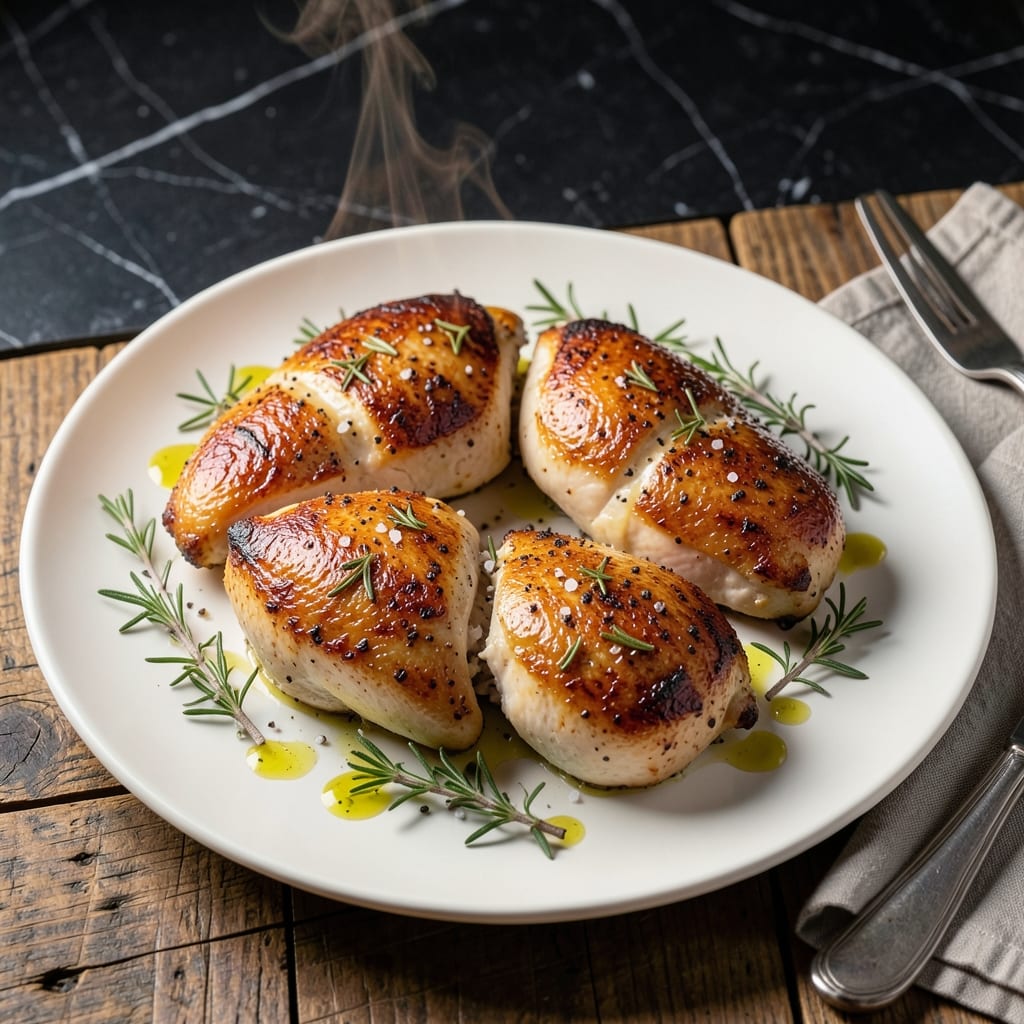
There’s a reason Ina Garten’s roasted chicken breasts have achieved legendary status in home kitchens. This method transforms simple ingredients into crispy, golden perfection with minimal effort.
The technique is foolproof: high heat, a dry brine, and plenty of fresh herbs. I’ve tested this in my tiny Boston kitchen with consistent results—juicy meat beneath that coveted shatteringly crispy skin.
What emerges from the oven is chicken that’s tender and flavorful, with skin so crisp it crackles. The herb butter baste adds layers of aromatic depth without overwhelming the natural chicken flavor.
Serve with roasted vegetables for a complete meal that looks and tastes restaurant-quality. Here’s how to achieve it at home.
Ingredients for Ina Garten Recipe for Roasted Chicken Breasts
Simple ingredients, extraordinary results. Herbs, butter, and chicken come together beautifully here.
| Ingredient | Amount | Notes |
|---|---|---|
| Bone-In, Skin-On Chicken Breasts 🍗 | 4 whole | Similar size for even cooking |
| Kosher Salt 🧂 | 1 tbsp | Diamond Crystal preferred for dry brine |
| Freshly Ground Black Pepper 🌶️ | 1 tsp | Coarse grind for texture |
| Unsalted Butter 🧈 | 4 tbsp | Melted for herb butter baste |
| Fresh Thyme Sprigs 🌿 | 4 whole | Stems intact for infusion |
| Fresh Rosemary Sprigs 🍃 | 2 whole | Woody stems removed |
| Garlic Cloves 🧄 | 4 cloves | Lightly smashed |
| Extra-Virgin Olive Oil 🫒 | 1 tbsp | For drizzling before roasting |
| Lemon 🍋 | 1 whole | Zest and juice reserved |
| Dijon Mustard 🟡 | 1 tbsp | For additional flavor in baste |
| Shallot 🧅 | 1 whole | Minced for herb butter |
| Fresh Flat-Leaf Parsley 🌿 | ¼ cup | Chopped, for garnish |
[recipe_ingredient_scaler]
The chicken is the foundation, so source bone-in, skin-on breasts of similar size—this ensures even cooking and that coveted crispy skin. Whole Foods or a trusted butcher will have quality options. For the dry brine, Diamond Crystal kosher salt is ideal due to its coarse texture and clean flavor. Fresh herbs are non-negotiable here; look for vibrant sprigs free of wilting or yellowing leaves at your grocer.
No fresh thyme or rosemary? Dried herbs at one-third the amount work in a pinch, though the flavor won’t be as bright. If you’re out of Dijon, whole-grain mustard adds a nice texture. The lemon can be swapped for lime if that’s what you have. For maximum crispiness, pat the chicken skin thoroughly dry before seasoning—moisture is the enemy of that perfect crackle.
Store raw chicken in the coldest part of your fridge and use within 2 days. The herb butter can be made a day ahead—just bring it to room temperature before using. Leftovers keep for 3-4 days and reheat beautifully in a toaster oven to revive that crispy skin.
Why You’ll Love This Recipe
- One Pan Magic: I toss the chicken with butter, thyme, salt and pepper, pop it in the oven, and that’s it—no babysitting, no fuss.
- Crispy, Juicy Perfection: The skin comes out golden and crackling while the meat stays tender, all thanks to that simple butter and thyme combo.
- Dinner or Lunch: I serve it hot for dinner, then slice the leftovers for sandwiches the next day—honestly, it’s even better cold.
- Budget Stretcher: Bone-in, skin-on breasts are cheaper than boneless, and one batch gives me multiple meals without breaking the bank.
Step-by-Step Instructions for Roasted Chicken Breasts
Achieve perfectly crispy skin and juicy meat with this proven technique for herb-infused roasted chicken.
Step 1: Season and Dry the Chicken
Pat the 4 whole Bone-In, Skin-On Chicken Breasts completely dry with paper towels. Any moisture prevents crispy skin. Season both sides evenly with the 1 tbsp Kosher Salt and 1 tsp Freshly Ground Black Pepper, pressing gently to adhere.
I use Diamond Crystal kosher salt for its clean flavor and even distribution. Let the seasoned chicken rest uncovered on a wire rack at room temperature for 30 minutes to allow the salt to penetrate while the skin dries further.
Step 2: Prepare the Herb Butter Baste
In a small saucepan, melt the 4 tbsp Unsalted Butter over low heat. Add the minced 1 whole Shallot and cook for 2 minutes until softened but not browned. This builds a flavor base for the baste.
Stir in the 1 tbsp Dijon Mustard, juice from half the 1 whole Lemon, the 4 whole Fresh Thyme Sprigs, 2 whole Fresh Rosemary Sprigs, and 4 cloves Garlic Cloves that have been lightly smashed. Let this infusion steep off heat for 10 minutes to extract the herb flavors.
Step 3: Roast at High Heat
Preheat your oven to 425°F. Place the chicken skin-side up on a wire rack set in a rimmed baking sheet. Drizzle with the 1 tbsp Extra-Virgin Olive Oil. This initial oil application kickstarts the crisping process.
Roast for 25 minutes, then baste the chicken generously with the herb butter mixture. Continue roasting for another 15-20 minutes until the skin is deep golden brown and crisp, and an instant-read thermometer inserted into the thickest part registers 165°F.
Step 4: Rest and Serve
Transfer the chicken to a cutting board and let it rest for 10 minutes. This allows the juices to redistribute for maximum tenderness. During this time, the internal temperature will rise to 170°F.
Strain the remaining herb butter and drizzle it over the chicken. Garnish with the chopped 0.25 cup Fresh Flat-Leaf Parsley and the remaining lemon zest for a bright, fresh finish. The skin should be crisp enough to crackle when cut, while the meat remains juicy and flavorful.
Pro Tips For Making Ina Garten Recipe For Roasted Chicken Breasts
- Dry the Skin: Pat the chicken breasts very dry with paper towels before seasoning—I learned this the hard way after my first few batches came out steamed instead of crisp. The butter won’t brown properly if there’s moisture in the way.
- Start Skin-Side Down: Place the chicken in the hot pan skin-side down first and resist the urge to move it for 5-6 minutes. This guarantees that golden, crackling crust Ina’s recipe is known for.
- Use Room-Temp Butter: Take the unsalted butter out 30 minutes before cooking so it’s soft enough to spread under the skin without tearing it. Cold butter just sits in clumps and doesn’t melt evenly over the thyme.
- Rest Before Serving: Let the chicken rest 5-10 minutes on a plate after roasting—yes, even if you’re starving. Skipping this step means all those juices you worked for will end up on the cutting board, not in the meat.
Wine and Beer Pairings for This ina garten recipe for roasted chicken breasts
White Wine Pairings
A crisp Sauvignon Blanc from New Zealand cuts through the richness of the herb butter beautifully. The bright acidity and citrus notes complement the lemon in the baste. I always reach for Kim Crawford or Oyster Bay at my local Boston wine shop. 🍷
Rich White Options
For a fuller-bodied white, try a Chardonnay with moderate oak—Kendall-Jackson Vintner’s Reserve is my go-to. The buttery notes mirror the herb butter while the acidity balances the dish. Serve slightly chilled for best results.
Light Red Wines
If you prefer red, a light Pinot Noir from Oregon works wonderfully. The earthy notes complement the rosemary and thyme. I love La Crema or Domaine Serene for this pairing. Avoid heavy, tannic reds.
Beer Pairings
A crisp pilsner like Samuel Adams Noble Pils cleanses the palate between bites. For craft beer lovers, a Belgian-style saison with its peppery notes adds interesting complexity. Both options won’t overpower the chicken’s delicate flavors. 🍺
Non-Alcoholic Option
For a non-alcoholic pairing, try a sparkling apple cider from a local New England orchard. The effervescence and sweet-tart balance work surprisingly well. I often serve this when hosting friends who don’t drink.
Nutrition Facts
Frequently Asked Questions
Should I remove the skin before roasting?
No, keep the skin on for maximum flavor and that signature crispy texture. The skin protects the meat while cooking and renders fat that bastes the chicken naturally. Just pat it very dry first for best results.
What can I use if I don’t have fresh herbs?
Dried herbs work in a pinch—use 1/3 the amount of fresh. For thyme and rosemary, substitute 1 tsp dried for each tablespoon of fresh. The flavor will be more concentrated but still delicious.
Why does the chicken need to rest before serving?
Resting for 10 minutes lets juices redistribute throughout the meat. Skipping this step causes juices to spill out when cut, resulting in dry chicken. The temperature will also rise to 170°F for perfect doneness.
Can I use boneless chicken breasts?
Not recommended—the bone helps conduct heat and keeps the meat moist. Boneless breasts tend to dry out at the 425°F temperature needed for crispy skin. Stick to bone-in for best texture.

Trained in classic French technique but raised on slow-cooked ribs and spicy rubs, she blends culinary skill with smoke and soul.
- Recipe for Boneless Pork Chops in Cast Iron Skillet: Sear and Baste to Juicy Perfection - October 3, 2026
- Recipe for Boneless Cross Rib Roast: Slow-Roasted Beef with Herb Crust - October 3, 2026
- Hamburgers in Sauce Recipe Crock Pot: Slow-Cooked Savory Delight - October 3, 2026