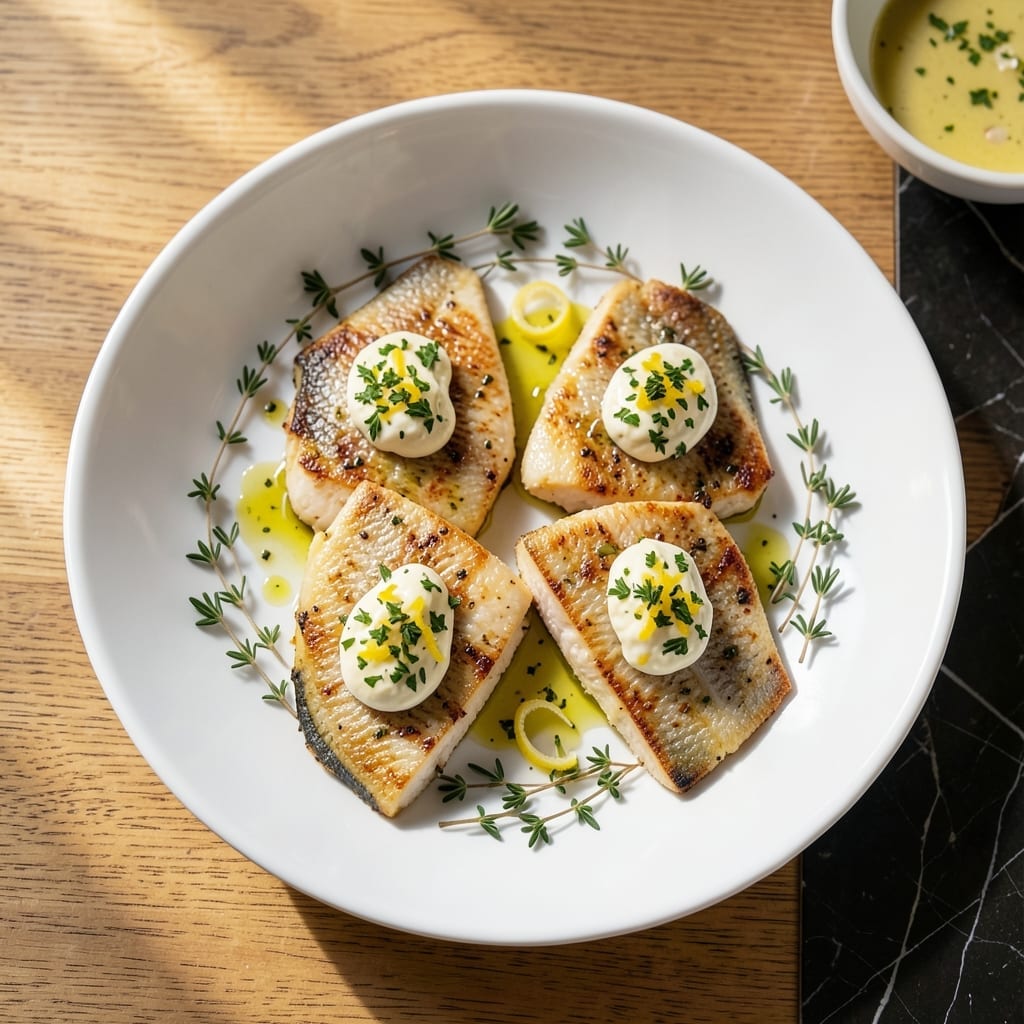
This recipe delivers restaurant-quality sea bass with minimal effort. The key is a simple lemon-herb butter that enhances the fish’s natural flavor.
With just 20 minutes and a hot pan, you’ll achieve perfectly flaky, tender fillets every time. The technique is foolproof for home cooks.
Ingredients for Ina Garten Sea Bass
Minimal ingredients deliver maximum elegance with this sea bass preparation.
| Ingredient | Amount | Notes |
|---|---|---|
| Sea Bass Fillets 🐟 | 4 whole | Skin-on, about 6 oz each |
| Unsalted Butter 🧈 | ½ cup | Room temperature for butter |
| Extra-Virgin Olive Oil 🫒 | 2 tbsp | Divided for cooking and finishing |
| Fresh Lemon Juice 🍋 | 3 tbsp | About 1 large lemon |
| Lemon Zest 🍋 | 1 tbsp | From 1-2 lemons |
| Garlic Cloves 🧄 | 3 cloves | Minced finely |
| Fresh Parsley 🌿 | ¼ cup | Finely chopped, flat-leaf variety |
| Fresh Thyme 🍃 | 1 tbsp | Leaves stripped from stems |
| Fresh Dill 🌿 | 1 tbsp | Chopped, optional for garnish |
| Kosher Salt 🧂 | 1 ½ tsp | Diamond Crystal preferred |
| Freshly Ground Black Pepper 🌶️ | ½ tsp | Coarse grind recommended |
| Dry White Wine 🍷 | ¼ cup | Such as Sauvignon Blanc |
| Shallot 🧅 | 1 whole | Finely minced |
[recipe_ingredient_scaler]
The sea bass is the star—wild-caught fillets from Whole Foods or local fishmongers offer superior flavor and texture. Skin-on ensures crispiness when seared in a hot pan. For the butter, Plugrá or European-style provides the rich, creamy base that carries the lemon and herbs. Fresh herbs are non-negotiable here; organic parsley and thyme from the farmers market elevate the dish significantly (worth the extra minute).
No dry white wine? Substitute with chicken or vegetable stock plus a squeeze of lemon. Fresh dill can be omitted if unavailable, but it adds a bright, grassy note that complements the fish. For the olive oil, a high-quality cold-pressed variety ensures the best flavor. If shallots are hard to find, one small red onion at half the amount works in a pinch. Always pat the fish dry before cooking—don’t skip this part.
The lemon-herb butter can be made 1 day ahead and stored in the fridge. Sea bass fillets should be cooked the day of purchase for optimal freshness. Leftovers (if any) keep for 1-2 days in the fridge, though they’re best enjoyed immediately. Reheat gently in a low oven to preserve moisture.
Why You’ll Love This Recipe
- 20-Minute Meal: I can have this on the table faster than takeout arrives—just sear the fillets and finish with butter and lemon.
- Bright Lemon Pop: That fresh lemon juice and zest cuts through the richness of the butter in the most addictive way.
- Dinner Party Star: I serve this for guests and look like a pro, but honestly it’s foolproof. (Yes, even on a Tuesday night)
- No Leftovers: Between us, my family fights over the last piece—so I always buy extra fillets now.
Step-by-Step Instructions for Lemon-Herb Sea Bass
Here’s the method I use for perfectly cooked sea bass with bright citrus and herb flavors.
Step 1: Prepare the Lemon-Herb Butter
In a small bowl, combine the 0.5 cup Unsalted Butter with 1 tbsp Lemon Zest, 1 tbsp Fresh Thyme, and 0.25 cup Fresh Parsley. The butter should be at room temperature so it incorporates evenly with the herbs and zest.
I always use flat-leaf parsley for its cleaner flavor, and I strip the thyme leaves from their stems for a smoother texture. Mix until fully combined, then set aside. This compound butter will melt beautifully over the cooked fish, infusing it with aromatic flavors.
Step 2: Sear the Sea Bass Fillets
Pat the 4 whole Sea Bass Fillets completely dry with paper towels—this ensures a good sear. Season both sides with 1.5 tsp Kosher Salt and 0.5 tsp Freshly Ground Black Pepper. Heat 1 tbsp Extra-Virgin Olive Oil in a large skillet over medium-high heat until it shimmers.
Place the fillets skin-side down first and press gently with a spatula for 10 seconds to prevent curling. Cook for 3-4 minutes per side until the skin is crisp and golden and the fish flakes easily with a fork. Transfer to a warm plate and tent loosely with foil.
Step 3: Build the Pan Sauce
In the same skillet, reduce heat to medium and add the remaining 1 tbsp Extra-Virgin Olive Oil. Sauté the 1 whole Shallot (finely minced) and 3 cloves Garlic Cloves (minced) for 1-2 minutes until fragrant but not browned.
Deglaze with 0.25 cup Dry White Wine, scraping up any browned bits from the bottom of the pan. Simmer for 2 minutes to reduce slightly, then stir in 3 tbsp Fresh Lemon Juice. This acidic balance cuts through the richness of the butter.
Step 4: Finish and Serve
Remove the skillet from heat and whisk in the prepared herb butter until fully melted and emulsified. The sauce should be glossy and lightly coat the back of a spoon. Taste and adjust seasoning if needed, though the initial salt on the fish usually suffices.
Return the sea bass fillets to the skillet, spooning the sauce over each one. Garnish with 1 tbsp Fresh Dill if using. Serve immediately while hot, as the delicate fish can overcook quickly. The sauce pairs beautifully with the crisp skin and tender flesh.
Pro Tips For Making Ina Garten Sea Bass
- Dry the Fillets: Pat the sea bass fillets very dry with paper towels before cooking – I learned this the hard way after my first batch steamed instead of seared.
- Hot Pan First: Get your pan screaming hot before adding the oil and butter, otherwise the fish will absorb the fat instead of forming that golden crust.
- Zest Before Juicing: Always zest your lemons before cutting them for juice – it’s nearly impossible to zest a halved lemon, and you’ll waste half the flavor.
- Baste Continuously: Spoon that browned butter and oil over the fillets every 20 seconds while cooking – it bastes the top and adds way more flavor than just letting it sit.
Dietary Considerations for This ina garten sea bass
Pescatarian Friendly
This elegant dish fits perfectly into a pescatarian diet, offering high-quality protein from the sea bass without any meat or poultry. The 4 fillets provide a satisfying main course that’s rich in omega-3s and lean protein, ideal for a balanced meal.
Gluten-Free Naturally
All ingredients in this recipe are inherently gluten-free, from the fresh sea bass to the lemon-herb butter. Just be sure to check your white wine label—most are gluten-free, but some may have processing warnings. I always use Sauvignon Blanc from Central Market. 💪
Dairy Considerations
The 0.5 cup Unsalted Butter makes this dish unsuitable for strict dairy-free diets. For a dairy-free version, substitute with olive oil or a high-quality vegan butter. David, my taste-tester, swears by Miyoko’s for its rich flavor.
Low-Carb Option
This is naturally low-carb with only 3 tbsp Fresh Lemon Juice and 0.25 cup Dry White Wine contributing minimal carbs. For keto, reduce the wine by half and replace with chicken stock. The dish remains light and flavorful.
Allergen Notes
Watch for common allergens: fish (sea bass), dairy (butter), and sulfites (white wine). If serving guests with allergies, omit the wine and use stock plus lemon for deglazing. Always disclose ingredients to avoid reactions.
Nutrition Facts
Frequently Asked Questions
Can I use a different type of fish?
Yes! This method works beautifully with halibut, cod, or branzino. Adjust cooking time to 2-3 minutes per side for thinner fillets. The lemon-herb butter complements most white fish perfectly.
Why is my fish sticking to the pan?
Your pan likely wasn’t hot enough before adding the fish, or you didn’t pat the fillets completely dry. Heat the oil until it shimmers, then wait 30 seconds more before adding the sea bass. Nonstick pans work best here.
What can I serve alongside this dish?
Pair with simple sides like roasted asparagus or mashed potatoes to let the fish shine. A crisp green salad with lemon vinaigrette echoes the sauce flavors beautifully.

Trained in classic French technique but raised on slow-cooked ribs and spicy rubs, she blends culinary skill with smoke and soul.
- Recipe for Boneless Pork Chops in Cast Iron Skillet: Sear and Baste to Juicy Perfection - October 3, 2026
- Recipe for Boneless Cross Rib Roast: Slow-Roasted Beef with Herb Crust - October 3, 2026
- Hamburgers in Sauce Recipe Crock Pot: Slow-Cooked Savory Delight - October 3, 2026