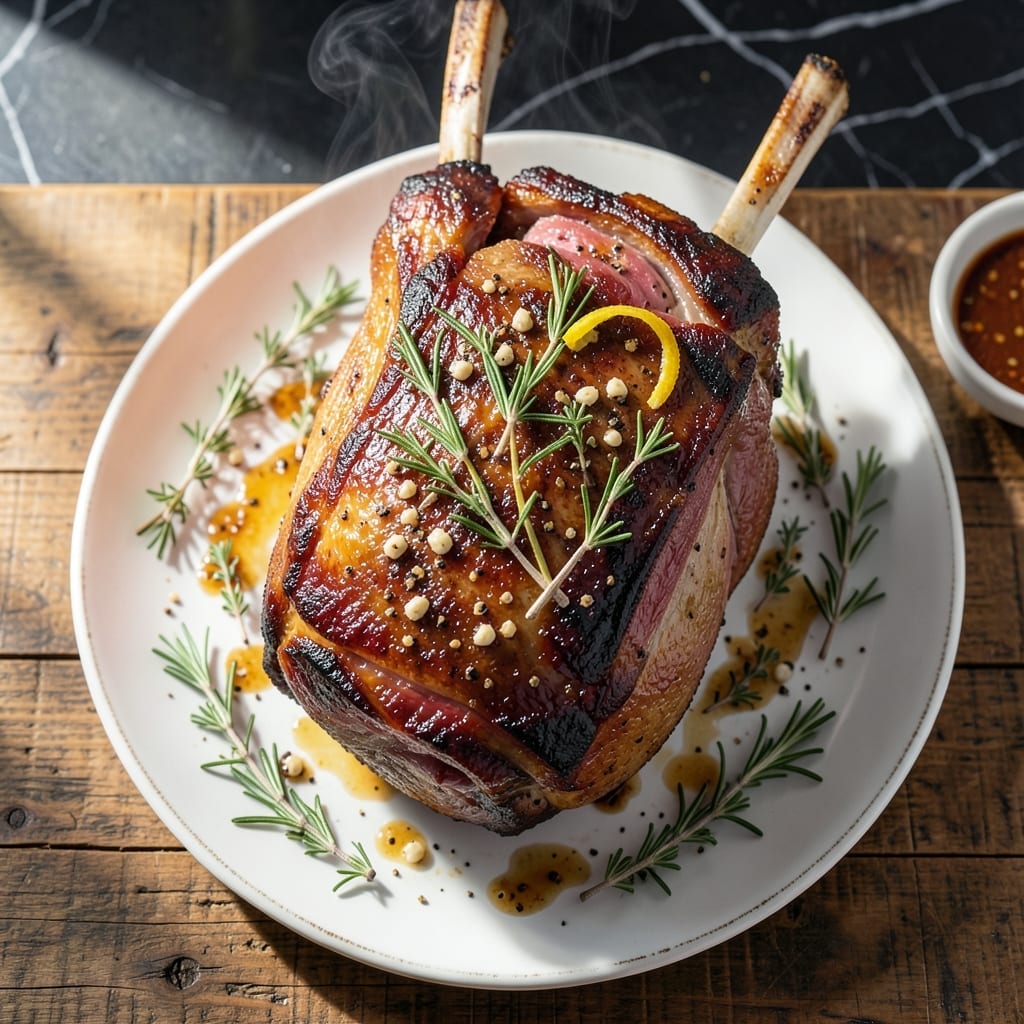
This herb-crusted masterpiece brings holiday elegance to your table with minimal fuss. I’ve refined this method to ensure perfect results every time.
Ready in 2 hours, it delivers tender, flavorful meat with a golden crust that impresses without stress. Ideal for special occasions.
Ingredients for Ina Garten Standing Rib Roast
Prime rib with herb crust requires quality ingredients for that perfect holiday centerpiece.
| Ingredient | Amount | Notes |
|---|---|---|
| Standing Rib Roast 🥩 | 5 lb | Bone-in, well-marbled prime rib |
| Kosher Salt 🧂 | 2 tbsp | Diamond Crystal preferred for texture |
| Freshly Ground Black Pepper 🌶️ | 2 tsp | Coarse grind for crust |
| Fresh Rosemary 🌿 | 3 tbsp | Finely chopped, stems discarded |
| Fresh Thyme 🍃 | 3 tbsp | Leaves only, no stems |
| Garlic Cloves 🧄 | 6 cloves | Minced to fine paste consistency |
| Dijon Mustard 🟡 | ¼ cup | Whole-grain for texture variation |
| Extra-Virgin Olive Oil 🫒 | ¼ cup | High-quality, fruity notes preferred |
| Dry Red Wine 🍷 | 1 cup | Full-bodied like Cabernet Sauvignon |
| Beef Stock 🥘 | 2 cups | Low-sodium preferred for reduction control |
| Unsalted Butter 🧈 | 4 tbsp | Room temperature for herb blend |
| All-Purpose Flour 🌾 | 2 tbsp | For thickening pan juices |
[recipe_ingredient_scaler]
The rib roast must be prime grade with abundant marbling—Whole Foods or Costco carry excellent options. Request bone-in for maximum flavor and even cooking. Look for bright red color with creamy white fat. The fresh herbs should be organic when possible, as their aromatic oils are essential for the crust’s depth of flavor.
No fresh rosemary or thyme? Dried herbs at one-third the quantity work, but fresh is non-negotiable for optimal results. Substitute white wine for red if preferred, though the tannins in red enhance the beef’s richness. For the stock, homemade is ideal, but Better Than Bouillon beef base creates a serviceable alternative.
The roast benefits from resting 30-45 minutes before carving—this redistributes juices for tender slices. Leftovers keep 4-5 days refrigerated or 3 months frozen. Reheat slices gently in au jus to maintain moisture and prevent drying.
Why You’ll Love This Recipe
- Set and Forget: I just season the roast with salt, pepper, rosemary, and thyme, pop it in the oven, and let it do its thing—no babysitting required.
- Herb-Crusted Perfection: That crust from the fresh rosemary and thyme with the juicy, tender beef inside? It’s the reason I make this every holiday.
- Holiday Showstopper: Between us, this is the one dish that makes me look like a pro at Christmas dinner without the stress.
- Leftovers for Days: Honestly, the sandwiches I make with the leftovers might be even better than the original meal.
Step-by-Step Instructions for Herb-Crusted Standing Rib Roast
This method delivers a perfectly crusty exterior with tender, juicy meat every time for your holiday centerpiece.
Step 1: Prepare the Herb Paste and Season the Roast
In a small bowl, combine the 0.25 cup Dijon mustard, 0.25 cup extra-virgin olive oil, 3 tbsp fresh rosemary, 3 tbsp fresh thyme, and the 6 cloves garlic cloves minced to a paste. Stir until fully incorporated into a thick, fragrant blend.
Pat the 5 lb standing rib roast completely dry with paper towels—this ensures a proper sear. Season generously on all sides with the 2 tbsp kosher salt and 2 tsp freshly ground black pepper. Using your hands, spread the herb paste evenly over the entire surface of the roast, pressing it into the meat so it adheres well during cooking.
Step 2: Sear the Roast for a Flavorful Crust
Preheat your oven to 450°F. Place the roast bone-side down in a large roasting pan. Roast at this high temperature for 20 minutes to develop a deep, flavorful crust on the exterior.
After 20 minutes, reduce the oven temperature to 325°F. This initial sear at high heat locks in juices and creates that coveted caramelized exterior, while the lower temperature ensures even cooking throughout the roast without overcooking the outer layers.
Step 3: Slow-Roast to Perfect Doneness
Continue roasting at 325°F until the internal temperature reaches 120-125°F for medium-rare, which will take approximately 1.5 to 2 hours for a 5 lb roast. Use a meat thermometer inserted into the thickest part of the roast, avoiding the bone, for the most accurate reading.
The roast is ready when the thermometer registers 120°F—remember the temperature will rise another 5-10°F during resting. The exterior should be a rich, deep brown with a crusty herb layer, and the meat should feel slightly springy to the touch.
Step 4: Rest and Prepare the Pan Sauce
Transfer the roast to a cutting board and tent loosely with aluminum foil. Let it rest for at least 20-30 minutes—this crucial step allows the juices to redistribute throughout the meat, ensuring every slice is moist and flavorful.
Meanwhile, place the roasting pan on the stovetop over medium heat. Add the 1 cup dry red wine and deglaze the pan, scraping up all the browned bits with a wooden spoon. Simmer for 3-4 minutes until reduced by half.
Step 5: Finish the Sauce and Serve
Add the 2 cups beef stock to the pan and bring to a simmer. In a small bowl, whisk together the 4 tbsp unsalted butter and 2 tbsp all-purpose flour to form a beurre manié. Whisk this mixture into the simmering liquid and cook for 5-7 minutes until the sauce thickens enough to coat the back of a spoon.
Strain the sauce through a fine-mesh sieve into a gravy boat. Carve the roast between the ribs into thick slices and serve immediately with the rich, savory pan sauce drizzled over the top or on the side for dipping.
Pro Tips For Making Ina Garten Standing Rib Roast
- Room Temp First: Pull the roast out of the fridge 2 hours before cooking—cold meat seizes up in the oven and cooks unevenly, and I learned this the hard way with a tough center.
- Salt Aggressively: Use 1 tablespoon of kosher salt per pound and don’t be shy; the thick crust on Ina’s roast needs that bold seasoning to shine.
- Don’t Overcrowd: Give the roast space in the pan so the heat circulates; I used to cram in veggies and ended up with steamed beef instead of a browned crust.
- Rest Under Foil: Tent it loosely with foil and rest 20-30 minutes after roasting—skipping this makes the juices run wild when you carve, and nobody wants that.
Perfect Pairings for This Recipe
Wine Pairings
This dish demands a bold red to match its richness. I love a Cabernet Sauvignon from Napa Valley—its dark fruit and firm tannins cut through the fat beautifully. A Bordeaux blend with its earthy notes also complements the herb crust perfectly. 🍷
Side Dish Ideas
Keep sides simple to let the roast shine. My go-to is creamy horseradish mashed potatoes—the spicy kick balances the meat’s richness. Roasted Brussels sprouts with balsamic glaze add a touch of acidity that brightens each bite.
Bread Options
A crusty sourdough or baguette is essential for soaking up the pan sauce. I warm slices in the oven with a garlic butter brush for extra flavor. Freshly baked rolls from my local bakery also work wonderfully.
Vegetable Suggestions
For color and texture, try roasted heirloom carrots with thyme—they echo the herbs in the crust. A simple arugula salad with lemon vinaigrette adds a peppery contrast that cleanses the palate between bites.
Cheese Pairings
Offer a sharp aged cheddar or blue cheese wedge alongside the roast. The saltiness enhances the beef’s natural flavors. I serve these on a small board with dried apricots and walnuts for a complete experience.
Sauce Enhancements
Beyond the pan sauce, I always set out prepared horseradish and whole-grain mustard. These condiments let guests customize their slices. A small bowl of flaky sea salt for finishing touches is my secret weapon. 💛
Nutrition Facts
Frequently Asked Questions
What internal temperature should I aim for?
For perfect medium-rare, remove the roast at 120-125°F. The temperature will rise to 130-135°F during resting.
Can I prepare the herb paste ahead of time?
Mix the paste up to 1 day in advance. Store it in an airtight container in the fridge.
How do I prevent the crust from burning?
Tent the roast with foil after the initial 20-minute sear at 450°F. This protects the herbs while allowing even cooking.
What if I don’t have a meat thermometer?
Use the touch test: rare feels soft, medium-rare slightly springy. But for best results, invest in a thermometer—it’s essential for precision.

Trained in classic French technique but raised on slow-cooked ribs and spicy rubs, she blends culinary skill with smoke and soul.
- Recipe for Boneless Pork Chops in Cast Iron Skillet: Sear and Baste to Juicy Perfection - October 3, 2026
- Recipe for Boneless Cross Rib Roast: Slow-Roasted Beef with Herb Crust - October 3, 2026
- Hamburgers in Sauce Recipe Crock Pot: Slow-Cooked Savory Delight - October 3, 2026