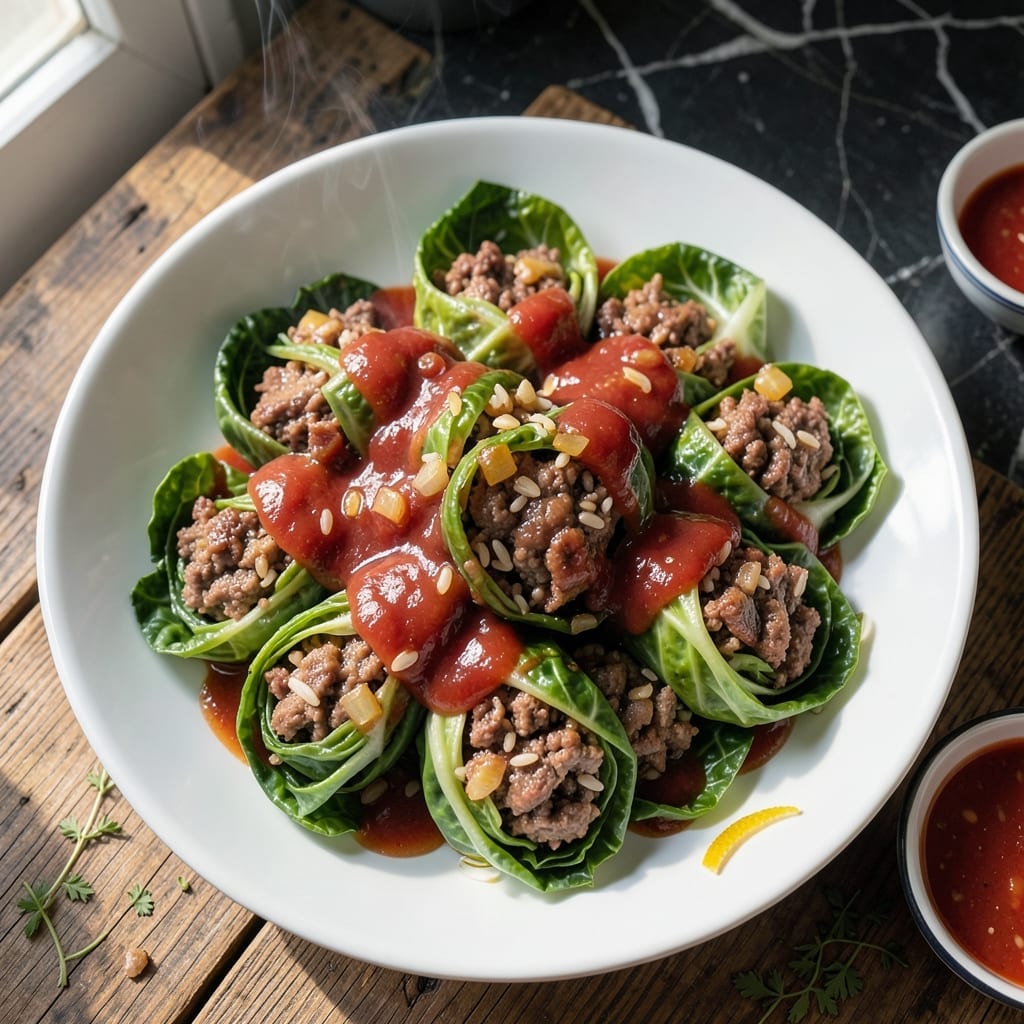
This dish transforms humble cabbage into an elegant meal with layers of flavor. The Barefoot Contessa approach focuses on simplicity and fresh ingredients.
You’ll create tender cabbage leaves wrapped around a savory filling. The result is a comforting, restaurant-quality dish that’s perfect for any occasion.
Ingredients for Ina Garten Stuffed Cabbage
Transform humble cabbage with these elegant, fresh ingredients for restaurant-quality roll-ups.
| Ingredient | Amount | Notes |
|---|---|---|
| Green Cabbage 🥬 | 1 whole | Large head, about 2.5 lbs |
| Ground Beef 🥩 | 1 lb | 80/20 lean-to-fat ratio |
| Ground Pork 🥩 | ½ lb | Mild flavor preferred |
| White Rice 🍚 | 1 ½ cups | Uncooked long-grain or jasmine |
| Yellow Onion 🧅 | 1 whole | Medium, finely diced |
| Garlic Cloves 🧄 | 4 cloves | Minced for depth of flavor |
| Chicken Broth 💧 | 2 cups | Low-sodium for controlled seasoning |
| Crushed Tomatoes 🍅 | 1 can | 28 oz can, San Marzano preferred |
| Tomato Paste 🍅 | 2 tbsp | For concentrated tomato flavor |
| Fresh Parsley 🌿 | ½ cup | Chopped, for brightness |
| Fresh Dill 🌿 | ¼ cup | Chopped, authentic flavor |
| Olive Oil 🫒 | ¼ cup | Extra-virgin for richness |
| Kosher Salt 🧂 | 1 ½ tsp | Diamond Crystal preferred |
| Black Pepper 🌶️ | 1 tsp | Freshly ground preferred |
| Lemon Juice 🍋 | 2 tbsp | Freshly squeezed for acidity |
[recipe_ingredient_scaler]
The cabbage is the foundation—choose a firm head with vibrant outer leaves. Whole Foods often carries beautiful specimens, but any well-stocked grocery store should have what you need. For the meat filling, 80/20 ground beef provides the right fat content for moisture, while the pork adds depth. San Marzano tomatoes elevate the sauce with their sweet, rich flavor (available at Trader Joe’s or Italian specialty stores).
No pork? Ground turkey or veal works as a substitute, though the flavor profile will shift slightly. Short on fresh herbs? Dried parsley and dill at one-third the amount will suffice in a pinch. For a vegetarian twist, swap the meat for lentils and mushrooms—just be sure to cook them down well to avoid excess moisture in the filling.
Assembled rolls keep beautifully in the fridge for 3-4 days and freeze wonderfully for up to 3 months. The flavors actually deepen after a day, making this perfect for meal prep. Always blanch cabbage leaves first—this softens them for easy rolling and removes any bitterness.
Why You’ll Love This Recipe
- One Pot Magic: I love that everything—cabbage, beef, pork, rice—simmers together in one pot. Honestly, cleanup is just a single dish.
- Rich and Savory: The combo of beef and pork with the sweetness of cabbage creates this deep, hearty flavor that’s impossible to resist.
- Feeds a Hungry Crowd: I made this for Sunday dinner and it stretched perfectly for six with leftovers. Between us, it’s ideal for family gatherings.
- Even Better Tomorrow: The flavors meld overnight, so the leftovers taste even more incredible the next day. I’ll be real: I sometimes make extra just for that.
Step-by-Step Instructions for Stuffed Cabbage Roll Ups
This method ensures tender cabbage leaves and perfectly seasoned filling every time.
Step 1: Prepare the Cabbage Leaves
Core the green cabbage and carefully peel off the outer leaves. Bring a large pot of water to a boil and blanch the whole head for 5-7 minutes until the leaves soften and pull away easily. Shock in ice water to stop the cooking process.
Gently peel off the leaves, trimming the thick center rib with a sharp knife to create flat surfaces. You’ll need about 12 large leaves for this recipe. Pat them dry with paper towels—excess moisture will dilute the filling’s flavor.
Step 2: Make the Filling Mixture
In a large bowl, combine the ground beef, ground pork, uncooked white rice, finely diced yellow onion, minced garlic cloves, 1.5 tsp kosher salt, and 1 tsp black pepper. I use my hands for this—it gives better control over the texture.
Add 0.25 cup olive oil, 0.5 cup fresh parsley, and 0.25 cup fresh dill. Mix until everything is evenly distributed but don’t overwork it. The filling should hold together when pressed but remain light—overmixing makes the rolls dense.
Step 3: Assemble and Roll
Place about ⅓ cup of filling near the stem end of each cabbage leaf. Fold the sides inward, then roll tightly from the stem end up, tucking in the sides as you go. The rolls should be snug but not bursting at the seams.
Arrange the rolls seam-side down in a large Dutch oven or heavy pot. This prevents them from unraveling during cooking. Pack them tightly together—they’ll expand slightly as the rice cooks.
Step 4: Cook in Tomato Broth
In a bowl, whisk together the chicken broth, crushed tomatoes, and tomato paste until smooth. Pour this mixture over the cabbage rolls, pressing down gently to submerge them about halfway. The liquid should come about ¾ of the way up the rolls.
Bring to a gentle simmer over medium heat, then reduce to low. Cover and cook for 1 hour to 1 hour 15 minutes until the rice is tender and the cabbage is silky. Resist the urge to peek—steam is what cooks the rice perfectly.
Step 5: Finish and Serve
Carefully transfer the rolls to a serving platter. Stir the lemon juice into the cooking liquid and spoon it over the rolls. Let them rest for 10 minutes before serving—this allows the flavors to meld and the rolls to set.
The sauce should be thick enough to cling to the rolls, with a bright, tangy finish from the lemon. Garnish with any remaining fresh parsley or fresh dill for a pop of color and freshness.
Pro Tips For Making Ina Garten Stuffed Cabbage
- Blanch the Cabbage: I learned this the hard way—boil the whole cabbage head for 3-4 minutes to soften the leaves before peeling. It makes rolling them without cracking a breeze.
- Mix Meats Evenly: Use your hands to combine the ground beef and pork with the rice—this ensures every bite has the right texture and flavor balance.
- Skip Overstuffing Rolls: Resist the urge to pack too much filling into each cabbage leaf, or they’ll burst open while baking. About 2 tablespoons per leaf is the sweet spot.
- Use Pre-Cooked Rice: Sounds weird, but it works: cook the white rice halfway before mixing it into the filling—this prevents a gritty texture in the finished rolls.
Regional Styles of ina garten stuffed cabbage
Polish Golabki Style
In Poland, golabki (meaning “little pigeons”) swaps pork for ground beef only, adds mushrooms and sauerkraut to the filling. The rolls are typically baked with a tomato or mushroom sauce. I love how the tangy sauerkraut cuts through the richness.
Ukrainian Holubtsi
This version uses buckwheat instead of rice and often includes carrots and raisins in the filling. The sauce is simpler—just tomatoes and herbs. My Ukrainian friend swears by dill and parsley as the only seasonings needed. 🗺️
Hungarian Töltött Káposzta
Hungarians smoke their stuffed cabbage, giving it a deep, smoky flavor. They often use sour cream in the sauce and serve it with paprika-spiced breadcrumbs. I tried this method once on my smoker—it was incredible. The smoke pairs perfectly with the sweet cabbage.
Middle Eastern Mahshi
In this version, cabbage leaves are stuffed with spiced lamb and rice, then cooked in a lemony tomato broth. The seasoning includes allspice, cinnamon, and nutmeg. It’s a beautiful blend of sweet and savory that reminds me of my travels to Lebanon.
Southern Comfort
In the American South, stuffed cabbage often includes bacon in the filling and is braised in a sweet and tangy tomato sauce. Some versions add bell peppers and Worcestershire sauce for extra depth. It’s hearty and perfect for potlucks. 💛
Nutrition Facts
Frequently Asked Questions
Can I make this ahead of time?
Yes! Assemble the rolls, cover, and refrigerate for up to 24 hours before cooking. You can also freeze uncooked rolls for up to 3 months. Thaw overnight in the fridge before cooking as directed.
How do I prevent the rolls from unraveling?
Roll them tightly, tucking the sides in as you go, and place seam-side down in the pot. Pack them snugly together to hold their shape during cooking.
What if my cabbage leaves tear?
Use smaller pieces to patch tears or save damaged leaves for the pot’s bottom layer. They’ll still soften and add flavor to the sauce.
Can I use a different grain?
Try quinoa or cauliflower rice for a low-carb option. Adjust cooking time as needed—quinoa cooks faster than white rice.

Trained in classic French technique but raised on slow-cooked ribs and spicy rubs, she blends culinary skill with smoke and soul.
- Recipe for Boneless Pork Chops in Cast Iron Skillet: Sear and Baste to Juicy Perfection - October 3, 2026
- Recipe for Boneless Cross Rib Roast: Slow-Roasted Beef with Herb Crust - October 3, 2026
- Hamburgers in Sauce Recipe Crock Pot: Slow-Cooked Savory Delight - October 3, 2026