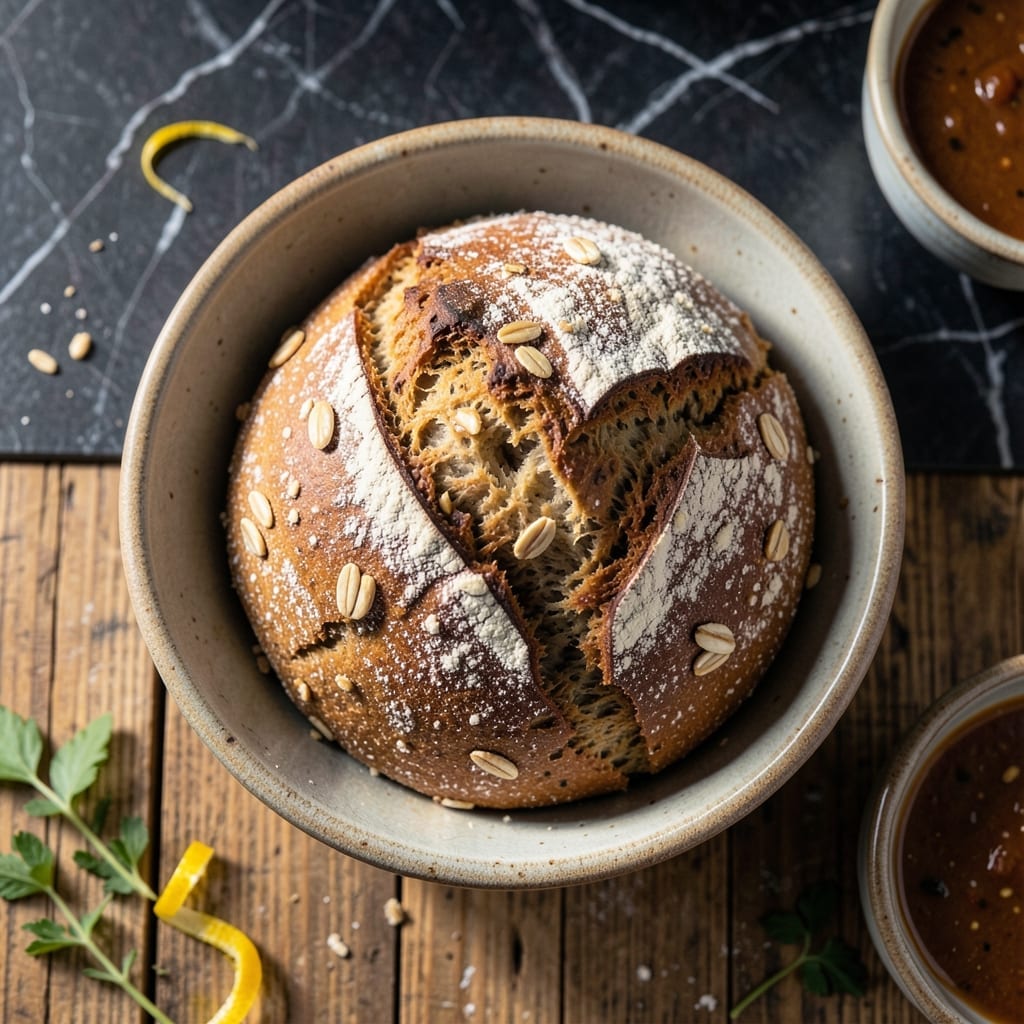
This traditional loaf brings authentic Irish charm to your kitchen table. A staple in Irish homes, it’s known for its dense texture and hearty flavor.
Simple ingredients and a straightforward method yield a rustic bread that pairs perfectly with soups or served warm with butter.
Ingredients for Irish Brown Bread Recipe from Ireland
A handful of pantry staples creates this authentic Irish loaf with rustic character and warmth.
| Ingredient | Amount | Notes |
|---|---|---|
| Whole Wheat Flour 🌾 | 2 cups | Stone-ground preferred for authenticity |
| All-Purpose Flour 🌾 | 1 cup | For lighter texture balance |
| Old-Fashioned Rolled Oats 🌾 | 1 cup | Plus extra for topping |
| Buttermilk 🥛 | 1 ½ cups | Full-fat for richness |
| Molasses 🍯 | 2 tbsp | Dark or robust variety |
| Baking Soda 🧂 | 1 tsp | Aluminum-free preferred |
| Salt 🧂 | 1 tsp | Fine sea salt recommended |
| Unsalted Butter 🧈 | 2 tbsp | Melted, for richness |
| Walnuts 🌰 | ½ cup | Chopped, optional for crunch |
| Raisins 🍇 | ½ cup | Optional for sweetness |
| Wheat Bran 🌾 | ¼ cup | For nutty depth |
[recipe_ingredient_scaler]
The flours are foundational here. Stone-ground whole wheat delivers that signature dense texture authentic to Irish brown bread, while all-purpose lightens it just enough. King Arthur Flour is a reliable brand for both. Buttermilk is non-negotiable—full-fat gives the crumb its tender richness. Most supermarkets carry it near the milk, but Whole Foods has excellent organic options if you’re avoiding additives.
No buttermilk? Stir 1.5 tbsp lemon juice or vinegar into regular milk and let sit for 5 minutes. Swap molasses for dark corn syrup in a pinch, though the flavor will be milder. The oats can be quick oats if that’s what you have (texture will be slightly less rustic). Skip the walnuts or raisins if preferred—this bread shines in its simplicity too.
This loaf stays fresh wrapped in a tea towel at room temperature for 2-3 days. For longer storage, slice and freeze for up to 3 months. Toast slices to revive—spread with butter while warm for the true Irish experience (worth the extra minute).
Why You’ll Love This Recipe
- I’ll be real: this bread only gets better the next day, and it freezes like a dream.
- No Yeast Needed: I love that this comes together without waiting for dough to rise—just mix and bake.
- Deep, Earthy Sweetness: The molasses and buttermilk give it a rich, slightly caramelized flavor that’s hard to resist.
- Breakfast or Tea Time: Honestly, it’s just as good toasted with butter in the morning as it is served with soup for dinner.
Step-by-Step Instructions for Irish Brown Bread
This traditional method ensures a dense, hearty loaf with authentic texture and flavor.
Step 1: Combine Dry Ingredients and Create Well
In a large mixing bowl, whisk together the 2 cups Whole Wheat Flour, 1 cup All-Purpose Flour, 1 cup Old-Fashioned Rolled Oats, 1 tsp Baking Soda, 1 tsp Salt, and 0.25 cup Wheat Bran until evenly distributed. The wheat bran adds that characteristic nutty depth essential to traditional versions.
Form a well in the center of the dry mixture. This creates a vessel for the wet ingredients and prevents spillage when mixing. The texture should look uniform with no visible clumps of baking soda or salt.
Step 2: Incorporate Wet Ingredients and Mix
Pour the 1.5 cups Buttermilk and 2 tbsp Molasses into the well you created. Using a wooden spoon or your hands, gradually incorporate the dry ingredients into the wet mixture. The dough will be sticky and shaggy—that’s exactly what you want for authentic texture.
Once the wet and dry ingredients are mostly combined, drizzle in the 2 tbsp Unsalted Butter (melted) and continue mixing. The butter adds richness while maintaining the bread’s traditional density. Don’t overwork the dough—just bring it together until no dry pockets remain.
Step 3: Fold in Add-Ins and Shape Loaf
Gently fold in the 0.5 cup Walnuts and 0.5 cup Raisins if using. These additions provide texture contrast and subtle sweetness, but remain optional for purists. The dough should now look uniformly speckled with these additions.
Turn the dough onto a lightly floured surface and shape it into a round loaf about 8 inches in diameter. The dough will be tacky but shouldn’t stick excessively to your hands. Place the shaped loaf onto a parchment-lined baking sheet.
Step 4: Score and Bake to Perfection
Using a sharp knife, cut a cross about ½ inch deep into the top of the loaf. This traditional scoring helps the bread bake evenly and creates that characteristic rustic appearance. Sprinkle a handful of extra Old-Fashioned Rolled Oats on top for additional texture and visual appeal.
Bake in a preheated 375°F oven for 40-45 minutes until the loaf is deep golden brown and sounds hollow when tapped on the bottom. The internal temperature should register 200°F on an instant-read thermometer for perfect doneness.
Step 5: Cool Completely Before Slicing
Transfer the baked loaf to a wire rack and let it cool completely for at least 1 hour. This resting period allows the crumb structure to set properly—slicing too soon results in a gummy texture. The bread should feel firm to the touch when fully cooled.
The finished loaf will have a dense, moist crumb with a slightly crisp crust. Each slice should showcase the speckled appearance from the walnuts and raisins, with a hearty, nutty flavor that improves as it sits. Serve at room temperature for the best texture.
Pro Tips For Making Irish Brown Bread Recipe From Ireland
- Preheat the Oven: Irish brown bread needs a hot start—crank your oven to 425°F and let it sit for 15 minutes before baking. I learned this the hard way after pulling out dense loaves from a lukewarm oven.
- Warm the Buttermilk: Cold buttermilk can make the dough tough. Let it sit on the counter for 10-15 minutes before mixing—just enough to take the chill off.
- Skip Overmixing: Stir the dough until it just comes together. After burning three batches to crispy bricks, I finally figured out that overworking it makes the bread dense and dry.
- Use Fresh Molasses: Old molasses can turn bitter and ruin the flavor. Sounds weird, but it works: check the jar’s freshness date and give it a sniff before measuring.
Health Benefits of This Recipe
Fiber-Rich Goodness
This loaf packs a serious fiber punch thanks to whole wheat flour and rolled oats. A single slice provides about 4-5 grams of fiber, supporting digestive health and keeping you full for hours. I notice it curbs my afternoon snack cravings better than white bread ever did. 💪
Heart-Healthy Benefits
The walnuts add heart-healthy omega-3 fatty acids, while the whole grains help lower cholesterol. Studies show that diets rich in whole grains can reduce heart disease risk by up to 30%. Even without the walnuts, the base ingredients work hard for your heart.
Sustained Energy Source
Complex carbs from whole wheat flour and oats provide steady energy release. Unlike refined breads, this loaf won’t spike your blood sugar. I love it for breakfast with peanut butter for energy that lasts through my busy mornings.
Nutrient-Dense Profile
You’ll get a boost of B vitamins, iron, and magnesium from the whole grains. The molasses adds small amounts of calcium and potassium. It’s amazing how much nutrition comes from such simple ingredients.
Low Glycemic Impact
The combination of fiber and healthy fats gives this bread a low glycemic index. This means it digests slowly, providing consistent energy. Diabetics often find this a better choice than white bread options. 🥖
Antioxidant Properties
Whole grains contain antioxidants like lignans and phenolic acids that combat inflammation. The wheat bran is particularly rich in these compounds. Regular consumption may help reduce chronic disease risk.
Nutrition Facts
Frequently Asked Questions
Why does this bread have a dense texture?
Whole wheat flour and rolled oats create that signature density. The lack of kneading and yeast also contributes to the hearty, rustic crumb traditional to Irish brown bread.
Can I make this without buttermilk?
Yes! Mix 1.5 tbsp lemon juice or vinegar with regular milk and let sit for 5 minutes. This creates the same tangy reaction needed for the bread to rise properly.
How do I know when it’s fully baked?
Look for a deep golden brown color and a hollow sound when tapped. The internal temperature should reach 200°F on a thermometer.
What’s the best way to store leftover loaf?
Wrap in a tea towel at room temperature for 2-3 days. For longer storage, slice and freeze for up to 3 months.

Trained in classic French technique but raised on slow-cooked ribs and spicy rubs, she blends culinary skill with smoke and soul.
- Recipe for Boneless Pork Chops in Cast Iron Skillet: Sear and Baste to Juicy Perfection - October 3, 2026
- Recipe for Boneless Cross Rib Roast: Slow-Roasted Beef with Herb Crust - October 3, 2026
- Hamburgers in Sauce Recipe Crock Pot: Slow-Cooked Savory Delight - October 3, 2026