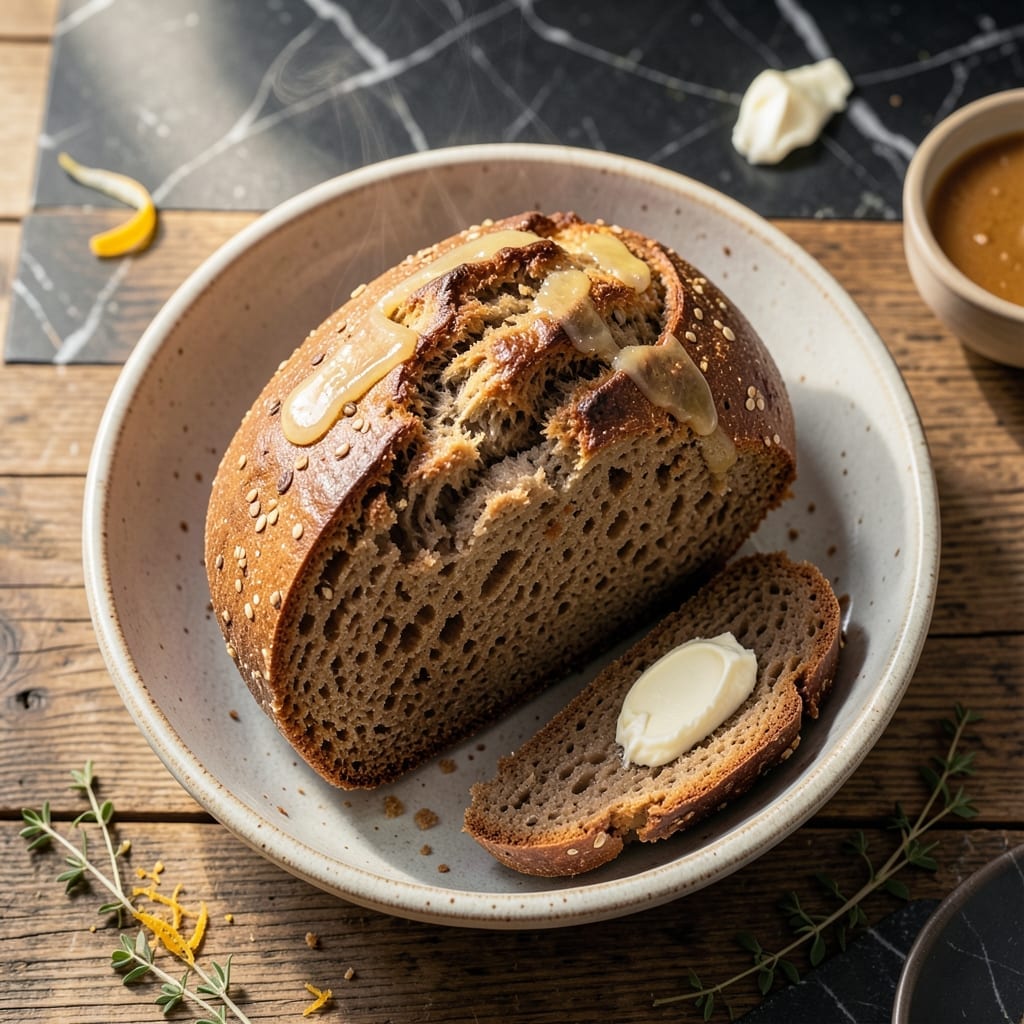
There’s a simple magic to traditional Irish brown bread that warms any kitchen. This recipe captures the rustic charm of wholemeal flour balanced with buttermilk’s gentle tang.
My grandmother taught me that the best bread needs no fancy techniques—just quality ingredients and a hot oven. The wholemeal flour gives it hearty texture while buttermilk keeps it tender.
What emerges is a loaf with a sturdy crust and soft, dense crumb that’s perfect with butter or alongside a hearty stew. The scent alone makes the house feel like home.
This is the kind of bread that improves with time, tasting even better the next day. Here’s how to make it.
Ingredients for Irish Brown Bread Recipe Irish Times
Wholemeal flour and buttermilk bring rustic Irish warmth to your kitchen with minimal effort.
| Ingredient | Amount | Notes |
|---|---|---|
| Wholemeal Flour 🌾 | 3 cups | Stone-ground preferred for texture |
| Plain White Flour 🌾 | 1 cup | All-purpose variety works best |
| Baking Soda 🧂 | 1 tsp | Ensures proper rise |
| Salt 🧂 | 1 tsp | Fine sea salt preferred |
| Buttermilk 🥛 | 1 ½ cups | Full-fat for richness |
| Unsalted Butter 🧈 | 2 tbsp | Melted for moisture |
| Molasses 🍯 | 2 tbsp | Adds depth of flavor |
| Wheat Bran 🌾 | ½ cup | Optional for extra texture |
| Oats 🌾 | ½ cup | Rolled oats preferred |
| Honey 🍯 | 1 tbsp | Optional for slight sweetness |
[recipe_ingredient_scaler]
The wholemeal flour is non-negotiable here. Stone-ground from a mill or a quality brand like King Arthur gives the best texture—avoid the fine, processed stuff. Buttermilk should be full-fat for that tender crumb; Whole Foods or any major grocery store carries it. If you’re grinding your own flour, ensure it’s fresh for optimal rise and flavor.
No buttermilk? Plain yogurt thinned with milk works in a pinch (use 1:1 ratio). Swap molasses for dark brown sugar dissolved in warm water if needed. The wheat bran and oats add texture but can be omitted—just add extra wholemeal flour to compensate. For a lighter loaf, reduce wholemeal to 2 cups and increase white flour to 2 cups.
This bread stays fresh for 3-4 days wrapped in a tea towel. Slice only what you need to preserve moisture. For longer storage, freeze slices for up to 3 months (worth the extra minute to wrap well). The flavor deepens overnight, so resist the urge to dig in immediately.
Why You’ll Love This Recipe
- No Fuss Mixing: Honestly, just stir the flours, baking soda, salt, and buttermilk together—no yeast, no waiting, no kneading.
- Nutty Warmth: The wholemeal flour gives it this deep, toasty flavor that pairs perfectly with a smear of butter.
- Breakfast to Dinner: I make a loaf on Sunday and it’s just as good with jam at breakfast as it is with soup at dinner.
- Budget Stretcher: A bag of wholemeal flour and buttermilk is all it takes to feed the whole table for days.
Step-by-Step Instructions for Irish Brown Bread
Here’s the method. Straightforward, tested, works every time.
Step 1: Combine Dry Ingredients Thoroughly
In a large mixing bowl, whisk together the 3 cups Wholemeal Flour, 1 cup Plain White Flour, 1 tsp Baking Soda, and 1 tsp Salt until evenly distributed. This ensures the leavening agent is properly incorporated throughout the mixture.
Add the 0.5 cup Wheat Bran and 0.5 cup Oats to the bowl. Stir these in with a wooden spoon or spatula until fully combined. The oats and wheat bran add texture and nuttiness to the bread, which is characteristic of traditional Irish brown bread.
Step 2: Incorporate Wet Ingredients with Care
Melt the 2 tbsp Unsalted Butter and let it cool slightly. In a separate bowl, combine the 1.5 cups Buttermilk, melted butter, 2 tbsp Molasses, and 1 tbsp Honey. Whisk these together until the molasses and honey are fully dissolved in the buttermilk.
Pour the wet mixture into the dry ingredients all at once. Using a wooden spoon, stir just until the dry ingredients are fully moistened and a shaggy dough forms. The dough should be sticky and slightly wet—this consistency is crucial for the bread’s texture.
Step 3: Shape and Prepare for Baking
Lightly flour a clean work surface with a bit of the wholemeal flour. Turn the dough out onto the floured surface and gently shape it into a round loaf, about 1.5 inches thick. Avoid overworking the dough, as this can make the bread dense.
Place the shaped loaf on a parchment-lined baking sheet. Using a sharp knife, cut a deep cross into the top of the loaf, about ½ inch deep. This traditional cut helps the bread bake evenly and allows steam to escape during baking.
Step 4: Bake to Golden Perfection
Preheat your oven to 375°F. Once preheated, bake the loaf on the middle rack for 40-45 minutes, or until the bread is deep golden brown and sounds hollow when tapped on the bottom.
The bread is done when a skewer or toothpick inserted into the center comes out clean. If the top begins to brown too quickly, tent the loaf loosely with foil to prevent over-browning while the interior finishes cooking.
Step 5: Cool Completely Before Slicing
Remove the bread from the oven and transfer it to a wire rack. Let it cool for at least 1 hour before slicing. This cooling period allows the bread to finish setting and makes it easier to slice cleanly.
Serve the bread warm or at room temperature. It pairs beautifully with butter, jam, or alongside a hearty stew. The crust should be firm and slightly crisp, while the interior remains moist and tender with a hearty, whole-grain texture.
Pro Tips For Making Irish Brown Bread Recipe Irish Times
- Preheat the Oven: Always start with a hot oven—200°C/400°F is ideal. I learned this the hard way after pulling out dense loaves from a lukewarm oven.
- Use Fresh Buttermilk: Sour or expired buttermilk won’t give the right tang or rise. My grandmother swore by this, and she was right: fresh is non-negotiable.
- Don’t Overmix: Stir just until the dough comes together—overworking it makes the bread tough. After burning three batches, I finally figured out it’s about gentle handling.
- Check with a Skewer: Test doneness with a clean skewer—if it comes out dry, it’s ready. Sounds weird, but it works: no guesswork, just perfect bread every time.
Storing and Reheating This irish brown bread recipe irish times
Room Temperature Storage
Wrap the cooled loaf in a clean tea towel or linen cloth to retain moisture while allowing it to breathe. This method keeps the crust firm and the interior tender for 3-4 days. Avoid plastic bags, as they trap moisture and make the crust soggy.
Refrigerator Storage
For slightly longer storage, place the bread in an airtight container or a paper bag inside the fridge. It will keep for up to 1 week, though the texture may become slightly drier. Slicing before storing makes it easier to toast or revivify individual pieces. ❄️
Freezing for Longevity
Slice the loaf before freezing and wrap each piece tightly in plastic wrap, then place in a freezer bag. This prevents freezer burn and keeps the bread fresh for up to 3 months. When ready to eat, thaw slices at room temperature or toast directly from frozen.
Reheating in Oven
Preheat your oven to 350°F and wrap the loaf or slices in aluminum foil. Heat for 10-15 minutes until warmed through. This method restores the bread’s softness without drying it out.
Toasting for Crispness
For a quick fix, toast slices in a toaster or under the broiler for 1-2 minutes per side. The heat revives the crust’s crispness while keeping the inside moist. I love this method for breakfast with a spread of butter. 🔥
Nutrition Facts
Frequently Asked Questions
Can I use regular milk instead of buttermilk?
Yes, but add 1 tbsp lemon juice or vinegar to 1.5 cups regular milk and let it sit for 5 minutes to create a buttermilk substitute. This adds the necessary acidity for proper rise.
Why cut a cross on top before baking?
The cross helps the bread bake evenly and allows steam to escape, preventing a dense center. It’s also a traditional Irish technique for good luck! The cuts should be ½ inch deep for best results.
How do I know when it’s fully baked?
Tap the bottom of the loaf—it should sound hollow. A skewer inserted in the center should come out clean. Baking typically takes 40-45 minutes at 375°F.

Trained in classic French technique but raised on slow-cooked ribs and spicy rubs, she blends culinary skill with smoke and soul.
- Recipe for Boneless Pork Chops in Cast Iron Skillet: Sear and Baste to Juicy Perfection - October 3, 2026
- Recipe for Boneless Cross Rib Roast: Slow-Roasted Beef with Herb Crust - October 3, 2026
- Hamburgers in Sauce Recipe Crock Pot: Slow-Cooked Savory Delight - October 3, 2026