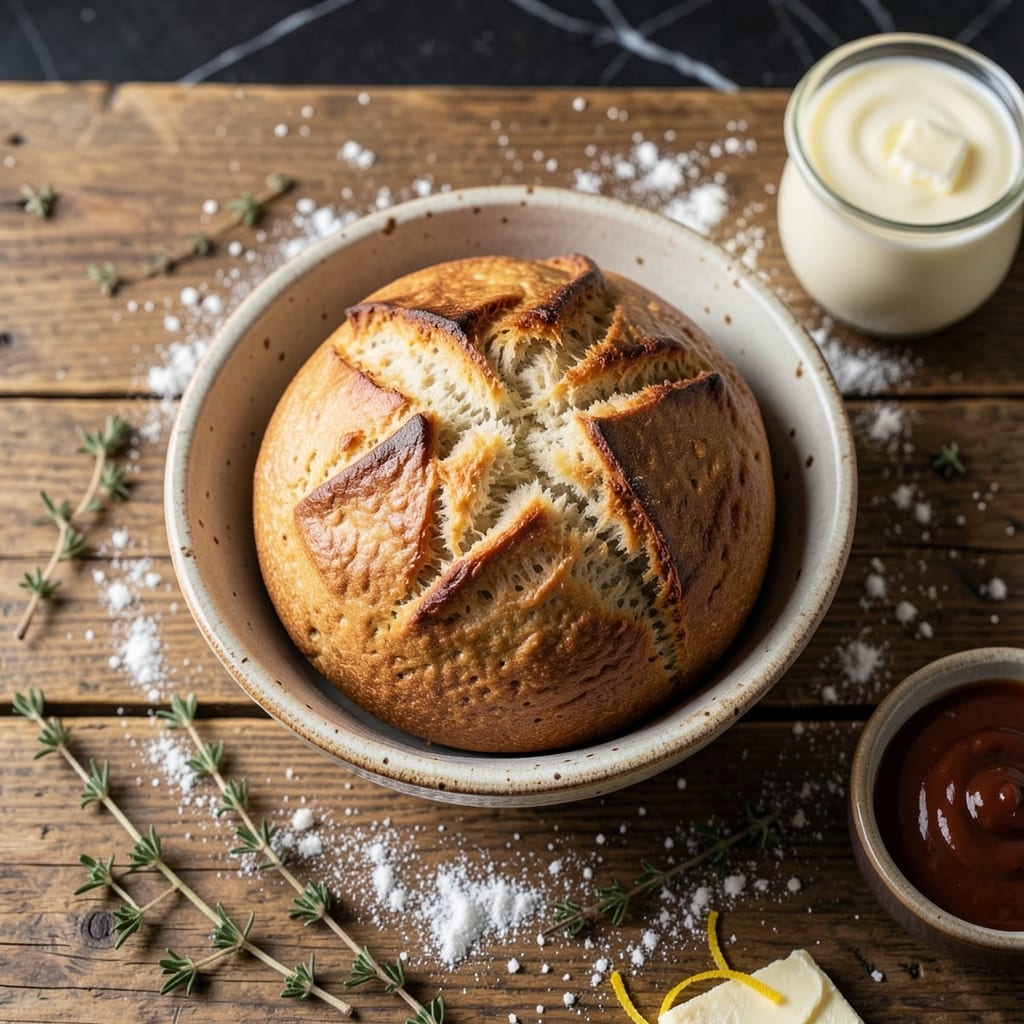
There’s something timeless about pulling a rustic loaf of soda bread from the oven, its golden crust crackling as it cools. This traditional Irish recipe relies on a simple chemical reaction between buttermilk and baking soda for its rise.
No yeast, no kneading, no long proofing times—just mix, shape, and bake for a warm, dense loaf with a slightly tangy flavor. The cross scored on top isn’t just for looks; it helps the bread bake evenly through.
The beauty lies in its simplicity: flour, buttermilk, baking soda, and salt. That’s all you need to create a loaf that’s perfect with butter, jam, or alongside a hearty stew.
Serve it fresh from the oven for the best texture, or toast slices the next day to revive that fresh-baked warmth.
Ingredients for Irish Soda Bread Recipe Card
Five simple ingredients create this rustic, no-yeast loaf with timeless Irish charm.
| Ingredient | Amount | Notes |
|---|---|---|
| All-Purpose Flour 🌾 | 4 cups | Plus extra for dusting surface |
| Baking Soda 🧂 | 1 tsp | Ensures proper rise reaction |
| Salt 🧂 | 1 tsp | Fine grain preferred for even distribution |
| Buttermilk 🥛 | 1 ¾ cups | Cold, full-fat for best texture |
| Unsalted Butter 🧈 | 2 tbsp | Melted, for richness in dough |
[recipe_ingredient_scaler]
The flour is the base here—King Arthur or Gold Medal all-purpose work perfectly. Baking soda must be fresh (test by mixing with vinegar—if it fizzes, it’s active). Buttermilk is non-negotiable; its acidity reacts with the baking soda to create lift. Whole Foods or any major grocery store carries it near the dairy. The salt should be fine grain to distribute evenly through the dense dough.
No buttermilk? Mix 1.75 cups milk with 1.75 tbsp vinegar or lemon juice and let sit 5 minutes. Substitute half the flour with whole wheat for nuttier flavor (add 1-2 tbsp extra buttermilk if dough seems dry). Unsalted butter can be replaced with equal amount of coconut oil for a dairy-free version, though the flavor will differ slightly.
Store cooled loaf wrapped in a clean towel at room temperature for 2 days. For longer storage, slice and freeze for up to 3 months. Always warm before serving—this bread tastes best fresh from the oven or lightly toasted.
Why You’ll Love This Recipe
- No-Fuss Mixing: I don’t even need a mixer—just a bowl and a spoon to stir the buttermilk into the flour and baking soda.
- Buttery Comfort: The cold butter melts into the dough, creating little pockets of richness that pair perfectly with the tangy buttermilk.
- Breakfast to Dinner: Honestly, it’s just as good toasted with jam at sunrise as it is mopping up stew at dinner.
- Pantry Staples: I always have flour, baking soda, and salt on hand, so this bread is my go-to when I need something fast and cheap.
Step-by-Step Instructions for Irish Soda Bread
This traditional method delivers a rustic loaf with a tender crumb and crisp crust.
Step 1: Preheat and Prepare Your Work Surface
Begin by preheating your oven to 425°F and positioning a rack in the center. This high heat creates the perfect environment for a well-risen loaf with a beautifully browned exterior.
Lightly dust your work surface with some of the All-Purpose Flour from your measured 4 cups. This prevents sticking when you turn out the dough later. I always keep a small bowl of extra flour nearby for adjustments during shaping.
Step 2: Combine Dry Ingredients
In a large mixing bowl, whisk together the 4 cups All-Purpose Flour, 1 tsp Baking Soda, and 1 tsp Salt. The baking soda is what gives this bread its lift, so make sure it’s evenly distributed throughout the flour.
I use a fork for this step—it breaks up any lumps in the flour and ensures the leavening agent is fully incorporated. The mixture should look uniform with no visible streaks of white baking soda.
Step 3: Incorporate Wet Ingredients
Make a well in the center of your dry ingredients. Pour in the 1.75 cups Buttermilk and 2 tbsp Unsalted Butter (melted and slightly cooled). The buttermilk’s acidity reacts with the baking soda to create the bread’s signature texture.
Using a wooden spoon or your hands, mix just until the dough comes together. It will be shaggy and slightly sticky—that’s exactly what you want. Overmixing develops gluten, which would make your bread dense rather than light and tender.
Step 4: Shape and Score the Dough
Turn the dough out onto your floured surface. Gently shape it into a round loaf about 1.5 inches thick. Don’t knead it—just pat and shape it with floured hands until smooth.
Place the loaf on a parchment-lined baking sheet. Using a sharp knife, cut a deep cross (about ½ inch deep) into the top of the dough. This traditional scoring helps the bread expand evenly during baking and creates that characteristic soda bread appearance.
Step 5: Bake to Golden Perfection
Bake for 30-35 minutes until the loaf is deep golden brown and sounds hollow when tapped on the bottom. The cross you cut will have opened up beautifully, and the crust should be firm to the touch.
Transfer to a wire rack and let cool for at least 30 minutes before slicing. I know it’s tempting to cut into it right away, but the bread needs this time to set properly. Serve warm or at room temperature with plenty of butter.
Pro Tips For Making Irish Soda Bread Recipe Card
- Chill the Buttermilk: I learned this the hard way—using room temp buttermilk can make the dough too sticky. Pop it in the fridge for 10 minutes before mixing if it’s been sitting out.
- Don’t Overwork Dough: After burning three batches, I finally figured out that kneading more than 8-10 times develops gluten and turns soda bread into a hockey puck.
- Use Fresh Baking Soda: My grandmother swore by this, and she was right: if your baking soda is older than 6 months, the bread won’t rise properly. Test it with vinegar first.
- Score Before Baking: Sounds weird, but it works: cutting a deep X in the top before baking helps the bread expand and prevents cracking.
Common Mistakes When Making Great irish soda bread recipe card
Overmixing the Dough
This is the most common mistake I see with soda bread. Mix just until the dough comes together—it should look shaggy. Overworking develops gluten, turning your loaf dense instead of tender. Use a wooden spoon like my Nonna’s to gently combine ingredients. 💪
Using Old Baking Soda
Baking soda loses potency over time. Test yours by mixing 1 tsp with 1 tbsp vinegar—if it doesn’t fizz vigorously, it’s inactive. Fresh Arm & Hammer or Bob’s Red Mill works best for that crucial rise.
Skipping the Cross
The traditional cross isn’t decorative—it helps the bread bake evenly. Cut ½ inch deep into the dough before baking. Without it, your loaf may crack unpredictably or bake unevenly through the center.
Wrong Oven Temperature
Bake at 425°F—any lower and your bread won’t rise properly. Preheat for at least 15 minutes to ensure even heat distribution. I check with an oven thermometer to be sure.
Slicing Too Soon
Resist cutting into that warm loaf! Let it cool on a wire rack for at least 30 minutes. Slicing early traps steam, making the bread gummy. The wait ensures a clean, tender crumb. 🔥
Substituting Milk
Buttermilk’s acidity is essential for the chemical reaction with baking soda. Regular milk won’t work. In a pinch, mix 1.75 cups milk with 1.75 tbsp vinegar and let sit 5 minutes to mimic buttermilk’s tang.
Nutrition Facts
Frequently Asked Questions
Why do you cut a cross in soda bread?
The cross helps the bread bake evenly and prevents cracking. It also lets steam escape during baking for a better texture. This traditional method dates back centuries in Ireland.
Can I make this with regular milk?
No, buttermilk’s acidity is essential for the chemical reaction. In a pinch, mix 1.75 cups milk with 1.75 tbsp vinegar and let sit 5 minutes to create a substitute.
How do I know when it’s done?
The loaf should be deep golden brown and sound hollow when tapped. Bake for 30-35 minutes at 425°F for best results.
Can I add raisins or nuts?
Fold in ½ cup raisins or chopped nuts with the wet ingredients. This creates delicious variations while keeping the traditional texture.

Trained in classic French technique but raised on slow-cooked ribs and spicy rubs, she blends culinary skill with smoke and soul.
- Recipe for Boneless Pork Chops in Cast Iron Skillet: Sear and Baste to Juicy Perfection - October 3, 2026
- Recipe for Boneless Cross Rib Roast: Slow-Roasted Beef with Herb Crust - October 3, 2026
- Hamburgers in Sauce Recipe Crock Pot: Slow-Cooked Savory Delight - October 3, 2026