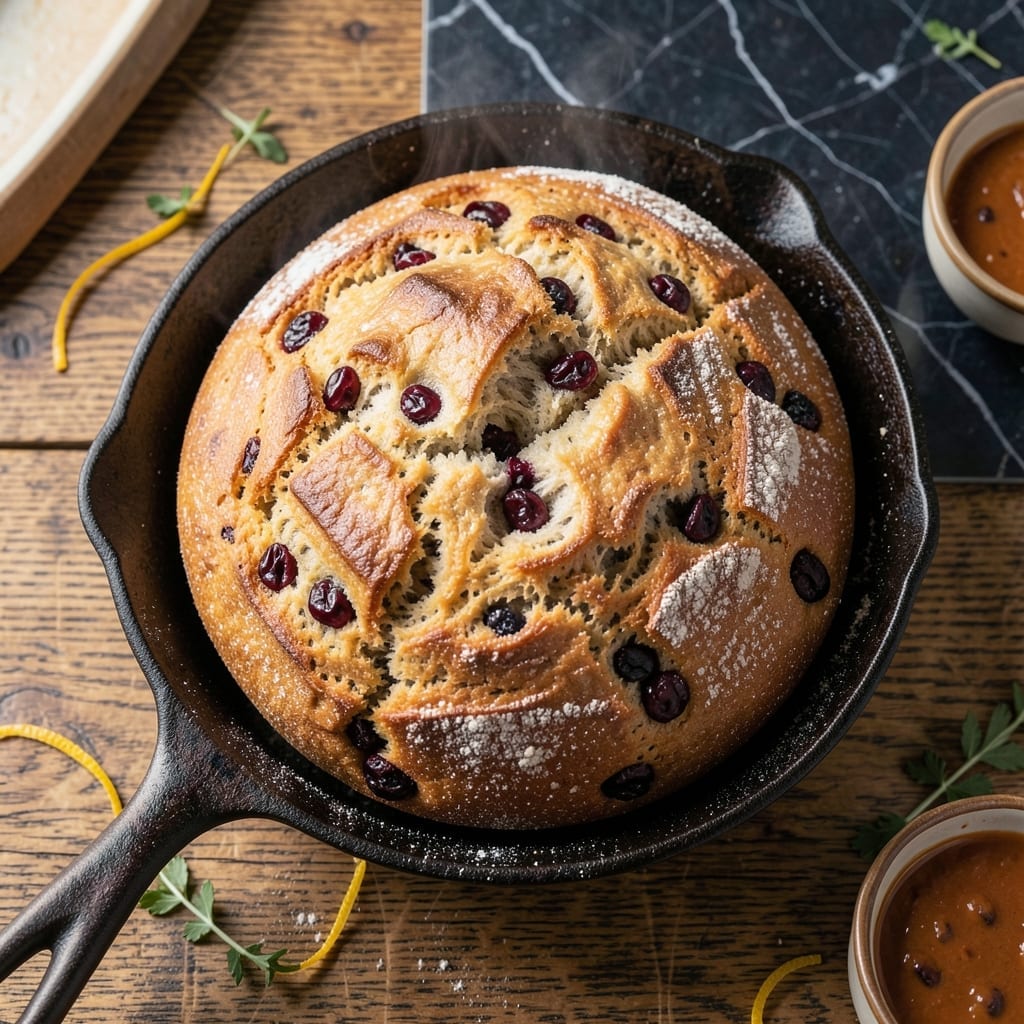
There’s something timeless about a warm loaf of soda bread fresh from the oven, its rustic crust giving way to a tender crumb studded with sweet currants. This traditional Irish recipe requires no yeast, relying instead on a simple chemical reaction between buttermilk and baking soda.
I appreciate its straightforward method: just 5 ingredients and 10 minutes of prep before baking. The currants add bursts of sweetness that perfectly balance the bread’s slightly tangy flavor from the buttermilk.
The result is a loaf with a crisp, golden exterior and a soft, slightly dense interior that’s perfect for breakfast or alongside hearty meals. Its simplicity makes it ideal for both novice and experienced bakers.
Serve it warm with butter for the ultimate comfort food experience.
Ingredients for Irish Soda Bread Recipe with Currants
Five pantry staples create this timeless Irish loaf with sweet currant bursts throughout.
| Ingredient | Amount | Notes |
|---|---|---|
| All-Purpose Flour 🌾 | 4 cups | Plus extra for dusting work surface |
| Baking Soda 🧂 | 1 tsp | Ensures proper rise reaction |
| Salt 🧂 | 1 tsp | Fine sea salt preferred |
| Buttermilk 🥛 | 1 ¾ cups | Cold, full-fat for best texture |
| Dried Currants 🍇 | ¾ cup | Plump in warm water if hard |
[recipe_ingredient_scaler]
The buttermilk is non-negotiable here—full-fat, cold buttermilk creates the ideal chemical reaction with baking soda for that signature soda bread rise. I source mine from Whole Foods or any well-stocked grocery store. The flour should be all-purpose with moderate protein content (10-11%) for the perfect crumb structure. Avoid self-rising flour as it contains leavening agents that will interfere with the recipe’s balance.
No buttermilk on hand? Whole milk with 1 tbsp lemon juice or white vinegar per cup works as a substitute (let sit 5 minutes to curdle). Golden raisins or chopped dried cherries can replace currants if needed. For a slightly sweeter loaf, increase currants to 1 full cup. The baking soda must be fresh—test by dropping a bit in vinegar; it should bubble vigorously.
Baked loaves stay fresh wrapped in a clean kitchen towel at room temperature for 2 days. For longer storage, slice and freeze in an airtight container for up to 3 months. Reheat frozen slices wrapped in foil at 350°F for 10 minutes to restore that fresh-baked warmth.
Why You’ll Love This Recipe
- No Fuss Mixing: Honestly, it’s just flour, buttermilk, and a pinch of baking soda—no yeast, no waiting, no stress.
- Sweet-Tart Surprise: The currants plump up in the oven, giving every bite that little burst of jammy fruit against the tender crumb.
- Breakfast or Tea: I slice it thick for toast in the morning and serve it warm with butter for afternoon tea.
- Stays Fresh: It keeps beautifully for days, so I bake one loaf and we nibble it all week without waste.
Step-by-Step Instructions for Irish Soda Bread With Currants
This traditional method delivers a rustic, golden loaf with perfect texture every time.
Step 1: Prep the Dried Currants and Oven
Begin by preheating your oven to 425°F to ensure it reaches optimal temperature. If the dried currants feel hard or dry, place the 0.75 cup Dried Currants in a small bowl and cover with warm water for 5 minutes to plump them. This softens their texture and prevents them from drawing moisture from the dough.
Drain the currants thoroughly and pat dry with a clean towel. This small step makes a significant difference in the final loaf’s moisture balance and distribution of sweetness.
Step 2: Combine Dry Ingredients Thoroughly
In a large mixing bowl, whisk together the 4 cups All-Purpose Flour, 1 tsp Baking Soda, and 1 tsp Salt until fully incorporated. The baking soda must be evenly distributed to ensure consistent rising throughout the loaf.
I always sift these dry ingredients first to break up any lumps in the flour and guarantee a uniform texture. This step also aerates the flour slightly, contributing to a lighter crumb in the finished bread.
Step 3: Create the Dough with Buttermilk
Make a well in the center of the dry ingredients and pour in the 1.75 cups Buttermilk. Using a wooden spoon or your hands, mix gently until a shaggy dough forms. The buttermilk’s acidity reacts with the baking soda to create lift, so work quickly but don’t overmix.
Fold in the prepared currants, ensuring they’re evenly dispersed. The dough will be slightly sticky—that’s normal for soda bread. If it feels too wet, add a dusting of the reserved All-Purpose Flour, but use a light hand to avoid a dense loaf.
Step 4: Shape and Score the Loaf
Turn the dough onto a lightly floured work surface and shape it into a round loaf about 1.5 inches thick. Use a sharp knife to cut a deep cross into the top, dividing the surface into four equal sections. This traditional scoring allows the bread to expand properly during baking.
Transfer the loaf to a parchment-lined baking sheet. The deep cross also helps the center cook through completely while creating that classic soda bread appearance with a slightly crisp, golden crust.
Step 5: Bake to Golden Perfection
Bake for 30 minutes, then reduce the oven temperature to 400°F and bake for an additional 15-20 minutes. The loaf is done when it’s deep golden brown and sounds hollow when tapped on the bottom.
Remove from the oven and transfer to a wire rack. Let it cool for at least 30 minutes before slicing. This cooling period allows the crumb to set properly, ensuring clean slices and preventing a gummy texture.
Pro Tips For Making Irish Soda Bread Recipe With Currants
- Soak the Currants: Plump the dried currants in warm water for 10 minutes before adding them to the dough—my grandmother swore by this, and it keeps them from drying out during baking.
- Use Cold Buttermilk: Keep the buttermilk straight from the fridge; I learned this the hard way when my first few loaves came out dense instead of light and fluffy.
- Handle the Dough Lightly: Mix just until the flour is dampened—overworking the dough makes it tough, and nobody wants a brick disguised as soda bread.
- Bake Immediately: Get the loaf in the oven as soon as the dough comes together; the baking soda starts reacting with the buttermilk right away, and waiting even 5 minutes can kill the rise.
Flavor Customization for This Dish
Sweetness Variations
For a richer experience, swap currants for golden raisins or chopped dried apricots. Soak them in warm Earl Grey tea for 10 minutes to add a subtle bergamot note. This trick reminds me of Nonna’s fruit-studded panettone. 💡
Citrus Zest Boost
Add 1 tbsp orange zest or lemon zest to the dry ingredients for a bright, aromatic twist. The citrus oils complement the buttermilk’s tang beautifully. I love this version with afternoon tea—it feels like a Sicilian sunset in bread form.
Nutty Texture
Fold in ½ cup chopped walnuts or pecans with the currants for crunch. Toast the nuts in a dry pan over medium heat for 3-4 minutes first to deepen their flavor. This adds a lovely contrast to the soft crumb.
Savory Twist
Reduce currants to ¼ cup and add ½ cup grated sharp cheddar and 1 tsp fresh rosemary for a savory-sweet loaf. Perfect with soups or stews. I discovered this combo at a Boston Irish pub years ago. ✨
Spiced Warmth
Mix 1 tsp cinnamon and ¼ tsp nutmeg into the flour for a cozy, spiced loaf. This pairs wonderfully with butter and honey. The spices make it feel like a hug in bread form—ideal for chilly mornings.
Herb-Infused Buttermilk
Steep 2 sprigs fresh thyme or rosemary in the buttermilk for 15 minutes before using. Strain and proceed with the recipe. The herbal notes add sophistication without overpowering the currants.
Nutrition Facts
Frequently Asked Questions
Can I use raisins instead of currants?
Swap in an equal amount of golden raisins or chopped dried apricots. For extra flavor, soak them in warm tea for 10 minutes first.
Why does my bread taste bitter?
This usually means the baking soda wasn’t fully mixed into the flour. Always whisk dry ingredients thoroughly before adding liquid to prevent bitter pockets.
How do I know when it’s done?
Look for a deep golden brown crust and a hollow sound when tapped on the bottom. If unsure, check the internal temperature with a thermometer—it should read 200°F.
Can I make this ahead?
The bread is best eaten fresh but keeps well wrapped for 2 days. For longer storage, slice and freeze for up to 3 months. Reheat at 350°F for 10 minutes.

Trained in classic French technique but raised on slow-cooked ribs and spicy rubs, she blends culinary skill with smoke and soul.
- Recipe for Boneless Pork Chops in Cast Iron Skillet: Sear and Baste to Juicy Perfection - October 3, 2026
- Recipe for Boneless Cross Rib Roast: Slow-Roasted Beef with Herb Crust - October 3, 2026
- Hamburgers in Sauce Recipe Crock Pot: Slow-Cooked Savory Delight - October 3, 2026