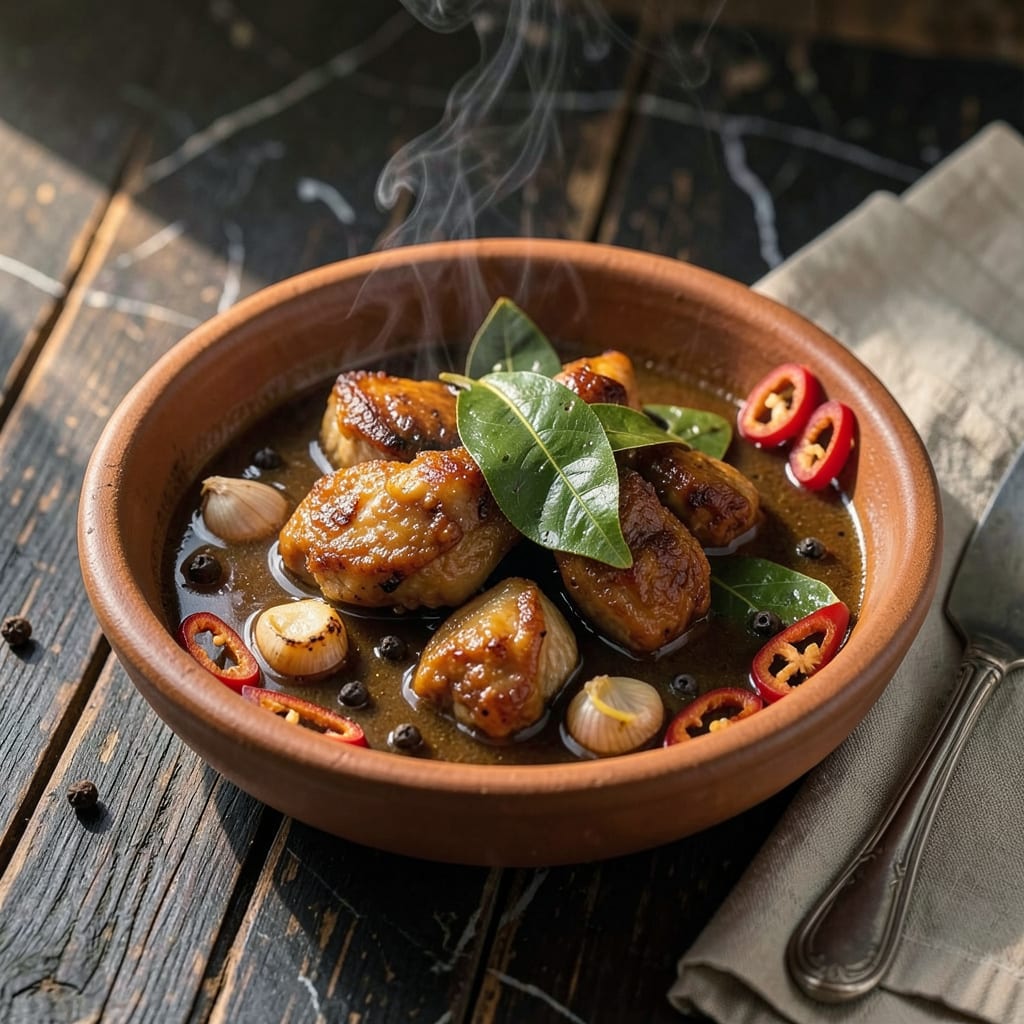
Traditional adobo isn’t inherently spicy—its bold flavor comes from vinegar, soy sauce, garlic, and black pepper. However, regional variations may include chili peppers for added heat, so spiciness depends on the recipe and cook’s preference.
I’ve cooked adobo dozens of ways, and the beauty lies in its adaptability. The classic Filipino version leans on tangy vinegar and umami-rich soy sauce, creating depth without heat. But when I’ve traveled through Mexico or the Caribbean, I’ve seen cooks toss in smoked chipotles or Scotch bonnets for a fiery kick. 🔥 The dish’s versatility means you can keep it mild for family meals or crank up the heat for spice lovers—it’s all about the ingredients you choose.
What fascinates me most is how the base flavors—garlic’s sharpness, vinegar’s brightness, and soy sauce’s saltiness—actually provide the perfect canvas for experimentation. Whether you’re simmering chicken or pork, those core elements hold their own, letting you play with heat levels without losing the dish’s soul. ✨
💡 In This Article
- What Gives Adobo Its Flavor Without the Heat?
- How to Adjust Adobo Spice Levels for Your Taste
What Gives Adobo Its Flavor Without the Heat?
The magic of adobo lies in its perfect balance of four foundational ingredients: vinegar, soy sauce, garlic, and black pepper. The vinegar (traditionally cane or coconut) provides a bright acidity that tenderizes meat while cutting through richness. Filipino cooks often use a 1:1 ratio of vinegar to soy sauce, creating that signature tangy-salty harmony.
The acidity also acts as a natural preservative—this is why adobo was originally a method for keeping meat edible in tropical climates.
Garlic is the aromatic powerhouse, typically used in generous quantities—think 8-12 cloves for a standard batch. When sautéed in oil until golden, the garlic develops sweet, nutty compounds that mellow the vinegar’s sharpness. Black peppercorns (usually 1-2 tablespoons) add warmth without heat, while bay leaves contribute subtle earthiness.
Together, these create what I call the “adobo flavor matrix”—a complex profile where no single element dominates, yet each is essential.
What surprises many is how this combination achieves such depth without chili peppers. The soy sauce provides umami through its fermented soybeans and wheat, while the vinegar’s acidity enhances flavor perception. I’ve found that the 30-45 minute simmering process allows these flavors to meld completely, with the liquid reducing slightly to concentrate the taste.
The result is a dish that’s bold and satisfying, proving you don’t need capsaicin to create memorable, crave-worthy flavors.
This stands in stark contrast to Latin American adobo styles, which often incorporate smoked chilies or achiote for color and heat. Filipino adobo’s brilliance lies in its restraint—the flavors develop through slow cooking and ingredient interaction rather than spice intensity.
When I teach cooking classes, I demonstrate how the vinegar’s acidity actually makes the dish taste more flavorful by enhancing our perception of other tastes, similar to how a squeeze of lemon brightens seafood.
The texture plays a role too—properly cooked adobo should have meat that’s fall-apart tender with a sauce that’s reduced just enough to cling lightly. This mouthfeel, combined with the layered flavors, creates a satisfying eating experience that doesn’t rely on heat.
It’s why adobo works equally well with chicken, pork, or even vegetables—the flavor foundation is strong enough to carry any main ingredient.
What most people don’t realize is that the vinegar’s type dramatically changes the profile. Cane vinegar offers a cleaner acidity, while coconut vinegar brings subtle sweetness. I’ve experimented with apple cider vinegar for fruitier notes, and rice vinegar for milder tang.
Each variation maintains that essential adobo character while offering new dimensions—proof that this dish’s versatility comes from its carefully balanced core, not from added spice.
The beauty of this approach is how it accommodates all palates. I’ve served the same adobo base to both children and chili heads—simply by setting out small bowls of sliced siling labuyo peppers or chili oil for those who want to add heat at the table.
This flexibility is why adobo has endured for centuries, adapting to regional tastes while maintaining its fundamental, heat-free deliciousness.

Trained in classic French technique but raised on slow-cooked ribs and spicy rubs, she blends culinary skill with smoke and soul.
- Recipe for Boneless Pork Chops in Cast Iron Skillet: Sear and Baste to Juicy Perfection - October 3, 2026
- Recipe for Boneless Cross Rib Roast: Slow-Roasted Beef with Herb Crust - October 3, 2026
- Hamburgers in Sauce Recipe Crock Pot: Slow-Cooked Savory Delight - October 3, 2026