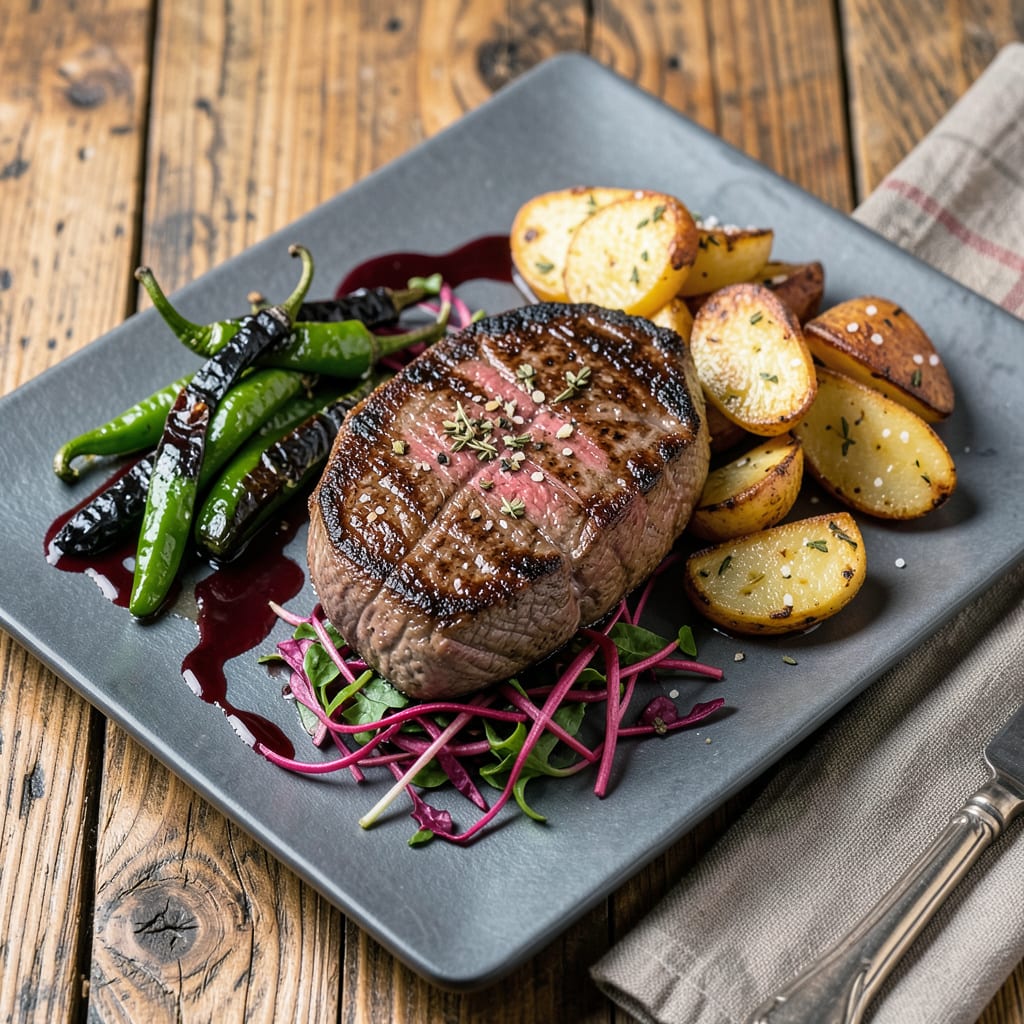
Petite sirloin offers moderate tenderness with a slightly firmer bite than premium cuts like filet mignon, but it remains flavorful and juicy when cooked properly. Its leanness makes it best suited for quick, high-heat methods to avoid toughness.
I love working with this cut because it delivers robust beefy flavor without the premium price tag. 🔥 The secret lies in its muscle structure—petite sirloin comes from the rear of the cow where muscles work harder, creating that characteristic chew. But here’s the kicker: when you hit it with high heat and cook it to just medium-rare (130-135°F), those fibers relax beautifully. Slicing against the grain transforms the texture completely, turning what might seem tough into something remarkably satisfying.
💡 In This Article
- Why Petite Sirloin Texture Varies by Cut Location
- Best Cooking Techniques to Maximize Petite Sirloin Tenderness
Why Petite Sirloin Texture Varies by Cut Location
The petite sirloin comes from the cow’s rear quarter, where muscles work harder than in the rib or loin sections. This area contains both the top sirloin (closer to the spine) and bottom sirloin (near the hip), which have distinctly different textures.
The top sirloin has finer muscle fibers and less connective tissue, making it noticeably more tender than its bottom counterpart. Meanwhile, the bottom sirloin’s proximity to weight-bearing joints means it develops more collagen fibers—giving it that characteristic chew when not prepared properly. 🔥
What really sets petite sirloin apart is its marbling distribution. Unlike a ribeye with its abundant fat streaks, petite sirloin typically has about 3-5% intramuscular fat—just enough to carry flavor but not enough to self-baste during cooking.
The top sirloin portion might show slightly more marbling (closer to 6-8% in well-graded cuts), while the bottom sirloin often appears leaner. This fat distribution explains why the same cut can feel dramatically different depending on which end of the sirloin your steak was cut from. ✨
Butchering plays a huge role too. When the sirloin is separated from the round, the exact location of the cut determines how much of the gluteus medius muscle (the most tender part) remains.
A true petite sirloin should come from the upper portion where this muscle dominates, while cuts labeled simply “sirloin” might include tougher adjacent muscles. I always look for steaks with visible grain running in one clear direction—this indicates cleaner muscle separation during butchering. 💫
The connective tissue story gets interesting when you compare petite sirloin to other popular steaks. A ribeye has about 15-20% fat that melts during cooking, naturally tenderizing the meat. New York strips have tighter muscle bundles but more consistent marbling.
Petite sirloin falls between these—it has more connective tissue than a filet but less than a flank steak. The key is that its collagen begins breaking down at 160°F, which is why cooking beyond medium-rare can actually work in your favor for certain preparations. ⚡
Here’s what most home cooks miss: the grain direction changes dramatically between the top and bottom portions. In the top sirloin, muscle fibers run in parallel bundles that are easier to identify and slice against.
The bottom sirloin has more intersecting fiber groups, making grain identification trickier but also creating those complex textural layers that steak lovers appreciate. When I’m teaching butchering classes, I always have students run their fingers across both portions to feel this difference firsthand. 🌟
Temperature control becomes especially critical with this cut. The top sirloin portion can handle a quick sear at 450°F for 3-4 minutes per side, while the bottom benefits from slightly lower heat (400°F) and a minute longer cooking time. This isn’t just about doneness—it’s about giving the different muscle structures time to relax properly.
I’ve found that resting petite sirloin for exactly 8 minutes (not the usual 5) allows the juices to redistribute more evenly through its varied texture. 💛
The flavor payoff makes understanding these textural nuances worthwhile. That signature beefy intensity comes from the sirloin’s position near flavor-rich bones and connective tissues. When cooked right, the firmer portions provide satisfying resistance while the more tender sections melt slightly—creating a dynamic eating experience that you just don’t get with uniformly tender cuts.
It’s this complexity that keeps me reaching for petite sirloin when I want steak with character. 🔥

Trained in classic French technique but raised on slow-cooked ribs and spicy rubs, she blends culinary skill with smoke and soul.
- Recipe for Boneless Pork Chops in Cast Iron Skillet: Sear and Baste to Juicy Perfection - October 3, 2026
- Recipe for Boneless Cross Rib Roast: Slow-Roasted Beef with Herb Crust - October 3, 2026
- Hamburgers in Sauce Recipe Crock Pot: Slow-Cooked Savory Delight - October 3, 2026