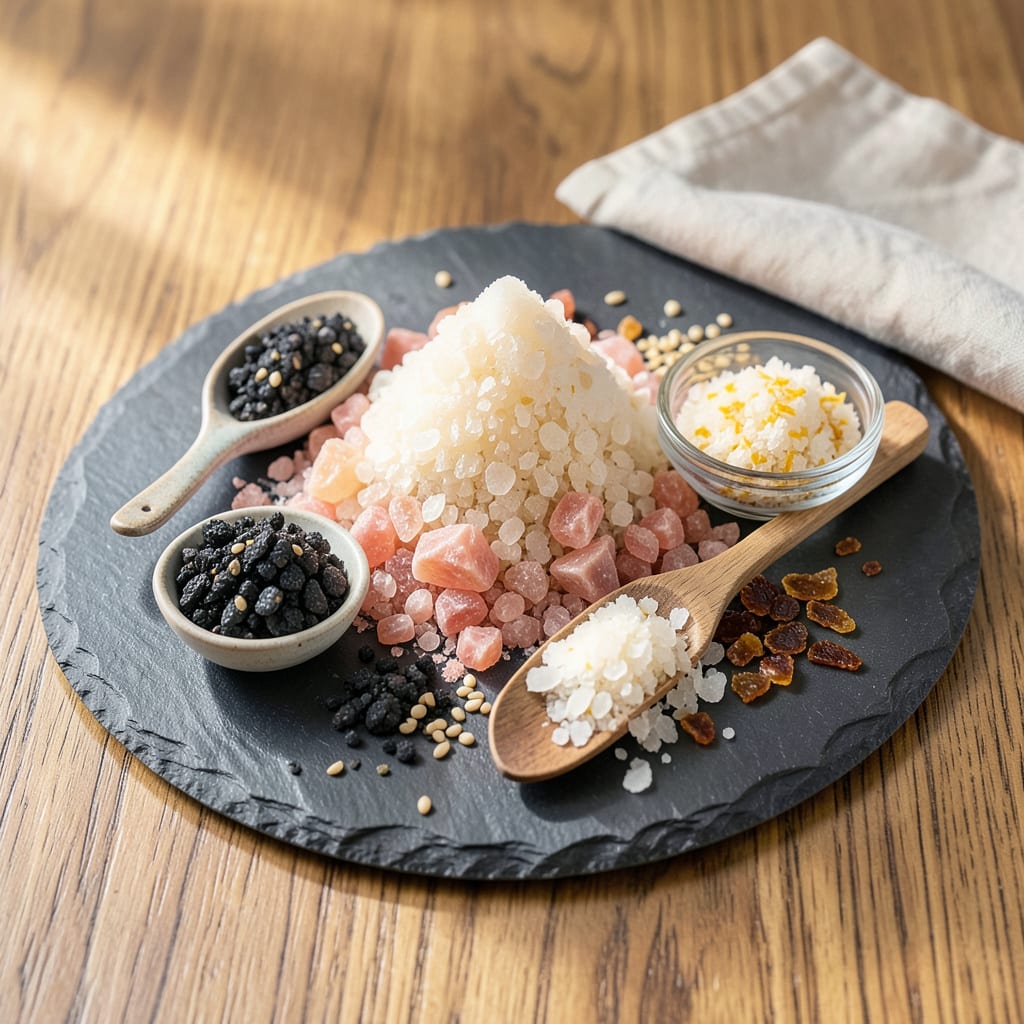
Yes, salt qualifies as a seasoning—it’s the most fundamental one. Unlike herbs or spices, it doesn’t add flavor on its own but enhances and balances existing tastes in food, making it essential in nearly every dish.
I’ve spent years perfecting rubs and marinades, and here’s what I’ve learned: salt is the backbone of flavor. 🔥 It doesn’t just make food taste “salty”—it actually heightens sweetness in desserts, mellows bitterness in greens, and deepens umami in meats. Think of it as the volume knob for your taste buds, turning up the best qualities of every ingredient.
What sets salt apart from other seasonings is its universal role. While cinnamon or paprika bring their own distinct notes, salt works behind the scenes to harmonize all flavors. This is why even sweet recipes like caramel or chocolate often include a pinch—it’s not about saltiness, but about making every other flavor sing. ✨
💡 In This Article
- How Salt Functions as a Culinary Seasoning
- Types of Salt and Their Best Culinary Uses
How Salt Functions as a Culinary Seasoning
Salt works its magic at the molecular level. When sodium ions hit your taste buds, they trigger a cascade of reactions that amplify perception of other flavors.
🔥 The science shows salt suppresses bitter compounds while enhancing sweet and umami notes—this is why a pinch in tomato sauce makes it taste richer, or why chocolate recipes often include salt despite being sweet.
Unlike herbs or spices that add their own distinct flavor profiles, salt operates as a flavor potentiator. It doesn’t contribute a taste so much as it optimizes your ability to taste. Studies reveal salt can increase perceived sweetness by up to 30% in desserts and reduce bitterness in vegetables by 50%.
This dual action makes it fundamentally different from seasonings like cinnamon or oregano.
Chefs rely on salt’s ability to balance the five basic tastes: sweet, sour, bitter, salty, and umami. When I develop rubs for competition BBQ, I use salt as the foundation because it creates harmony between smoky, spicy, and sweet elements.
The right amount makes every other ingredient taste more like itself—whether it’s the caramelization on ribs or the acidity in a mop sauce.
The concentration matters dramatically. Too little salt leaves flavors flat, while too much overwhelms. Professional kitchens use precise measurements—typically 0.5-1% salt by weight in most dishes. This isn’t about making food taste salty, but about achieving perfect flavor balance.
My French training taught me to season in layers, building depth gradually rather than correcting at the end.
Salt also plays a physical role in cooking. It draws out moisture in meats through osmosis, then reabsorbs it with dissolved proteins, creating juicier results. In baking, it strengthens gluten structure and controls yeast activity. These functional properties separate it from other seasonings that only contribute flavor notes without altering food’s physical properties.
What most home cooks miss is salt’s timing. Adding it early in cooking allows it to penetrate ingredients fully, while finishing salts provide textural contrast and a burst of flavor. I keep three salts in my kitchen: kosher for cooking, fine sea salt for baking, and flaky Maldon for finishing.
Each serves a distinct purpose in the flavor-building process. ✨

Trained in classic French technique but raised on slow-cooked ribs and spicy rubs, she blends culinary skill with smoke and soul.
- Recipe for Curried Lamb Chops: Spice-Rubbed and Pan-Seared to Succulence - October 3, 2026
- Recipe for Boneless Leg of Lamb Roast in the Oven: Herb-Crusted and Rosy Pink Inside - October 3, 2026
- Meat Loaf Recipe With Beef And Pork: Homestyle Blend With Rich Gravy - October 3, 2026