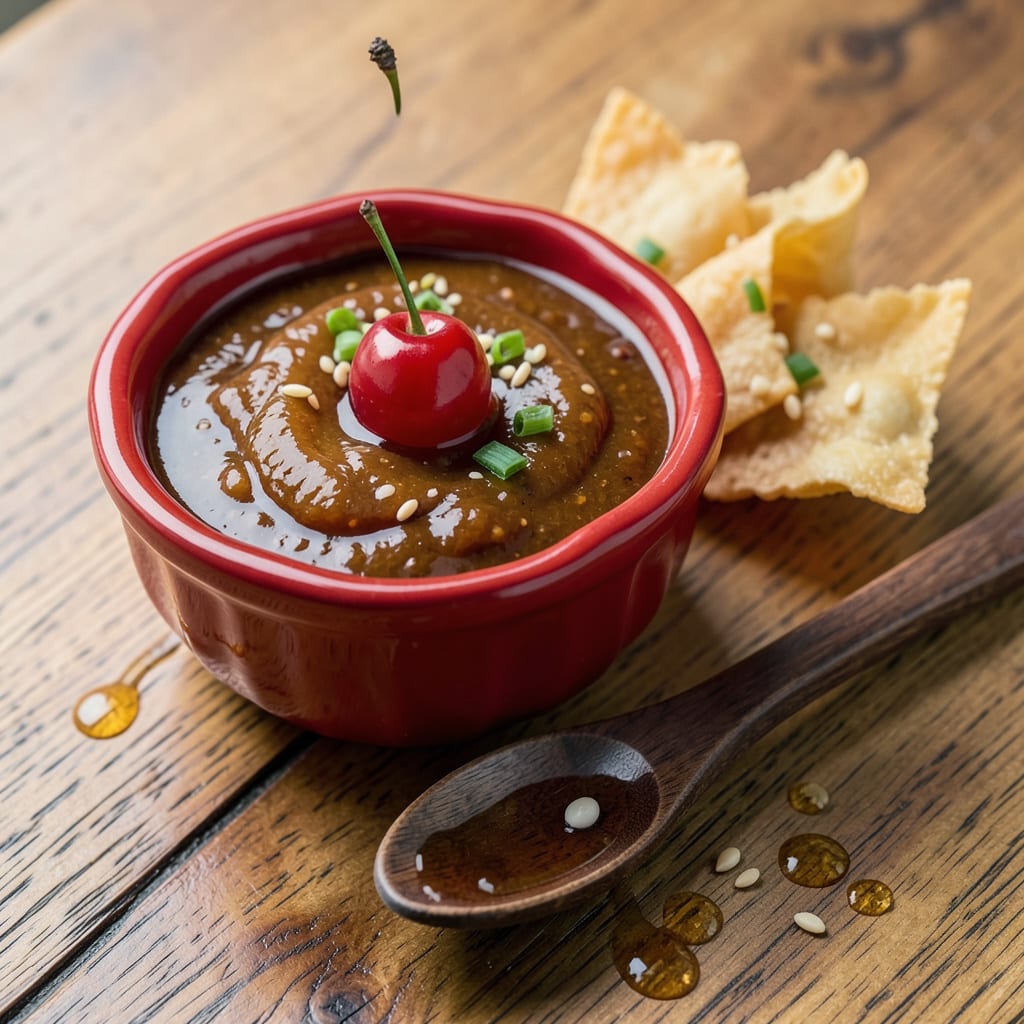
Panda Express duck sauce is a sweet, tangy orange condiment made primarily from apricots, peaches, sugar, and vinegar. Its smooth texture and mild fruitiness complement fried dishes like egg rolls and crispy chicken perfectly.
This iconic orange dipping sauce has become a staple in American-Chinese cuisine, striking a delicate balance between fruity brightness and subtle acidity. 🔥 What sets it apart is how the natural sweetness of stone fruits harmonizes with the vinegar’s sharpness, creating a versatile condiment that cuts through rich, fried textures. I’ve found it works surprisingly well as a glaze for grilled meats or even as a creative addition to salad dressings when you want to add depth without overpowering the dish.
💡 In This Article
- What Gives Panda Express Duck Sauce Its Signature Flavor?
- Creative Ways to Use Panda Express Duck Sauce Beyond Takeout
What Gives Panda Express Duck Sauce Its Signature Flavor?
The magic starts with stone fruit purees—specifically apricot and peach—which form about 60% of the base. These fruits contribute natural pectin that thickens the sauce while delivering that distinctive orange hue. Apricots bring a subtle tartness with their 3.9 pH level, while peaches add floral sweetness that lingers on the palate.
The combination creates a more complex fruit profile than you’d get from either alone. 🌟
White vinegar (typically 5% acidity) plays the crucial balancing role, cutting through the sugar’s sweetness at a ratio of about 1 part vinegar to 3 parts fruit puree. This isn’t just about taste—it’s chemistry. The acetic acid reacts with fruit sugars during cooking, creating ester compounds that enhance the sauce’s aromatic qualities.
You’ll notice the difference immediately compared to plum sauce, which uses rice vinegar and has a sharper, less rounded acidity profile.
Texture comes from two key additions: modified food starch (about 2-3% of the mixture) for that smooth, clingy consistency, and xanthan gum in trace amounts to prevent separation. The starch molecules swell when heated to 185°F, creating a gel-like network that holds everything together.
This is why the sauce coats fried foods so perfectly without dripping off. ✨
What most people miss is how the processing affects flavor. The purees are cooked at 190-200°F for 12-15 minutes to develop caramel notes from the fruit sugars, then rapidly cooled to preserve brightness. Traditional plum sauce skips this step, which is why it tastes more one-dimensional. The final touch?
A pinch of salt (0.5% by weight) to make all those fruit flavors pop.
Compare this to authentic Chinese plum sauce, which relies on fermented plums, ginger, and sometimes chili for complexity. Panda’s version simplifies the profile for mass appeal—more approachable sweetness, less funky depth. That’s why it pairs so well with American palates who prefer cleaner, fruit-forward flavors over the traditional umami-heavy versions. 🔥
The sauce’s 28-32 Brix sugar concentration (measured with a refractometer) hits the sweet spot—literally. This level of sweetness triggers maximum taste bud response without being cloying. The viscosity at 1,200-1,500 centipoise ensures it clings to foods but still pours easily from those little packets. Every element is engineered for that perfect first dip experience.

Trained in classic French technique but raised on slow-cooked ribs and spicy rubs, she blends culinary skill with smoke and soul.
- Recipe for Boneless Pork Chops in Cast Iron Skillet: Sear and Baste to Juicy Perfection - October 3, 2026
- Recipe for Boneless Cross Rib Roast: Slow-Roasted Beef with Herb Crust - October 3, 2026
- Hamburgers in Sauce Recipe Crock Pot: Slow-Cooked Savory Delight - October 3, 2026