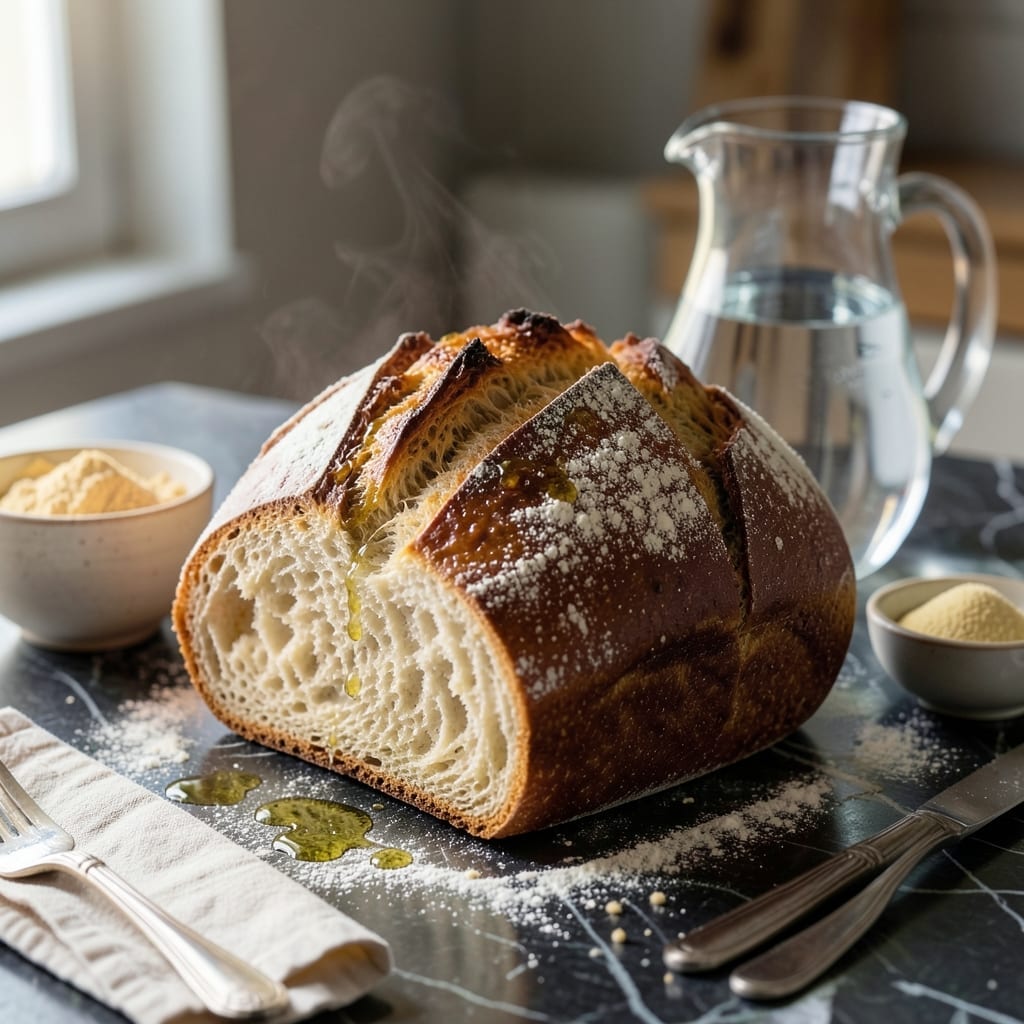
This bread machine recipe delivers a hands-free artisan loaf with minimal effort. The process transforms simple ingredients into a golden, crusty Italian bread that rivals bakery versions.
With precise measurements and the right machine settings, you’ll achieve a light, airy interior and a perfectly browned crust. It’s the ideal solution for fresh bread without the traditional labor.
Ingredients for Italian Bread Recipe for Bread Machine
Simple, precise ingredients transform into bakery-quality bread with minimal effort.
| Ingredient | Amount | Notes |
|---|---|---|
| Bread Flour 🌾 | 3 ½ cups | High-protein for structure |
| Water 💧 | 1 ¼ cups | Warm, about 110°F |
| Extra-Virgin Olive Oil 🫒 | 2 tbsp | For richness and tenderness |
| Sugar 🍚 | 1 tbsp | Granulated, feeds yeast |
| Salt 🧂 | 1 ½ tsp | Fine sea salt preferred |
| Active Dry Yeast 🍞 | 2 ¼ tsp | Or one packet, proofed |
| Dried Italian Seasoning 🌿 | 1 tbsp | Or mix oregano, basil, thyme |
| Garlic Powder 🧄 | 1 tsp | For savory depth |
| Parmesan Cheese 🧀 | ½ cup | Freshly grated, optional |
| Non-Fat Dry Milk 🥛 | 2 tbsp | Enhances browning and texture |
| Cornmeal 🌽 | 2 tbsp | For dusting pan |
[recipe_ingredient_scaler]
Bread flour is non-negotiable for this texture—King Arthur or Bob’s Red Mill are reliable brands. The yeast must be active; check expiration dates and store in the freezer to extend shelf life. Olive oil adds moisture and richness, so opt for extra-virgin from a trusted source like California Olive Ranch. Warm water should feel like bathwater—too hot kills the yeast, too cold slows activation.
No bread flour? All-purpose with 1 tbsp vital wheat gluten per cup gets close. Skip the Parmesan for a vegan version (though it’s vegetarian-friendly here). Italian seasoning can be homemade with equal parts oregano, basil, and thyme. Garlic powder substitutes well with 1/2 tsp onion powder plus 1/2 tsp dried minced garlic. Sugar can be replaced with honey, but stick to granulated for consistency.
Store flour and yeast in airtight containers in a cool, dark place for 6-12 months. Freshly grated Parmesan keeps 1 week in the fridge. The dough can be shaped and frozen before the final rise—bake straight from frozen, adding 10-15 minutes to the cycle.
Why You’ll Love This Recipe
- Set and Forget: I toss the flour, water, olive oil, sugar and salt in the machine, press start, and let it do all the work.
- Crisp Crust, Soft Inside: The olive oil gives it that golden crust with a pillowy center I can’t resist.
- Sandwich Savior: It’s my go-to for meatball subs, bruschetta, or just warm bread with butter.
- Budget Friendly: Five humble ingredients, one loaf pan, and I’ve got fresh bread for pennies.
Step-by-Step Instructions for Italian Bread for Bread Machine
Master the technique for a perfectly textured loaf with minimal effort using your machine.
Step 1: Prepare the Bread Machine Pan and Ingredients
Begin by adding the 1.25 cups Water to the bread machine pan first. The liquid ingredients should always go in first to prevent the yeast from activating prematurely. I use water at about 110°F—warm to the touch but not hot—to ensure proper yeast activation without killing it.
Next, add the 2 tbsp Extra-Virgin Olive Oil, 1 tbsp Sugar, 1.5 tsp Salt, 2 tbsp Non-Fat Dry Milk, 1 tbsp Dried Italian Seasoning, and 1 tsp Garlic Powder. The sugar feeds the yeast, while the dry milk enhances browning and texture. Stir these lightly to combine before adding the dry ingredients.
Step 2: Add Dry Ingredients and Yeast
Measure the 3.5 cups Bread Flour and add it to the pan, spreading it evenly over the liquid mixture. Make a small well in the center of the flour and add the 2.25 tsp Active Dry Yeast to this indentation. This separation ensures the yeast doesn’t come into direct contact with the water until the machine begins mixing.
If using, sprinkle the 0.5 cup Parmesan Cheese evenly over the flour. The cheese will melt into the dough during kneading, adding a subtle savory note. Avoid pressing the yeast into the liquid—let the machine handle the mixing when it starts.
Step 3: Select the Program and Start the Machine
Secure the pan in the bread machine and select the “Basic” or “White Bread” setting. Choose a 1.5- or 2-pound loaf size depending on your machine’s capacity. Set the crust to medium for a balanced texture—crisp enough to hold shape but tender inside.
Press start and allow the machine to begin the kneading cycle. After 5-10 minutes, check that the dough forms a smooth, elastic ball. If it appears too dry, add 1 teaspoon of water; if too sticky, add 1 teaspoon of bread flour. The dough should pull away from the sides but still be slightly tacky.
Step 4: Add Cornmeal and Complete the Bake Cycle
Once the kneading cycle finishes and the machine transitions to the rise phase, sprinkle the 2 tbsp Cornmeal over the top of the dough. The cornmeal adds a rustic texture and prevents sticking during the final bake. Do not stir it in—let the machine incorporate it naturally during the next kneading phase.
Allow the machine to complete the full cycle, which typically takes 3-4 hours depending on your model. The loaf is done when it’s golden brown on top and sounds hollow when tapped. Resist the urge to open the lid during baking—this can cause the loaf to collapse.
Step 5: Cool and Serve
When the cycle ends, immediately remove the pan from the machine and turn the loaf out onto a wire rack. Let it cool for at least 20 minutes before slicing. This resting period allows the crumb structure to set, preventing a gummy texture.
Slice with a serrated knife for clean cuts. The bread should have a soft, slightly chewy interior with a thin, crisp crust. Serve warm with olive oil and balsamic vinegar for dipping, or use it for sandwiches once fully cooled.
Pro Tips For Making Italian Bread Recipe For Bread Machine
- Check Yeast Freshness: I learned this the hard way—old yeast kills the rise. Test yours in warm water with a pinch of sugar; if it doesn’t bubble within 5 minutes, toss it and start fresh.
- Use Room-Temp Water: Cold water slows activation, hot water kills yeast. Aim for 110°F—warm but not uncomfortable to touch, like a baby bottle.
- Measure Flour Right: Scooping directly from the bag packs it down. Spoon the bread flour into your cup, then level it off—this prevents dense, brick-like loaves.
- Add Oil Last: Pour the olive oil in after the wet ingredients start mixing. It keeps the dough from sticking to the pan and makes cleanup way easier.
Creative Variations of This Recipe
Rosemary Focaccia Style
Add 1 tbsp fresh rosemary (or 1 tsp dried) to the dough with the dry ingredients. I also drizzle 1 extra tbsp olive oil over the top during the final rise for a crisp, herb-infused crust. The rosemary pairs perfectly with the Italian seasoning. 🌿
Cheesy Garlic Pull-Apart
Increase Parmesan Cheese to 1 cup and add 1 cup shredded mozzarella during the kneading cycle. Shape into a ring in the pan for a pull-apart bread. Brush with garlic butter after baking for extra richness.
Whole Wheat Blend
Replace 1 cup Bread Flour with whole wheat flour for a nuttier flavor. Add 1 extra tbsp water to compensate for the denser flour. The result is heartier but still soft, with a deeper color.
Sun-Dried Tomato
Fold in ½ cup chopped sun-dried tomatoes (oil-packed, drained) at the beep signal or during the last kneading cycle. This adds a tangy sweetness that complements the garlic and herbs beautifully.
Honey Olive Oil
Swap Sugar for 2 tbsp honey and use robust extra-virgin olive oil for a sweeter, more complex loaf. The honey enhances browning and adds a subtle floral note that’s divine with the Italian seasoning.
Herb Swirl
Create a swirl effect by layering a paste of 2 tbsp olive oil, 1 tbsp chopped fresh basil, and 1 tsp minced garlic over the dough before the final rise. This gives every bite a burst of fresh herb flavor. 💛
Nutrition Facts
Frequently Asked Questions
Can I use all-purpose flour instead of bread flour?
Yes, but add 1 tbsp vital wheat gluten per cup of all-purpose flour to mimic bread flour’s protein content. This ensures a proper rise and chewy texture. Without it, the loaf may be denser.
Why did my bread collapse after baking?
This usually happens if the dough overproofed or the yeast was old. Ensure your yeast is fresh and the machine’s lid stays closed during baking. Let the loaf cool completely before slicing.
How do I store leftover bread?
Wrap cooled loaves in a clean kitchen towel or airtight container at room temperature for up to 2 days. For longer storage, freeze slices in a sealed bag for up to 3 months.

Trained in classic French technique but raised on slow-cooked ribs and spicy rubs, she blends culinary skill with smoke and soul.
- Recipe for Boneless Pork Chops in Cast Iron Skillet: Sear and Baste to Juicy Perfection - October 3, 2026
- Recipe for Boneless Cross Rib Roast: Slow-Roasted Beef with Herb Crust - October 3, 2026
- Hamburgers in Sauce Recipe Crock Pot: Slow-Cooked Savory Delight - October 3, 2026