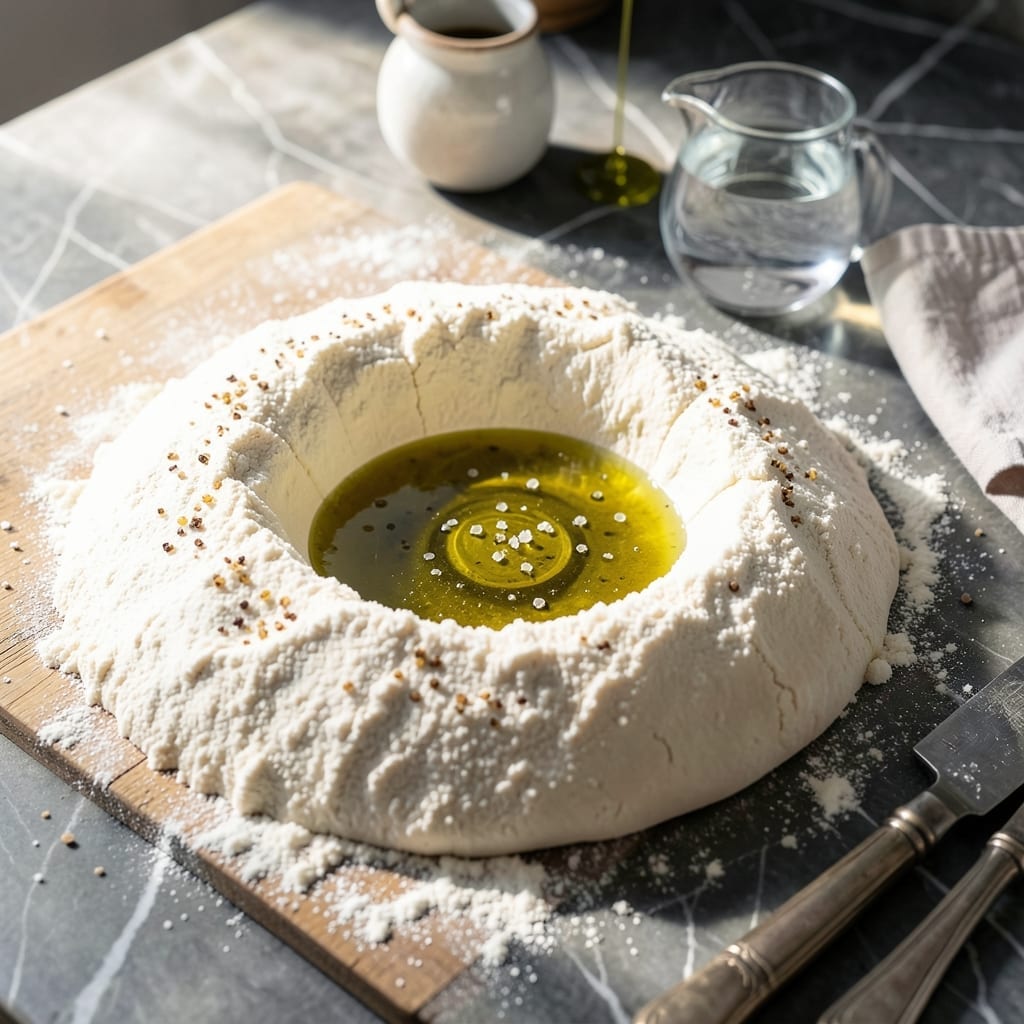
There’s a pure simplicity to traditional Italian pasta made with just flour and water. This method delivers a silky, elastic dough that forms the foundation for countless classic dishes.
The technique relies on precise measurements and proper kneading to develop the gluten structure. With only 2 ingredients, you’ll create pasta that’s both tender and sturdy enough to hold sauces beautifully.
Resting the dough is crucial—this allows the gluten to relax, making it easier to roll out thin sheets. The result is a smooth, supple dough ready for cutting into any shape you desire.
Whether you’re making spaghetti, fettuccine, or ravioli, this no-egg pasta recipe proves that sometimes less truly is more in Italian cooking.
Ingredients for Italian Pasta Dough Recipe No Egg
Just four humble ingredients create this authentic Italian pasta foundation ready for any sauce.
| Ingredient | Amount | Notes |
|---|---|---|
| All-Purpose Flour 🌾 | 3 cups | Type 00 preferred for authenticity |
| Water 💧 | 1 cup | Room temperature, divided |
| Sea Salt 🧂 | 1 tsp | Fine grain for even distribution |
| Olive Oil 🫒 | 1 tbsp | Optional, for elasticity |
[recipe_ingredient_scaler]
The flour is everything here. Type 00 flour (imported from Italy) gives the silkiest texture, but high-quality all-purpose works. King Arthur or Bob’s Red Mill are reliable domestic brands. Water temperature matters—room temp absorbs evenly. Use filtered if your tap water has a strong taste (worth the extra minute).
No Type 00? Standard all-purpose is fine—just avoid cake or bread flour. Want richer flavor? Semolina flour at 50/50 ratio with all-purpose works beautifully. The salt enhances flavor, but you can omit it if making sweet stuffed pasta. The olive oil is optional but adds elasticity (don’t skip this part if rolling by hand).
Dough rests best covered at room temperature for 30-60 minutes. Wrap tightly in plastic—keeps in fridge for 24 hours or freezes for 1 month. Bring to room temp before rolling for best results.
Why You’ll Love This Recipe
- No-Fuss Mixing: I just dump flour, water, salt, and olive oil in a bowl—no eggs, no stress.
- Rich, Simple Taste: The olive oil and sea salt give it that authentic Italian flavor without overpowering.
- Endless Possibilities: I’ve used it for ravioli, tagliatelle, even hand-cut pappardelle for date night.
Step-by-Step Instructions for Italian Pasta Dough No Egg
This method delivers authentic texture using only flour and water with proper technique.
Step 1: Create the Flour Well and Incorporate Salt
On a clean work surface, mound the 3 cups All-Purpose Flour and form a deep well in the center. I use a bench scraper to create clean edges—this contains the liquid as we work. Sprinkle the 1 tsp Sea Salt evenly over the flour mound.
The salt should be fine grain for even distribution throughout the dough. This step ensures seasoning is consistent in every bite. The well method provides better control over hydration than mixing in a bowl, allowing you to feel the dough’s texture as it develops.
Step 2: Gradually Add Water and Olive Oil
Pour ¾ cup of the 1 cup Water into the well along with the 1 tbsp Olive Oil. The oil is optional but adds elasticity to the final pasta. Using a fork, begin incorporating the flour from the inner walls of the well into the liquid in a circular motion.
Continue this process until the mixture becomes too thick to stir with a fork. Then, using your hands, gradually draw in the remaining flour. The dough will be shaggy at first—this is normal. Reserve the remaining ¼ cup Water in case the dough feels too dry.
Step 3: Knead to Develop Gluten Structure
Once all flour is incorporated, begin kneading the dough with the heels of your hands. Push the dough away from you, then fold it back over itself and turn 45 degrees. Repeat this motion for 8-10 minutes until the dough becomes smooth and elastic.
If the dough feels too stiff, add the reserved water 1 tablespoon at a time until it reaches the right consistency. Properly developed dough should spring back when pressed with a finger. This gluten development is what gives your pasta its characteristic chew and strength.
Step 4: Rest the Dough for Optimal Texture
Shape the dough into a ball and wrap it tightly in plastic wrap. Let it rest at room temperature for 30 minutes. This resting period allows the gluten to relax, making the dough easier to roll out and preventing it from springing back during shaping.
During this time, the flour fully hydrates and the dough’s internal structure stabilizes. You’ll notice the dough becomes more pliable and less resistant when you begin rolling it out after resting. This step is non-negotiable for achieving the silky texture promised by this technique.
Pro Tips For Making Italian Pasta Dough Recipe No Egg
- Knead Longer: I used to stop at 5 minutes, but 8-10 minutes of kneading develops the gluten properly—your pasta will hold its shape and have that perfect chew.
- Use Warm Water: Cold water makes the dough fight you; lukewarm (about 100°F) helps the flour absorb evenly and speeds up gluten formation.
- Skip the Oil Overload: More than 1 tablespoon of olive oil makes the dough too slick and hard to roll thin—just enough to bring it together is all you need.
- Rest the Dough: Wrap it in plastic and let it sit for 30 minutes at room temp—this relaxes the gluten so it rolls out smooth instead of springing back.
Pro Cooking Tips for italian pasta dough recipe no egg
Flour Selection Matters
Type 00 flour is my go-to for the silkiest texture, but high-quality all-purpose works too. I’ve had great results with King Arthur or Bob’s Red Mill. The finer grind of Type 00 creates a smoother dough that’s closer to what you’d find in Italy. 🌾
Water Temperature Control
Use room temperature water for even absorption. If your tap water has a strong taste, opt for filtered. Cold water slows hydration, while warm water can make the dough sticky. I keep a ¼ cup reserved to adjust consistency as needed.
Kneading Technique
Knead with the heels of your hands, pushing the dough away, then folding it back over itself. Turn the dough 45 degrees between folds. This process takes 8-10 minutes—you’ll feel the dough transform from shaggy to smooth and elastic. 💪
Resting is Non-Negotiable
Wrap the dough tightly in plastic and let it rest for 30-60 minutes at room temperature. This allows the gluten to relax, making it easier to roll out thin sheets. Skipping this step results in tough, springy pasta.
Rolling Thin Sheets
Use a pasta machine for consistent thickness. Start at the widest setting and gradually narrow it down. If rolling by hand, aim for sheets thin enough to see your hand through. Dust with flour to prevent sticking.
Cutting Shapes
For uniform strands, use the machine’s cutting attachment. For shapes like farfalle or ravioli, cut the sheets to size before shaping. Fresh pasta cooks in 2-3 minutes—test for doneness by tasting.
Nutrition Facts
Frequently Asked Questions
Can I use bread flour instead of all-purpose?
Bread flour works but creates a chewier texture. The higher protein content develops more gluten, making the pasta denser. For authentic results, stick with Type 00 or all-purpose.
Why does my dough keep springing back when rolling?
This means the gluten hasn’t relaxed enough. Let the dough rest for the full 30-60 minutes before rolling. If it still resists, cover and rest for another 20 minutes.
How thin should I roll the pasta sheets?
For most shapes, aim for 1-2mm thickness. When using a machine, stop at setting 5 or 6. The sheets should be nearly translucent but not tearing.
Can I make this dough in a stand mixer?
Yes! Use the dough hook on low speed for 6-8 minutes. Add water gradually until the dough comes together. Finish kneading by hand for best texture.

Trained in classic French technique but raised on slow-cooked ribs and spicy rubs, she blends culinary skill with smoke and soul.
- Recipe for Boneless Pork Chops in Cast Iron Skillet: Sear and Baste to Juicy Perfection - October 3, 2026
- Recipe for Boneless Cross Rib Roast: Slow-Roasted Beef with Herb Crust - October 3, 2026
- Hamburgers in Sauce Recipe Crock Pot: Slow-Cooked Savory Delight - October 3, 2026