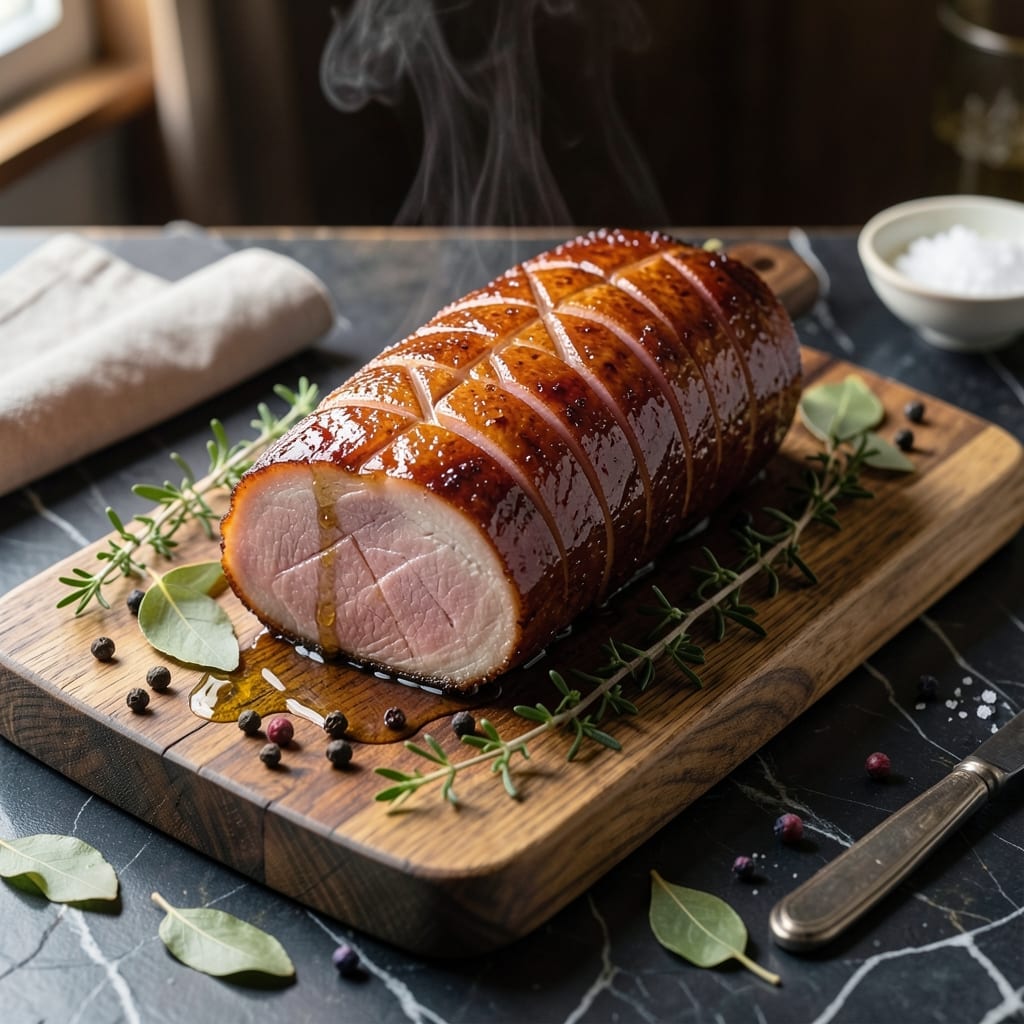
This classic French preparation brings the taste of a Parisian charcuterie to your kitchen. The process transforms simple pork into a delicately seasoned, rolled ham that’s both elegant and approachable.
Traditional methods ensure a tender, juicy result with balanced flavors. The curing and cooking process develops depth while maintaining the ham’s natural richness. It’s a technique that rewards patience with professional results.
What emerges is a beautifully shaped ham with a smooth, slicable texture that’s perfect for sandwiches or charcuterie boards. The subtle seasoning allows the pork’s natural flavor to shine through.
Serve thinly sliced with crusty bread, cornichons, and mustard for an authentic French experience. This method delivers the quality you’d expect from a Parisian deli.
Ingredients for Jambon De Paris
Eleven ingredients transform pork shoulder into Parisian deli-quality ham with professional finesse and tradition.
| Ingredient | Amount | Notes |
|---|---|---|
| Pork Shoulder 🥩 | 3 lb | Boneless, skin-on preferred |
| Kosher Salt 🧂 | ½ cup | Diamond Crystal preferred |
| Black Peppercorns 🌶️ | 1 tbsp | Lightly crushed |
| Bay Leaves 🍃 | 4 whole | Dried, for curing |
| Fresh Thyme Sprigs 🌿 | 6 whole | Plus extra for garnish |
| Juniper Berries 🫒 | 1 tsp | Lightly crushed |
| Pink Curing Salt 🧂 | 1 tsp | Prague Powder #1 essential |
| Garlic Cloves 🧄 | 6 cloves | Smashed, peeled |
| Dry White Wine 🍷 | 1 cup | Sauvignon Blanc preferred |
| Water 💧 | 4 cups | For brine solution |
| Brown Sugar 🍚 | 2 tbsp | Optional for balance |
| Butcher's Twine 🧶 | 1 piece | For rolling ham |
[recipe_ingredient_scaler]
The pork shoulder is non-negotiable—look for well-marbled, skin-on cuts at Whole Foods or a trusted butcher. The curing salt (Prague Powder #1) is a specialty item, but essential for safety and that signature pink hue. Bay leaves and juniper berries add the classic French charcuterie notes; find them in the spice aisle at Williams Sonoma or bulk sections.
No pork shoulder? Pork loin works in a pinch but lacks fat for moisture. Out of juniper berries? Substitute with ½ tsp coriander seeds for earthy depth. The wine can be replaced with apple cider vinegar (use ¼ cup) if avoiding alcohol. Fresh thyme is ideal, but dried at one-third the amount works—just bloom it in warm water first.
The cured ham keeps 10-12 days refrigerated in brine, or 3 months frozen. Slice only what you need—exposure to air dries it out. For sandwiches, slice paper-thin against the grain for that deli texture. Always use a sharp knife to maintain the smooth, slicable finish.
Why You’ll Love This Recipe
- Set It and Forget It: I just rub the pork shoulder with salt, peppercorns, and herbs, then let the oven do the work.
- Herb-Infused Delight: The bay leaves and thyme give the meat this subtle, earthy depth that’s just right.
- Sandwich Superstar: Honestly, it’s my go-to for picnic spreads, lunchboxes, or even a fancy charcuterie board.
- Budget-Friendly Feast: A whole pork shoulder costs pennies per serving and makes enough for leftovers all week.
Step-by-Step Instructions for Jambon de Paris
Master the classic technique for this traditional cured ham with precise steps.
Step 1: Prepare the Curing Brine
In a large pot, combine the 4 cups water, 0.5 cup kosher salt, 1 cup dry white wine, 2 tbsp brown sugar, 1 tbsp black peppercorns, 1 tsp pink curing salt, 4 whole bay leaves, 1 tsp juniper berries, and 6 cloves garlic cloves.
Bring to a gentle simmer over medium heat until the salt and sugar dissolve completely, stirring occasionally. Remove from heat and add the 6 whole fresh thyme sprigs. Let the brine cool to room temperature before using—this typically takes 1-2 hours at room temperature or 30 minutes in an ice bath.
Step 2: Cure the Pork Shoulder
Once the brine is completely cool, submerge the 3 lb pork shoulder in the brine, ensuring it is fully covered. I use a large food-safe container or a brining bag for this. Place in the refrigerator and let cure for 4-5 days, turning the pork shoulder daily to ensure even curing.
The pork should feel firm to the touch when properly cured. If you notice any floating, weigh it down with a plate or other food-safe weight to keep it submerged. This step is crucial for developing the characteristic flavor and preserving the meat.
Step 3: Rinse and Prepare for Rolling
After curing, remove the pork shoulder from the brine and rinse it thoroughly under cold water to remove excess salt. Pat it dry with paper towels. At this stage, the pork should have a slightly firmer texture and a light pink hue from the curing process.
If using a skin-on pork shoulder, you may leave the skin intact for a traditional presentation. Trim any excess fat if desired, but maintain enough to help with rolling. This preparation ensures the final product has the right texture and appearance.
Step 4: Roll and Tie the Ham
Lay the pork shoulder skin-side down on a clean work surface. Roll it tightly into a cylindrical shape, keeping the meat as compact as possible. Secure the roll with the 1 piece butcher’s twine, tying it at 1-2 inch intervals to maintain the shape during cooking.
Tie a knot at one end, then loop the twine around the roll, pulling snugly after each loop to create even tension. Finish with another knot at the opposite end. This step is essential for achieving the classic uniform shape of Jambon de Paris.
Step 5: Poach and Cool
Place the tied pork roll in a large pot and cover completely with fresh water. Bring to a gentle simmer over medium-low heat and poach for 2-2.5 hours, maintaining a temperature of 180-185°F. The internal temperature should reach 150°F.
Remove from the water and let it cool to room temperature, then refrigerate overnight. This cooling step allows the ham to set properly, making it easier to slice thinly for that authentic deli-style presentation.
Pro Tips For Making Jambon De Paris
- Brining Overnight: Soak the pork shoulder in a saltwater brine with thyme and bay leaves for at least 12 hours—I learned this the hard way after my first attempt came out bland.
- Simmer, Don’t Boil: Keep the water just below a simmer, around 180°F, or the meat will toughen up. I used to rush it with higher heat and ended up with a dry, chewy mess.
- Use Fresh Herbs: Fresh thyme and bay leaves make a real difference compared to dried—skip the old spices in your cabinet for this one.
- Rest Before Slicing: Let the jambon rest for 15-20 minutes after cooking, tented with foil, or all the juices will spill out when you cut into it. (Yes, even if you’re hungry.)
Wine and Beer Pairings for These Flavors
French Wine Pairings
A crisp Sancerre from the Loire Valley complements the delicate seasoning beautifully. Its bright acidity and mineral notes cut through the ham’s richness while enhancing the subtle herbs. I always reach for Domaine Vacheron when available. 🍷
Burgundy Whites
Chablis offers a steely, citrus-forward profile that pairs wonderfully with this creation. The flinty character of Louis Latour Chablis balances the saltiness perfectly. Serve slightly chilled at 50-55°F for optimal enjoyment.
Light Red Options
For red wine lovers, a light Beaujolais from Morgon works surprisingly well. The gamay grape’s bright fruit and low tannins won’t overpower the ham’s delicate flavors. I prefer Jean Foillard’s version for its purity.
Beer Pairings
A French Bière de Garde like Jenlain offers malty sweetness that contrasts nicely with the salt. The copper-colored ale has enough body to stand up to the ham without overwhelming it. Serve at 50°F in a tulip glass. 🍺
Non-Alcoholic Choice
Try a dry French cider from Normandy for a refreshing alternative. Écusson makes an excellent brut version with crisp apple notes. The effervescence cleanses your palate between slices of this delicately seasoned creation.
Nutrition Facts
Frequently Asked Questions
Can I use pork loin instead of shoulder?
Pork loin works in a pinch but lacks the fat content of shoulder. This can result in a drier finished product. If using loin, consider adding a thin layer of pork fat before rolling.
How do I know when the curing is complete?
The pork should feel firm to the touch, like the texture of cooked chicken breast. The color will also change to a light pink throughout. This typically takes 4-5 days in the refrigerator.
What if my ham isn’t holding its shape?
Tie the roll more tightly with the butcher’s twine at 1-inch intervals. Also, ensure you’re not over-trimming the fat cap, as this helps maintain structure during cooking.
Can I skip the curing salt?
Never omit the pink curing salt—it’s essential for proper preservation and color. Without it, your ham won’t have the traditional appearance and may not keep safely.

Trained in classic French technique but raised on slow-cooked ribs and spicy rubs, she blends culinary skill with smoke and soul.
- Recipe for Boneless Pork Chops in Cast Iron Skillet: Sear and Baste to Juicy Perfection - October 3, 2026
- Recipe for Boneless Cross Rib Roast: Slow-Roasted Beef with Herb Crust - October 3, 2026
- Hamburgers in Sauce Recipe Crock Pot: Slow-Cooked Savory Delight - October 3, 2026