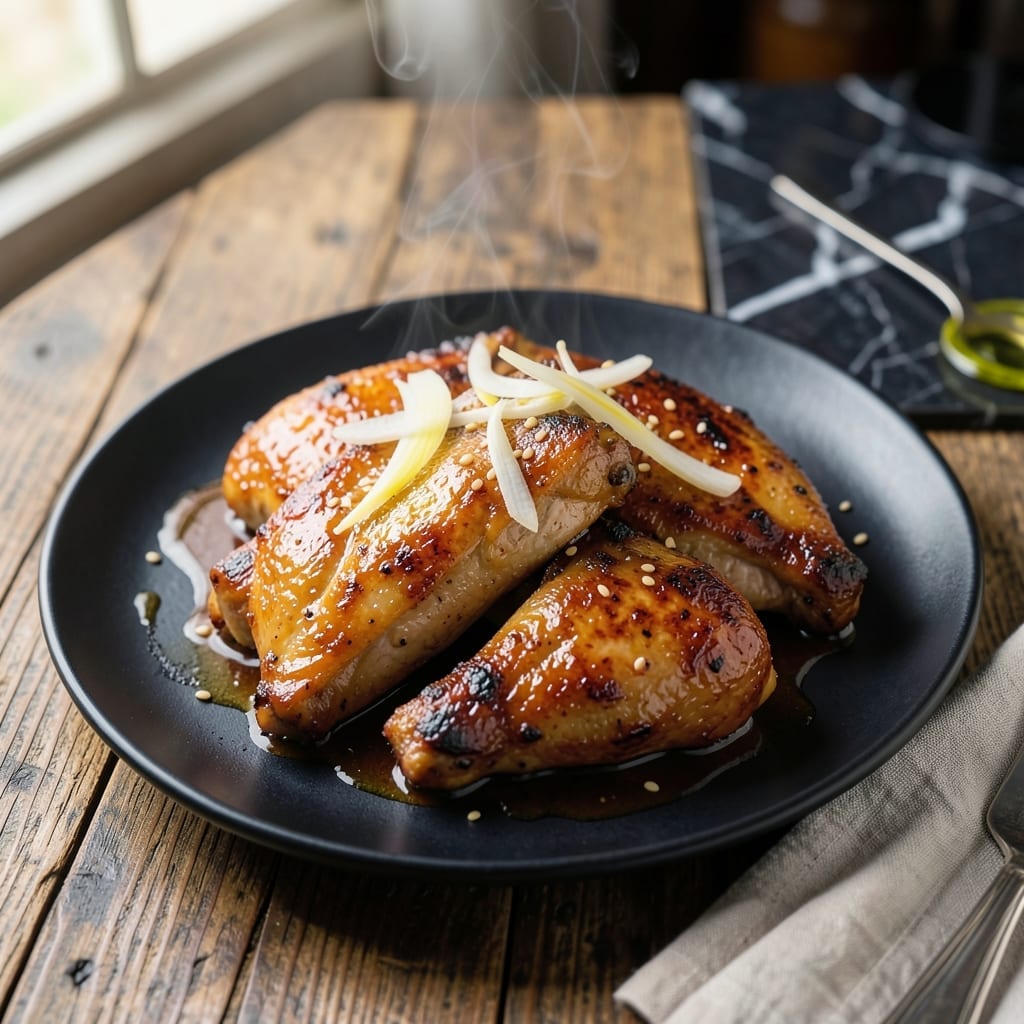
This yakitori-style chicken delivers that perfect balance of sweet and savory I first tasted at a Tokyo izakaya. The glaze caramelizes beautifully over high heat.
Using simple ingredients, this method brings authentic Japanese barbecue flavors to your grill. The result is tender, sticky-sweet chicken with smoky depth.
Ingredients for Japanese Barbecue Chicken
Authentic Japanese flavors with accessible ingredients for your grill at home.
| Ingredient | Amount | Notes |
|---|---|---|
| Chicken Thighs 🍗 | 2 lb | Boneless, skin-on preferred |
| Soy Sauce 🥢 | ½ cup | Low-sodium for balance |
| Mirin 🍶 | ½ cup | Sweet rice wine essential |
| Sake 🍶 | ¼ cup | Dry Japanese rice wine |
| Brown Sugar 🧈 | ⅓ cup | Packed, for caramelization |
| Fresh Ginger 🌿 | 1 tbsp | Grated, for zing |
| Garlic Cloves 🧄 | 4 cloves | Minced for depth |
| Green Onions 🧅 | 4 whole | Thinly sliced for garnish |
| Vegetable Oil 🫒 | 2 tbsp | Neutral flavor, high smoke point |
| Sesame Seeds 🌰 | 1 tbsp | Toasted for garnish |
| Rice Vinegar 🍚 | 1 tbsp | Balances sweetness |
| Red Pepper Flakes 🌶️ | ½ tsp | Optional for heat |
[recipe_ingredient_scaler]
The chicken thighs are non-negotiable here—skin-on, bone-in gives you that crispy, sticky glaze everyone fights over. Whole Foods or Asian markets will have the best selection, but any supermarket will do. Look for thighs with good fat marbling—they stay juicy through the high heat. Mirin and sake are in the international aisle, but Kikkoman’s Aji-Mirin is a reliable brand if you’re unsure.
No mirin? Dry sherry plus a teaspoon of sugar gets you close. Sake can be swapped for dry white wine, but the flavor won’t be as clean. Brown sugar works, but honey or maple syrup add a different depth if that’s what you’ve got. The ginger and garlic are fresh-only—jarred minced just won’t cut it. For extra umami, a splash of fish sauce (yes, even in chicken) works wonders.
The glaze keeps in the fridge for up to 5 days, so make extra—it’s great on veggies or tofu too. Chicken is best served fresh but leftovers reheat well in a skillet with a splash of water. Store cooked chicken in an airtight container for 3-4 days.
Why You’ll Love This Recipe
- 5-Minute Marinade: I just mix soy sauce, mirin, sake, and brown sugar while the thighs warm up—no chopping, no fuss.
- Sticky Sweet Glaze: That caramelized brown sugar with the umami depth from soy and sake? Ridiculously good on juicy thighs.
- Feeds a Hungry Table: I’ve served this to picky kids and dinner guests alike—everyone cleans their plate.
- Even Better Tomorrow: The flavors deepen overnight, so leftovers (if there are any) make a killer next-day lunch.
Step-by-Step Instructions for Japanese Barbecue Chicken
Master the technique and achieve perfectly glazed, tender chicken with a balance of sweet and savory flavors.
Step 1: Prepare the Yakitori Glaze
In a saucepan, combine the 0.5 cup soy sauce, 0.5 cup mirin, 0.25 cup sake, and 0.33 cup brown sugar. Stir over medium heat until the sugar fully dissolves and the mixture begins to simmer.
Add the 1 tbsp fresh ginger and 4 cloves garlic cloves, then reduce heat to low. Let it simmer for 8-10 minutes until the glaze thickens slightly and develops a glossy sheen. This concentration of flavors is essential for the signature yakitori taste.
Step 2: Sear the Chicken Thighs
Heat the 2 tbsp vegetable oil in a large skillet over medium-high heat. Pat the 2 lb chicken thighs dry with paper towels to ensure optimal browning. Season lightly with salt if desired, though the glaze provides ample seasoning.
Sear the chicken skin-side down for 5-6 minutes until the skin is golden brown and crispy. Flip and cook for another 4-5 minutes until the chicken is nearly cooked through. The internal temperature should reach 160°F at this stage.
Step 3: Glaze and Finish the Chicken
Pour half of the prepared glaze over the chicken in the skillet. Increase heat to high and let the sauce bubble and caramelize on the chicken for 1-2 minutes, spooning it over the thighs to coat evenly.
Flip the chicken and repeat with the remaining glaze. Cook for another 1-2 minutes until the chicken reaches an internal temperature of 165°F and the glaze has formed a sticky, glossy coating. Remove from heat immediately to prevent burning the sugar in the glaze.
Step 4: Rest and Garnish
Transfer the chicken to a serving platter and let it rest for 5 minutes. This allows the juices to redistribute, ensuring moist, tender meat.
Thinly slice the 4 whole green onions and sprinkle them over the chicken. Toast the 1 tbsp sesame seeds in a dry pan for 30 seconds until fragrant, then sprinkle them over the dish. For a final touch, drizzle the 1 tbsp rice vinegar over the top to balance the sweetness, and add the 0.5 tsp red pepper flakes if using for a subtle heat. Serve immediately.
Pro Tips For Making Japanese Barbecue Chicken
- Score the Thighs: Cut 2-3 deep slashes into each thigh before marinating—it lets the soy-mirin glaze penetrate deeper and cooks the meat more evenly.
- Reduce the Marinade: After marinating, simmer the leftover sauce for 3-4 minutes to kill bacteria, then brush it on while grilling for maximum flavor without risk.
- Watch the Sugar: Brown sugar burns fast on the grill, so keep the heat medium and move pieces to cooler spots if they start charring too quickly.
- Use Skin-On Thighs: The fat renders down as it cooks, basting the meat in its own juices—way more flavorful than boneless skinless, even if it takes a minute longer.
Health Benefits of This Recipe
Protein Powerhouse
This dish delivers 35 grams of protein per serving from the chicken thighs, supporting muscle repair and growth. The high-quality protein keeps you full longer, making it perfect for active days—especially after my coastal motorcycle rides. 💪
Heart-Healthy Fats
Chicken thighs provide monounsaturated fats that support heart health when enjoyed in moderation. I love that this recipe uses skin-on thighs for flavor, but the balance of fats here is still beneficial compared to red meat options.
Antioxidant Boost
The fresh ginger and garlic in the glaze are packed with antioxidants that combat inflammation. Gingerol in ginger and allicin in garlic have been linked to improved immune function. I always use fresh for maximum benefits. ✨
Low-Carb Friendly
With only 20 grams of carbs per serving (mostly from the glaze), this dish fits well into low-carb lifestyles. The natural sugars in mirin and brown sugar are balanced by the protein, preventing blood sugar spikes.
Rich in B Vitamins
Chicken thighs are an excellent source of B6 and B12, essential for energy metabolism and brain function. The combination with ginger and garlic enhances nutrient absorption, making every bite count.
Essential Minerals
You’ll get a healthy dose of iron and zinc from this recipe, crucial for oxygen transport and immune support. The soy sauce in the glaze adds a bit of iron too, boosting the nutritional profile.
Nutrition Facts
Frequently Asked Questions
Can I use chicken breasts instead of thighs?
You can, but thighs stay juicier due to their higher fat content. Breasts dry out faster, so reduce cooking time to 4-5 minutes per side. For best results, brine them first in saltwater for 30 minutes.
What can I substitute for mirin?
Mix 2 tbsp rice vinegar with 1 tbsp sugar and 2 tbsp water for each 0.5 cup mirin. Or use dry sherry plus 1 tsp sugar for a close match.
How do I prevent the glaze from burning?
Keep heat at medium-high and baste constantly. Remove chicken once it hits 165°F—sugar burns quickly. A well-seasoned cast iron skillet helps distribute heat evenly.
Can I make this in the oven?
Yes! Broil on high for 5-7 minutes per side, basting with glaze every 2 minutes. Place rack in upper third of oven for best caramelization.

Trained in classic French technique but raised on slow-cooked ribs and spicy rubs, she blends culinary skill with smoke and soul.
- Recipe for Boneless Pork Chops in Cast Iron Skillet: Sear and Baste to Juicy Perfection - October 3, 2026
- Recipe for Boneless Cross Rib Roast: Slow-Roasted Beef with Herb Crust - October 3, 2026
- Hamburgers in Sauce Recipe Crock Pot: Slow-Cooked Savory Delight - October 3, 2026