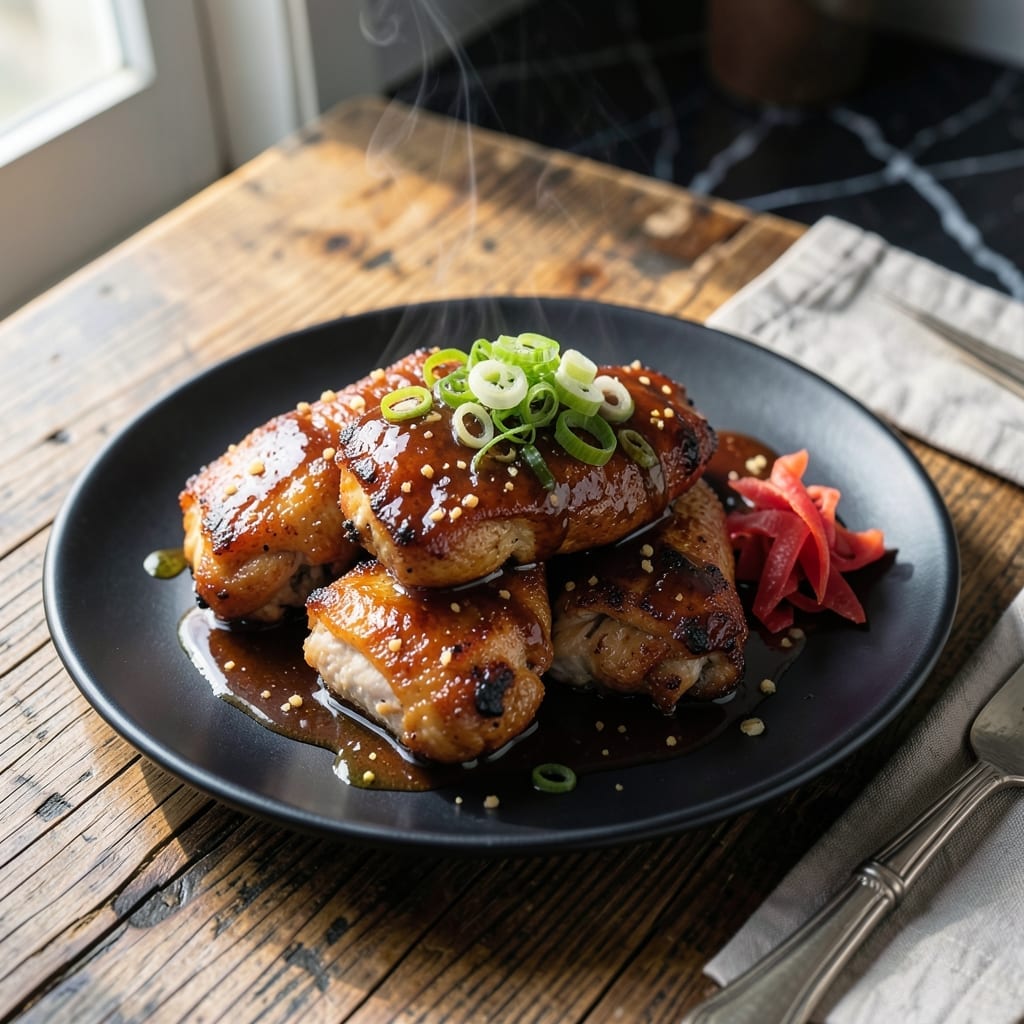
This recipe delivers restaurant-quality chicken with a glossy, umami-rich glaze that caramelizes beautifully on the grill. The Japanese barbecue sauce balances sweet, savory, and smoky notes with precision.
Each bite offers tender, juicy meat coated in a sticky, flavor-packed sauce that elevates simple chicken to a standout dish. Perfect for weeknight dinners or summer cookouts.
Ingredients for Japanese Barbecue Sauce Chicken
Restaurant-quality chicken starts with these bold, umami-packed Japanese ingredients for a glossy, caramelized glaze.
| Ingredient | Amount | Notes |
|---|---|---|
| Boneless Chicken Thighs 🍗 | 2 lb | Skin-on for crispiness, patted dry |
| Soy Sauce 🫒 | ½ cup | Low-sodium preferred for balance |
| Mirin 🍶 | ½ cup | Aji-mirin for authentic sweetness |
| Sake 🍶 | ¼ cup | Dry variety for depth |
| Brown Sugar 🥣 | ¼ cup | Packed, for caramelization |
| Garlic Cloves 🧄 | 4 cloves | Minced finely for even distribution |
| Fresh Ginger 🌿 | 1 tbsp | Grated, peeled before use |
| Rice Vinegar 🍶 | 2 tbsp | Unseasoned for acidity balance |
| Sesame Oil 🫒 | 1 tbsp | Toasted for nutty aroma |
| Gochujang 🌶️ | 1 tbsp | Adjust for desired spice level |
| Vegetable Oil 🫒 | 2 tbsp | Neutral flavor for grilling |
| Green Onions 🧅 | 4 whole | Thinly sliced for garnish |
| Sesame Seeds 🌾 | 1 tbsp | Toasted for garnish |
[recipe_ingredient_scaler]
The chicken thighs are non-negotiable here—bone-in, skin-on delivers the juiciest, most flavorful results. Source them from Whole Foods or a trusted butcher for consistent quality. Mirin and sake are essential for authenticity; Kikkoman and Gekkeikan are reliable brands available at most Asian markets or larger grocery stores. Fresh ginger and garlic should be firm and aromatic (avoid any with soft spots).
No mirin? Substitute with 1 tbsp sugar plus 1 tbsp water per tbsp mirin. Sake can be replaced with dry white wine in a pinch. For a milder sauce, reduce the gochujang to 1 tsp. If you can’t find skin-on thighs, bone-in breasts work but require more careful cooking to prevent drying. The brown sugar can be swapped for honey, though the flavor profile will shift slightly.
The sauce can be made 2 days ahead and stored in the fridge. Marinated chicken should sit no longer than 24 hours to avoid texture breakdown. Leftover cooked chicken keeps for 3-4 days refrigerated. For best results, bring the sauce ingredients to room temperature before combining (worth the extra 10 minutes).
Why You’ll Love This Recipe
- One Pan Magic: I just toss the thighs with soy sauce, mirin, and sake, then let the oven do the work—hardly any cleanup.
- Sweet-Savory Glaze: That brown sugar caramelizes with the soy into this ridiculously good sticky coating.
- Weeknight Hero: Honestly, it’s my go-to for busy Tuesdays when I need dinner fast but still crave-worthy.
- Budget Stretcher: A pound of thighs feeds my family for two meals, and the sauce ingredients last for ages.
Step-by-Step Instructions for Japanese Barbecue Sauce Chicken
Master this method to achieve restaurant-quality results with a perfect balance of sweet, savory, and umami flavors.
Step 1: Prepare the Chicken and Marinade Base
Pat the 2 lb Boneless Chicken Thighs completely dry with paper towels to ensure maximum crispiness when grilled. Trim any excess fat, but leave the skin intact for that signature texture.
In a medium bowl, combine the 0.5 cup Soy Sauce, 0.5 cup Mirin, 0.25 cup Sake, and 0.25 cup Brown Sugar. Stir until the brown sugar fully dissolves—this creates the foundation of your glaze. The mirin adds essential sweetness while the sake provides depth without overpowering.
Step 2: Infuse Aromatics and Develop Flavor
Add the 4 cloves Garlic Cloves (minced) and 1 tbsp Fresh Ginger (grated) to the soy mixture. These aromatics are non-negotiable—they build the complex flavor profile that defines this dish.
Stir in the 2 tbsp Rice Vinegar, 1 tbsp Sesame Oil, and 1 tbsp Gochujang. The rice vinegar balances the richness, while the sesame oil adds a nutty depth. The gochujang introduces a subtle heat that complements the sweetness. Let the marinade sit for 10 minutes to allow the flavors to meld before introducing the chicken.
Step 3: Marinate and Prepare for Grilling
Place the chicken thighs in a large resealable bag or shallow dish. Pour the marinade over the chicken, ensuring each piece is fully coated. Seal and refrigerate for at least 4 hours, or preferably overnight. This extended marination ensures the flavors penetrate deeply.
While the chicken marinated, thinly slice the 4 whole Green Onions and set aside for garnish. Toast the 1 tbsp Sesame Seeds in a dry pan over medium heat for 1-2 minutes until golden brown and fragrant. Remove from heat immediately to prevent burning.
Step 4: Grill to Perfection
Preheat your grill to medium-high heat (about 400°F). Brush the grates with 2 tbsp Vegetable Oil to prevent sticking. Remove the chicken from the marinade (reserve the marinade for basting) and grill skin-side down first for 6-7 minutes.
Flip the chicken and baste with the reserved marinade. Continue grilling for another 5-6 minutes, basting occasionally, until the internal temperature reaches 165°F and the skin is deeply caramelized. The sugars in the marinade will create a beautiful char—watch closely to prevent burning.
Step 5: Rest and Garnish
Transfer the chicken to a cutting board and let it rest for 5 minutes. This allows the juices to redistribute, ensuring moist, flavorful meat. Slice the chicken into strips or leave whole, depending on your preference.
Arrange on a serving platter and garnish with the toasted 1 tbsp Sesame Seeds and sliced 4 whole Green Onions. The contrast of the crispy skin, tender meat, and vibrant garnishes makes this dish as visually impressive as it is delicious. Serve immediately while hot.
Pro Tips For Making Japanese Barbecue Sauce Chicken
- Score the Thighs: Cut 2-3 shallow slits into each thigh before marinating—helps the sauce penetrate deeper and cooks the meat more evenly.
- Reduce the Sauce: Simmer the soy sauce, mirin, sake, and brown sugar for 5-7 minutes first to thicken it slightly—I learned this the hard way after watery glaze ruined my first few batches.
- Skip the Boiling Marinade: Never boil the marinade with raw chicken in it, or you’ll end up with tough, chewy meat; always cook the sauce separately if reusing it.
- Use Skin-On Thighs: Sounds weird, but it works: leaving the skin on while cooking keeps the chicken juicy, then you can crisp it under the broiler at the end.
Best Sauces and Condiments for japanese barbecue sauce chicken
Classic Yakitori Glaze
For an even deeper Japanese flavor, simmer ½ cup reserved marinade with 1 tbsp honey until thickened. This creates a glossy yakitori-style glaze to brush on just before serving. I learned this trick at a Tokyo izakaya. 🌟
Spicy Mayo Drizzle
Combine ¼ cup mayo with 1 tbsp sriracha and 1 tsp lime juice for a creamy contrast. The coolness cuts through the rich umami. Drizzle lightly over the chicken before garnishing with sesame seeds.
Pickled Cucumber Slices
Thinly slice 1 English cucumber and toss with 1 tbsp rice vinegar and ½ tsp salt. Let sit for 15 minutes before serving. The acidity refreshes your palate between bites of the sweet-savory chicken.
Miso Butter Bast
Mix 2 tbsp softened butter with 1 tbsp white miso paste. Brush this on the chicken during the last 2 minutes of grilling for an extra umami boost. I use Miso Master brand for consistent quality.
Citrus Ponzu Dipping
Whisk 3 tbsp soy sauce with 2 tbsp citrus juice (yuzu or lime) and 1 tsp mirin. Serve in small bowls for dipping the crispy chicken skin. The bright citrus notes elevate the dish beautifully. 💛
Sesame Salt Sprinkle
Combine 1 tbsp toasted sesame seeds with ½ tsp flaky sea salt. Sprinkle this mixture over the finished chicken for added texture and a salted sesame crunch that complements the glaze perfectly.
Nutrition Facts
Frequently Asked Questions
Can I use chicken breast instead of thighs?
Yes, but bone-in, skin-on thighs stay juicier. If using breasts, reduce grilling time to 4-5 minutes per side and brine first to prevent dryness. Watch closely to avoid overcooking.
How long can I marinate the chicken?
Marinate for 4-24 hours maximum. Beyond that, the acidity in mirin and vinegar can break down the meat texture. For best results, refrigerate in an airtight container.
What if I don’t have a grill?
Use a grill pan on medium-high heat or broil in the oven at 425°F for 5-6 minutes per side. Baste with sauce as usual for that sticky glaze.
Can I make this sauce ahead of time?
Prepare the sauce up to 3 days in advance. Store in the fridge in a sealed jar. Let it come to room temperature before using for best flavor.

Trained in classic French technique but raised on slow-cooked ribs and spicy rubs, she blends culinary skill with smoke and soul.
- Recipe for Fried Pork Chops With Flour: Crispy Crust and Juicy Centers - October 3, 2026
- Octopus Recipe Pan Fried: Crispy Edges With Tender Bites - October 3, 2026
- Recipe For Fried Pork Chops In An Iron Skillet: Crispy Crust With Juicy Centers - October 3, 2026