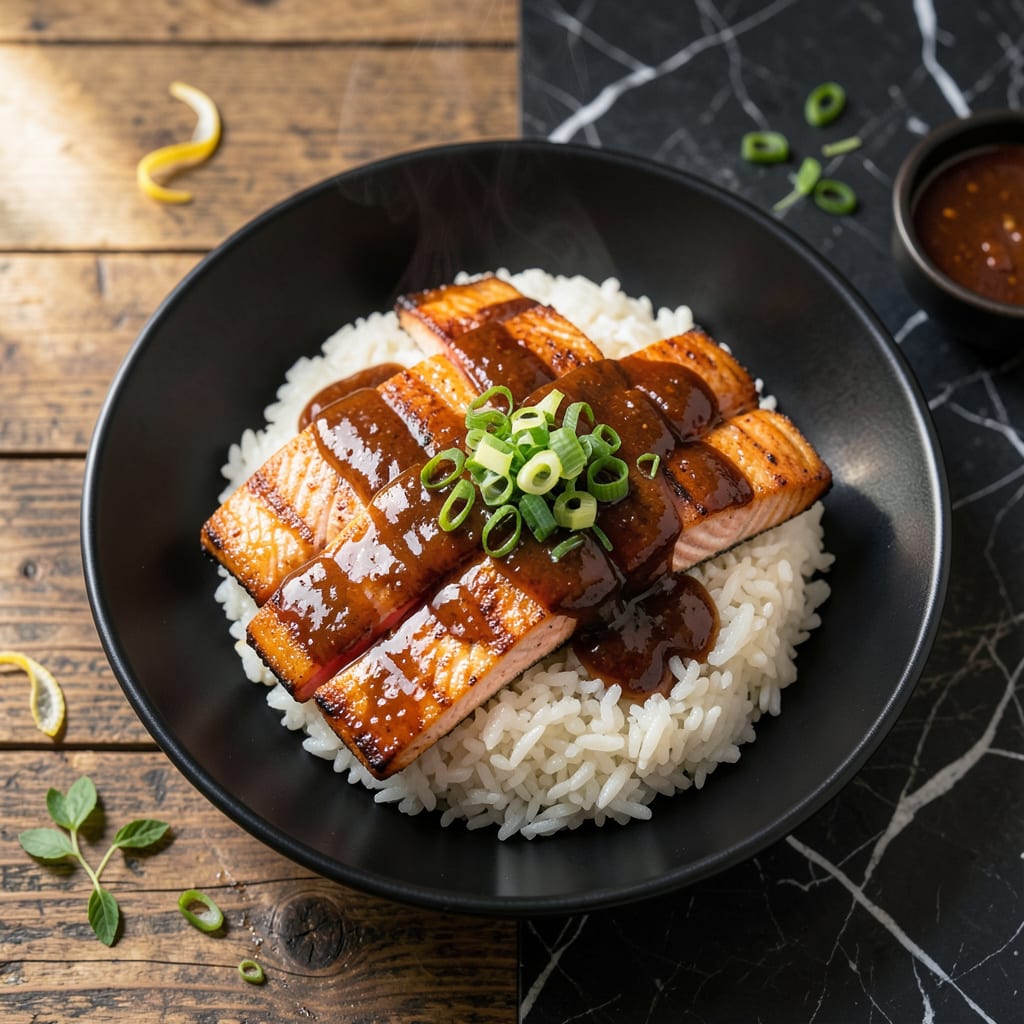
This Japanese BBQ glazed salmon delivers flaky, tender results in just 25 minutes. The sauce caramelizes beautifully, creating a sticky, savory-sweet coating.
I developed this method to ensure the salmon stays moist while achieving that perfect glaze. The high-heat finish locks in flavor and texture, making it restaurant-quality at home.
Ingredients for Japanese Bbq Sauce Salmon
Fresh salmon plus a handful of Japanese pantry staples for that signature sticky glaze.
| Ingredient | Amount | Notes |
|---|---|---|
| Salmon Fillets 🐟 | 1 ½ lb | Skin-on, center-cut preferred |
| Soy Sauce 🫒 | ½ cup | Low-sodium recommended |
| Mirin 🍶 | ¼ cup | Sweet rice wine, essential |
| Sake 🍶 | ¼ cup | Dry Japanese rice wine |
| Brown Sugar 🍚 | 3 tbsp | Light or dark works |
| Rice Vinegar 🍯 | 2 tbsp | Unseasoned variety |
| Fresh Ginger 🌿 | 1 tbsp | Peeled and grated |
| Garlic Cloves 🧄 | 3 cloves | Minced finely |
| Sesame Oil 🫒 | 1 tsp | Toasted for aroma |
| Cornstarch 🌾 | 1 tsp | For thickening sauce |
| Green Onions 🧅 | 2 whole | Thinly sliced, for garnish |
| Sesame Seeds 🌰 | 1 tbsp | Toasted, for garnish |
| Vegetable Oil 🫒 | 1 tbsp | High smoke point for searing |
[recipe_ingredient_scaler]
The salmon quality is non-negotiable here. Wild-caught sockeye or king salmon delivers the best flavor and texture for this preparation. Look for skin-on, center-cut fillets at Whole Foods or a trusted fishmonger—avoid previously frozen unless it’s sushi-grade. The mirin and sake are critical for authentic flavor; Kikkoman and Ozeki are reliable brands found in most Asian markets or the international aisle.
No mirin? Combine 2 tbsp rice vinegar + 1 tbsp sugar + 1 tbsp water as a substitute. Sake can be replaced with dry sherry or white wine in a pinch. For a gluten-free version, use tamari instead of soy sauce. The brown sugar can be swapped for honey or maple syrup (adjust sweetness to taste). Always pat the salmon dry before cooking—this ensures the glaze adheres properly.
The sauce keeps in the fridge for 1 week in an airtight container. Salmon is best cooked fresh but can be stored in the fridge for 1-2 days before cooking. Leftovers reheat nicely in a 300°F oven for 10-12 minutes—cover to prevent drying.
Why You’ll Love This Recipe
- One Pan Magic: I toss the salmon in the soy-mirin-sake glaze and bake—no flipping, no fuss, just a sheet pan and 15 minutes.
- Sweet-Savory Balance: The brown sugar caramelizes with the soy and sake, creating this sticky, umami-rich coating that clings to every bite.
- Weeknight Lifesaver: Honestly, it’s my go-to when I need something fancy enough for guests but simple enough for a Tuesday.
- Leftovers? Yes Please: The flavors deepen overnight, so tomorrow’s lunch tastes even better—cold or reheated.
Step-by-Step Instructions for Japanese BBQ Sauce Salmon
Achieve perfectly glazed and flaky salmon with this precise, professional method.
Step 1: Prepare the Japanese BBQ Glaze
In a small saucepan, combine the 0.5 cup soy sauce, 0.25 cup mirin, 0.25 cup sake, 3 tbsp brown sugar, and 2 tbsp rice vinegar. Whisk until the brown sugar dissolves completely—this ensures an even distribution of sweetness throughout the glaze.
Add the 1 tbsp fresh ginger and 3 cloves garlic cloves, then bring the mixture to a gentle simmer over medium heat. Simmer for 5-6 minutes until the sauce reduces slightly and becomes syrupy. The aroma should intensify, signaling that the flavors are melding properly.
Step 2: Thicken the Glaze
In a small bowl, mix the 1 tsp cornstarch with 1 tsp of cold water to create a slurry. Slowly pour this into the simmering sauce while whisking constantly to prevent lumps. Continue cooking for 1-2 minutes until the glaze thickens enough to coat the back of a spoon.
Remove the saucepan from heat and stir in the 1 tsp sesame oil. This adds a nutty depth to the glaze. Set aside to cool slightly while you prepare the salmon—this prevents the sauce from being too hot when it touches the fish, which could cause it to seize.
Step 3: Sear the Salmon Fillets
Pat the 1.5 lb salmon fillets dry with paper towels to ensure a good sear. Heat the 1 tbsp vegetable oil in a large skillet over medium-high heat until it shimmers. Place the salmon fillets skin-side up in the pan and sear undisturbed for 4-5 minutes until the bottom develops a golden-brown crust.
Carefully flip the fillets and sear the other side for 2-3 minutes. The salmon should release easily from the pan when it’s ready to flip—if it sticks, let it cook a bit longer. Reduce heat to medium-low to maintain control over the cooking process.
Step 4: Glaze and Finish the Salmon
Pour the slightly cooled glaze evenly over the salmon fillets. Use a spoon to baste the tops and sides, ensuring each piece is fully coated. Cover the skillet and let the salmon cook for another 3-4 minutes until it reaches an internal temperature of 145°F and flakes easily with a fork.
The glaze should caramelize slightly, creating a glossy, sticky coating on the salmon. Avoid overcooking—remove the skillet from heat as soon as the salmon is done to prevent the glaze from burning.
Step 5: Garnish and Serve
Transfer the glazed salmon to a serving platter. Sprinkle with the 2 whole green onions, thinly sliced, and the 1 tbsp sesame seeds. The green onions add a fresh contrast, while the sesame seeds provide a subtle crunch.
Let the salmon rest for 2-3 minutes before serving to allow the juices to redistribute. Serve immediately with steamed rice or vegetables to soak up the extra glaze. Each bite should deliver tender, flaky salmon with a rich, umami-packed sauce.
Pro Tips For Making Japanese Bbq Sauce Salmon
- Pat Salmon Dry: I learned this the hard way—skip this and your sauce won’t cling properly. Press the fillets with paper towels until they’re bone-dry before adding the marinade.
- Simmer the Sauce: After burning my first batch, I now simmer the soy, mirin, sake, and brown sugar for 3-4 minutes until it thickens slightly. Raw alcohol taste gone, flavor concentrated.
- Skip Overcrowding: Resist the urge to cram all fillets in one pan. Give each piece space so the sauce reduces instead of steaming the salmon.
- Use Skin-On Fillets: Sounds weird, but it works: the skin holds the fish together while the sauce caramelizes. Plus, it looks way better on the plate.
Dietary Considerations for This Recipe
Gluten-Free Option
Swap the soy sauce for tamari—it’s naturally gluten-free and delivers the same deep umami flavor. I always keep a bottle of San-J Tamari in my pantry for this exact reason. The rest of the ingredients are already gluten-free, so no other changes are needed. 💪
Low-Sodium Adaptation
Use low-sodium soy sauce or tamari to cut the salt content by nearly 40%. You can also reduce the total soy sauce to ⅓ cup and add 2 tbsp water to balance the volume. Taste the glaze before finishing and adjust with a pinch of salt if needed.
Dairy-Free and Vegan
This dish is naturally dairy-free, but for a vegan version, replace the salmon with thick-cut tofu or tempeh. Press the tofu first to remove excess moisture, then sear and glaze it using the same method. The flavors work beautifully with plant-based proteins too.
Sugar Alternatives
Replace the brown sugar with honey or maple syrup for a refined sugar-free option. Use 2 tbsp of either, as they’re sweeter than sugar. If you’re avoiding sweeteners entirely, increase the mirin to ⅓ cup for natural sweetness from the rice wine.
Pescatarian-Friendly
This recipe is already pescatarian, but ensure your mirin and sake are fish-free—some brands use bonito (fish) flakes in production. I recommend Takara or Hinode brands for guaranteed fish-free versions. Always check labels to be safe.
Allergen Notes
The primary allergens here are soy (from soy sauce) and sesame (from oil and seeds). For soy allergies, use coconut aminos as a substitute. For sesame allergies, replace sesame oil with avocado oil and omit the seeds. 🌱
Nutrition Facts

Trained in classic French technique but raised on slow-cooked ribs and spicy rubs, she blends culinary skill with smoke and soul.
- Recipe for Boneless Pork Chops in Cast Iron Skillet: Sear and Baste to Juicy Perfection - October 3, 2026
- Recipe for Boneless Cross Rib Roast: Slow-Roasted Beef with Herb Crust - October 3, 2026
- Hamburgers in Sauce Recipe Crock Pot: Slow-Cooked Savory Delight - October 3, 2026