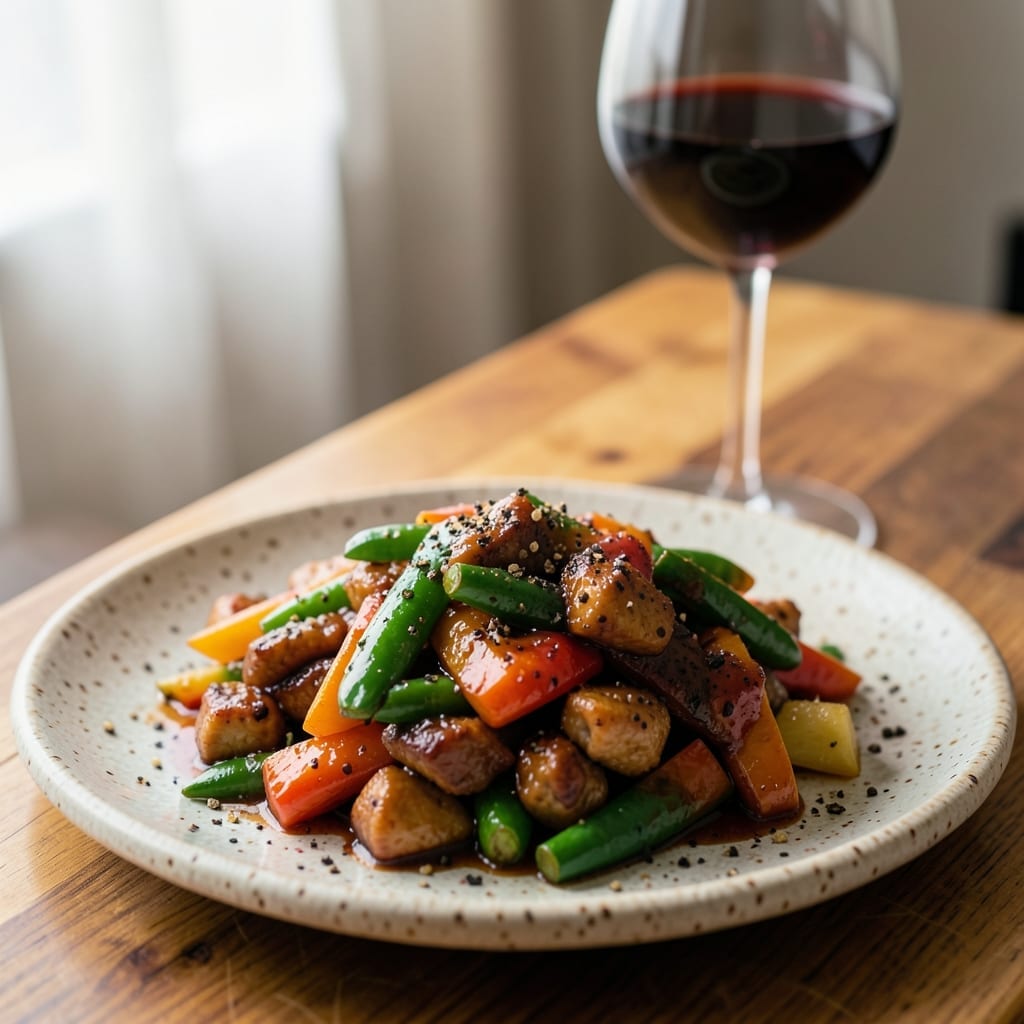
This stir fry delivers bold, savory flavors with a rich Japanese BBQ sauce that transforms simple ingredients into something extraordinary.
High heat and quick cooking preserve the vegetables’ crisp-tender texture while the sauce creates a glossy, umami-packed glaze.
Ingredients for Japanese Bbq Sauce Stir Fry
Transform everyday ingredients into a restaurant-worthy dish with this glossy Japanese-inspired sauce.
| Ingredient | Amount | Notes |
|---|---|---|
| Boneless Chicken Thighs 🍗 | 1 ½ lb | Cut into bite-sized pieces |
| Bell Peppers 🌶️ | 2 whole | Assorted colors, sliced thin |
| Snap Peas 🌿 | 2 cups | Trimmed, fresh or frozen |
| Carrots 🥕 | 2 whole | Julienned for quick cooking |
| Red Onion 🧅 | 1 whole | Thinly sliced into strips |
| Garlic Cloves 🧄 | 4 cloves | Minced for maximum flavor |
| Fresh Ginger 🌿 | 1 tbsp | Grated or finely minced |
| Soy Sauce 🫒 | ⅓ cup | Low-sodium preferred |
| Brown Sugar 🍚 | ¼ cup | Packed for sweetness balance |
| Rice Vinegar 🍋 | 3 tbsp | For acidity and brightness |
| Mirin 🍶 | 2 tbsp | Sweet rice wine essential |
| Sesame Oil 🫒 | 1 tbsp | Toasted for aroma |
| Cornstarch 🌾 | 1 tbsp | Slurry with water to thicken |
| Vegetable Oil 🫒 | 3 tbsp | High smoke point for stir-frying |
| Sesame Seeds 🌿 | 1 tbsp | Toasted for garnish |
[recipe_ingredient_scaler]
For authentic flavor, mirin and rice vinegar are non-negotiable—find them in the Asian aisle at Whole Foods or any well-stocked supermarket. The chicken thighs add richness; boneless, skinless ensures even cooking. Fresh ginger and garlic are key for that bright, aromatic base (powdered just won’t cut it). Look for toasted sesame oil—it’s darker and more fragrant than the untouched variety.
No mirin? Substitute with 1 tbsp sugar plus 1 tbsp dry sherry. Swap chicken for tofu or shrimp if preferred. Bell peppers can be any color, but red adds sweetness. For a gluten-free version, use tamari instead of soy sauce. The cornstarch slurry is what gives the sauce its signature gloss, so don’t skip it (or use arrowroot in a pinch).
The sauce can be made 2 days ahead—store in the fridge. Vegetables and chicken are best prepped just before cooking. Leftovers keep for 3-4 days in an airtight container. Reheat gently to avoid making the sauce too thick.
Why You’ll Love This Recipe
- One Pan Wonder: I just toss the chicken thighs, bell peppers, and snap peas in with the sauce—no fancy techniques, no extra dishes.
- Sweet & Savory Bomb: That Japanese BBQ sauce caramelizes on the chicken and veggies, making every bite ridicously good.
- Meal Prep MVP: Honestly, it tastes even better the next day, so I double the batch for lunches all week.
- Budget Stretcher: A pound of thighs and a handful of veggies feed my family of four, and no one complains.
Step-by-Step Instructions for Japanese BBQ Sauce Stir Fry
Master the wok technique and achieve restaurant-quality results with this precise method.
Step 1: Prepare the Chicken and Vegetables
Cut the 1.5 lb Boneless Chicken Thighs into 1-inch pieces for even cooking. I prefer thighs over breasts for their richer flavor and resistance to drying out during high-heat cooking. Thinly slice the 2 whole Bell Peppers, 1 whole Red Onion, and julienned 2 whole Carrots into uniform strips.
Trim the 2 cups Snap Peas if using fresh, removing any tough strings. Mince the 4 cloves Garlic Cloves and grate the 1 tbsp Fresh Ginger. This prep work ensures all ingredients cook at the same rate in the wok. Keep everything organized in separate piles for efficient cooking.
Step 2: Create the Japanese BBQ Sauce
In a bowl, whisk together the 0.33 cup Soy Sauce, 0.25 cup Brown Sugar, 3 tbsp Rice Vinegar, 2 tbsp Mirin, and 1 tbsp Sesame Oil. The brown sugar should be packed firmly for proper sweetness balance. Stir until the sugar fully dissolves and the mixture becomes glossy.
In a small separate bowl, mix the 1 tbsp Cornstarch with 2 tbsp water to create a smooth slurry. This will thicken the sauce to the perfect consistency for coating the stir fry. Set both the sauce and slurry aside until ready to use.
Step 3: Stir-Fry the Chicken and Aromatics
Heat a wok or large skillet over high heat until smoking hot. Add 2 tbsp Vegetable Oil and swirl to coat the surface. Add the chicken pieces in a single layer, working in batches if necessary to avoid overcrowding. Cook undisturbed for 2-3 minutes until the bottoms develop a golden-brown sear.
Flip the chicken and add the minced garlic and grated ginger. Stir-fry for another 2 minutes until the chicken is cooked through and the aromatics become fragrant. Remove the chicken and any accumulated juices to a plate, leaving the oil in the wok.
Step 4: Cook the Vegetables and Combine
Add the remaining 1 tbsp Vegetable Oil to the wok. Toss in the bell peppers, red onion, carrots, and snap peas. Stir-fry over high heat for 3-4 minutes until the vegetables are tender-crisp and the peppers begin to blister slightly. The carrots should maintain a slight bite.
Return the chicken to the wok and pour the sauce mixture over everything. Stir well to combine and bring to a simmer. Slowly drizzle in the cornstarch slurry while stirring constantly. Cook for 1-2 minutes until the sauce thickens to a glossy coating that clings to the ingredients.
Step 5: Finish and Serve
Remove from heat and stir in the 1 tbsp Sesame Seeds. The sauce should be thick enough to coat the back of a spoon, with all ingredients glistening. Taste and adjust seasoning if needed, though the balanced sweet-savory profile should be perfect as is.
Transfer to a serving platter and garnish with additional sesame seeds if desired. Serve immediately over steamed rice to soak up every bit of the rich, umami-packed sauce. The vegetables should maintain their vibrant colors and slight crispness, perfectly complementing the tender chicken.
Pro Tips For Making Japanese Bbq Sauce Stir Fry
- Velocity Cut Veggies: Slice bell peppers, snap peas, and carrots into thin, even strips—about 1/8-inch thick. This ensures they cook through in the same 3-4 minutes as the chicken without turning mushy.
- Dry the Chicken: Pat the boneless chicken thighs very dry with paper towels before cooking. I learned this the hard way—wet meat steams instead of searing, and your stir fry will taste boiled.
- Skip the Overcrowd: Cook the chicken in two batches if needed—about 1 lb per batch in a 12-inch pan. Crowding drops the temperature fast, and you’ll end up with pale, sad chicken instead of golden, saucy bites.
- Bloom the Sauce: After removing the chicken, pour the Japanese BBQ sauce into the same hot pan and let it bubble for 60 seconds before adding veggies. This deepens the flavor and thickens it just enough to cling to everything.
Best Sauces and Condiments for japanese bbq sauce stir fry
Elevate your Japanese BBQ sauce stir fry with these mouthwatering sauces and condiments 🔥😋. Whether you’re a fan of heat, sweetness, or umami depth, there’s a perfect match for your dish.
Spicy Options
For those who love a kick, try Sriracha or Gochujang to add fiery depth. A homemade blend of chili flakes, garlic, and soy sauce can also bring the heat without overpowering the dish. Store-bought options like Kewpie Spicy Mayo offer a creamy, tangy spice that pairs beautifully with grilled meats and veggies.
Sweet and Tangy
A classic teriyaki sauce (homemade or store-bought like Kikkoman) delivers a glossy, sweet-savory finish. For a tangy twist, mix rice vinegar with a touch of honey or Yakitori sauce for a balanced, sticky glaze. These sauces caramelize beautifully in the wok, locking in flavor.
Umami Bombs
Boost richness with miso paste or hoisin sauce, which add deep, savory notes. A homemade umami blend of soy sauce, mirin, and dashi can also work wonders. For convenience, Lee Kum Kee Char Siu Sauce is a store-bought favorite that brings instant complexity.
Nutrition Facts

Trained in classic French technique but raised on slow-cooked ribs and spicy rubs, she blends culinary skill with smoke and soul.
- Recipe for Boneless Pork Chops in Cast Iron Skillet: Sear and Baste to Juicy Perfection - October 3, 2026
- Recipe for Boneless Cross Rib Roast: Slow-Roasted Beef with Herb Crust - October 3, 2026
- Hamburgers in Sauce Recipe Crock Pot: Slow-Cooked Savory Delight - October 3, 2026