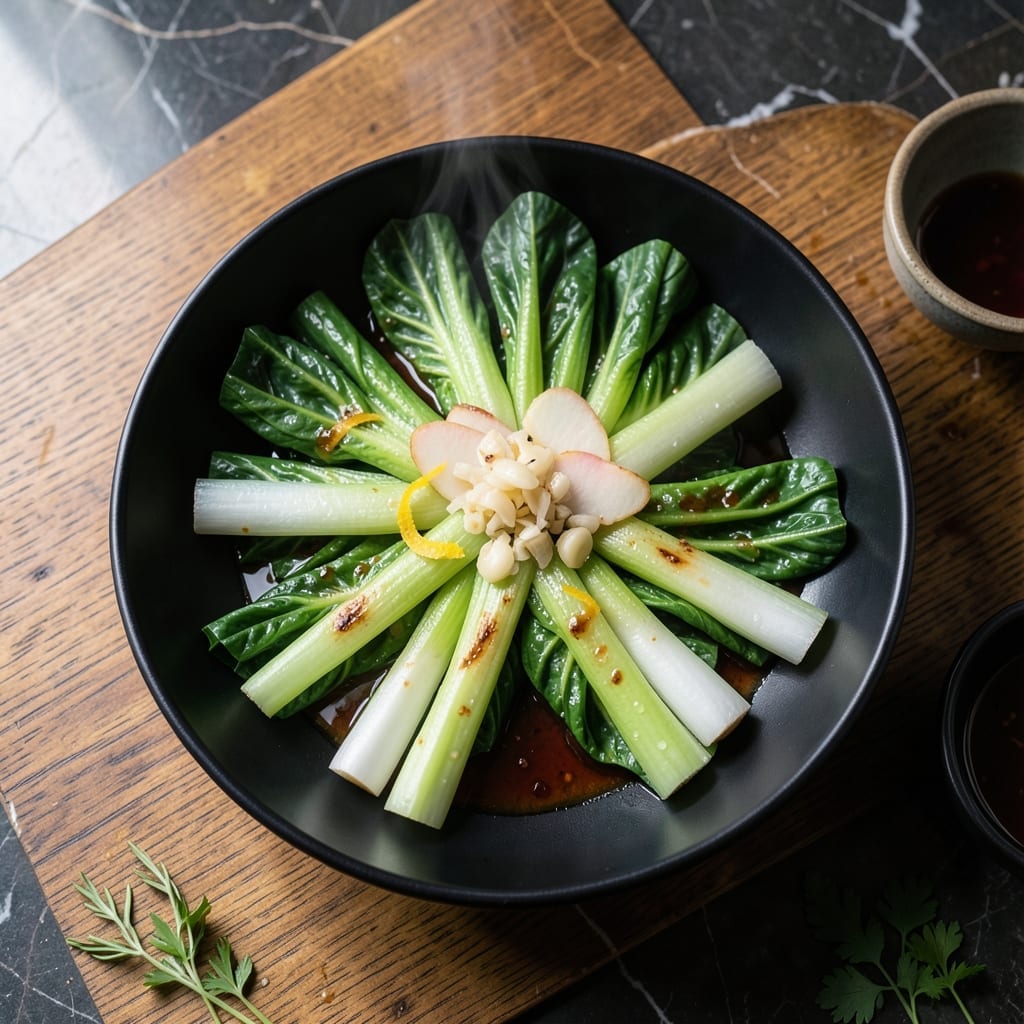
This stir-fry method transforms humble bok choy into a dish with crisp-tender perfection every time. I developed this technique after multiple attempts to replicate the texture I remembered from my favorite Japanese restaurants.
The key is high heat and quick cooking, which preserves the vegetable’s natural sweetness while creating those desirable charred edges. A simple sauce of soy, sake, and mirin enhances without overpowering the perfect balance of flavors.
You’ll achieve restaurant-quality results with minimal ingredients and 10 minutes of active cooking. The bok choy retains its vibrant green color and satisfying crunch, making it an ideal side for any Asian-inspired meal.
This foolproof approach works with both baby and mature bok choy, adapting easily to what’s available at your local market.
Ingredients for Japanese Bok Choy
Transform humble greens into a vibrant dish with just a handful of pantry staples.
| Ingredient | Amount | Notes |
|---|---|---|
| Baby Bok Choy 🥬 | 8 whole | Or mature bok choy, quartered |
| Vegetable Oil 🫒 | 2 tbsp | High smoke point preferred |
| Garlic Cloves 🧄 | 3 cloves | Thinly sliced for even cooking |
| Fresh Ginger 🌿 | 1 tbsp | Peeled and minced finely |
| Soy Sauce 🫙 | 3 tbsp | Low-sodium if preferred |
| Sake 🍶 | 2 tbsp | Dry variety for cooking |
| Mirin 🍯 | 1 tbsp | Sweet rice wine essential |
| Rice Vinegar 🍚 | 1 tsp | Unseasoned for balance |
| Coconut Sugar 🥥 | 1 tsp | Or agave nectar for sweetness |
| Sesame Oil 🫒 | 1 tsp | Toasted, for finishing |
| Sesame Seeds 🌰 | 1 tbsp | Toasted for garnish |
| Red Pepper Flakes 🌶️ | ½ tsp | Optional for heat |
| Green Onions 🧅 | 2 whole | Thinly sliced for topping |
[recipe_ingredient_scaler]
The bok choy is everything here. Baby bok choy is sweeter and more tender, but mature works if that’s what’s available—just slice it thinner. Asian markets usually have the freshest, but I’ve grabbed great bunches at Whole Foods too. Look for firm stalks with bright green leaves, no wilting or yellowing. The ginger and garlic should be fresh (not the jarred stuff) for that authentic pop of flavor.
No sake? Dry white wine works in a pinch, or skip it entirely and add an extra tablespoon of soy. Mirin can be swapped with 1 tsp sugar + 2 tsp rice vinegar, though the depth won’t be quite the same. Short on sesame oil? Toasted peanut oil gives a similar nutty finish. For heat, Sriracha or chili crisp can replace the red pepper flakes—just adjust to taste.
Bok choy wilts fast, so use it within 2-3 days. Store unwashed in a plastic bag with a paper towel to absorb moisture. The sauce keeps for 1 week in the fridge—perfect for doubling and using later. Leftovers reheat well, but the texture is best fresh off the stove.
Why You’ll Love This Recipe
- One Pan Wonder: I just toss the baby bok choy in with garlic, ginger, and soy sauce—no fancy techniques, just a hot pan and five minutes.
- Umami Bomb: The combination of soy sauce with fresh ginger and garlic hits that savory-sweet spot that makes me go back for seconds.
- Weeknight Rescue: Honestly, it’s my go-to when I need a veggie side that pairs with anything from grilled chicken to rice bowls.
- Budget Friendly: A bunch of baby bok choy costs pennies, and this dish stretches it into something that feels like a restaurant side.
Step-by-Step Instructions for Stir-Fried Baby Bok Choy
Here’s the method I use for restaurant-quality results every time with this dish.
Step 1: Prepare the Baby Bok Choy and Aromatics
Separate the 8 whole baby bok choy into individual leaves, keeping the base intact if they’re small. Rinse thoroughly and pat dry with a clean towel—this prevents splattering when they hit the hot pan. I like to trim any tough ends, but leave most of the stem for texture contrast.
Mince the 1 tbsp fresh ginger finely and thinly slice the 3 cloves garlic cloves. Having these ready before cooking is crucial because stir-frying happens fast. Thinly slice the 2 whole green onions, keeping the white and green parts separate for garnish.
Step 2: Create the Stir-Fry Sauce
In a small bowl, combine the 3 tbsp soy sauce, 2 tbsp sake, 1 tbsp mirin, 1 tsp rice vinegar, and 1 tsp coconut sugar. Whisk until the coconut sugar dissolves completely. This balance of salty, sweet, and umami is what makes this dish special.
Have this sauce ready by the stove. I also measure out the 1 tsp sesame oil and 1 tbsp sesame seeds in separate small dishes—once the cooking starts, you won’t have time to hunt for ingredients.
Step 3: Stir-Fry the Aromatics and Bok Choy
Heat the 2 tbsp vegetable oil in a large skillet or wok over medium-high heat until it shimmers. Add the sliced garlic and minced ginger, stirring constantly for 30 seconds until fragrant but not browned. Burnt garlic turns bitter, so watch closely.
Add all the baby bok choy in a single layer, stem-side down first. Cook undisturbed for 1-2 minutes until the stems begin to soften slightly. Then stir-fry for another 2-3 minutes until the leaves wilt but retain their vibrant green color and slight crispness.
Step 4: Finish with Sauce and Garnishes
Pour the prepared sauce over the bok choy and toss gently to coat. Cook for an additional 30-60 seconds until the sauce thickens slightly and glazes the vegetables. The leaves should be tender-crisp and the stems should yield slightly when pierced with a fork.
Remove from heat and drizzle with the 1 tsp sesame oil. Sprinkle with 1 tbsp sesame seeds and the sliced green onions. For a touch of heat, add the 0.5 tsp red pepper flakes now. Toss once more and serve immediately while hot.
Pro Tips For Making Japanese Bok Choy
- Blanch First: I learned this the hard way—blanching the bok choy in boiling water for 30 seconds before stir-frying removes bitterness and keeps the leaves crisp. Skip this and you’ll taste the difference.
- Slice Ginger Thin: Fresh ginger can overpower if cut too thick. Shave it paper-thin or mince finely—about 1 teaspoon per 4 bok choy—to let its warmth shine without dominating.
- Don’t Overcrowd: Tossing all the bok choy in at once steams instead of sears. Cook in batches if needed, giving each leaf room to char slightly in the oil.
- Add Soy Last: Sounds weird, but it works: drizzle the soy sauce in the final 10 seconds of cooking to avoid soggy greens. The heat caramelizes it just enough for depth.
Pro Cooking Tips for This Recipe
High Heat Matters
Crank your burner to medium-high heat and let the pan get screaming hot before adding oil. I test by flicking a drop of water—it should sizzle and evaporate immediately. This ensures your bok choy gets those desirable charred edges rather than steaming in its own juices. 🔥
Dry Ingredients First
After rinsing, I always pat the bok choy completely dry with a clean towel. Excess water causes oil to splatter dangerously and prevents proper browning. Even a little moisture can turn your stir-fry into a sad, soggy mess.
Single Layer Cooking
Don’t overcrowd the pan—cook in batches if needed. Each piece should have contact with the hot surface. I learned this the hard way when my first attempt resulted in steamed rather than stir-fried vegetables.
Sauce Timing
Add the sauce only in the final 30-60 seconds of cooking. Adding it too early creates steam, which softens the bok choy too much. The sauce should glaze the vegetables, not drown them.
Rest Before Serving
Let the finished dish sit for 1-2 minutes off the heat. This allows the flavors to meld and the sauce to thicken slightly. I always taste and adjust with an extra pinch of sugar or splash of soy if needed. 💡
Garnish Last
Sesame oil and seeds go on after removing from heat to preserve their fresh flavors. The residual heat will lightly toast the sesame seeds, enhancing their nuttiness without burning them.
Nutrition Facts
Frequently Asked Questions
What if I can’t find baby bok choy?
Mature bok choy works just as well—just cut it into 1-inch pieces. The stems will need slightly longer to cook, so add them to the pan 1-2 minutes before the leaves.
Can I make this ahead of time?
It’s best served fresh, but you can prep ingredients in advance. Store chopped veggies and sauce separately in the fridge for up to 4 hours. Cook just before serving.
Why did my bok choy turn out soggy?
Most likely, the pan wasn’t hot enough or you added too much sauce too early. Use medium-high heat and add sauce only in the final 30-60 seconds.
Is there a gluten-free option?
Yes! Swap regular soy sauce for tamari or coconut aminos. All other ingredients are naturally gluten-free. Always check labels to be safe.

Trained in classic French technique but raised on slow-cooked ribs and spicy rubs, she blends culinary skill with smoke and soul.
- Recipe for Boneless Pork Chops in Cast Iron Skillet: Sear and Baste to Juicy Perfection - October 3, 2026
- Recipe for Boneless Cross Rib Roast: Slow-Roasted Beef with Herb Crust - October 3, 2026
- Hamburgers in Sauce Recipe Crock Pot: Slow-Cooked Savory Delight - October 3, 2026