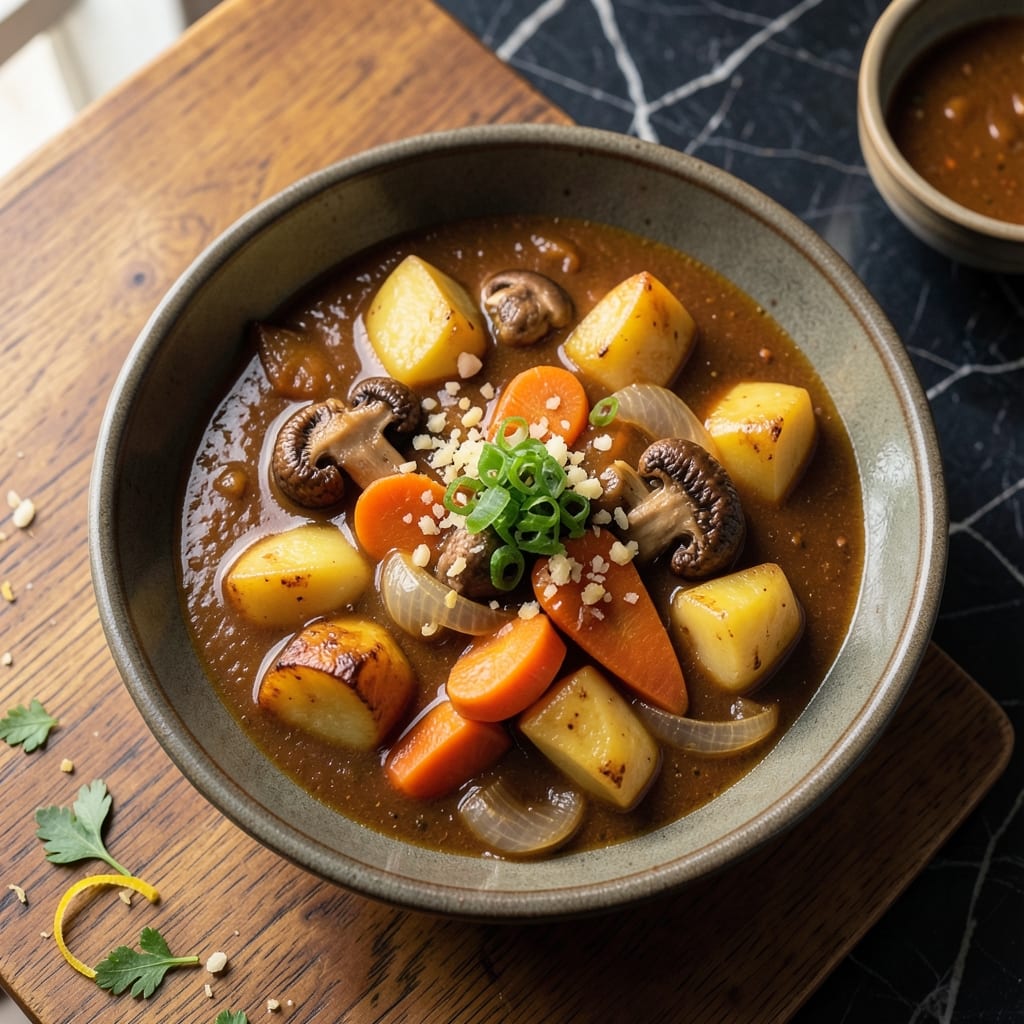
I developed this vegetarian version after realizing plant-based ingredients could deliver the same rich depth as traditional Japanese curry. The secret lies in layering umami from mushrooms, potatoes, and carrots.
This recipe transforms humble vegetables into a comforting meal with the same thick, velvety sauce you expect from classic versions. No meat needed to achieve that signature hearty texture.
You’ll create a dish with perfectly tender potatoes, sweet carrots, and earthy mushrooms all coated in a spiced, slightly sweet curry sauce. The aroma alone makes it worth the effort.
Ready in about 45 minutes, this satisfies cravings for warmth and flavor without compromising on authenticity.
Ingredients for Japanese Curry Recipe Vegetarian
Humble vegetables meet umami-rich curry roux for a satisfying plant-based dish.
| Ingredient | Amount | Notes |
|---|---|---|
| Yukon Gold Potatoes 🥔 | 1 ½ lb | Peeled and cubed evenly |
| Carrots 🥕 | 3 whole | Peeled, sliced into rounds |
| Cremini Mushrooms 🍄 | 8 oz | Wiped clean, quartered |
| Yellow Onion 🧅 | 1 whole | Diced medium-fine |
| Garlic Cloves 🧄 | 4 cloves | Minced finely |
| Fresh Ginger 🌿 | 1 tbsp | Grated or minced |
| Japanese Curry Roux Blocks 🍛 | 4 pieces | Vegetarian variety like S&B Golden |
| Vegetable Broth 🥫 | 3 cups | Low-sodium preferred |
| Apple 🍎 | 1 whole | Peeled, grated for sweetness |
| Soy Sauce 🫒 | 2 tbsp | Low-sodium or tamari |
| Honey 🍯 | 1 tbsp | Or maple syrup for vegan option |
| Neutral Oil 💧 | 2 tbsp | Vegetable or canola oil |
| Bay Leaf 🍃 | 1 whole | Dried, for depth |
| Salt 🧂 | 1 tsp | Adjust to taste |
| Black Pepper 🌶️ | ½ tsp | Freshly ground |
[recipe_ingredient_scaler]
The mushrooms are key here—cremini or shiitake give that meaty depth vegetarians crave. Trader Joe’s has great pre-sliced options if you’re short on time. For the curry roux, S&B Golden is widely available and vegetarian-friendly (check the label, as some contain animal products). Potatoes should be Yukon Gold for their buttery texture, but Russets work in a pinch (they just fall apart more).
No curry roux? Make a slurry with flour, curry powder, and oil, but the flavor won’t be the same. Swap the apple for a spoonful of applesauce if that’s what you’ve got. For gluten-free, use tamari instead of soy sauce and check your roux brand. The honey can be maple syrup or agave—just avoid artificial sweeteners, as they don’t caramelize the same way.
Curry tastes even better the next day. Keeps in the fridge for 4-5 days or freeze for up to 3 months. Reheat gently to avoid breaking the sauce. Leftovers make an amazing filling for pot pies (just add a puff pastry top).
Why You’ll Love This Recipe
- One Pot Wonder: I love that this comes together in a single pot—just chop the Yukon Golds, carrots, and mushrooms, then let them simmer with the onions and garlic.
- Rich Comfort: The cremini mushrooms add this deep, umami flavor that makes the curry taste like it’s been cooking all day.
- Feeds a Crowd: Honestly, I make a big batch on Sunday and it’s my lunch all week—still tastes amazing reheated.
- Budget Stretcher: Between us, it’s filling, delicious, and costs almost nothing since it’s just potatoes, carrots, and a few other simple ingredients.
Step-by-Step Instructions for Japanese Vegetarian Curry
Here’s how I build layers of flavor for this hearty, comforting dish every time.
Step 1: Bloom Aromatics in Hot Oil
Heat the 2 tbsp neutral oil in a large pot over medium heat. Add the diced yellow onion and cook for 5-6 minutes until it turns translucent and just begins to caramelize at the edges. This slow start prevents burning and builds a sweet, deep base.
Stir in the minced garlic cloves and grated fresh ginger, cooking for 1-2 minutes until the mixture becomes fragrant. The garlic should soften but not brown—if it starts to darken, lower the heat immediately. These aromatics are the foundation of your curry’s complexity.
Step 2: Build the Vegetable and Liquid Base
Add the cubed Yukon Gold potatoes, sliced carrots, and quartered cremini mushrooms to the pot. Stir to coat everything in the aromatic oil and cook for 3-4 minutes to soften slightly. This step jumpstarts the cooking process before adding liquid.
Pour in the 3 cups vegetable broth, then add the grated apple, 2 tbsp soy sauce, 1 tbsp honey, 1 whole bay leaf, 1 tsp salt, and 0.5 tsp black pepper. Stir well and bring to a gentle boil. The apple adds natural sweetness that balances the curry’s richness.
Step 3: Simmer Until Vegetables Are Tender
Reduce the heat to medium-low and let the mixture simmer uncovered for 15-20 minutes, stirring occasionally. You’ll know it’s ready when the potatoes are fork-tender and the carrots have softened but still hold their shape.
Keep an eye on the liquid level—if it reduces too much before the vegetables are done, add a splash of water. The goal is a stew-like consistency with vegetables that are fully cooked but not mushy.
Step 4: Thicken with Roux and Finish
Break the 4 pieces Japanese curry roux blocks into the pot, stirring constantly as they dissolve. The mixture will thicken almost immediately—keep stirring to prevent lumps from forming. Cook for an additional 5 minutes on low heat to let the flavors meld.
Taste and adjust seasoning if needed. The curry should be rich, slightly sweet, and deeply savory. Remove the bay leaf before serving. The sauce will continue to thicken as it cools, so if it seems too thick, stir in a little hot water to reach your desired consistency.
Pro Tips For Making Japanese Curry Recipe Vegetarian
- Parboil Potatoes First: Yukon Golds can turn to mush if added raw to the curry—parboil them for 5-7 minutes until just fork-tender so they hold their shape but soak up the sauce.
- Bloom the Spices: After sautéing the onion and garlic, let the curry roux cook for 1-2 minutes in the oil before adding liquids—this deepens the flavor and prevents a raw, starchy taste.
- Skip Unpeeled Carrots: I learned this the hard way: carrot skins can make the sauce slightly bitter, so peel them even if it feels tedious.
- Use Mushroom Stock: Swap water for a quick mushroom stock made from the cremini stems and a splash of soy sauce—it adds umami without extra effort.
Perfect Pairings for japanese curry recipe vegetarian
Side Dish Pairings
I love serving this with steamed Japanese white rice—about 1 cup uncooked per person. The rice soaks up that rich, spiced sauce beautifully. For a lighter option, try brown rice or even quinoa.
Fresh Accompaniments
A simple quick-pickled cucumber salad cuts through the richness. Thinly slice 1 cucumber and toss with 2 tbsp rice vinegar, 1 tsp sugar, and a pinch of salt. Let it sit for 10 minutes while the curry finishes. 🥗
Beverage Matches
Green tea is classic, but I prefer cold brewed hojicha—its roasted, nutty notes complement the curry’s warmth. For beer lovers, a crisp Japanese lager like Sapporo cleanses the palate between bites.
Comforting Additions
Add a side of miso soup with tofu and wakame for a full Japanese meal. I use 1 tbsp white miso paste per bowl of hot water. The umami depth pairs perfectly with the curry’s spices.
Bread Options
For scooping up every last bit of sauce, serve with warm naan or pita bread. Toast it lightly in the oven at 350°F for 3-4 minutes to soften. 💛
Nutrition Facts
Frequently Asked Questions
Can I use other vegetables?
Try adding sweet potatoes, bell peppers, or cauliflower. Just ensure they’re cut evenly for consistent cooking.
Why add grated apple?
The apple adds natural sweetness that balances the curry’s rich, spiced flavors. It dissolves completely during cooking.
How do I make it spicier?
Stir in 1/2 tsp cayenne pepper or add a diced jalapeño with the onions. Adjust to taste before serving.
Can I prepare this ahead of time?
Yes! The flavors deepen overnight. Store in an airtight container for up to 5 days in the fridge.

Trained in classic French technique but raised on slow-cooked ribs and spicy rubs, she blends culinary skill with smoke and soul.
- Recipe for Boneless Pork Chops in Cast Iron Skillet: Sear and Baste to Juicy Perfection - October 3, 2026
- Recipe for Boneless Cross Rib Roast: Slow-Roasted Beef with Herb Crust - October 3, 2026
- Hamburgers in Sauce Recipe Crock Pot: Slow-Cooked Savory Delight - October 3, 2026