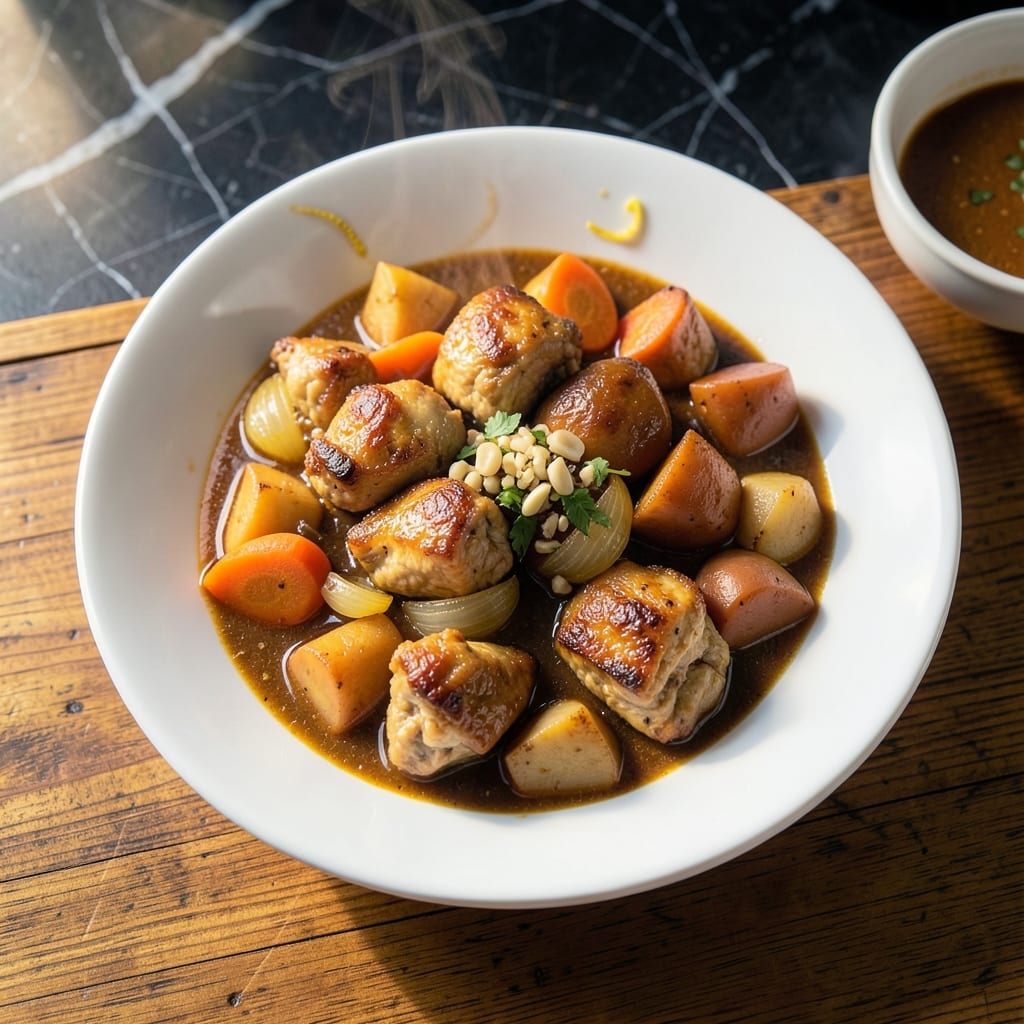
There’s a reason Japanese curry has become a global comfort food staple. This dish transforms humble ingredients into a rich, aromatic bowl that feels like a warm embrace.
I developed this version after testing countless roux combinations to capture that authentic balance of sweet, savory, and slightly spicy notes. The secret lies in blooming the spices properly and allowing the curry to simmer until it reaches that perfect velvety consistency.
What emerges is a deeply satisfying meal with tender meat, soft vegetables, and a sauce so thick and flavorful you’ll want to soak up every last drop. The aroma alone will have everyone gathering around the table.
Serve over steamed rice for the complete experience. Here’s how to achieve restaurant-quality results at home.
Ingredients for Japanese Curry Recipe Youtube
Transform humble ingredients into a rich, aromatic bowl of authentic Japanese curry.
| Ingredient | Amount | Notes |
|---|---|---|
| Chicken Thighs 🍗 | 1 ½ lb | Boneless, skinless, cut into bite-sized pieces |
| Yellow Onion 🧅 | 1 whole | Large, finely diced |
| Carrots 🥕 | 2 whole | Peeled, sliced into rounds |
| Russet Potatoes 🥔 | 2 whole | Peeled, cubed into 1-inch pieces |
| Garlic Cloves 🧄 | 4 cloves | Minced finely |
| Fresh Ginger 🌿 | 1 tbsp | Peeled, grated |
| Japanese Curry Roux 🍛 | 3 ½ oz | S&B Golden or Vermont Curry brand preferred |
| Water 💧 | 3 cups | For adjusting consistency |
| Soy Sauce 🫙 | 2 tbsp | Low-sodium recommended |
| Honey 🍯 | 1 tbsp | For balancing sweetness |
| Garam Masala 🌶️ | 1 tsp | For depth of spice blend |
| Turmeric Powder 🌿 | ½ tsp | For color and earthiness |
| Vegetable Oil 🫒 | 2 tbsp | Neutral flavor for sautéing |
| Steamed Rice 🍚 | 4 cups | Cooked, for serving |
[recipe_ingredient_scaler]
The curry roux is non-negotiable for authenticity. S&B Golden Curry or Vermont Curry blocks are widely available at Asian markets or the international aisle of most supermarkets. Chicken thighs are ideal here—they stay tender through the long simmer, unlike breasts which can dry out. Look for bone-in, skin-on if you prefer extra depth of flavor (remove skin before cooking).
No Japanese roux? Homemade roux with butter, flour, and curry powder works in a pinch, but the flavor profile won’t be identical. Swap chicken for beef or pork if preferred—adjust cooking time accordingly. Potatoes can be Yukon Gold for creamier texture. The honey can be replaced with brown sugar for a deeper caramel note.
Leftovers taste even better the next day. Store in an airtight container for up to 4 days in the fridge or freeze for 3 months. Reheat gently on the stove with a splash of water to restore the velvety consistency. Always serve over freshly cooked rice.
Why You’ll Love This Recipe
- One Pot Wonder: I love that everything—chicken thighs, potatoes, carrots—simmers together in one pot, so cleanup is a breeze.
- Rich and Comforting: The garlic and onions caramelize into this deep, savory curry that’s warm and satisfying every single time.
- Feeds a Crowd: Honestly, this makes enough for dinner plus leftovers, and it tastes even better the next day.
- Budget Friendly: Chicken thighs and basic veggies keep the cost low, but the flavor is anything but cheap.
Step-by-Step Instructions for Japanese Curry
Master the authentic technique behind this deeply comforting, spice-forward dish with precision.
Step 1: Sear the Chicken Thighs and Aromatics
Heat the 2 tbsp vegetable oil in a large Dutch oven over medium-high heat until shimmering. Add the 1.5 lb chicken thighs in a single layer, ensuring they don’t touch. Sear undisturbed for 4-5 minutes until the undersides develop a deep golden-brown crust.
Flip the chicken and add the 1 whole yellow onion, 2 whole carrots, and 2 whole russet potatoes. Cook for another 5 minutes, stirring the vegetables occasionally, until they begin to soften slightly. This builds the flavor foundation.
Step 2: Build the Spice Base
Reduce heat to medium and push the chicken and vegetables to one side of the pot. Add the 4 cloves garlic cloves and 1 tbsp fresh ginger to the cleared space. Sauté for 30-45 seconds until fragrant—this prevents bitterness while deepening the aroma.
Sprinkle the 1 tsp garam masala and 0.5 tsp turmeric powder over the mixture. Stir to coat everything evenly, allowing the spices to bloom in the hot oil for 30 seconds. The turmeric will lend its characteristic golden hue to the dish.
Step 3: Simmer with Liquid and Roux
Pour in the 3 cups water, 2 tbsp soy sauce, and 1 tbsp honey. Stir to combine, scraping up any browned bits from the bottom of the pot. These fond bits dissolve into the liquid, adding incredible depth.
Break the 3.5 oz Japanese curry roux into small pieces and add them to the pot. Stir continuously until the roux fully dissolves and the sauce thickens. Bring the mixture to a gentle simmer.
Step 4: Finish and Thicken the Curry
Once simmering, reduce heat to medium-low and cover. Let the curry cook for 20-25 minutes, stirring occasionally, until the potatoes and carrots are fork-tender and the sauce has thickened enough to coat the back of a spoon.
Taste and adjust seasoning if needed. The sauce should be rich, slightly sweet, and deeply savory. If it’s too thick, add a splash of water to reach your desired consistency.
Step 5: Serve Over Steamed Rice
Ladle the curry over the 4 cups steamed rice, ensuring each serving has a generous amount of sauce, vegetables, and chicken. The rice soaks up the flavorful broth beautifully.
Let the curry rest for 5 minutes before serving. This allows the flavors to meld further and the sauce to settle slightly. The result should be a harmonious balance of tender meat, soft vegetables, and a velvety, spiced sauce that delivers authentic comfort in every bite.
Pro Tips For Making Japanese Curry Recipe Youtube
- Cut Potatoes Evenly: Slice russets into 1.5-inch chunks—any smaller and they’ll turn to mush before the curry thickens. I learned this the hard way after ending up with potato paste in my first few attempts.
- Brown the Chicken Well: Get those thighs deeply golden in the pot first—about 4-5 minutes per side over medium-high heat. Skipping this leaves the curry tasting flat, no matter how good your roux is.
- Simmer Uncovered First: Let it bubble uncovered for 10 minutes before adding the lid. This reduces the liquid just enough so your curry isn’t watery, even if you’re using store-bought roux.
- Grate the Onions: Sounds weird, but it works: grate half the yellow onion directly into the pot. It melts into the sauce, adding sweetness without texture—my grandmother swore by this, and she was right.
Essential Equipment for Perfect Results
Essential Pot
Invest in a heavy-bottomed 5-6 quart Dutch oven—I use my Lodge enameled cast iron from the South End market. The even heat distribution prevents hot spots that can burn your roux. A light-colored interior helps you monitor the browning of your spices and chicken. 🔥
Wooden Spoon
A flat-edged wooden spoon is your best tool for scraping up those flavorful browned bits. I keep one dedicated to my curry-making—it won’t scratch your pot and won’t absorb odors like plastic. The flat edge helps dissolve the roux blocks completely.
Sharp Chef’s Knife
Uniform pieces mean even cooking. My 8-inch Victorinox handles all the dicing and slicing with ease. A sharp knife is safer and makes prep faster. I learned this the hard way in my tiny Boston kitchen after one too many uneven potato chunks.
Microplane Grater
For the 1 tbsp fresh ginger, nothing beats a fine-rasp microplane. It extracts maximum flavor with minimal fiber. I found mine at a North End Italian deli—proof that good tools transcend cuisine boundaries. The difference in ginger flavor is noticeable.
Instant-Read Thermometer
While not traditional, I use my ThermoWorks Thermapen to check chicken doneness at 165°F. It’s especially helpful if you’re scaling up portions. The probe fits easily into bite-sized pieces without piercing through completely.
Rice Cooker
Perfect steamed rice every time with minimal effort. My Zojirushi 5.5-cup model has been a workhorse for years. Start it before you begin the curry so both finish simultaneously. Freshly cooked rice soaks up that velvety sauce best.
Nutrition Facts
Frequently Asked Questions
What can I use if I can’t find Japanese curry roux?
Make a homemade version with 2 tbsp butter, 3 tbsp flour, and 2 tbsp curry powder. Melt butter, whisk in flour, then add curry powder. It won’t taste identical but works in a pinch.
How do I adjust the thickness of the sauce?
Too thick? Add 1/4 cup water at a time until desired consistency. Too thin? Simmer uncovered for 5-10 minutes to reduce. The sauce should coat the back of a spoon.
Can I make this curry ahead of time?
The flavors deepen overnight. Store in an airtight container for up to 4 days in the fridge. Reheat gently on the stove with a splash of water.

Trained in classic French technique but raised on slow-cooked ribs and spicy rubs, she blends culinary skill with smoke and soul.
- Recipe for Boneless Pork Chops in Cast Iron Skillet: Sear and Baste to Juicy Perfection - October 3, 2026
- Recipe for Boneless Cross Rib Roast: Slow-Roasted Beef with Herb Crust - October 3, 2026
- Hamburgers in Sauce Recipe Crock Pot: Slow-Cooked Savory Delight - October 3, 2026