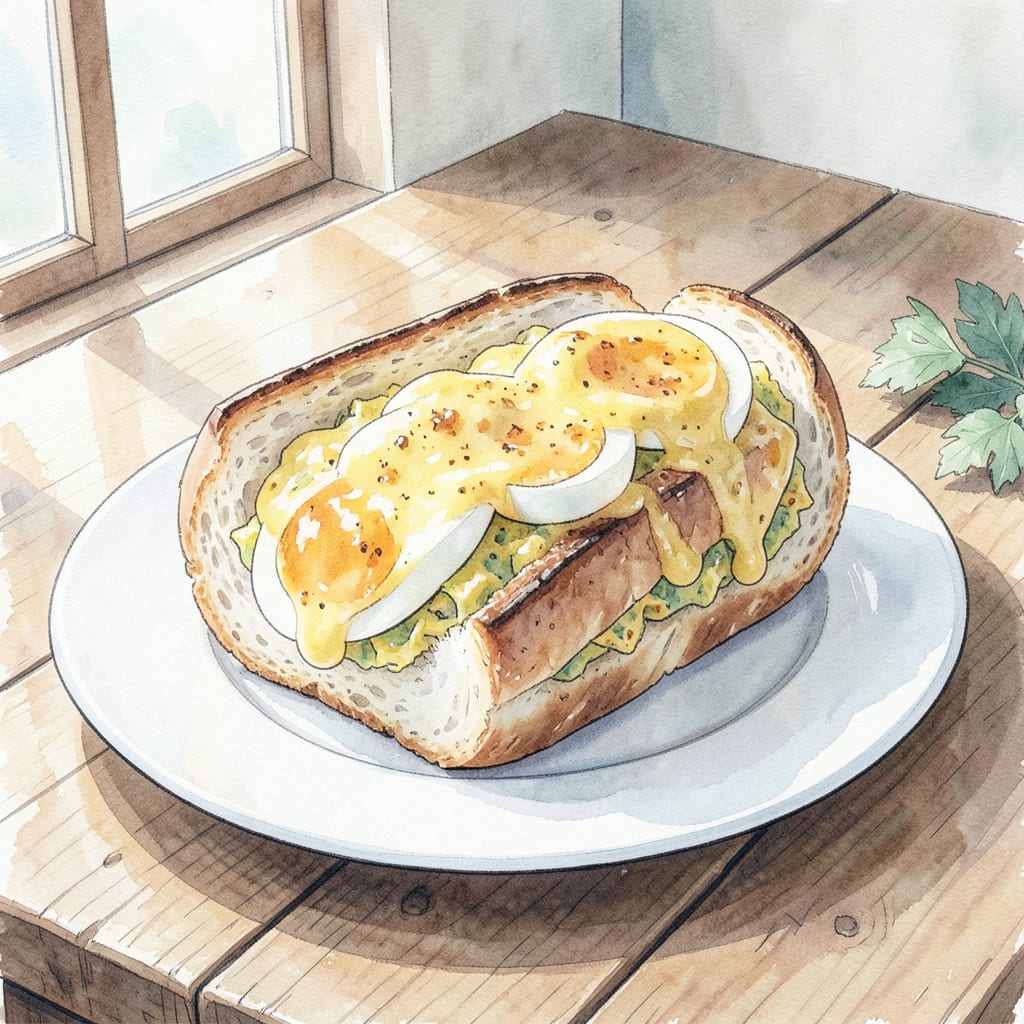
I’ve perfected the Japanese egg sando recipe after years of experimentation. This fluffy egg salad between soft, milk bread is a game-changer. The secret lies in the precise cooking technique that makes the eggs tender and creamy.
With just a few ingredients and some simple preparation, you’ll achieve perfect harmony between the egg filling and the bread. Let’s create this savory sandwich perfection together!
Ingredients for Japanese Egg Sando
Simple, quality ingredients come together to create this Japanese egg sando masterpiece.
| Ingredient | Amount | Notes |
|---|---|---|
| Large Eggs 🥚 | 4 whole | Room temperature for better emulsification |
| Mayonnaise 🥚 | ¼ cup | Japanese or Duke's for best flavor |
| Dijon Mustard 🌶️ | 1 tsp | For subtle tanginess |
| White Bread 🍞 | 4 slices | Soft, milk bread or shokupan |
| Unsalted Butter 🧈 | 2 tbsp | Softened for bread preparation |
| Salt 🧂 | ¼ tsp | Diamond Crystal or kosher salt |
| Black Pepper 🌶️ | 0.125 tsp | Freshly ground for best flavor |
[recipe_ingredient_scaler]
For the fluffiest egg salad, use room temperature eggs—makes a noticeable difference in texture. Most grocery stores carry Japanese mayonnaise or you can find it at Asian markets. If using regular mayonnaise, add a squeeze of fresh lemon juice to brighten the flavor.
The bread matters here—look for soft milk bread or shokupan at your local Asian bakery. Regular white bread works too, just toast it lightly first. For the best flavor, use high-quality Duke’s or Japanese mayonnaise. If you can’t find shokupan, brioche is a good substitute.
This egg sando keeps well in the fridge for up to 24 hours. Store in an airtight container and assemble just before serving for the best texture. The egg salad mixture will keep for 3 days in the refrigerator.
Step-by-Step Instructions for Japanese Egg Sando
Creating the perfect Japanese Egg Sando requires attention to detail and precise technique.
Step 1: Prepare the Fluffy Egg Filling
Start by hard-boiling the 4 whole Large Eggs to perfection. Place them in a single layer in a saucepan, cover them with cold water, and bring to a boil. Once boiling, reduce the heat to a simmer and cook for 12 minutes. After cooking, transfer the eggs to an ice bath to stop the cooking process and make them easier to peel. Once cooled, peel the eggs carefully and chop them into small pieces using a sharp knife.
In a medium bowl, combine the chopped eggs, 0.25 cup Mayonnaise, 1 tsp Dijon Mustard, 0.25 tsp Salt, and 0.125 tsp Black Pepper. Mix gently until the ingredients are just combined, being careful not to mash the eggs. The mixture should be creamy and hold its shape when pressed between two fingers.
Step 2: Prepare the Soft White Bread
Take the 4 slices White Bread and trim off the crusts using a sharp bread knife. For an authentic Japanese Egg Sando, use soft, milk bread or shokupan. The bread should be soft and slightly sweet, providing a gentle contrast to the savory egg filling. If your bread is not pre-toasted, lightly toast it to remove excess moisture and create a better texture for the sandwich.
Spread a thin layer of the 2 tbsp Unsalted Butter on one side of each bread slice. The butter should be softened to room temperature for easy spreading. This step adds richness and helps keep the bread fresh.
Step 3: Assemble the Egg Sando
To assemble the sandwiches, place a generous amount of the egg mixture on one slice of bread, spreading it evenly to the edges. Be careful not to overfill, as this can make the sandwich difficult to close and messy to eat. Top with another slice of bread, butter-side up, to create a sandwich.
Press gently on the sandwich to adhere the bread to the filling. The finished sandwiches should be neat and compact, with the filling evenly distributed and no excess egg mixture squeezing out the sides.
Step 4: Cut and Serve
Using a sharp knife, cut the sandwiches into halves or quarters, depending on your desired serving size. For clean cuts, wipe the knife with a damp cloth between cuts. Serve the Japanese Egg Sando immediately, or wrap tightly in plastic wrap and refrigerate for up to 24 hours for later use.
The finished Egg Sando should have a beautiful presentation, with the soft white bread and creamy egg filling creating an appealing contrast. Serve as is, or accompany with a simple salad or Japanese-style pickles for a complete meal.
Best Sauces and Condiments for japanese egg sando
Classic Japanese Condiments
For an authentic Japanese egg sando experience, consider adding traditional condiments. Japanese mayonnaise, like Kewpie, brings a richer, more complex flavor profile than regular mayonnaise. Its creamy texture and subtle tanginess perfectly complement the egg salad. You can find Japanese mayonnaise at most Asian grocery stores or well-stocked supermarkets. 🌟
Modern Twists with Condiments
While traditional Japanese mayonnaise is a great starting point, you can experiment with other condiments to create unique flavor profiles. Adding a touch of wasabi mayonnaise can introduce a pleasant heat, while a drizzle of yuzu juice can add a citrusy brightness. For those who like a bit of spice, mixing in some gochujang (Korean chili paste) can add depth and a subtle kick. 🔥
International Influences
Don’t be afraid to incorporate international flavors to give your egg sando a personal twist. A dash of smoked paprika can add a smoky dimension, while a sprinkle of chopped fresh herbs like chives or parsley can provide freshness. For a more Western-inspired flavor, try adding a bit of Dijon mustard or a pinch of curry powder to the egg salad mixture. The key is to balance these additions without overpowering the delicate flavor of the eggs.
Homemade Condiment Recipes
Creating your own condiments from scratch can elevate your Japanese egg sando to the next level. For example, making a homemade Japanese mayonnaise allows you to adjust the seasoning to your taste. You can also experiment with making pickled ginger or quick-pickled cucumbers to add a tangy crunch to your sandwich. These homemade touches not only enhance flavor but also add a personal touch to your dish.
Balancing Flavors
The key to a great Japanese egg sando lies in balancing the flavors. The creamy egg salad, the soft bread, and the condiments should all work together in harmony. Start with a base of high-quality ingredients, then adjust your condiments and seasonings to achieve the perfect balance. Remember, the goal is to enhance the natural flavors of the ingredients, not to overpower them. 💡
Serving Suggestions
When serving your Japanese egg sando, consider pairing it with a simple salad or a bowl of miso soup for a more substantial meal. For a lighter option, a side of Japanese pickles or a few slices of daikon radish can cleanse the palate between bites. The versatility of the egg sando makes it suitable for various occasions, from a quick lunch to a sophisticated picnic.
Nutrition Facts

Trained in classic French technique but raised on slow-cooked ribs and spicy rubs, she blends culinary skill with smoke and soul.
- Recipe for Boneless Pork Chops in Cast Iron Skillet: Sear and Baste to Juicy Perfection - October 3, 2026
- Recipe for Boneless Cross Rib Roast: Slow-Roasted Beef with Herb Crust - October 3, 2026
- Hamburgers in Sauce Recipe Crock Pot: Slow-Cooked Savory Delight - October 3, 2026