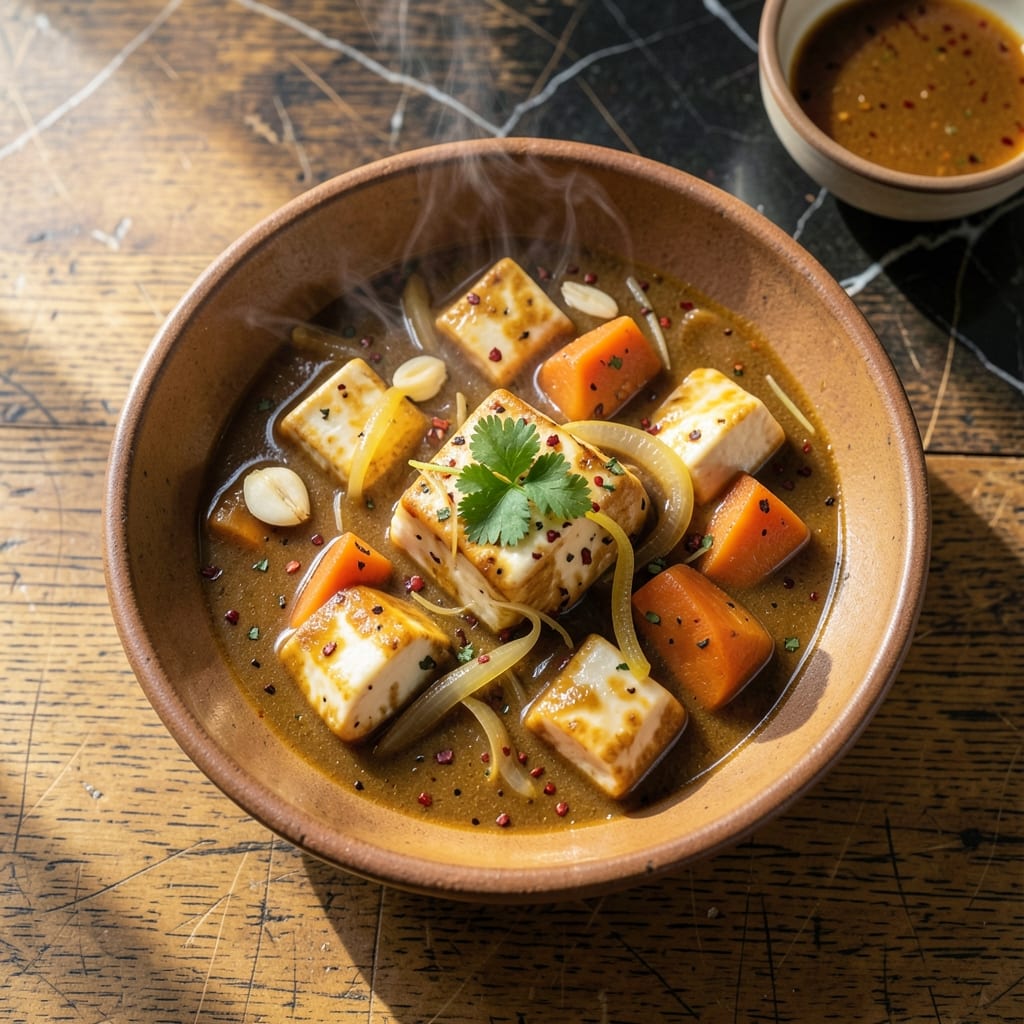
Japanese curry brings comfort to the table with its rich, velvety sauce and hearty ingredients. This vegetarian version replaces meat with tofu and sweet potatoes, creating a dish that’s just as satisfying.
I developed this recipe after realizing traditional curry could be just as flavorful without meat. The key is building layers of umami with vegetables, spices, and a touch of sweetness from the potatoes.
The sauce thickens beautifully as it simmers, coating every piece of tofu and vegetable in its golden, aromatic embrace. It’s the kind of meal that warms you from the inside out.
Perfect for a cozy weeknight dinner, this dish proves that vegetarian food can be deeply comforting. Here’s how to make it at home.
Ingredients for Japanese Golden Curry Recipe Vegetarian
Rich spices and hearty vegetables create this deeply satisfying vegetarian comfort dish with authentic flavor.
| Ingredient | Amount | Notes |
|---|---|---|
| Firm Tofu 🧈 | 14 oz | Pressed and cubed into 1-inch pieces |
| Sweet Potatoes 🍠 | 1 ½ lb | Peeled and diced into 1-inch cubes |
| Yellow Onion 🧅 | 1 whole | Thinly sliced for even cooking |
| Carrots 🥕 | 2 whole | Peeled and cut into chunks |
| Garlic Cloves 🧄 | 4 cloves | Minced for maximum flavor |
| Fresh Ginger 🌿 | 1 tbsp | Freshly grated for best results |
| Japanese Curry Roux Blocks 🟡 | 4 pieces | Golden or mild variety (vegetarian-friendly) |
| Vegetable Broth 💧 | 4 cups | Low-sodium preferred for controlled seasoning |
| Soy Sauce 🫒 | 2 tbsp | Low-sodium or tamari for gluten-free |
| Honey 🍯 | 1 tbsp | Balances the savory umami flavors |
| Apple 🍎 | 1 whole | Peeled, cored, and grated for natural sweetness |
| Potatoes 🥔 | 1 whole | Russet or Yukon Gold, peeled and cubed |
| Frozen Peas 🌱 | 1 cup | No need to thaw before adding |
| Neutral Cooking Oil 🫒 | 2 tbsp | Vegetable or canola oil for sautéing |
[recipe_ingredient_scaler]
The curry roux blocks are non-negotiable—S&B Golden Curry (check the box for vegetarian label) is the gold standard and widely available at Asian markets or the international aisle of most supermarkets. Firm tofu is essential here; it holds its shape during simmering. Nasoya or Wildwood brands are reliable. Sweet potatoes should be deep orange (Jewel or Garnet varieties) for natural sweetness that balances the savory spices.
No firm tofu? Extra-firm works in a pinch but may be chewier. Out of sweet potatoes? Regular potatoes plus a pinch of sugar can substitute. The apple might seem odd, but it’s the secret to authentic sweetness—Granny Smith works best. For gluten-free, use tamari instead of soy sauce and check roux labels carefully. Vegetable broth can be swapped for water, but the depth of flavor won’t be the same.
The curry thickens as it cools, so it’ll be even better the next day. Stores in the fridge for 4-5 days or freeze for 3 months. Portion into single-serving containers for easy reheating—just add a splash of water when warming to restore the velvety texture.
Why You’ll Love This Recipe
- One Pot Wonder: I just dump everything in, simmer, and let the sweet potatoes and carrots soak up that golden curry goodness.
- Crave-Worthy Depth: The garlic and tofu absorb the rich, slightly sweet sauce—honestly, I could eat this every week.
- Meal Prep Champ: Makes enough for three lunches, and it tastes even better the next day.
- Budget Friendly: Firm tofu and root veggies stretch this into a filling meal without breaking the bank.
Step-by-Step Instructions for Japanese Golden Curry Vegetarian
Master this method for rich, aromatic curry with perfectly balanced flavors and textures.
Step 1: Sauté Aromatics and Build the Flavor Base
Heat the 2 tablespoons neutral cooking oil in a large pot over medium heat. Add the thinly sliced yellow onion, cooking for 5-6 minutes until it turns translucent and golden at the edges.
Stir in the minced garlic cloves and freshly grated 1 tablespoon fresh ginger, sautéing for 1 minute until fragrant. This aromatic foundation is critical for depth of flavor. Add the diced sweet potatoes, cubed potatoes, and chunked carrots, cooking for 3-4 minutes to soften slightly.
Step 2: Incorporate Liquid and Umami Elements
Pour in the 4 cups vegetable broth, 2 tablespoons soy sauce, and 1 tablespoon honey. Stir in the peeled, cored, and grated apple for natural sweetness that balances the savory notes. Bring to a gentle boil over medium-high heat.
Once boiling, reduce to a simmer and cook for 10-12 minutes until the potatoes and carrots are fork-tender. The broth should be slightly reduced and infused with the vegetables’ flavors. This creates the perfect base for the roux.
Step 3: Add Tofu and Curry Roux Blocks
Gently stir in the pressed and cubed 14 oz firm tofu and the 4 pieces Japanese curry roux blocks, ensuring they dissolve completely. The roux will thicken the curry and give it that signature golden color and rich, velvety texture.
Simmer for 5 minutes until the sauce coats the back of a spoon and the tofu absorbs some of the flavor. Watch for the sauce to turn glossy and thickened—this indicates the roux is fully incorporated.
Step 4: Finish with Peas and Final Adjustments
Add the 1 cup frozen peas and stir to combine. Since the peas are frozen, they’ll warm through in just 2-3 minutes of simmering. This preserves their vibrant color and slight bite.
Taste and adjust seasoning if needed, though the roux blocks should provide plenty of flavor. The curry should have a smooth, luscious consistency with visible chunks of vegetables and tofu. Serve immediately over rice for the ultimate comfort experience.
Pro Tips For Making Japanese Golden Curry Recipe Vegetarian
- Press the Tofu: Drain and press firm tofu for 15-20 minutes under a heavy pan—this removes excess water so it soaks up the curry sauce instead of diluting it. I learned this the hard way after my first few batches tasted watery.
- Uniform Sweet Potato Cubes: Cut sweet potatoes into 1-inch cubes so they cook evenly with the carrots. After burning a few uneven chunks, I finally figured out that consistent sizing prevents mushy or undercooked bits.
- Bloom the Spices: Cook the curry roux with onions and garlic for 2-3 minutes on medium-low heat until fragrant. Sounds weird, but it works—this deepens the flavor way beyond just stirring it into simmering liquid.
- Skip Peeling Carrots: Just scrub carrots well and slice them thin—peeling is a waste of time and you lose texture. My grandmother swore by this, and she was right: the skin softens nicely in the curry.
Regional Styles of This japanese golden curry recipe vegetarian
Kanto Style
In the Kanto region around Tokyo, this dish often features thicker, heartier sauces with more vegetables. I love adding lotus root and eggplant alongside the tofu and sweet potatoes for extra texture. The sauce tends to be slightly sweeter here.
Kansai Style
Osaka’s version leans toward a lighter, less viscous sauce with more emphasis on the natural flavors of the ingredients. I’ve found that using dashi stock instead of vegetable broth creates that authentic Kansai touch. The curry is often served with udon noodles instead of rice.
Hokkaido Style
Northern Japan’s colder climate calls for heartier ingredients. Hokkaido-style curry often includes pumpkin and mushrooms alongside the standard vegetables. I like to add shiitake mushrooms for their meaty texture and umami depth. 🌟
Okinawa Style
Okinawa’s unique cuisine incorporates local ingredients like bitter melon (goya) and tofu made from island-grown soybeans. The curry here often has a slightly bitter edge that balances the sweetness. I’ve had to search specialty stores for authentic Okinawan tofu.
Kyushu Style
Southern Japan’s version tends to be spicier. I add 1 tsp of chili powder or a dash of shichimi togarashi to my curry for that Kyushu kick. They also prefer a higher ratio of potatoes to other vegetables in their curry. 🔥
Nutrition Facts
Frequently Asked Questions
Can I use a different protein instead of tofu?
Try chickpeas, tempeh, or seitan for a heartier texture. Chickpeas add a nice bite, while tempeh offers a nutty flavor that pairs well with the curry spices.
How do I make it spicier?
Add 1 teaspoon chili powder or a dash of cayenne pepper with the roux blocks. For authentic heat, try shichimi togarashi—a Japanese seven-spice blend. Start small and adjust to taste.
Can I make this ahead of time?
Yes! The flavors deepen after a day in the fridge. Store in an airtight container for up to 4-5 days or freeze for 3 months. Reheat with a splash of water to restore the creamy texture.
What if my curry is too thick?
Thin it with 1/4 cup of water or broth at a time until it reaches your desired consistency. The roux thickens as it cools, so it’s normal for leftovers to be thicker.

Trained in classic French technique but raised on slow-cooked ribs and spicy rubs, she blends culinary skill with smoke and soul.
- Recipe for Boneless Pork Chops in Cast Iron Skillet: Sear and Baste to Juicy Perfection - October 3, 2026
- Recipe for Boneless Cross Rib Roast: Slow-Roasted Beef with Herb Crust - October 3, 2026
- Hamburgers in Sauce Recipe Crock Pot: Slow-Cooked Savory Delight - October 3, 2026