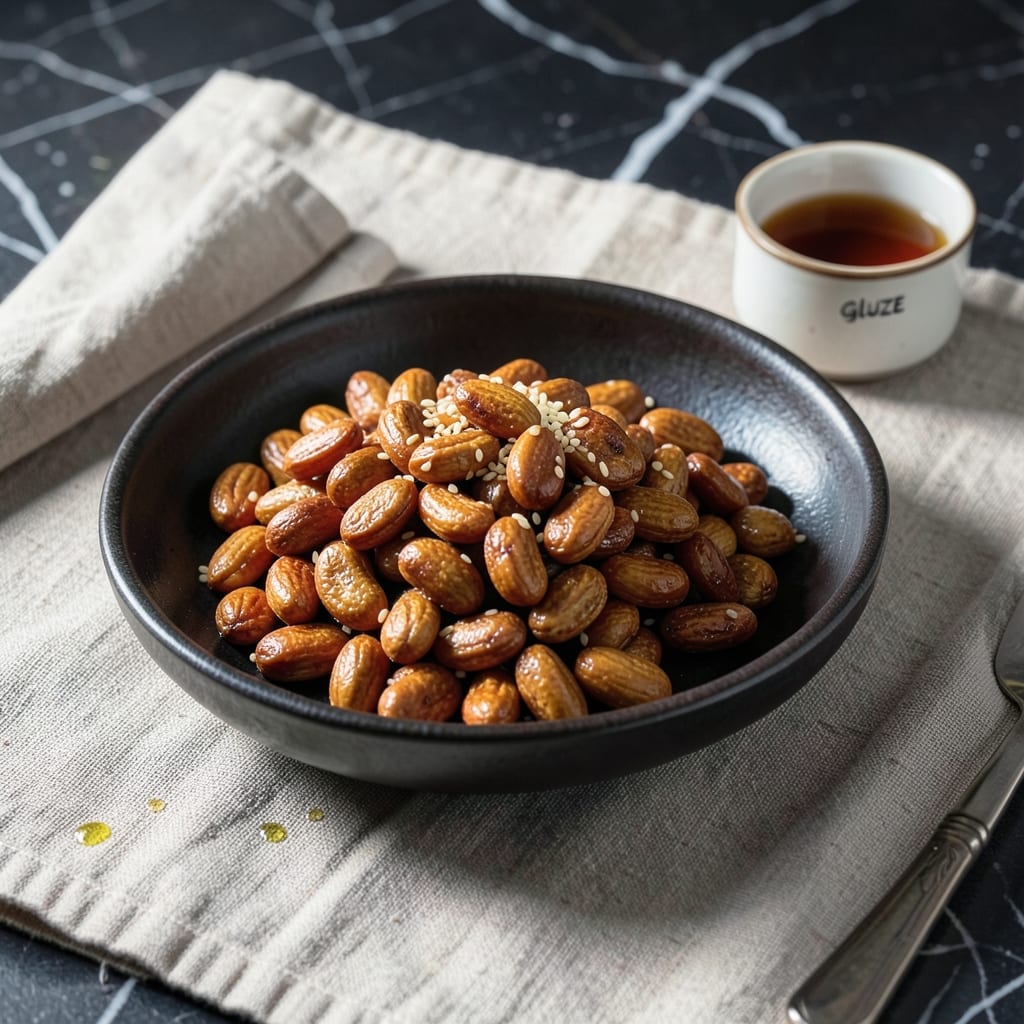
These Japanese-style peanuts deliver a satisfying crunch with every bite, coated in a rich sesame dressing that’s both nutty and subtly sweet. I developed this recipe to capture the authentic goma-ae flavor without complicated steps.
The process is simple yet precise: toast the peanuts until golden and fragrant, then toss them in a warm sesame sauce that clings perfectly. This method ensures an even coating and maximum flavor in every handful.
What you’ll get is a dish that’s both elegant and addictive—ideal for snacking, garnishing salads, or serving as a bar morsel. The balance of savory and sweet makes these peanuts irresistibly moreish.
Ready in under 20 minutes, this recipe transforms humble ingredients into a restaurant-worthy treat.
Ingredients for Japanese Peanuts
Transform humble peanuts into an elegant snack with authentic goma-ae flavors using these ingredients.
| Ingredient | Amount | Notes |
|---|---|---|
| Raw Peanuts 🥜 | 2 cups | Unsalted, skin-on preferred |
| Sesame Seeds 🌰 | ¼ cup | Toasted for nuttiness |
| Soy Sauce 🥢 | 2 tbsp | Low-sodium for balance |
| Rice Vinegar 🍚 | 1 tbsp | Seasoned or unseasoned |
| Mirin 🍶 | 1 tbsp | Sweet rice wine essential |
| Granulated Sugar 🍚 | 1 tbsp | Adjust to taste preference |
| Sesame Oil 🫒 | 1 tsp | Toasted for depth |
| Garlic Clove 🧄 | 1 clove | Minced finely |
| Fresh Ginger 🌿 | ½ tsp | Grated for intensity |
| Red Pepper Flakes 🌶️ | ¼ tsp | Optional for heat |
[recipe_ingredient_scaler]
The peanuts are the foundation here. Raw Spanish peanuts (skin-on) from Whole Foods or Trader Joe’s give the best texture and crunch. Avoid pre-salted or roasted varieties—they won’t absorb the sesame sauce properly. For the sesame seeds, toast them lightly before adding to release their oils and deepen the flavor. The mirin is non-negotiable for authentic taste; look for authentic Japanese brands like Takara or Gekkeikan.
No mirin? Dry sherry plus 1/2 tsp sugar works in a pinch. Out of rice vinegar? Apple cider vinegar at half the amount can substitute, though the flavor profile will shift slightly. For a gluten-free version, swap soy sauce for tamari. The sugar can be replaced with honey or maple syrup (though this will slightly alter the texture). Skip the red pepper flakes if serving to those sensitive to heat.
Store peanuts in an airtight container at room temperature for up to 1 week (they’ll soften over time). For longer storage, freeze for up to 3 months. The sesame sauce can be made ahead and refrigerated for 5 days—just warm slightly before tossing with fresh peanuts.
Why You’ll Love This Recipe
- One Pot Wonder: I toss everything in a pan—peanuts, sesame, soy, vinegar, mirin—and let the stove do the work.
- Umami Bomb: The soy and mirin create this deep, savory-sweet crust on the peanuts that’s honestly hard to stop eating.
- Snack or Topping: I keep a batch in my pantry for nibbling, but they’re just as good sprinkled over salads or rice bowls.
- Budget Stretch: A pound of raw peanuts costs pennies and turns into something way fancier than store-bought.
Step-by-Step Instructions for Goma-Ae Style Peanuts
This professional technique ensures maximum flavor infusion and perfect texture each time.
Step 1: Toast the Peanuts and Sesame Seeds
Preheat your oven to 350°F. Spread the 2 cups Raw Peanuts on a baking sheet in a single layer. Toast for 10-12 minutes, stirring halfway through, until the peanuts are light golden brown and fragrant. Watch closely—they burn easily.
In a dry skillet over medium heat, toast the 0.25 cup Sesame Seeds for 2-3 minutes until golden and aromatic, shaking the pan frequently to prevent burning. Transfer both to a large bowl to cool slightly. This toasting step deepens the nutty flavors and ensures crisp texture.
Step 2: Prepare the Flavorful Glaze
In a small saucepan, combine the 2 tbsp Soy Sauce, 1 tbsp Rice Vinegar, 1 tbsp Mirin, and 1 tbsp Granulated Sugar. Cook over medium-low heat for 3-4 minutes, stirring constantly, until the sugar dissolves and the mixture thickens slightly.
Remove from heat and stir in the 1 tsp Sesame Oil, minced Garlic Clove, 0.5 tsp Fresh Ginger, and 0.25 tsp Red Pepper Flakes. The glaze should be glossy and fragrant, with the aromatics fully infused. Let it cool for 2 minutes before using.
Step 3: Coat the Peanuts Evenly
Pour the warm glaze over the toasted Raw Peanuts and Sesame Seeds in the bowl. Using a silicone spatula, fold gently to ensure every nut is evenly coated. The mixture will seem wet at first, but the peanuts will absorb the liquid as they cool.
Let the mixture sit for 5 minutes, then fold again. Repeat this process 2-3 times over 15 minutes to allow the flavors to penetrate deeply and the coating to set. The peanuts should appear glossy with visible sesame seeds clinging to their surfaces.
Step 4: Dry and Crisp the Coating
Spread the coated peanuts back onto the baking sheet in a single layer. Return them to the 350°F oven for 8-10 minutes, stirring once halfway through. This final bake removes excess moisture, creating a crisp, caramelized exterior.
Cool completely on the pan. The peanuts will crisp further as they cool. Test one—it should have a satisfying crunch with a balance of sweet, salty, and umami flavors from the soy, mirin, and sesame. Store in an airtight container for up to 2 weeks.
Pro Tips For Making Japanese Peanuts
- Toast Peanuts First: Dry-toast the raw peanuts in a pan for 5-7 minutes over medium heat until they’re golden and fragrant—this brings out their nutty depth before the glaze even hits the pan.
- Bloom the Sesame: Lightly toast the sesame seeds separately for just 1-2 minutes until they smell nutty, then set aside. I learned this the hard way after burning three batches trying to do it all at once.
- Reduce the Glaze: Simmer the soy sauce, rice vinegar, and mirin together for 3-4 minutes until it thickens slightly—this keeps it from pooling at the bottom of the bowl.
- Toss While Warm: Mix the peanuts with the glaze and sesame seeds while everything is still hot, so the coating sticks evenly without clumping. Sounds simple, but it actually changes the outcome.
Essential Equipment for japanese peanuts
Oven and Baking Sheet
A reliable oven is crucial for even toasting. I use a conventional oven set to 350°F for consistent results. A half-sheet pan (18×13 inches) with a wire rack ensures proper air circulation. Avoid dark pans—they can cause peanuts to burn before fully toasting. 🔥
Mixing Bowls
Use a large stainless steel or glass bowl for tossing the peanuts with the glaze. The smooth surface makes folding easier and prevents sticking. A silicone spatula is ideal for scraping every last bit of that delicious sesame sauce onto the nuts.
Small Saucepan
For the glaze, a 1-2 quart saucepan with a heavy bottom prevents hot spots. I prefer All-Clad stainless steel for even heat distribution. The small size ensures the glaze reduces quickly without spreading too thin, allowing precise control over thickness.
Skillet for Sesame Seeds
A 10-inch nonstick skillet works perfectly for toasting sesame seeds. The wide surface area allows even browning in just 2-3 minutes. I recommend Calphalon for its durable nonstick coating and even heat distribution.
Cooling Rack
After the final bake, transfer peanuts to a wire cooling rack to prevent steam from softening the crisp coating. This step is often overlooked but makes a noticeable difference in texture. Let them cool completely before storing.
Storage Container
An airtight glass jar keeps peanuts fresh and crisp for up to 2 weeks. I use Ball Mason jars—they’re sturdy, reusable, and let you see the beautiful glossy coating. Store at room temperature, away from direct sunlight. 💡
Nutrition Facts
Frequently Asked Questions
Can I use roasted peanuts instead of raw?
No, raw peanuts absorb the sesame glaze best for even coating. Roasted peanuts won’t soak up the flavors as well.
How do I make these gluten-free?
Simply swap regular soy sauce for tamari. It delivers the same umami taste without gluten.
Why did my peanuts turn out soggy?
They likely didn’t bake long enough in the final 8-10 minute crisping step. Ensure they’re spread in a single layer.
Can I add other nuts to this recipe?
Yes! Cashews or almonds work well. Toast them separately first, as cooking times may vary.

Trained in classic French technique but raised on slow-cooked ribs and spicy rubs, she blends culinary skill with smoke and soul.
- Recipe for Boneless Pork Chops in Cast Iron Skillet: Sear and Baste to Juicy Perfection - October 3, 2026
- Recipe for Boneless Cross Rib Roast: Slow-Roasted Beef with Herb Crust - October 3, 2026
- Hamburgers in Sauce Recipe Crock Pot: Slow-Cooked Savory Delight - October 3, 2026