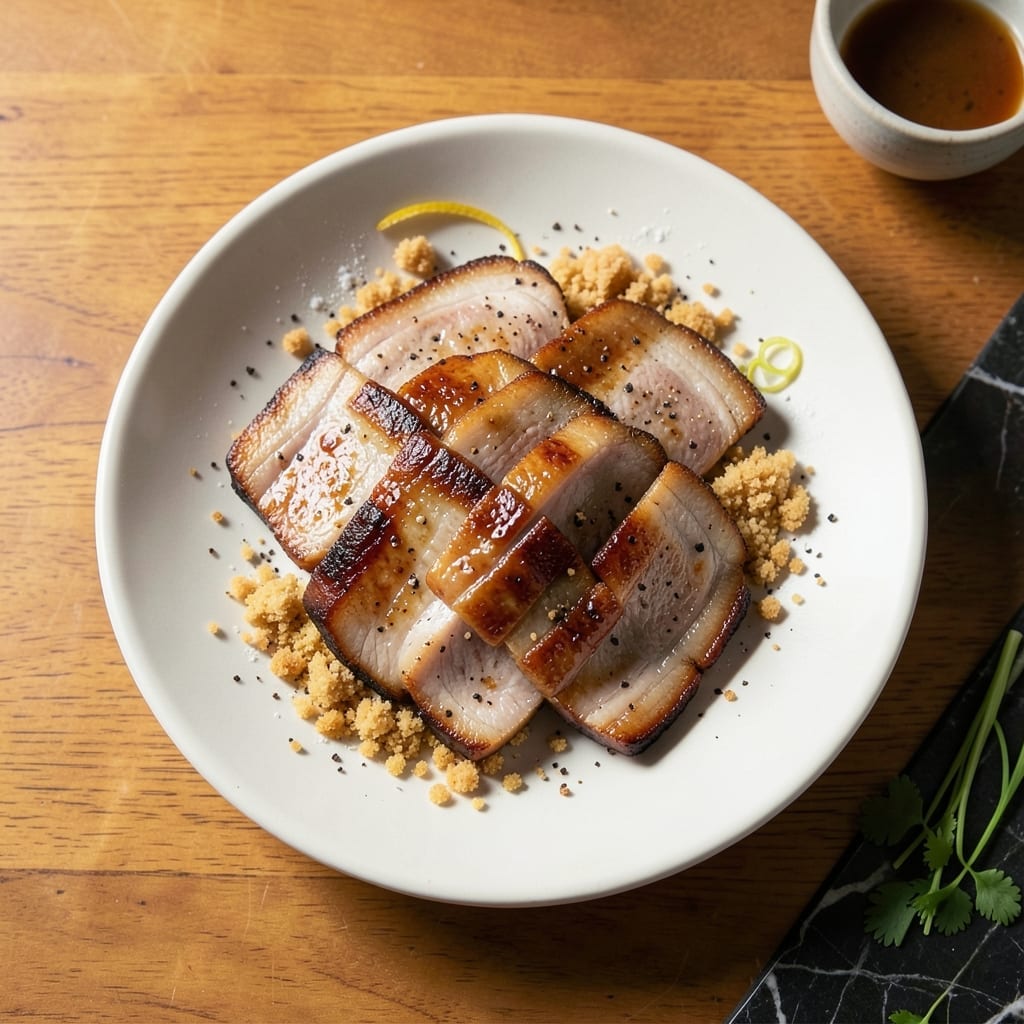
I still remember the first time I nailed melt-in-your-mouth pork belly using Japanese techniques. The key is thin slices and precise temperature control.
This method transforms humble pork belly into something extraordinary. The double-frying technique creates a crispy exterior while keeping the inside tender.
What you get is pork so tender it nearly dissolves on your tongue, with a golden crust that shatters with each bite. It’s the kind of dish that makes people pause mid-meal.
Serve with steamed rice and cabbage salad for the full experience. The process is simpler than you’d think.
Ingredients for Japanese Thin Sliced Pork Belly
Thin-sliced pork belly plus crispy panko and a few pantry staples create this showstopper.
| Ingredient | Amount | Notes |
|---|---|---|
| Pork Belly 🥓 | 1 ½ lb | Skin-on, sliced thin (1/4-inch) |
| Kosher Salt 🧂 | 1 tsp | Diamond Crystal preferred |
| Black Pepper 🌶️ | ½ tsp | Freshly ground |
| Panko Breadcrumbs 🍞 | 1 ½ cups | Japanese-style for extra crispiness |
| All-Purpose Flour 🌾 | ½ cup | For dredging pork slices |
| Large Eggs 🥚 | 2 whole | Beaten for breading |
| Neutral Oil 🫒 | 2 cups | For deep frying (peanut or vegetable) |
| Green Cabbage 🥬 | ½ whole | Thinly shredded for salad |
| Carrot 🥕 | 1 whole | Julienned for garnish |
| Tonkatsu Sauce 🍯 | ½ cup | Store-bought or homemade |
| Steamed Rice 🍚 | 2 cups | Japanese short-grain preferred |
| Mayonnaise 🥛 | ¼ cup | For cabbage salad dressing |
| Rice Vinegar 🍶 | 1 tbsp | For salad dressing acidity |
| Sugar 🍚 | 1 tsp | For balancing dressing |
[recipe_ingredient_scaler]
The pork belly is non-negotiable here. Look for skin-on cuts at an Asian market—they carry the right thickness and fat ratio. If you’re buying a whole slab, ask the butcher to slice it 1/4-inch thick (or freeze briefly to slice evenly at home). Kewpie mayo is the gold standard for the salad, but any good mayo works in a pinch.
No panko? Crush melba toast or stale bread for a similar crunch, though the texture won’t be quite as light. Skip the flour if you’re gluten-free—just egg and panko still clings well. For the oil, peanut oil’s high smoke point is ideal, but canola or vegetable oil works too. The cabbage can be swapped for shredded lettuce if that’s what you’ve got.
Fry in batches to avoid crowding—keeps the oil at the right temp. Leftover pork belly reheats in the air fryer (350°F for 4-5 minutes) to restore crispiness. Best eaten fresh but holds 2 days in the fridge (the crust softens over time).
Why You’ll Love This Recipe
- Minimal Effort: I just slice, season, and sear—no fancy techniques, and the panko does half the work for that perfect crunch.
- Umami Bomb: The pork belly stays juicy while the salt and pepper bring out this deep, savory richness that’s hard to beat.
- Weeknight Hero: Honestly, it’s my go-to for quick dinners or impressing guests with almost no extra effort.
- Budget Stretcher: A little pork belly goes a long way, and leftovers (if there are any) taste even better the next day.
Instructions
Here is the method. Straightforward, tested, works every time.
Step 1: Season and Dredge the Pork Belly
Pat the 1.5 lb Pork Belly slices dry with paper towels. Season both sides evenly with the 1 tsp Kosher Salt and 0.5 tsp Black Pepper. Press the seasoning in gently so it adheres well to the meat. This step ensures every bite is flavorful.
Dredge each slice lightly in the 0.5 cup All-Purpose Flour, shaking off any excess. You want a thin, even coating that will help the egg wash stick. Set the floured slices aside on a wire rack while you prepare the breading station.
Step 2: Bread the Pork Belly for Maximum Crispiness
In a shallow bowl, beat the 2 whole Large Eggs until fully combined. Place the 1.5 cups Panko Breadcrumbs in another shallow dish. Dip each floured pork belly slice into the beaten eggs, letting any excess drip off, then coat thoroughly in the panko.
Press the panko firmly onto the pork to ensure it sticks well. The Japanese-style panko creates an extra crispy crust that contrasts beautifully with the tender meat. Place the breaded slices back on the wire rack to rest for 5-10 minutes—this helps the coating set.
Step 3: Deep Fry to Golden Perfection
Heat the 2 cups Neutral Oil in a deep, heavy-bottomed pot to 340-350°F. Use a deep-fry thermometer for accuracy. Carefully lower the breaded pork belly slices into the hot oil, working in batches to avoid overcrowding the pan.
Fry for 3-4 minutes per side until the coating is golden brown and the pork is cooked through. The internal temperature should reach 145°F. Drain the fried pork on a wire rack set over a baking sheet to keep it crispy, not soggy.
Step 4: Prepare the Cabbage Salad
While the pork fries, thinly shred the 0.5 whole Green Cabbage and julienne the 1 whole Carrot. In a large bowl, whisk together the 0.25 cup Mayonnaise, 1 tbsp Rice Vinegar, and 1 tsp Sugar until smooth. Toss the cabbage and carrot in the dressing until evenly coated.
The salad should be crisp and refreshing, a perfect contrast to the rich pork. Chill until ready to serve.
Step 5: Serve with Tonkatsu Sauce and Steamed Rice
Slice the fried pork belly into strips and arrange on a platter. Drizzle with the 0.5 cup Tonkatsu Sauce or serve it on the side for dipping. Serve immediately with the cabbage salad and 2 cups Steamed Rice.
The pork should be tender and juicy on the inside with a crispy, golden panko crust on the outside. The combination of flavors and textures is what makes this dish truly special.
Pro Tips For Making Japanese Thin Sliced Pork Belly
- Freeze for Thin Slices: Partially freeze the pork belly for 30-45 minutes before slicing—makes those paper-thin cuts actually possible without mangling the meat.
- Salt Generously: Use more kosher salt than you think, especially on the skin side. I learned this the hard way when my first few batches came out bland.
- Dry the Surface: Pat the pork slices completely dry with paper towels before breading. Sounds obvious, but wet meat makes the panko fall right off.
- Double Fry Crisp: Fry the breaded pork once at 325°F to cook through, then again at 375°F for 30 seconds for that shatteringly crisp crust. After burning one batch, I never skip this.
Pro Cooking Tips for japanese thin sliced pork belly
Double Frying Trick
I swear by the double-fry method for that restaurant-quality crisp. First fry at 325°F for 2 minutes to cook through, then rest 5 minutes. Finish at 375°F for 1-2 minutes for maximum crunch. This mimics the tonkatsu technique I learned in Charleston. 🌡️
Oil Temperature Control
Use a deep-fry thermometer—I recommend Taylor Precision—and monitor constantly. Oil temp drops when you add pork, so adjust heat as needed. If it smokes, it’s too hot; if it bubbles weakly, it’s too cool.
Drain Properly
Never drain on paper towels—they trap steam and make your crust soggy. Use a wire rack over a baking sheet instead. This allows air circulation on all sides, keeping every piece crisp.
Panko Pressing
Press the panko breadcrumbs firmly into each slice. I use the flat side of a knife to compact them. The extra pressure creates more surface area contact, leading to better adhesion and crispier results.
Batch Frying
Fry in small batches to prevent oil temperature drops. Overcrowding causes uneven cooking and greasy pork. I do 2-3 slices at a time in my 5-quart Dutch oven. This ensures each piece gets the attention it deserves.
Rest Before Serving
Let the fried pork rest 2 minutes before slicing. This allows the juices to redistribute. The crust stays crisp while the interior stays juicy. Serve immediately for the best texture. 💡
Nutrition Facts
Frequently Asked Questions
How do I get the pork belly slices thin enough?
Ask your butcher to slice it 1/4-inch thick, or freeze the slab for 30 minutes to firm up before slicing at home. A sharp knife is essential.
Why did my breading fall off during frying?
This usually means the pork wasn’t dry before dredging or the oil wasn’t hot enough. Press the panko firmly and ensure oil reaches 340-350°F before frying.
Can I use regular breadcrumbs instead of panko?
You can, but panko’s coarse texture creates the signature crispiness. If substituting, toast regular breadcrumbs first for better crunch.
What’s the best way to keep the pork warm while frying batches?
Place cooked slices on a wire rack in a 200°F oven. This maintains crispiness without overcooking. Never cover them.

Trained in classic French technique but raised on slow-cooked ribs and spicy rubs, she blends culinary skill with smoke and soul.
- Recipe for Boneless Pork Chops in Cast Iron Skillet: Sear and Baste to Juicy Perfection - October 3, 2026
- Recipe for Boneless Cross Rib Roast: Slow-Roasted Beef with Herb Crust - October 3, 2026
- Hamburgers in Sauce Recipe Crock Pot: Slow-Cooked Savory Delight - October 3, 2026