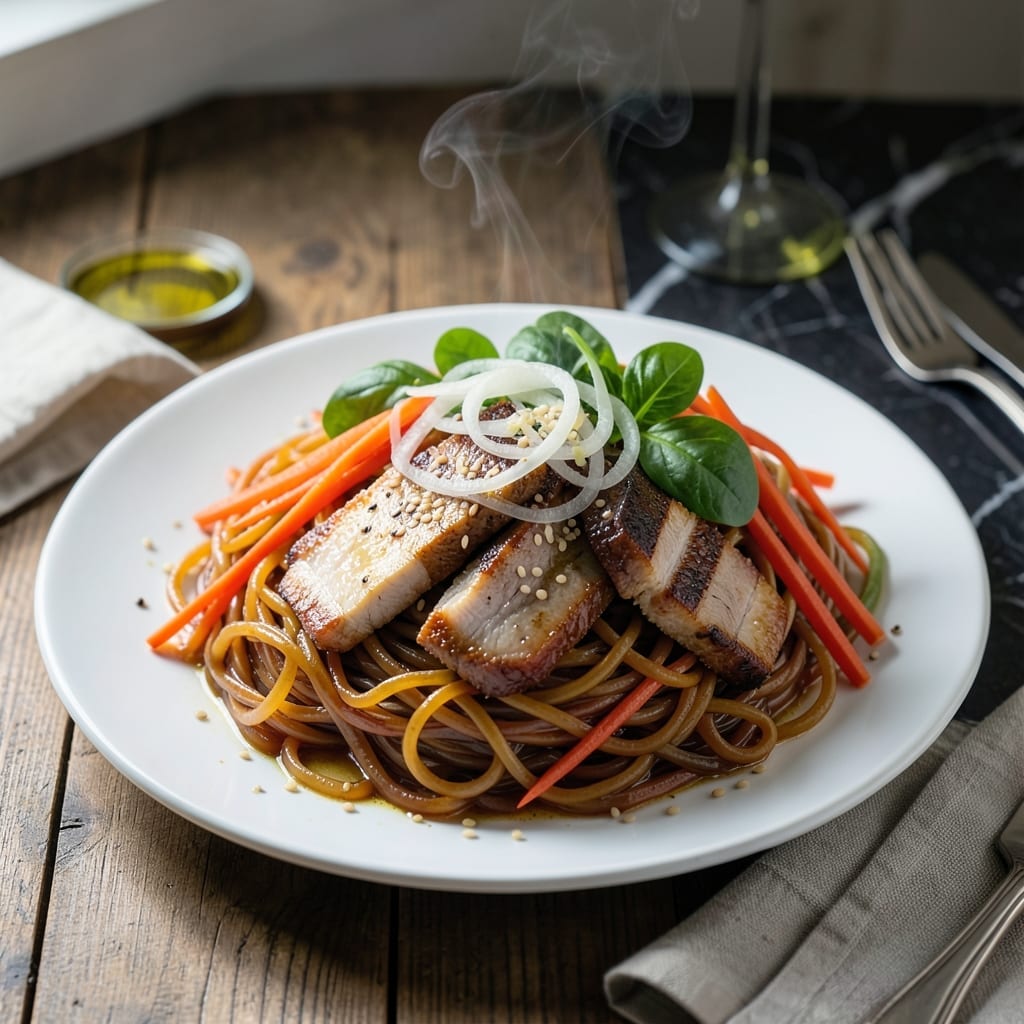
This Korean classic brings sweet potato noodles and tender pork together in a dish that’s both elegant and approachable. I’ve spent years refining my grandmother’s vague but brilliant method into clear, foolproof steps.
The key is the marinade—a balanced blend of soy, sugar, and sesame that coats every strand of noodle and slice of pork. It’s a dish that feels special without demanding all-day effort.
You’ll love how the chewy noodles and savory pork come together with crisp vegetables for a meal that’s as satisfying as it is beautiful. The flavors deepen as it sits, making leftovers even better.
Perfect for feeding a crowd or meal prepping for the week. Here’s how to make it right.
Ingredients for Japchae Recipe Pork
Glass noodles, tender pork, and crisp veggies come together beautifully here.
| Ingredient | Amount | Notes |
|---|---|---|
| Sweet Potato Noodles 🍜 | 8 oz | Dangmyeon or cellophane noodles |
| Pork Shoulder 🐖 | ¾ lb | Thinly sliced for stir-fry |
| Spinach 🥬 | 4 cups | Fresh, washed and trimmed |
| Carrots 🥕 | 2 whole | Julienned or matchstick cut |
| White Onion 🧅 | 1 whole | Thinly sliced |
| Garlic Cloves 🧄 | 4 cloves | Minced finely |
| Soy Sauce 🫙 | ⅓ cup | Regular or light variety |
| Brown Sugar 🍚 | 3 tbsp | Packed for sweetness |
| Sesame Oil 🫒 | 2 tbsp | Toasted for depth |
| Toasted Sesame Seeds 🌰 | 2 tbsp | For garnish and flavor |
| Vegetable Oil 🛢️ | 2 tbsp | For cooking pork and noodles |
| Salt 🧂 | ½ tsp | To taste |
| Black Pepper 🌶️ | ¼ tsp | Freshly ground preferred |
| Green Onions 🧅 | 3 whole | Thinly sliced for garnish |
[recipe_ingredient_scaler]
The pork is everything here. Pork shoulder stays juicy when thinly sliced—butcher shops will often cut it for you if you ask nicely. For the noodles, look for Korean sweet potato starch noodles (dangmyeon) at H Mart or any well-stocked Asian grocery. They’re usually in the refrigerated or dried noodle section. The spinach should be bright green and crisp—no wilted leaves.
No pork? Thinly sliced beef or chicken works just as well. Short on veggies? Bell peppers or mushrooms add great texture. If you can’t find sweet potato noodles, regular glass noodles are fine but the texture won’t be quite the same. The soy sauce can be tamari for gluten-free, but adjust saltiness as needed. Brown sugar can be swapped with coconut sugar for a deeper flavor.
This tastes even better the next day. Store leftovers in the fridge for up to 5 days or freeze for 3 months. Reheat gently to keep the noodles from getting mushy. I always make a double batch for lunches—saves time all week.
Why You’ll Love This Recipe
- One Pot Wonder: I can cook the pork shoulder and noodles together—no extra pans, no extra fuss.
- Savory Sweet Balance: The caramelized pork with sesame oil and soy sauce makes every bite ridicously good.
- Feeds a Crowd: Between us, this stretches easily for potlucks or Sunday dinner with leftovers for lunch.
- Budget Friendly: Pork shoulder and sweet potato noodles fill up plates without emptying my wallet.
Step-by-Step Instructions for Japchae with Pork
Follow my tested method for perfectly chewy noodles and tender pork in a sweet-savory sauce.
Step 1: Blanch Spinach and Cook Noodles
Bring a large pot of water to a boil. Add the 4 cups spinach and blanch for 30 seconds until just wilted. Drain immediately and rinse under cold water to stop the cooking process. Squeeze out excess water with your hands—this prevents a watery dish.
In the same pot, cook the 8 oz sweet potato noodles according to package directions, usually 6-7 minutes. They should be tender but still slightly chewy. Drain and rinse under cold water, then toss with 1 tbsp sesame oil to prevent sticking.
Step 2: Cook Pork and Vegetables
Heat 2 tbsp vegetable oil in a large skillet over medium-high heat. Add the thinly sliced 0.75 lb pork shoulder and cook for 5-6 minutes until no longer pink. Season with 0.5 tsp salt and 0.25 tsp black pepper.
Add the 1 whole white onion (thinly sliced), 2 whole carrots (julienned), and 4 cloves garlic cloves (minced). Stir-fry for 3-4 minutes until the vegetables soften slightly but retain some crispness.
Step 3: Make the Sweet-Savory Sauce
In a small bowl, whisk together the 0.33 cup soy sauce, 3 tbsp brown sugar, and remaining 1 tbsp sesame oil. The sugar should dissolve completely, creating a glossy, dark brown mixture.
Pour this sauce over the pork and vegetables in the skillet. Stir well to coat everything evenly and cook for 2 minutes until the sauce thickens slightly. Remove from heat.
Step 4: Combine All Ingredients
In a large bowl, combine the cooked sweet potato noodles, spinach, pork-vegetable mixture, and any remaining sauce from the skillet. Toss gently but thoroughly with tongs to ensure every strand of noodle is coated.
Here’s the thing—I always let this sit for 5 minutes before serving. This allows the flavors to meld together beautifully, and the noodles absorb some of that delicious sauce.
Step 5: Garnish and Serve
Transfer to a serving platter and sprinkle with 2 tbsp toasted sesame seeds and thinly sliced 3 whole green onions. The sesame seeds add a wonderful nutty crunch, while the green onions provide a fresh, sharp contrast.
Serve warm or at room temperature. Each bite should deliver chewy noodles, tender pork, crisp-tender vegetables, and that signature sweet-savory flavor that makes this dish irresistible.
Pro Tips For Making Japchae Recipe Pork
- Parboil the Noodles: Boil sweet potato noodles for just 5-6 minutes until pliable but still firm, then rinse under cold water to stop cooking—I learned this the hard way after ending up with mushy japchae more than once.
- Slice Pork Thin: Cut pork shoulder into paper-thin slices against the grain (about 1/8 inch thick) so it cooks in under 2 minutes and stays tender. Sounds tedious, but it works.
- Salt the Spinach: After blanching spinach, toss it with 1/2 teaspoon salt while still warm to draw out excess water—my grandmother swore by this, and she was right.
- Marinate 30 Minutes: Give the pork at least 30 minutes in its marinade (soy, sugar, garlic, sesame) before cooking. I skip this when I’m lazy, but the dish is noticeably better when I don’t.
Flavor Customization for This Recipe
Spice It Up
Add 1-2 tsp gochugaru (Korean red pepper flakes) to the marinade for a subtle heat that complements the sweetness. I love how this balances the dish without overpowering it. For more fire, include 1 tbsp sriracha in the sauce.
Extra Umami Boost
A splash of 1 tbsp fish sauce deepens the savory notes beautifully. My grandmother’s vague notes never mentioned it, but I’ve found it elevates the dish. Alternatively, 1 tsp oyster sauce adds richness without changing the flavor profile.
Citrus Zing
Brighten the flavors with 1 tbsp rice vinegar or juice of ½ lime in the marinade. This adds a tangy contrast that cuts through the richness. I often add this when serving the dish cold for meal prep. 💡
Nutty Crunch
Toast ¼ cup crushed peanuts or slivered almonds and sprinkle on top before serving. This adds texture and a nutty aroma. My local farmers market has the freshest nuts for this.
Herb Freshness
Fresh cilantro or Thai basil can replace green onions for a different aromatic note. About ¼ cup chopped is perfect. These herbs add a vibrant, fresh finish to the dish.
Sweet Adjustments
For a less sweet version, reduce the brown sugar to 2 tbsp and add 1 tbsp honey for complexity. This creates a more balanced sweetness that some prefer. Honestly, I go back and forth on this one. 💛
Nutrition Facts
Frequently Asked Questions
Can I use a different cut of pork?
Yes, pork tenderloin works well too. Just slice it thinly against the grain for maximum tenderness.
How do I prevent the noodles from sticking?
Rinse them under cold water after cooking and toss with 1 tbsp sesame oil. This keeps them separate and adds flavor.
Can I make this ahead of time?
The flavors deepen as it sits. Store in the fridge for up to 5 days or freeze for 3 months.
What if my sauce is too thin?
Simmer it for an extra 2-3 minutes to thicken. If it’s still thin, mix 1 tsp cornstarch with water and stir in.

Trained in classic French technique but raised on slow-cooked ribs and spicy rubs, she blends culinary skill with smoke and soul.
- Energy Ball Recipe Peanut Butter: No-Bake Protein-Packed Bites - September 24, 2026
- Jerk Chicken Recipe Crock Pot: Slow-Cooked Caribbean Heat - September 24, 2026
- Japanese Curry Recipe Kenji: Chef-Tested Rich and Velvety Sauce - September 24, 2026