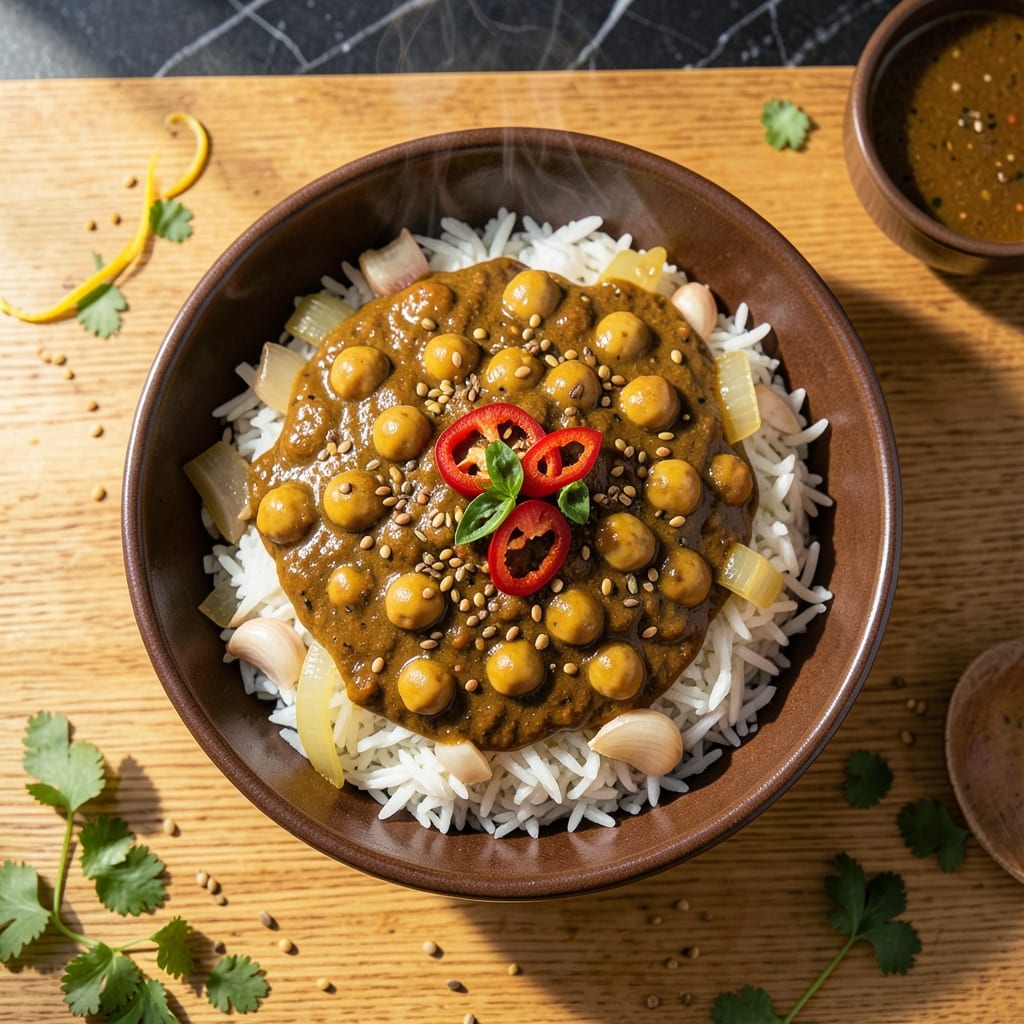
I developed this vegetarian madras curry after years of testing spice blends in my Boston kitchen. This version uses chickpeas for heartiness and a balance of aromatic spices that never overpowers.
The key is blooming whole spices in hot oil before adding vegetables and chickpeas. This builds layers of flavor that taste complex yet approachable for home cooks.
You’ll end up with a rich, fragrant curry that’s thick enough to cling to rice but still light. The chickpeas soak up the sauce while maintaining their shape.
Serve with basmati rice or naan to complete the meal. Here’s how to make it perfectly every time.
Ingredients for Madras Curry Recipe Vegetarian
Rich spices, hearty chickpeas, and a few fresh vegetables create this vibrant dish.
| Ingredient | Amount | Notes |
|---|---|---|
| Chickpeas 🥘 | 2 cans | Drained and rinsed thoroughly |
| Basmati Rice 🍚 | 1 ½ cups | Uncooked, rinsed before use |
| Yellow Onion 🧅 | 1 whole | Finely diced for even cooking |
| Garlic Cloves 🧄 | 4 cloves | Minced for maximum flavor |
| Fresh Ginger 🌿 | 1 tbsp | Peeled and finely grated |
| Green Chili Pepper 🌶️ | 1 whole | Seeds removed, finely chopped |
| Diced Tomatoes 🍅 | 1 can | With juices, 14.5 oz |
| Coconut Milk 🥥 | 1 can | Full-fat for creaminess |
| Vegetable Oil 🫒 | ¼ cup | Neutral flavor, high smoke point |
| Cumin Seeds 🌿 | 1 tsp | Whole seeds for blooming |
| Mustard Seeds 🧂 | 1 tsp | Yellow or black variety |
| Coriander Seeds 🌿 | 1 tsp | Lightly crushed for flavor |
| Ground Turmeric 🌶️ | 1 tsp | For vibrant color and earthiness |
| Ground Cinnamon 🌿 | ¼ tsp | Ceylon for subtle sweetness |
| Garam Masala 🌶️ | 1 tsp | Freshly ground for best flavor |
[recipe_ingredient_scaler]
The whole spices are non-negotiable for that authentic Madras depth. Bulk bins at Whole Foods or Patel Brothers have the best selection—freshness matters more than brand here. I always buy cumin and coriander seeds whole and toast them myself (the aroma alone tells you they’re good). The coconut milk? Thai Kitchen or Chaokoh are my go-tos for full-fat creaminess.
No garam masala? Mix equal parts cumin, coriander, and cardamom with a pinch of cloves and cinnamon—close enough. Fresh ginger is ideal but ground ginger at half the amount works in a pinch. Can’t find green chilies? Jalapeño or serrano peppers bring similar heat. The chickpeas can be swapped for kidney beans, but they won’t soak up the sauce quite as well.
This curry tastes even better the next day once the spices meld. Keeps for 4-5 days in the fridge, freezes beautifully for 3 months. I always make a double batch—leftovers disappear fast (worth the extra effort).
Why You’ll Love This Recipe
- One-Pot Wonder: I love that everything from the chickpeas to the basmati rice cooks together in one pot—minimal cleanup, maximum flavor.
- Flavor Bomb: The combo of fresh ginger, garlic, and those caramelized onions gives this madras curry a warmth that lingers long after the last bite.
- Meal Prep Hero: Honestly, it tastes even better the next day, so I double the batch and pack it for lunch all week.
- Pantry MVP: Between us, I always have these ingredients on hand, and it still feels like a restaurant-quality meal without the cost.
Step-by-Step Instructions for Madras Curry Vegetarian
This method builds layers of flavor that will transport you to Southern India with every bite.
Step 1: Bloom the Whole Spices in Hot Oil
Heat the 0.25 cup vegetable oil in a heavy-bottomed pot over medium heat. When the oil shimmers, add the 1 tsp cumin seeds, 1 tsp mustard seeds, and 1 tsp coriander seeds. Cook for 30-45 seconds until the mustard seeds begin to pop like tiny firecrackers.
This blooming process awakens the essential oils in the spices, creating the aromatic foundation. I always cover the pot partially with a lid during this step—it prevents the mustard seeds from jumping out while still allowing you to hear their distinctive popping. The moment they start to dance, you’ll smell the transformation.
Step 2: Build the Aromatic Base
Immediately add the finely diced yellow onion and cook for 6-8 minutes until golden brown and translucent. Then stir in the 1 tbsp fresh ginger, 4 cloves minced garlic cloves, and finely chopped green chili pepper. Cook for 2 minutes until the raw aroma mellows into something rich and inviting.
This is where the magic happens. The onions should caramelize slightly at the edges, creating sweetness that balances the heat from the chili. Stir frequently to prevent burning—you want deep color, not bitter char. The kitchen will fill with an intoxicating scent that tells you you’re on the right track.
Step 3: Develop the Curry Base and Add Chickpeas
Stir in the 1 tsp ground turmeric and 0.25 tsp ground cinnamon, cooking for 30 seconds until fragrant. Then add the 1 can diced tomatoes with juices, scraping up any browned bits from the bottom. Simmer for 5 minutes until the mixture thickens slightly.
Now add the 2 cans chickpeas (drained and rinsed) and stir to coat them in the spiced tomato mixture. This step marries all the bold flavors with the hearty chickpeas, which will soak up the sauce beautifully as they cook.
Step 4: Finish with Coconut Milk and Garam Masala
Pour in the 1 can coconut milk and stir well to combine. Bring to a gentle simmer, then reduce heat to low. Add the 1 tsp garam masala and simmer uncovered for 15-20 minutes, stirring occasionally, until the sauce thickens and the flavors meld together.
The curry should reduce slightly, with the oil separating at the edges—a sign that the spices have fully released their flavors. The chickpeas will be tender but still hold their shape, and the sauce will have a rich, velvety texture that clings to every bite.
Step 5: Rest and Serve with Basmati Rice
Remove from heat and let the curry rest for 10 minutes. This allows the flavors to deepen and the sauce to reach its perfect consistency. While it rests, cook the 1.5 cups basmati rice according to package instructions.
Serve the curry hot over the cooked basmati rice. The rice should be fluffy and separate easily, providing the perfect neutral base for the bold, aromatic curry. Each spoonful should deliver a balance of heat, sweetness, and earthy spices that defines authentic Madras flavor.
Pro Tips For Making Madras Curry Recipe Vegetarian
- Toast the Spices: Heat your madras curry spices in dry oil for 30 seconds until fragrant—this wakes them up and deepens the flavor. I learned this the hard way when my curry tasted flat before I started toasting.
- Soak the Chickpeas: If using dried chickpeas, soak them overnight in plenty of water. Sounds tedious, but it cuts cooking time in half and gives a creamier texture.
- Prevent Onion Burn: Cook the yellow onion low and slow until golden, not brown. After burning three batches, I finally figured out that rushing this step makes the curry bitter.
- Ginger-Garlic Paste: Blend the fresh ginger and garlic cloves into a paste before adding—it distributes evenly and saves you from fishing out chunks later. My grandmother swore by this, and she was right.
Troubleshooting This Recipe
Spices Not Blooming
If your whole spices aren’t popping or releasing aroma, your oil may not be hot enough. Heat the 0.25 cup vegetable oil until it shimmers—test with one mustard seed. If it doesn’t sizzle immediately, wait 30 more seconds. I learned this the hard way in my tiny Boston kitchen. 💡
Sauce Too Thin
Simmer uncovered for the full 15-20 minutes after adding coconut milk. If still watery, mash ½ cup chickpeas against the pot wall to thicken naturally. Avoid cornstarch—it dulls the spice complexity I worked so hard to build.
Bitter Curry Base
Burnt onions or spices cause bitterness. If this happens, stir in 1 tsp brown sugar or 1 tbsp coconut milk to balance. Next time, lower heat to medium and stir constantly during the 6-8 minute onion cooking phase.
Chickpeas Too Firm
Simmer the 2 cans chickpeas in the sauce for the full 20 minutes. If they’re still tough, they were likely old—always check can dates at the store. I now buy chickpeas from Patel Brothers for fresher stock.
Oil Separation Issues
Some oil separation is normal, but if excessive, your heat may be too high. Maintain a gentle simmer, not a boil. If it happens, just stir it back in—the flavors are still there. This dish forgives minor temperature fluctuations, as I discovered making it in my temperamental apartment stove.
Spice Level Too High
For milder heat, remove all seeds from the green chili pepper before chopping. If it’s still too spicy, stir in ½ cup plain yogurt at the end. The yogurt cools without diluting the rich flavors we built in earlier steps. ⚡
Nutrition Facts
Frequently Asked Questions
Can I use dried chickpeas instead of canned?
Yes! Soak 1 cup dried chickpeas overnight, then cook until tender before adding. This may require 10-15 extra minutes of simmering to absorb the flavors fully.
What if I don’t have whole spices?
Use ground spices in a pinch: ½ tsp ground cumin, ½ tsp ground coriander, and ¼ tsp mustard powder. Toast them briefly in oil to wake up the flavors.
How do I adjust the heat level?
Remove seeds from the green chili for mild heat, or add ½ tsp cayenne for extra spice. Stir in plain yogurt at the end to cool it down if needed.
Can I make this ahead of time?
The flavors deepen after 1-2 days in the fridge. Store in an airtight container for up to 5 days, or freeze for 3 months.

Trained in classic French technique but raised on slow-cooked ribs and spicy rubs, she blends culinary skill with smoke and soul.
- Energy Ball Recipe Peanut Butter: No-Bake Protein-Packed Bites - September 24, 2026
- Jerk Chicken Recipe Crock Pot: Slow-Cooked Caribbean Heat - September 24, 2026
- Japanese Curry Recipe Kenji: Chef-Tested Rich and Velvety Sauce - September 24, 2026