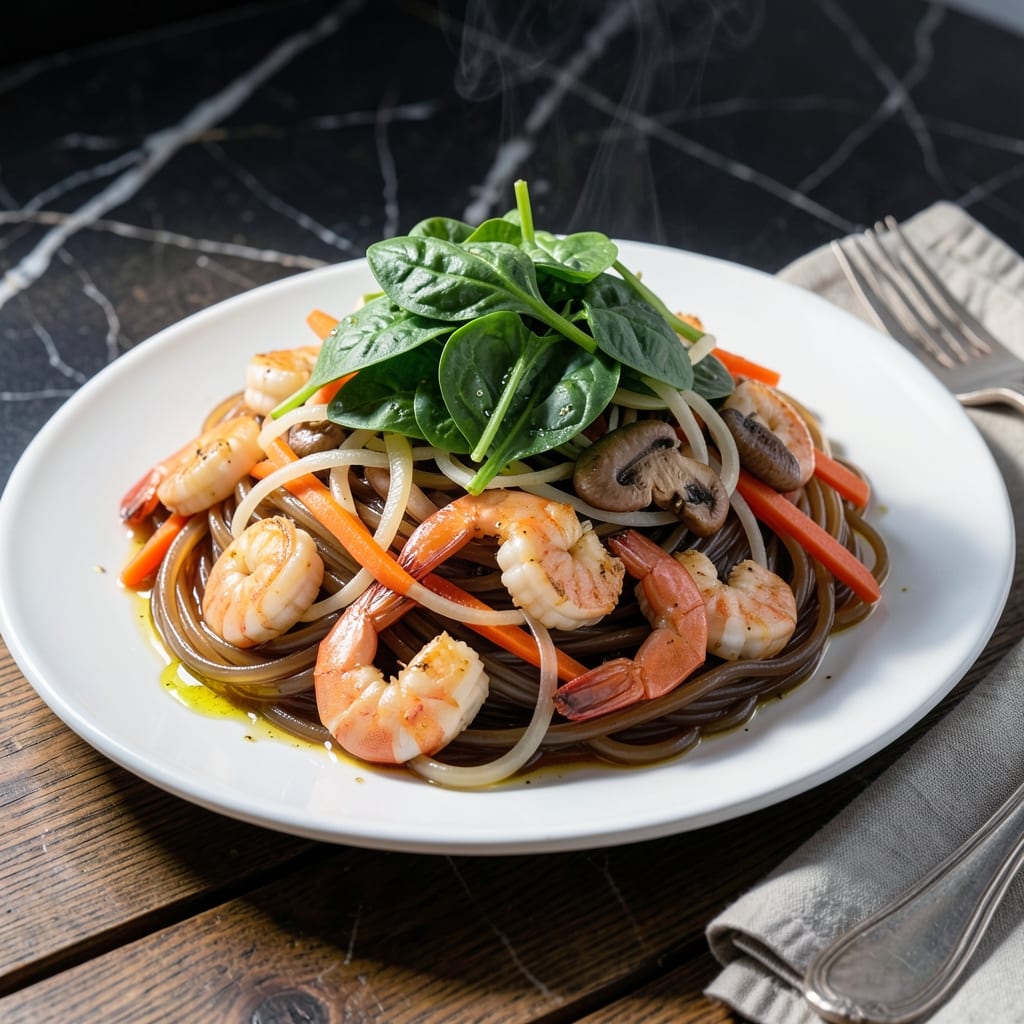
I first encountered japchae at a Korean friend’s dinner table, where the glossy chewy noodles and plump shrimp stole the show. This dish balances sweet, savory, and umami in every bite.
The key is properly rehydrating the glass noodles and stir-frying them with vegetables and shrimp for even flavor distribution. A well-seasoned soy-based sauce ties everything together.
You’ll end up with vibrant, slightly tender noodles, succulent shrimp, and colorful vegetables that make this dish as beautiful as it is delicious.
Perfect for celebrations or weekday meals when you want something special. Here’s how to make it right.
Ingredients for Japchae Recipe with Shrimp
Sweet potato starch noodles, plump shrimp, and vibrant vegetables come together beautifully here.
| Ingredient | Amount | Notes |
|---|---|---|
| Dangmyeon Glass Noodles 🍜 | 8 oz | Sweet potato starch noodles |
| Medium Shrimp 🦐 | 1 lb | Peeled, deveined, tails on or off |
| Carrots 🥕 | 2 whole | Julienned into matchsticks |
| Spinach 🍃 | 6 oz | Fresh baby spinach preferred |
| White Onion 🧅 | 1 whole | Thinly sliced into half-moons |
| Shiitake Mushrooms 🍄 | 4 whole | Fresh or rehydrated dried |
| Garlic Cloves 🧄 | 4 cloves | Minced for maximum flavor |
| Green Onions 🌱 | 4 whole | Thinly sliced for garnish |
| Soy Sauce 🫒 | ⅓ cup | Low-sodium preferred for balance |
| Brown Sugar 🍚 | 3 tbsp | Light or dark works |
| Sesame Oil 🫒 | 2 tbsp | Toasted for nutty depth |
| Vegetable Oil 🫒 | 2 tbsp | Neutral flavor for stir-frying |
| Toasted Sesame Seeds 🌰 | 2 tbsp | For garnishing finished dish |
| Ground Black Pepper 🌶️ | ½ tsp | Freshly ground for best flavor |
[recipe_ingredient_scaler]
The glass noodles are non-negotiable—look for dangmyeon at Korean markets (they’re usually labeled sweet potato starch noodles). H Mart or Assi Plaza are great sources if you’ve got one nearby. For shrimp, wild-caught frozen from Trader Joe’s or Whole Foods works just as well as fresh (thaw in cold water first). The carrots and spinach? Grab whatever looks freshest at your regular grocery store.
No shrimp? Scallops or firm white fish (like cod) hold up well. For a vegetarian twist, try shitake mushrooms at double the amount. Out of brown sugar? White sugar with a splash of molasses mimics the depth. If you can’t find fresh spinach, frozen works—just thaw and squeeze out all the water (don’t skip this part). The sesame oil is key, but toasted and untoasted aren’t interchangeable here.
Leftovers keep 4-5 days in the fridge—reheat gently with a splash of water to loosen the noodles. Freezes for 2 months, but the texture changes slightly (still tasty, just different). Store sesame oil in a cool, dark place to prevent it from going rancid. Always keep it sealed tight.
Why You’ll Love This Recipe
- One Pot Wonder: I toss the shrimp, glass noodles, and veggies in one pan—minimal cleanup, maximum flavor.
- Sweet & Savory Bite: The shrimp soak up the sesame oil while the carrots add just the right crunch.
- Meal Prep Magic: Honestly, it tastes even better the next day when the flavors meld together.
- Budget Stretcher: A little shrimp goes a long way with those chewy glass noodles filling out the dish.
Step-by-Step Instructions for Japchae With Shrimp
This method ensures perfectly chewy noodles and shrimp cooked to tender perfection every time.
Step 1: Prepare the Glass Noodles and Vegetables
Boil the 8 oz Dangmyeon Glass Noodles in salted water according to package instructions until just tender, about 6-7 minutes. Drain and rinse under cold water to stop the cooking process. Toss with 1 tbsp Sesame Oil to prevent sticking while you prep the rest.
Meanwhile, blanch the 6 oz Spinach in boiling water for 30 seconds, then drain and rinse under cold water. Squeeze out excess moisture with your hands. Thinly slice the 1 whole White Onion into half-moons, julienne the 2 whole Carrots into matchsticks, and slice the 4 whole Shiitake Mushrooms into thin strips.
Step 2: Cook the Shrimp and Aromatics
Heat 2 tbsp Vegetable Oil in a large skillet or wok over medium-high heat. Add the 1 lb Medium Shrimp and cook for 2-3 minutes per side until they turn opaque and pink. Remove the shrimp and set aside.
In the same pan, add the sliced onion, carrots, and shiitake mushrooms. Stir-fry for 4-5 minutes until the vegetables soften slightly but retain a crisp bite. Add the minced 4 cloves Garlic Cloves and cook for 30 seconds until fragrant.
Step 3: Combine Everything with the Sauce
In a small bowl, whisk together the 0.33 cup Soy Sauce, 3 tbsp Brown Sugar, 1 tbsp Sesame Oil, and 0.5 tsp Ground Black Pepper until the sugar dissolves. Pour this sauce into the skillet with the vegetables and stir to combine.
Add the cooked glass noodles, spinach, and shrimp to the skillet. Toss everything together over medium heat for 2-3 minutes, ensuring the noodles and shrimp are evenly coated and heated through. The noodles should glisten with the sauce, not be dry or clumping.
Step 4: Finish and Serve
Drizzle the remaining 1 tbsp Sesame Oil over the japchae and toss once more. Transfer to a serving platter and garnish with the thinly sliced 4 whole Green Onions and 2 tbsp Toasted Sesame Seeds.
Serve warm or at room temperature. Each bite should deliver a balance of chewy noodles, tender shrimp, and vibrant vegetables with a glossy, savory-sweet sauce clinging to every strand. The sesame seeds add a nutty crunch that ties it all together.
Pro Tips For Making Japchae Recipe With Shrimp
- Boil Noodles Separately: I learned this the hard way—cooking dangmyeon with other ingredients makes them gummy. Boil them alone in water for 6-7 minutes, then rinse under cold water to stop the cooking.
- Salt the Shrimp: Toss the shrimp with ½ teaspoon of salt and a pinch of sugar before cooking. Sounds weird, but it works—it keeps them juicy and seasons them evenly.
- Slice Veggies Thin: Julienne the carrots and onions into matchstick-thin pieces, about 2 inches long. This makes a real difference in texture and ensures they cook quickly and evenly with the noodles.
- Use Sesame Oil Last: Skip adding sesame oil while stir-frying—it burns easily. Instead, drizzle it in at the end, just before serving, to preserve its nutty flavor.
Storing and Reheating japchae recipe with shrimp
Refrigerator Storage
Let your japchae cool completely before transferring to airtight containers. I use glass containers from Central Market for easy visibility. Store in the fridge at 40°F or below for up to 4-5 days. The flavors actually deepen overnight as the ingredients meld together. ❄️
Freezer Storage
For longer storage, freeze in quart-sized freezer bags with excess air removed. It keeps well for up to 2 months, though the noodles may soften slightly upon thawing. I recommend portioning into meal-sized servings before freezing for convenience.
Stovetop Reheating
My preferred method is reheating on the stovetop. Add a splash of water or broth and warm over medium-low heat for 5-7 minutes, stirring occasionally. This helps restore the noodles’ chewiness and prevents sticking. David always tests this method first for me. 🔥
Microwave Reheating
For quick meals, microwave individual portions covered with a damp paper towel. Heat on 70% power for 2-3 minutes, stir, then continue in 30-second intervals until heated through. Add a splash of sesame oil after reheating to refresh the flavors.
Room Temperature Serving
Japchae is delicious served at room temperature, which makes it perfect for picnics or potlucks. Simply take it out of the fridge 30 minutes before serving. The noodles maintain their texture beautifully, and the flavors remain vibrant.
Nutrition Facts
Frequently Asked Questions
Can I use chicken instead of shrimp?
Yes, boneless chicken breast or thigh works well. Cut into thin strips and cook until 165°F internal temperature. The texture will differ but flavors will still shine.
How do I prevent the noodles from sticking?
Rinse with cold water immediately after boiling, then toss with 1 tbsp Sesame Oil. This creates a protective coating while you prep other ingredients.
What if my sauce is too salty?
Balance it by adding 1 tsp Brown Sugar or a splash of water. Taste as you go—Korean cooking is all about adjusting to preference.
Can I make this ahead of time?
Prepare up to 1 day in advance and store in the fridge. The flavors meld beautifully overnight.

Trained in classic French technique but raised on slow-cooked ribs and spicy rubs, she blends culinary skill with smoke and soul.
- Recipe for Boneless Pork Chops in Cast Iron Skillet: Sear and Baste to Juicy Perfection - October 3, 2026
- Recipe for Boneless Cross Rib Roast: Slow-Roasted Beef with Herb Crust - October 3, 2026
- Hamburgers in Sauce Recipe Crock Pot: Slow-Cooked Savory Delight - October 3, 2026