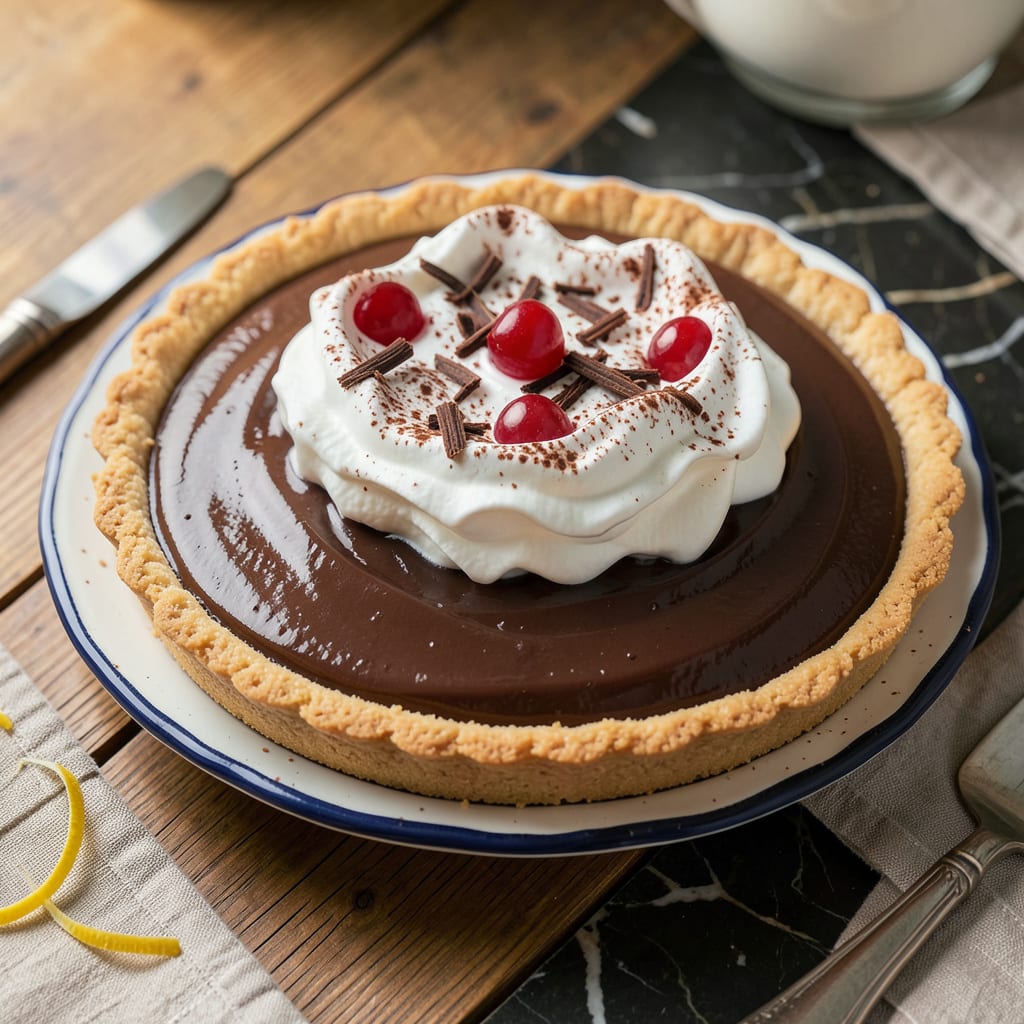
The classic box recipe combines cooked chocolate pudding with a pre-baked pie crust, chilled until set. It requires 5 ingredients: pudding mix, milk, sugar, butter, and a 9-inch crust. Bake the filling briefly before cooling for a creamy, rich texture.
This nostalgic dessert delivers that perfect balance between silky and sturdy that makes every slice satisfying. 🌟 What sets it apart is the cooking process—unlike instant pudding, heating the mix transforms starches to create a velvety consistency that holds its shape when sliced. I love how the brief baking step intensifies the chocolate flavor while ensuring the filling adheres beautifully to the crust. The chilling time isn’t just about setting; it’s when the magic happens as flavors meld and the texture becomes luxuriously smooth.
💡 In This Article
- How Cook-and-Serve Pudding Creates the Perfect Pie Texture
- Pro Tips for Customizing Your Jello Chocolate Pudding Pie
How Cook-and-Serve Pudding Creates the Perfect Pie Texture
When you heat the Jello Cook & Serve pudding mix with milk, something fascinating happens to the cornstarch molecules. 🔥 At temperatures around 180-212°F, the starch granules absorb liquid and swell dramatically—a process called gelatinization. This creates that signature thick, velvety texture that instant pudding simply can’t match.
The heat also activates the cocoa’s full flavor profile, releasing deeper chocolate notes than you’d get from no-bake versions.
The brief baking step serves two critical purposes. First, it allows the pudding to reach that ideal 203°F threshold where starch gelatinization is complete but before proteins begin to curdle. Second, the oven’s dry heat evaporates just enough moisture to concentrate flavors while maintaining a creamy consistency.
I’ve found that 10-12 minutes at 350°F is the sweet spot—long enough to set the filling but not so long that it develops a skin or becomes rubbery.
Chilling transforms the texture completely. As the pie cools, the starch network contracts slightly, creating a firm yet silky structure that holds clean slices.
This is where cook-and-serve pudding shines over instant: the slow cooling process (ideally 4+ hours) allows the starch molecules to retrogradate—forming crystalline structures that give the filling its satisfying, slightly elastic bite. The butter in the recipe plays a crucial role here, adding richness while preventing the filling from becoming gummy.
What you won’t get from instant pudding is that beautiful contrast between the crisp crust and the dense yet yielding filling. The cooking process creates a pudding with about 30% more body than instant versions, which means it can support heavier toppings like whipped cream or chocolate shavings without collapsing.
I always recommend using a pre-baked crust (graham cracker or chocolate wafer) because the pudding’s weight needs that sturdy foundation to maintain perfect slice integrity.
The science explains why this pie holds up so well at room temperature for serving. The starch network created through cooking is more stable than instant pudding’s chemical thickeners, giving you a 2-hour window before the texture starts to soften. This makes it ideal for potlucks or summer gatherings where refrigerator space might be limited.
The flavor actually improves during this time as the cocoa’s bitter notes mellow and blend with the sweetness.
For those who remember the classic diner chocolate cream pies, this is how they achieved that perfect balance—firm enough to hold its shape when sliced, but still lusciously creamy on the tongue.
✨ The cooking process creates microscopic air pockets that melt as you eat, releasing bursts of chocolate flavor that instant pudding pies just can’t replicate. It’s this textural complexity that makes the extra cooking step worthwhile.

Trained in classic French technique but raised on slow-cooked ribs and spicy rubs, she blends culinary skill with smoke and soul.
- Recipe for Boneless Pork Chops in Cast Iron Skillet: Sear and Baste to Juicy Perfection - October 3, 2026
- Recipe for Boneless Cross Rib Roast: Slow-Roasted Beef with Herb Crust - October 3, 2026
- Hamburgers in Sauce Recipe Crock Pot: Slow-Cooked Savory Delight - October 3, 2026