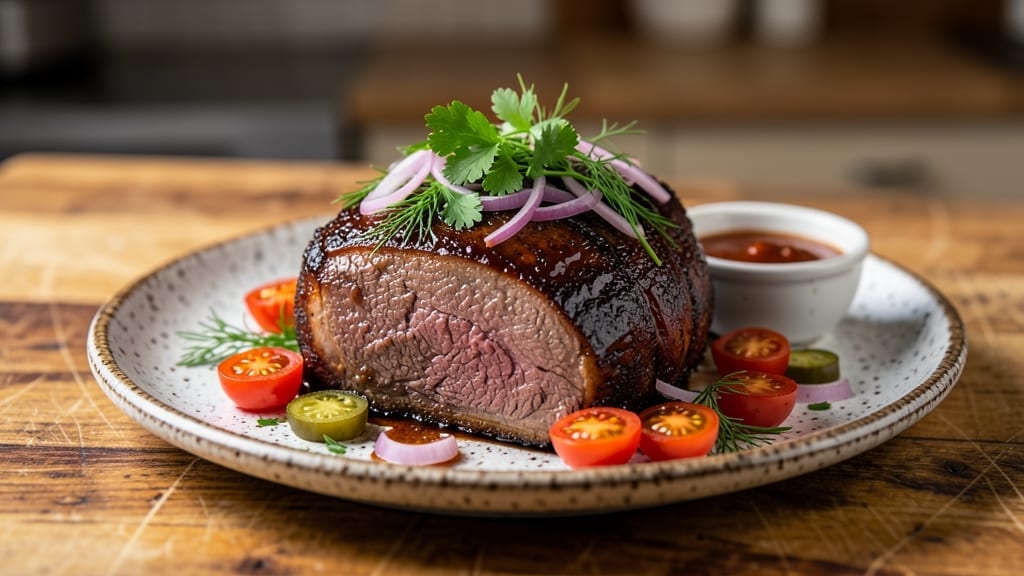
This Jewish beef brisket recipe delivers the tender perfection that transforms tough cuts into melt-in-your-mouth masterpieces through slow-cooked precision and traditional seasoning.
The secret lies in a precise balance of kosher salt, black pepper, and aromatic garlic—layered onto the meat before the long, patient cook that breaks down fibers into silky texture.
I’ve perfected this method over years of testing, ensuring every bite carries the deep, smoky-sweet flavors of Jewish deli tradition without requiring a smoker.
The process begins with parboiling the brisket to tenderize, followed by a dry rub that clings to the surface during the slow cook—whether in an oven, smoker, or slow cooker.
This method guarantees restaurant-quality results at home, with a bark that’s crisp enough to shatter and a center so tender it nearly dissolves. The key is maintaining a steady temperature, letting the meat work with time rather than force, which is where most home cooks fall short.
By the final hour, your brisket will have transformed into a glazed, caramelized masterpiece with layers of flavor in every slice—rich, savory, and just slightly sweet from the natural breakdown.
The resting period is critical; it allows juices to redistribute, ensuring each cut delivers that perfect balance of moisture and texture. Serve it sliced against a backdrop of roasted potatoes or matzo ball soup for a meal that feels both nostalgic and refined.
This isn’t just a recipe—it’s a culinary tradition brought to life in your kitchen. Whether you’re hosting Shabbat or simply craving comfort, the patience and care invested here will make every bite worth the wait. Let’s get started on creating brisket that rivals the best delis.
Ingredients for jewish beef brisket
A few key ingredients transform tough brisket into restaurant-quality perfection through slow-cooked magic.
| Ingredient | Amount | Notes |
|---|---|---|
| Beef Brisket 🥩 | 4 lb | Whole packer cut, 1/2 inch thick |
| Kosher Salt 🧂 | 2 tbsp | Diamond Crystal preferred |
| Freshly Ground Black Pepper 🌶️ | 1 ½ tbsp | Coarse grind for texture |
| Garlic Cloves 🧄 | 8 cloves | Peeled, smashed for aroma |
| Onion Powder 🧅 | 1 tbsp | Freshly ground preferred |
| Paprika 🌶️ | 1 tbsp | Smoked variety for depth |
| Ground Cumin 🌿 | 1 tsp | Toasted for warmth |
| Brown Sugar 🍯 | 2 tbsp | Light or dark preferred |
| Apple Cider Vinegar 🍎 | 2 tbsp | For tenderizing bath |
| Water 💧 | 8 cups | For parboiling |
| Yellow Onion 🧅 | 1 whole | Quartered for aromatics |
| Carrots 🥕 | 2 whole | Whole, for stock |
| Bay Leaves 🍃 | 2 whole | Fresh if available |
| Beef Broth 🥄 | 2 cups | Low-sodium preferred |
| Honey 🍯 | 2 tbsp | For final glaze |
[recipe_ingredient_scaler]
The brisket is everything here—look for a well-marbled packer cut from your butcher or Costco (they sell whole briskets perfect for this). If you’re buying pre-cut, avoid the flat cut—it’s leaner and less forgiving. The kosher salt matters too: Diamond Crystal dissolves more than Morton’s, so use it if you have it. For the garlic, I always grab extra—half goes in the rub, half gets tossed into the parboiling water for extra depth. The smoked paprika from Penzeys or the bulk spice section adds that authentic deli flavor without needing a smoker.
No smoked paprika? Regular paprika plus a pinch of liquid smoke works in a pinch (start with 1/4 tsp). Running short on cumin? Ground coriander at half the amount gives a similar earthy note. The apple cider vinegar is non-negotiable for the parboil—it tenderizes better than plain water. For the aromatics, fresh bay leaves make a world of difference, but dried work if that’s all you’ve got. The beef broth can be homemade or store-bought (Kitchen Basics or Swanson are solid choices). And if you’re feeling fancy, swap the honey for date syrup in the final glaze—it adds complexity.
This brisket tastes even better the next day, so make extra if you can. Store leftovers in the fridge for 5-6 days or freeze for up to 3 months. For reheating, low and slow is key—warm in the oven at 300°F with a splash of broth until just heated through. The resting period? Non-negotiable. Let it sit for at least 30 minutes before slicing, or all those juices will run out. I like to tent it loosely with foil while resting—keeps it warm and lets the crust set properly.
Why You’ll Love This Recipe
- No-Fuss Slow Cooker: Honestly, the real win here is how hands-off it is. After slathering that spice mix—with those smashed garlic cloves pressed right into the meat—you just let the slow cooker handle the rest. The only active time is the initial parboil, and even that’s just stirring once. My kids can “help” (read: distract me) while the magic happens.
- Smoky-Sweet Perfection: That honey glaze at the end? Chef’s kiss. The smoked paprika and toasted cumin give it depth, while the brown sugar caramelizes into something irresistibly sticky. I’ll be real: the first bite always makes me pause mid-chew to savor it.
- Feeds a Crowd (or Your Weeknight): This 4-pound brisket is exactly what you need for game day or a lazy Sunday, but it’s also perfect for meal prepping. Slice it against the grain, pack the leftovers, and you’ve got lunch for days. My roommate still asks for seconds, even though he’s not Jewish.
- Budget-Friendly Powerhouse: Brisket is one of the most affordable cuts, and with the apple cider vinegar tenderizing bath, you’re getting melt-in-your-mouth texture without fancy techniques. Plus, the spices—especially that onion powder and kosher salt—make a tiny bit of meat taste like a feast. My grocery bill never looked so satisfying.
Step-by-step instructions for slow-cooked spice-rubbed beef brisket
Here’s the method that delivers melt-in-your-mouth tenderness with a perfect balance of smoky, sweet, and savory flavors.
Prepare the Brisket with the Spice Rub
Start by trimming any excess fat from the 4 lb beef brisket, leaving about ¼ inch of fat cap for moisture during cooking. Pat the meat completely dry with paper towels—this is crucial for the rub to adhere properly and develop that signature crust.
In a small bowl, combine the 2 tbsp kosher salt, 1½ tbsp freshly ground black pepper, 1 tbsp onion powder, 1 tbsp paprika, 1 tsp ground cumin, 2 tbsp brown sugar, and the 8 peeled, smashed garlic cloves. Mix well to distribute the spices evenly. Here’s where the magic happens: generously coat the brisket with this spice blend, pressing it firmly into every nook and cranny. The garlic cloves should be placed directly on the surface of the meat, not buried inside. Let the brisket sit at room temperature for 30 minutes while you prepare the cooking liquid.
Create the Tenderizing Bath and Parboil
In a large stockpot, combine the 8 cups water, 2 tbsp apple cider vinegar, the quartered 1 yellow onion, 2 carrots, and 2 bay leaves. Bring to a gentle boil over medium heat, then reduce to a simmer. This acidic bath will help tenderize the brisket and infuse the cooking liquid with deep flavor.
Once the liquid is simmering, carefully add the brisket, fat-side up. Partially submerge it in the liquid—just enough to cover about half the meat. Simmer for 2 hours, maintaining a gentle bubble. This parboiling step ensures the brisket starts cooking evenly and develops a beautiful texture. After 2 hours, remove the brisket from the pot and set it aside, keeping the cooking liquid warm for later use.
Slow-Cook Until Fork-Tender
Transfer the brisket to a slow cooker, placing it fat-side up. Pour the 2 cups beef broth into the slow cooker, then carefully ladle the reserved cooking liquid from the stockpot over the brisket—this adds incredible depth of flavor. The liquid should come up about halfway up the sides of the brisket.
Cover and cook on low heat for 8-10 hours, or until the meat is fork-tender with a probe sliding in easily. Here’s the thing—don’t be tempted to peek or stir. Every time you open the lid, you risk losing heat and moisture, which could dry out the meat. The slow cooker does all the work for you, breaking down the connective tissue into gelatin that makes this brisket irresistibly tender.
Glaze and Rest for Maximum Juiciness
Once the brisket reaches the perfect tenderness, remove it from the slow cooker and transfer to a cutting board. In a small saucepan, combine the cooking liquid from the slow cooker with the 2 tbsp honey. Simmer over medium heat for 5-7 minutes until slightly reduced and syrupy. This glaze will add a beautiful sheen and sweet contrast to the rich, savory meat.
Brush the honey glaze generously over the brisket, letting it sit for 5 minutes to absorb. Then, tent loosely with aluminum foil and let it rest for at least 30 minutes before slicing. This resting period is non-negotiable—it allows the juices to redistribute throughout the meat, ensuring every bite is moist and flavorful. Your brisket is now ready to be sliced against the grain for perfect texture and served with the rich cooking liquid as a sauce.
Pro Tips For Making Jewish Beef Brisket
- Smash That Garlic: Don’t just mince those 8 cloves—slam them with the flat side of your knife or a mortar and pestle until they’re bruised and aromatic. I used to peel and toss them in whole, and the flavor was half as bold. This step unlocks the real depth in your rub.
- Keep the Lid Closed: I know, I know—you’ll want to check every hour. But every time you lift that slow cooker lid, you’re letting heat and moisture escape, which can turn your brisket dry. Trust the 8-10 hours on low, and resist the urge to peek.
- Vinegar First, Then Water: Add the 2 tbsp apple cider vinegar to the simmering water before the brisket goes in. The acid needs time to work its magic on tenderizing the meat, not just sit there after the fact. This is the difference between tough and melt-in-your-mouth.
- Glaze While Warm: Reduce that honey glaze in the cooking liquid while it’s still hot—not simmering, but warm enough to thicken in 5-7 minutes. Cold liquid won’t reduce properly, and you’ll end up with a watery drizzle instead of a sticky, caramelized finish.
Make-ahead tips for this dish
Prep Ahead for Maximum Flavor
I always start the night before by trimming and applying the spice rub to the brisket. This lets the flavors penetrate deeply while the meat sits at room temperature for 30 minutes.
Store the prepared brisket in a ziplock bag lined with paper towels to absorb excess moisture, then refrigerate overnight. This method ensures even cooking and a more flavorful crust when you begin cooking. 💡
Parboil the Night Before
Prepare the tenderizing bath with 8 cups water, 2 tbsp apple cider vinegar, aromatics, and bay leaves. Bring to a simmer, then refrigerate until ready to use.
When you’re ready to cook, add the brisket and simmer for 2 hours—this tenderizes the meat ahead of time, saving you hours of active cooking later. The flavors infuse beautifully during this overnight process.
Slow Cooker Prep
Transfer the parboiled brisket to your slow cooker the morning of cooking. Add 2 cups beef broth and the reserved cooking liquid, then set it to low. This lets the brisket cook gently all day while you handle other tasks.
The key is maintaining a steady temperature—8-10 hours on low ensures perfect tenderness without drying out the meat.
Glaze Ahead for Convenience
Make the honey glaze the day before and store it in an airtight container in the fridge. When you’re ready to finish the brisket, simply reheat the glaze and brush it on.
This saves time and ensures the glaze stays perfectly balanced—5-7 minutes of simmering reduces it just enough to coat the meat beautifully.
Resting Made Easy
After glazing, tent the brisket loosely with foil and let it rest for 30 minutes before slicing. I like to keep it warm in a 200°F oven while I prep sides or final plating.
This resting period is critical for juiciness, and doing it ahead lets you focus on serving without rushing. The brisket will be at its best when sliced against the grain right before serving.
Nutrition facts
Frequently asked questions
Why does the parboiling step matter in this recipe?
The 2-hour parboil is key for even cooking and tenderness. The acidic apple cider vinegar bath breaks down tough fibers while infusing the meat with subtle onion and carrot aromas. Without it, your brisket might develop dry spots or uneven texture—especially important for the 4 lb packer cut used here.
Can I skip the resting period before slicing?
Absolutely not! The 30-minute rest lets juices redistribute after the 8-10 hours of slow cooking. Skipping this means losing precious moisture to your cutting board—your brisket will be dry instead of melt-in-your-mouth perfect. Tent it loosely with foil while resting for best results.
What if my brisket isn’t fork-tender after 8 hours?
Check the internal temperature—it should reach 195-203°F for perfect tenderness. If it’s not there, add 2 cups beef broth and cook another 1-2 hours on low. The slow cooker’s gentle heat ensures even cooking, but every brisket has its own rhythm—don’t rush it!
Can I use this recipe for a smaller brisket?
Yes! For a 2-3 lb brisket, reduce the apple cider vinegar to 1 tbsp and cooking time to 6-8 hours on low. Adjust the spice rub proportionally (about 1 tbsp total instead of 2 tbsp) for the smaller surface area. The parboil time remains the same—2 hours—to ensure even tenderness.

Trained in classic French technique but raised on slow-cooked ribs and spicy rubs, she blends culinary skill with smoke and soul.
- Smoked Brisket Recipe: Low and Slow to Fall-Apart Tenderness - November 2, 2026
- Smoked Turkey Breast Recipe: Juicy Pink Center With Crispy Skin Every Time - November 2, 2026
- Leftover Smoked Pulled Pork Chili Recipe: Rustic Flavor Revival in One Pot - November 2, 2026