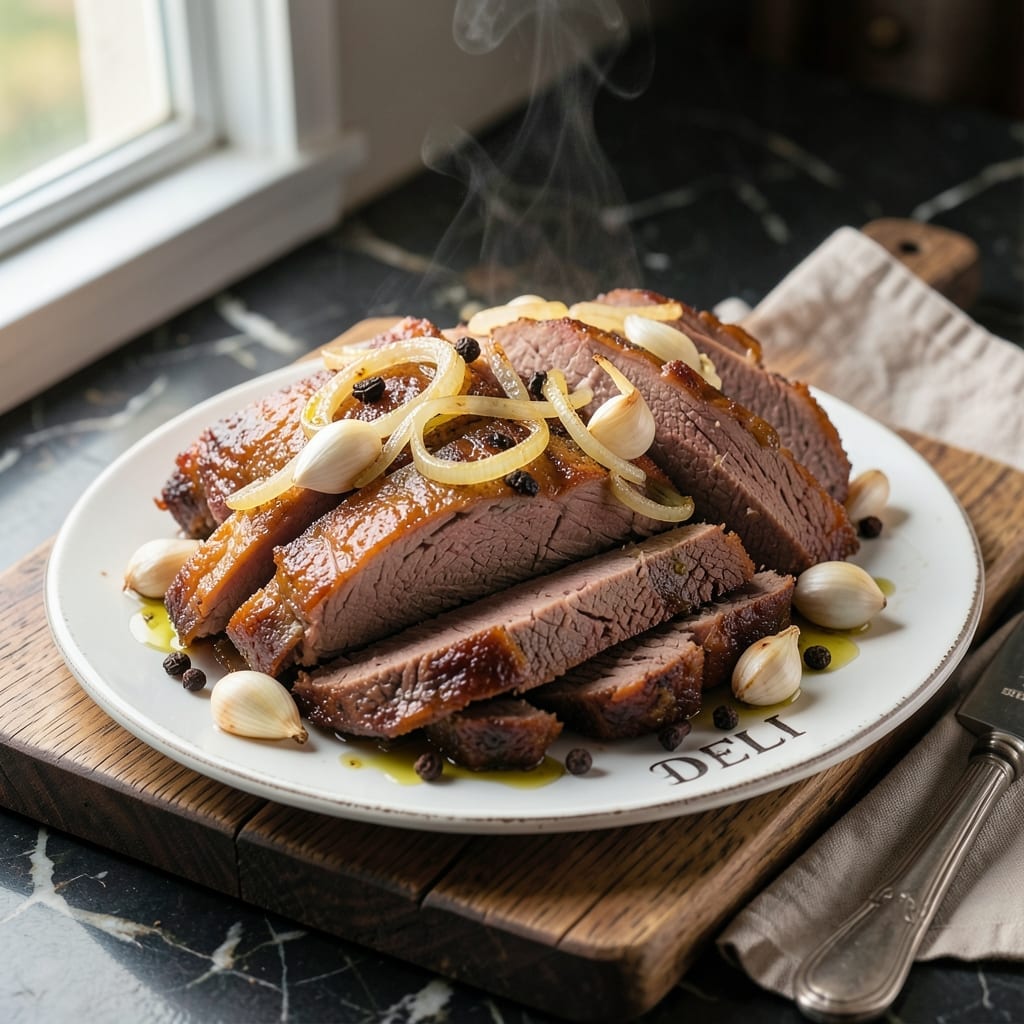
This recipe captures authentic Jewish deli flavor through a precise brining process and traditional spice blend. The slow cooking method transforms brisket into tender, flavorful slices.
I developed this technique to replicate the classic deli experience at home, ensuring perfect results every time. The aromatic spices and careful preparation create that signature taste.
Ingredients for Jewish Deli Corned Beef
Authentic deli flavor starts with brisket, salt, and a carefully curated spice blend for brining.
| Ingredient | Amount | Notes |
|---|---|---|
| Beef Brisket 🥩 | 3 lb | Flat cut, trimmed of excess fat |
| Kosher Salt 🧂 | ½ cup | Diamond Crystal preferred for brining |
| Granulated Sugar 🍚 | ¼ cup | Balances brine salinity |
| Water 💧 | 8 cups | Filtered for clean brine |
| Garlic Cloves 🧄 | 6 cloves | Smashed for infusion |
| Yellow Onions 🧅 | 2 whole | Quartered for brine |
| Black Peppercorns 🌶️ | 2 tbsp | Whole for spice blend |
| Mustard Seeds 🌿 | 1 tbsp | Yellow or brown variety |
| Coriander Seeds 🍃 | 1 tbsp | Lightly crushed for aroma |
| Bay Leaves 🍁 | 4 whole | Dried, for depth |
| Ground Cloves 🌰 | ½ tsp | Freshly ground preferred |
| Ground Allspice 🌿 | ½ tsp | Warm spice for authenticity |
| Dried Thyme 🍃 | 1 tsp | Rubbed between palms |
| Olive Oil 🫒 | 2 tbsp | For searing brisket |
[recipe_ingredient_scaler]
The brisket is non-negotiable—flat cut from a butcher or specialty grocer like Whole Foods ensures proper fat distribution and grain. Diamond Crystal kosher salt is the industry standard for brining due to its texture and purity. Avoid iodized table salt, as it imparts a metallic taste. For the whole spices, Penzeys or bulk sections at natural food stores offer superior freshness compared to pre-ground options.
No brisket? Beef short ribs can substitute, though texture will differ. Missing whole spices? Use pre-ground at half the quantity, but toast them first to revive aroma. The sugar can be swapped for brown sugar (adds molasses depth) or honey, though the latter isn’t traditional. For the brine, ensure your container is non-reactive—glass or food-grade plastic only.
Brined brisket keeps in the fridge for 5 days before cooking, or freeze for 3 months. Once cooked, store slices in their juices for 4 days—reheat gently to preserve tenderness. Spices retain potency for 6-12 months in airtight containers.
Why You’ll Love This Recipe
- Set and Forget: I just mix the brine with kosher salt, sugar, and garlic, then let the brisket soak for days—no babysitting required.
- That Classic Deli Taste: The garlic and sugar in the brine give the beef that unmistakable sweet-savory depth I crave from my favorite deli counter.
- Feeds a Crowd: One brisket makes enough for sandwiches all week, plus leftovers that taste even better sliced thin for Reubens.
- Budget Stretch: A single brisket costs less per serving than most takeout, and honestly, it’s richer than anything I’d order out.
Step-by-Step Instructions for Jewish Deli Corned Beef
Master the brining and spicing process for authentic deli-style results every time.
Step 1: Prepare the Brine with Aromatics
In a large pot, combine the 8 cups water with the 0.5 cup kosher salt and 0.25 cup granulated sugar. Stir until both are fully dissolved—the sugar balances the salt’s intensity while the salt ensures proper curing.
Add the 6 cloves garlic cloves (smashed), 2 whole yellow onions (quartered), 2 tbsp black peppercorns, 1 tbsp mustard seeds, and 1 tbsp coriander seeds. These whole spices infuse the brine with complex, traditional deli flavors without overpowering the beef.
Step 2: Add Remaining Spices and Submerge the Brisket
Stir in the 4 whole bay leaves, 0.5 tsp ground cloves, 0.5 tsp ground allspice, and 1 tsp dried thyme. The ground spices dissolve completely, while the bay leaves steep like tea, creating a deeply aromatic brine.
Place the 3 lb beef brisket in the brine, ensuring it’s fully submerged. I weigh it down with a plate if necessary—this guarantees every surface cures evenly. Refrigerate for 5-7 days, turning the brisket daily. The meat will firm up slightly and develop a pink hue, signaling proper curing.
Step 3: Rinse and Simmer the Brisket
After brining, remove the brisket and discard the brine. Rinse the meat under cold water for 30 seconds to remove excess salt from the surface. Pat it dry thoroughly with paper towels—this prevents a harsh salty exterior in the finished product.
In a large pot, heat the 2 tbsp olive oil over medium heat. Sear the brisket on all sides for 2-3 minutes per side until golden brown. This step develops a flavorful crust before the long simmer. Add enough fresh water to cover the brisket by 2 inches and bring to a boil.
Step 4: Slow-Cook to Tender Perfection
Reduce heat to low and cover the pot. Simmer gently for 3-4 hours, turning the brisket every 45 minutes. You want a bare simmer—vigorous boiling will make the meat tough. The brisket is done when a fork inserts easily into the thickest part with minimal resistance.
Remove the brisket from the liquid and let it rest for 15 minutes before slicing. This allows the juices to redistribute, ensuring moist, tender slices. For authentic deli texture, slice against the grain into ¼-inch thick pieces while still warm.
Pro Tips For Making Jewish Deli Corned Beef
- Brine Overnight: Soak the brisket in the salt-sugar-water brine for at least 12 hours—I learned this the hard way after my first attempt came out bland. The longer it sits, the deeper the flavor penetrates.
- Use Flat Cut: Skip the point cut and go for flat cut brisket; it’s leaner and slices cleaner for deli-style corned beef. My butcher confirmed it’s the standard for Jewish delis.
- Simmer, Don’t Boil: Keep the water just below a boil, around 180°F, to avoid toughening the meat. After ruining a batch with rolling boils, I now use a thermometer to double-check.
- Add Garlic Late: Toss in the crushed garlic cloves during the last hour of cooking so it infuses without turning bitter. Sounds weird, but it works—my grandmother swore by this timing.
Essential Equipment for jewish deli corned beef
Large Brining Container
A food-grade plastic bucket or 2-gallon glass jar is essential for submerging the 3 lb brisket completely. I use a Cambro container from my restaurant days—it’s durable and the perfect size. Ensure it fits in your fridge with a plate to weigh down the meat. 💡
Accurate Kitchen Scale
Precise measurements matter for brining, so I rely on my OXO Good Grips 11lb scale. Weighing the 0.5 cup kosher salt and 0.25 cup sugar ensures consistent curing every time. A scale also helps portion the finished corned beef for sandwiches.
Heavy-Duty Pot
For simmering, a 7-8 quart Dutch oven like my Le Creuset provides even heat distribution. The heavy base prevents hot spots that could toughen the brisket. I also use it for everything from soups to braises—worth every penny.
Instant-Read Thermometer
A ThermoWorks Thermapen gives me confidence the brisket reaches the perfect 195-203°F internal temp. This isn’t just for safety—it ensures the collagen breaks down for that melt-in-your-mouth texture deli corned beef is known for.
I check multiple spots since the flat cut can cook unevenly. The 3-4 hour simmer time is a guideline, but temperature is what truly matters.
Sharp Slicing Knife
For paper-thin deli slices, my Wüsthof 10-inch chef’s knife is indispensable. Slice against the grain into ¼-inch thick pieces while the brisket is still warm. A dull knife crushes the fibers—keep yours honed.
Nutrition Facts
Frequently Asked Questions
How long should I brine the beef?
For best results, brine the brisket for 5-7 days in the refrigerator. This ensures full flavor penetration and proper curing. Turn the meat daily for even distribution.
Can I use a different cut of meat?
Yes, but flat-cut brisket is traditional for deli-style texture. Beef short ribs work as a substitute, though the texture will differ. Avoid lean cuts—they lack the fat needed for tenderness.
Why is my corned beef tough?
Toughness usually comes from boiling too vigorously. Maintain a gentle simmer at low heat for 3-4 hours. Also, slice against the grain to shorten muscle fibers for easier chewing.
What’s the ideal internal temperature?
Aim for 195-203°F internally. This range breaks down collagen for that signature melt-in-your-mouth texture. Use an instant-read thermometer for accuracy.

Trained in classic French technique but raised on slow-cooked ribs and spicy rubs, she blends culinary skill with smoke and soul.
- Recipe for Boneless Pork Chops in Cast Iron Skillet: Sear and Baste to Juicy Perfection - October 3, 2026
- Recipe for Boneless Cross Rib Roast: Slow-Roasted Beef with Herb Crust - October 3, 2026
- Hamburgers in Sauce Recipe Crock Pot: Slow-Cooked Savory Delight - October 3, 2026