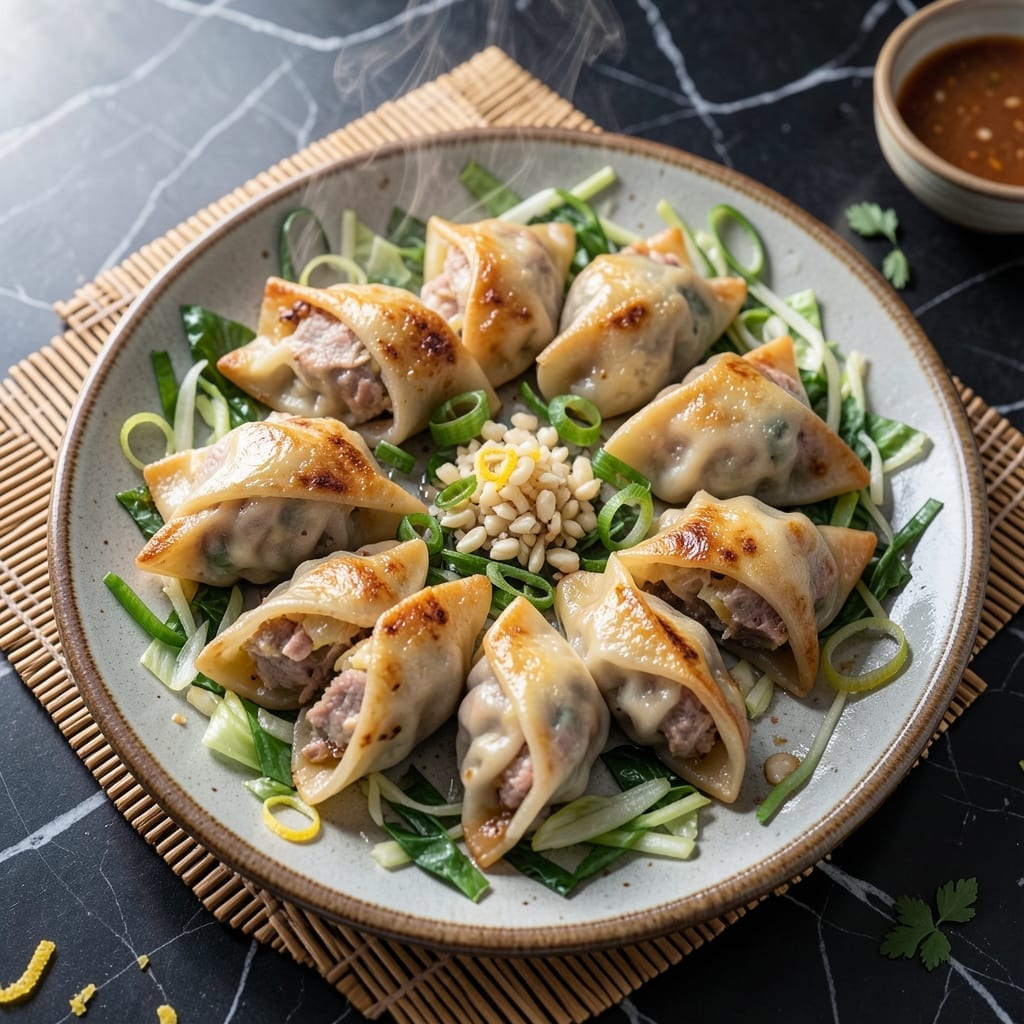
Making jiaozi from scratch is simpler than you think, and the results rival any restaurant version. I learned this method from my grandmother’s handwritten cards, which were maddeningly vague but always delicious.
The filling combines pork and cabbage with just enough seasoning to create a savory, juicy center. The dough comes together in minutes with basic ingredients, and the pan-frying technique ensures a perfectly crispy bottom.
Each bite delivers tender meat, fresh vegetables, and that signature golden crust. The process becomes meditative once you find the rhythm of folding and pleating.
This dish proves homemade can surpass takeout with restaurant-quality results every time.
Ingredients for Jiaozi Recipe Pork Cabbage
Basic pantry staples plus fresh pork and cabbage. Nothing exotic, just good technique.
| Ingredient | Amount | Notes |
|---|---|---|
| Ground Pork 🐷 | 1 lb | 80/20 fat ratio ideal |
| Napa Cabbage 🥬 | 3 cups | Finely chopped, salted and drained |
| Green Onions 🧅 | 4 whole | Thinly sliced, white and green parts |
| Fresh Ginger 🌿 | 1 tbsp | Finely grated or minced |
| Garlic Cloves 🧄 | 3 cloves | Minced to fine paste |
| Soy Sauce 🫒 | 2 tbsp | Low-sodium preferred for control |
| Sesame Oil 🫒 | 1 tbsp | Toasted variety for depth |
| Shaoxing Wine 🍶 | 1 tbsp | Or dry sherry as substitute |
| All-Purpose Flour 🌾 | 3 cups | Plus extra for dusting |
| Water 💧 | 1 ¼ cups | Warm, for dough consistency |
| Salt 🧂 | 1 ½ tsp | Divided, for filling and dough |
| Sugar 🍚 | 1 tsp | Balances savory filling flavors |
| Neutral Oil 🫒 | 3 tbsp | For pan-frying, high smoke point |
| Cornstarch 🌾 | 1 tbsp | Keeps filling juicy, not soggy |
| White Pepper 🌶️ | ½ tsp | Traditional in Chinese dumplings |
[recipe_ingredient_scaler]
The pork is non-negotiable here—ground pork with 80/20 fat ratio keeps the filling juicy and flavorful. Most Asian markets carry it, but Whole Foods or a good butcher works too. For the cabbage, Napa is traditional (milder, sweeter), but regular green cabbage in a pinch. Always salt and drain it first—no one wants soggy dumplings. The Shaoxing wine adds depth you can’t fake. Look for it at H Mart or any well-stocked international aisle.
No Shaoxing? Dry sherry gets you 90% there. Out of Napa cabbage? Regular green cabbage works but has a sharper bite. Ground chicken or turkey can swap for pork (leaner, so add a tbsp of oil to the filling). Want to go veg? Mushrooms and tofu make a solid stand-in. The dough is forgiving—bread flour makes it slightly chewier if you’ve got it. For folding, those pleated edges come with practice (or just crimp them shut—still delicious).
Filling can be prepped a day ahead and refrigerated. Dough too, but let it warm up 30 minutes before rolling. Cooked jiaozi freeze beautifully on a tray first, then into bags for up to 3 months. Reheat straight from frozen in a hot pan with a splash of water to steam. Leftovers? 2-3 days in the fridge, but they’re always best fresh.
Why You’ll Love This Recipe
- Minimal Chopping: I just shred the cabbage and mince the green onions—no fancy knife work here.
- Umami Bomb: The pork, ginger, and garlic create that rich, savory depth I crave in every bite.
- Freezer Friendly: I make a double batch and freeze them for lazy days. (Yes, even on a Tuesday night)
- Budget Stretcher: Ground pork and cabbage go a long way, and honestly, it’s one of the cheapest meals that still feels special.
Step-by-Step Instructions for Pork and Cabbage Jiaozi
Master the art of these crispy-bottomed dumplings with my tested method.
Step 1: Prepare the Filling Mixture
In a large bowl, combine the 1 lb Ground Pork with 3 cups Napa Cabbage that you’ve finely chopped, salted, and thoroughly drained. The cabbage must be completely dry to prevent a soggy filling—press it in a clean towel to remove every drop of moisture.
Add the 4 whole Green Onions (thinly sliced), 1 tbsp Fresh Ginger, 3 cloves Garlic Cloves (minced to a paste), 2 tbsp Soy Sauce, 1 tbsp Sesame Oil, 1 tbsp Shaoxing Wine, 1 tsp Sugar, 0.5 tsp White Pepper, and 1 tbsp Cornstarch. Mix vigorously in one direction until the filling becomes sticky and the pork starts to bind together. This process develops the right texture for juicy, flavorful dumplings.
Step 2: Create and Rest the Dough
In a separate bowl, combine 3 cups All-Purpose Flour with ½ tsp Salt from your 1.5 tsp Salt total. Make a well in the center and gradually add 1.25 cups Water (warm) while mixing with chopsticks or a fork until a shaggy dough forms.
Turn the dough onto a floured surface and knead for 8-10 minutes until smooth and elastic. The dough should spring back slowly when pressed with a finger. Cover with a damp towel and let rest for 30 minutes—this relaxes the gluten for easier rolling.
Step 3: Shape and Fill the Jiaozi
Divide the rested dough into 4 equal portions and roll each into a 1-inch thick rope. Cut each rope into 8 equal pieces (you’ll have about 32 dumplings total). Roll each piece into a 3-inch circle, keeping the edges thinner than the center for better pleating.
Place 1 tablespoon of filling in the center of each wrapper. To pleat, fold the circle in half, pinch the center, then make 3-4 pleats on each side while pressing the edges together firmly. The finished dumpling should have a crescent shape with a sealed edge. Keep finished jiaozi under a damp towel to prevent drying.
Step 4: Pan-Fry to Crispy Perfection
Heat 1 tbsp Neutral Oil from your 3 tbsp Neutral Oil in a non-stick skillet with a lid over medium-high heat. Arrange the dumplings in a single layer, not touching, and fry for 2-3 minutes until the bottoms turn golden brown. Watch for the edges to become translucent—this indicates they’re starting to cook through.
Carefully add ½ cup water to the pan (it will sizzle violently), then immediately cover with the lid. Reduce heat to medium and steam for 6-8 minutes until the water has evaporated. Uncover and continue frying for 1-2 minutes until the bottoms are crisp and deep golden brown. The dumplings are done when the wrappers are no longer doughy and the filling is cooked through.
Pro Tips For Making Jiaozi Recipe Pork Cabbage
- Salt the cabbage first: Sprinkle napa cabbage with 1 teaspoon salt and let sit 10 minutes before squeezing out excess water—I learned this the hard way after my first batch turned into soggy dumplings.
- Chill the filling: Refrigerate the pork-cabbage mixture for 20 minutes before folding; it makes the filling easier to handle and prevents the wrappers from tearing.
- Seal with water: Dip your finger in water to moisten the edges of each wrapper before folding—sounds simple, but it actually changes the outcome by keeping jiaozi from bursting open while cooking.
- Use ginger juice: Grate fresh ginger and squeeze out 1 tablespoon of juice to mix into the filling instead of minced ginger; the flavor is more intense and distributes evenly.
Troubleshooting Great jiaozi recipe pork cabbage
Dough Too Dry
If your dough cracks when rolling, it likely needs more moisture. Add 1-2 tbsp warm water at a time, knead well, and rest for 10 minutes before testing again. I learned this the hard way—grandmother’s vague notes never mentioned exact ratios. 💡
Filling Too Wet
Soggy dumplings ruin the texture. After salting cabbage, let it sit for 15 minutes, then squeeze in a clean towel. I use my local farmers market Napa cabbage—it has perfect moisture content when fresh.
Won’t Seal Properly
If edges won’t stick, dip your finger in water and moisten the dough edges before pleating. Keep unused wrappers under a damp towel—they dry out fast. Honestly, my first dozen always looked like sad little half-moons.
Sticking to Pan
Use a non-stick skillet and ensure it’s fully heated before adding oil. If they stick, don’t force it—add 2 tbsp water, cover, and let steam release them. My neighborhood grocery store non-stick pan saved many batches.
Undercooked Filling
If wrappers brown before filling cooks, reduce heat to medium-low and add ¼ cup extra water before covering. The steam finishes the job. Real talk: I still check one by cutting it open.
No Crispy Bottom
For that signature crust, ensure all water evaporates before the final fry. Remove the lid and cook uncovered for 1-2 minutes until deep golden. The sizzle sound is your cue it’s working. 🔥
Nutrition Facts
Frequently Asked Questions
Can I use regular cabbage instead of Napa?
Yes, but salt and drain it well first. Regular cabbage has a sharper bite and more moisture, which can make fillings soggy if not properly prepped.
How do I keep dumplings from sticking?
Use a non-stick pan and ensure it’s fully heated before adding oil. If they stick, add 2 tbsp water, cover, and let steam release them.
Can I make the filling ahead?
Prepare filling up to a day ahead and refrigerate. Let it come to room temperature before assembling.
How do I store leftovers?
Cooked jiaozi keep 2-3 days in the fridge or freeze for up to 3 months. Reheat from frozen in a hot pan with a splash of water.

Trained in classic French technique but raised on slow-cooked ribs and spicy rubs, she blends culinary skill with smoke and soul.
- Recipe for Boneless Pork Chops in Cast Iron Skillet: Sear and Baste to Juicy Perfection - October 3, 2026
- Recipe for Boneless Cross Rib Roast: Slow-Roasted Beef with Herb Crust - October 3, 2026
- Hamburgers in Sauce Recipe Crock Pot: Slow-Cooked Savory Delight - October 3, 2026