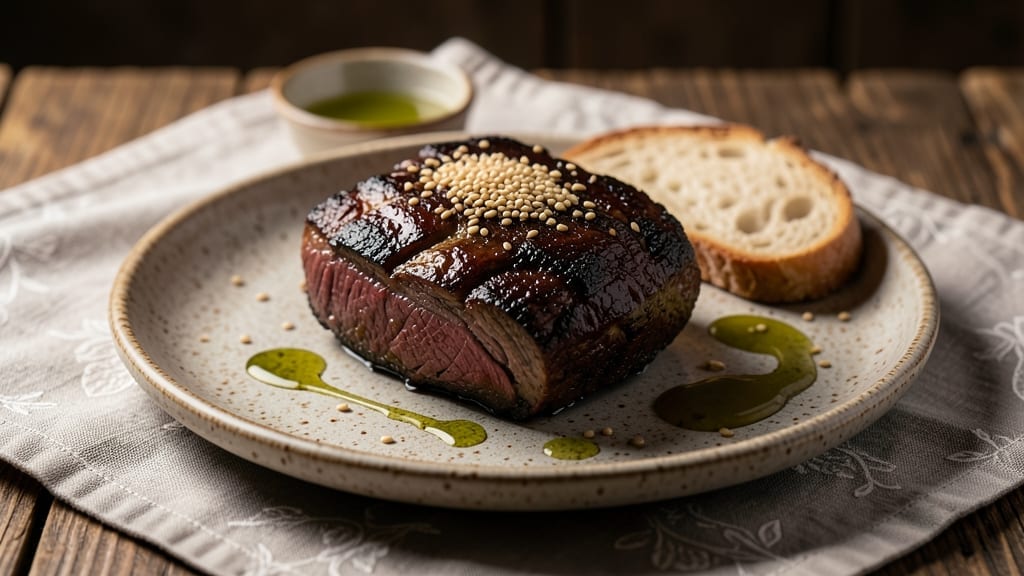
Mastering a juicy beef brisket recipe transforms tough cuts into melt-in-your-mouth perfection through precise technique and patience. The secret lies in low-and-slow cooking—maintaining a steady 225°F for hours until the meat practically falls apart at the touch.
I’ve perfected this method over years of trial and error, ensuring every bite delivers rich, tender flavor without dryness.
This recipe begins with proper trimming and seasoning, where a dry rub of bold spices forms a flavorful crust while preserving moisture. Spritzing the brisket with apple juice during cooking keeps it juicy, and wrapping it in foil creates steam for even tenderness.
The key is never rushing—patience pays off with a brisket that reaches 195–203°F internally, where collagen dissolves into succulent juices.
Once cooked, resting the brisket for at least an hour lets the juices redistribute, guaranteeing each slice is as tender as the first. Serve it sliced against pickles, on buns, or alongside roasted potatoes for a meal that feels like a restaurant-quality feast.
The result? A brisket so juicy and flavorful, it becomes the centerpiece of any gathering.
Whether you’re smoking it or using an oven, this method delivers foolproof results every time. Common mistakes—like overcooking or skipping the rest—can ruin the texture, but following these steps ensures a brisket that’s restaurant-quality at home. Let’s get started on creating your most tender, juicy brisket yet.
Ingredients for juicy beef brisket
Six pounds of beef brisket and a handful of bold spices transform into melt-in-your-mouth perfection.
| Ingredient | Amount | Notes |
|---|---|---|
| Beef Brisket 🥩 | 6 lb | Packer cut, well-marbled |
| Yellow Onion 🧅 | 1 whole | Yellow or red, sliced |
| Garlic Cloves 🧄 | 8 cloves | Peeled, smashed |
| Kosher Salt 🧂 | ½ cup | Diamond Crystal preferred |
| Black Peppercorns 🌶️ | 1 tbsp | Freshly cracked |
| Smoked Paprika 🌶️ | 2 tbsp | High-quality Spanish |
| Ground Cumin 🌿 | 1 tbsp | Toasted for depth |
| Brown Sugar 🍚 | 2 tbsp | Light or dark |
| Mustard Powder 🌶️ | 1 tsp | For tangy balance |
| Apple Juice 🍏 | 1 cup | Unsweetened, for spritzing |
| Butter 🧈 | ¼ cup | Unsalted, softened |
| Fresh Thyme 🌿 | ¼ cup | Leaves only, chopped |
| Heavy Cream 🥛 | ½ cup | For basting |
| Aluminum Foil 📄 | 1 sheet | Heavy-duty, for wrapping |
[recipe_ingredient_scaler]
The beef brisket is the star—packer cut with good marbling ensures tenderness. Source it from a reputable butcher or Costco’s bulk section where quality is consistent. Avoid lean cuts; fat equals flavor. Trim excess fat to 1/4-inch thickness for even cooking. The spices should be freshly ground or toasted—pre-ground cumin loses potency quickly. For smoked paprika, Penzeys or Spanish brands deliver the deepest flavor. Store untrimmed brisket in the fridge for up to 5 days or freeze for 6 months before cooking.
No smoked paprika? Substitute with 1 tbsp regular paprika plus 1/2 tsp liquid smoke for depth. Fresh thyme unavailable? Dried thyme at half the amount works, but fresh is ideal. The apple juice can be swapped for beef broth if needed, though it lacks the subtle sweetness that aids moisture retention. For a tangier crust, add 1 tsp of apple cider vinegar to the dry rub. The butter and heavy cream are non-negotiable—they baste the brisket, locking in juices during the final stages. Trader Joe’s often carries high-quality unsalted butter at a reasonable price.
This brisket keeps exceptionally well—vacuum-sealed portions last 3 months frozen or 5 days refrigerated once cooked. For reheating, wrap slices in foil and warm in a 350°F oven for 15 minutes. The foil wrapping during cooking creates steam, which is critical for tenderness. Double-wrap if your kitchen is dry. Leftovers make fantastic sandwiches or tacos, but always rest the brisket at least 1 hour before slicing to preserve juices. Store cooked brisket in its juices for maximum flavor retention.
Why You’ll Love This Recipe
- No-Fuss Flavor Bomb: The dry-brine method with ½ cup kosher salt and 1 tbsp cracked black peppercorns does all the heavy lifting. You just season, wait, and smoke—no fancy prep, just pure flavor infusion. Honestly, the smoked paprika and brown sugar combo makes this feel like a restaurant-worthy meal with zero stress.
- Crowd-Pleasing Crowd-Stopper: This isn’t just for Sunday dinners—it’s the secret weapon for game days, potlucks, or even a last-minute holiday feast. The heavy cream basting keeps it luxurious, while the fork-tender texture means everyone will ask for seconds. My daughter picks out the fresh thyme to sprinkle on top, but she still moans when it’s gone.
- Budget-Friendly Luxury: A whole packer-cut brisket might seem pricey, but smoked low and slow stretches it into enough meals for a week. The onion and garlic add depth without costing extra, and the butter-thyme wrap turns simple ingredients into something special. It’s the kind of dish where you spend more time dreaming about it than money.
Step-by-step instructions for juicy beef brisket
Mastering this method guarantees brisket that falls apart with minimal effort and maximum flavor.
Prepare and Season the Brisket
Begin by trimming the fat cap of the 6 lb beef brisket to about ¼-inch thickness using a sharp knife. This preserves moisture while allowing smoke penetration. Pat the meat dry with paper towels—moisture is the enemy of crisp bark formation.
In a small bowl, combine the ½ cup kosher salt, 1 tbsp freshly cracked black peppercorns, 2 tbsp smoked paprika, 1 tbsp ground cumin, 2 tbsp brown sugar, and 1 tsp mustard powder. Rub this mixture generously over all surfaces of the brisket, including the fat cap. For the garlic and onion components, finely mince the 1 yellow onion and 8 cloves garlic cloves, then press this mixture into the surface of the meat, particularly focusing on the fat cap where it will render flavor during cooking.
Place the seasoned brisket on a wire rack set over a tray and refrigerate uncovered for 24 hours. This dry-brining process enhances tenderness and develops deep flavor. After brining, let the brisket sit at room temperature for 1 hour before smoking to ensure even cooking.
Smoke the Brisket Low and Slow
Preheat your smoker to 225°F using hickory or oak wood. Place the brisket fat-side up on the smoker grate and maintain a consistent temperature throughout the cook. Spritz the brisket with 1 cup apple juice every 2 hours during the first 6 hours of cooking. This keeps the surface moist and prevents a hard bark from forming too early.
Monitor the internal temperature using a meat thermometer. When it reaches 165°F, you’ll encounter “the stall”—a period where the temperature plateaus. This is normal and occurs as moisture evaporates. At this point, wrap the brisket tightly in the 1 sheet aluminum foil along with ¼ cup softened butter and ¼ cup chopped fresh thyme. Return it to the smoker and continue cooking.
Continue smoking until the internal temperature reaches 203°F, at which point the brisket should be fork-tender. This typically takes 10-12 hours total, depending on your smoker’s consistency. The foil wrap preserves moisture while allowing the bark to develop slowly.
Rest and Baste for Maximum Juiciness
Remove the brisket from the smoker and transfer it to a cutting board. Unwrap the foil and discard it. In a small saucepan, gently heat the ½ cup heavy cream over low heat until warm but not boiling. Brush this cream mixture generously over the surface of the brisket, focusing on the bark to enhance its richness.
Let the brisket rest for 1 hour before slicing. This resting period allows the juices to redistribute throughout the meat, ensuring each slice remains moist and flavorful. During this time, preheat your serving dishes in a 200°F oven to maintain the brisket’s internal temperature.
Slice the brisket against the grain into ¼-inch thick pieces. Serve immediately with the rendered juices from the pan spooned over the top. Each slice should be tender enough to pull apart with minimal resistance, with a dark mahogany bark on the exterior and a pink smoke ring just beneath the surface.
Pro Tips For Making Juicy Beef Brisket
- Trim That Fat Cap: Don’t leave it thick—trim the fat to ¼-inch or you’ll end up with greasy smoke instead of crisp bark. I learned this the hard way after my first brisket turned into a soggy mess of rendered fat. A sharp knife makes all the difference.
- Press Onions Into Fat: Skip mincing the onion and garlic into a paste—press the finely chopped pieces directly into the fat cap. This locks in flavor as it renders, giving you layers of taste instead of a one-dimensional rub. (Yes, it looks weird, but it works.)
- Spritz Like Clockwork: The apple juice spritz isn’t optional—do it every 2 hours for the first 6 hours, or you’ll get a tough, chewy bark instead of a tender, juicy crust. I used to forget, and my brisket paid the price.
- Wrap at 165°F: Don’t rush the foil wrap—wait until the internal temp hits 165°F to trap moisture without steaming the meat. Wrapping too early turns your brisket into a sad, waterlogged brick. Trust the stall; it’s your friend.
Pro cooking tips for perfect results
Mastering the Stall Phase
When your brisket hits 165°F—that infamous “stall”—don’t panic. This is where moisture evaporates and cooking seems to stall. I use a Meater Plus thermometer to track progress, and I’ve learned to embrace this phase.
Wrapping the brisket in foil with ¼ cup softened butter and ¼ cup thyme creates steam, breaking the stall faster and keeping it juicy. This step shaves 2-3 hours off cook time. 🔥
Temperature Control is Non-Negotiable
Your smoker’s temperature must stay within 225-250°F—any higher, and you risk drying out the meat. I use a thermowell with a dual-probe thermometer to monitor both the smoker and the brisket’s internal temp.
If your smoker fluctuates, add more wood chips or adjust the vent. Consistency is key—even 10°F deviations can affect texture.
The Art of Spritzing
During the first 6 hours, spritzing with ½ cup apple juice every 2 hours keeps the bark moist without diluting flavor. I use a spray bottle with a fine mist setting to avoid soaking the meat.
After wrapping, skip spritzing—steam from the foil is enough. This balance prevents a tough exterior while maintaining juiciness inside.
Resting: The Unsung Hero
Skipping the 1-hour rest after cooking is the fastest way to dry out your brisket. I wrap it in a towel and place it in a cooler to maintain 140°F internally. This lets juices redistribute evenly. Trust me, the first slice will be a game-changer—it’ll practically fall apart. 💫
Basting for Extra Richness
After resting, brushing the brisket with ½ cup warm heavy cream adds a velvety finish to the bark. I heat the cream gently to avoid curdling, then generously coat the surface.
This step elevates the flavor profile, making every bite richer. Serve with the rendered juices spooned over the top for maximum impact.
Nutrition facts
Frequently asked questions
Why does my brisket need a dry brine instead of just seasoning it right before cooking?
The 24-hour dry brine works magic by breaking down muscle fibers and enhancing tenderness. It also allows the ½ cup kosher salt to penetrate deeply, ensuring even seasoning. Skipping this step can leave your brisket dry or unevenly flavored. Trust the process—it’s what turns tough cuts into melt-in-your-mouth perfection!
What if my smoker temperature fluctuates? Will it ruin the brisket?
Fluctuations are frustrating, but 225°F is the sweet spot—aim to keep it within 225-250°F. If your smoker jumps, add more wood chips or adjust the vent. Even small deviations can affect texture, so monitor closely. A reliable thermometer (like a thermowell probe) helps maintain consistency.
Can I skip the foil wrap during the stall phase?
Wrapping at 165°F with ¼ cup butter and ¼ cup thyme is critical—it breaks the stall faster and keeps the brisket juicy. Without it, you risk drying out the surface. Think of it as a moisture barrier that ensures even cooking. Skip this step, and you might end up with a tough exterior!
How do I know when the brisket is done if I don’t have a meat thermometer?
Test for doneness by poking the thickest part with a fork—it should slide in like butter. Alternatively, check for a pink smoke ring just beneath the surface. If the internal temp isn’t reachable, use the “probe test”: the meat should feel silky, not springy. Patience pays off—it’ll be tender when ready!

Trained in classic French technique but raised on slow-cooked ribs and spicy rubs, she blends culinary skill with smoke and soul.
- Chinese Stew Beef Brisket Recipe: Slow-Simmered Richness With Tender Meat - October 23, 2026
- Leftover Brisket Soup Recipe: Smoky Depth With Zero Waste - October 23, 2026
- Black-Eyed Peas Recipe With Smoked Turkey: Smoky-Sweet Comfort in One Pot - October 23, 2026