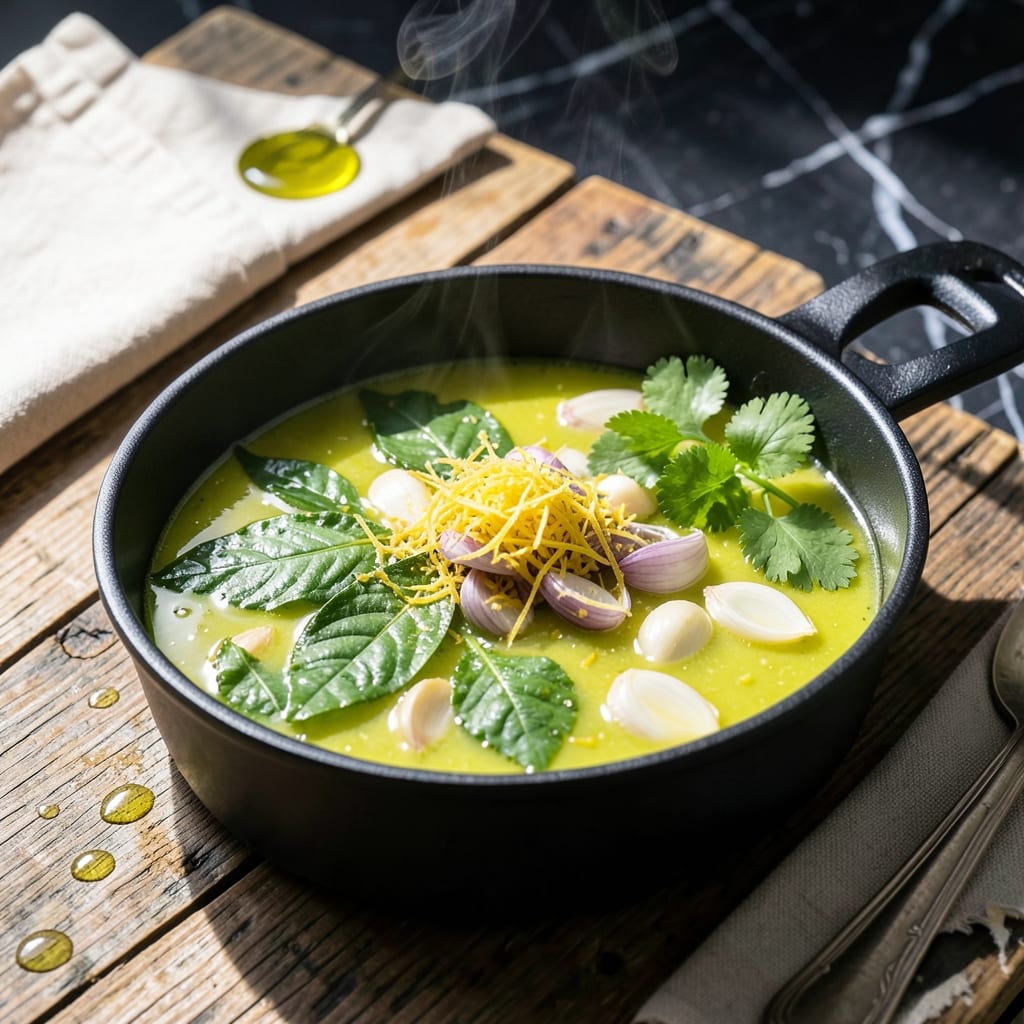
This vibrant kaffir lime sauce brings authentic Southeast Asian flavor to your kitchen with minimal effort. The unique citrus notes from the leaves create a bright, aromatic base that elevates any dish.
I developed this recipe to capture the essence of Thai and Vietnamese cooking without complicated techniques. Just a few ingredients transform into a versatile condiment that works as a marinade, dressing, or dipping sauce.
What you’ll get is a tangy, fragrant liquid with layers of citrus and herbal complexity. It keeps beautifully in the fridge, ready to add a burst of freshness to salads, noodles, or grilled proteins.
Perfect for meal prep or last-minute flavor boosting. Here’s how to make it.
Ingredients for Kaffir Lime
Nine ingredients transform into this bright, aromatic Southeast Asian sauce with minimal effort.
| Ingredient | Amount | Notes |
|---|---|---|
| Fresh Kaffir Lime Leaves 🍃 | 10 whole | Finely chopped, stems removed |
| Lime Juice 🍈 | ½ cup | Freshly squeezed key or Persian limes |
| Lime Zest 🍈 | 2 tbsp | From fresh limes, finely grated |
| Garlic Cloves 🧄 | 4 cloves | Peeled and minced |
| Shallot 🧅 | 1 whole | Finely minced |
| Fresh Cilantro 🌿 | ½ cup | Stems removed, roughly chopped |
| Palm Sugar 🍚 | 2 tbsp | Or substitute brown sugar |
| Fish-Free Soy Sauce 🫒 | 3 tbsp | Tamari or coconut aminos work too |
| Rice Vinegar 💧 | 2 tbsp | Unseasoned variety |
[recipe_ingredient_scaler]
Kaffir lime leaves are non-negotiable here. Asian markets or specialty grocers usually stock them fresh or frozen—avoid dried, they lose most of their citrus punch. Look for leaves with vibrant green color and no brown spots. The lime juice should be fresh-squeezed; bottled just doesn’t have the same zing. I always grab my limes from Whole Foods since they tend to have the juiciest ones.
No kaffir leaves? Lime zest plus bay leaf gets you 70% there (use 1 tbsp zest + 1 bay leaf per 2 leaves). Out of palm sugar? Brown sugar or agave at equal amounts. Skip the fish sauce entirely since we’re keeping this vegan—coconut aminos add that umami depth without the fish. The shallot can be swapped for red onion if that’s what you’ve got, but use half the amount.
This sauce keeps 1 week in a sealed jar in the fridge. The flavors meld and deepen over time, so it’s actually better after a day or two. Freeze in ice cube trays for up to 3 months (thaw before using). Always give it a good stir before drizzling—those herbs settle fast.
Why You’ll Love This Recipe
- Five-Minute Prep: I just toss the leaves, zest, and juiced lime with crushed garlic and shallot—no fancy steps, no mess.
- Zing That Sticks: The double hit of kaffir lime and regular lime juice gives a bright citrus punch that lingers on your tongue.
- Curry Night Shortcut: I stir this paste into soups, marinades, or curries—one base, endless flavor twists.
- Fridge Lifesaver: It keeps a week in the fridge, so I always have that citrus-garlic kick ready on demand.
Step-by-Step Instructions for Kaffir Lime Infusion
Here’s how to layer these bright flavors into a sauce that sings with complexity.
Step 1: Toast and Bruise the Aromatics
Start by finely chopping the 10 whole Fresh Kaffir Lime Leaves, removing any tough stems. I like to stack the leaves, roll them tightly, then slice thinly—a technique that releases their essential oils without bitterness.
Heat a dry skillet over medium heat and add the chopped leaves along with the 4 cloves Garlic Cloves and 1 whole Shallot. Toast for 1-2 minutes until fragrant, stirring constantly. You want the garlic to turn just pale gold at the edges, not brown. This gentle heat awakens the oils in the kaffir lime without destroying their delicate citrus notes.
Step 2: Build the Flavor Base
Transfer the toasted aromatics to a small saucepan. Add the 0.5 cup Lime Juice, 2 tbsp Lime Zest, 2 tbsp Palm Sugar, 3 tbsp Fish-Free Soy Sauce, and 2 tbsp Rice Vinegar. The palm sugar should dissolve completely as you stir over low heat.
Watch for the moment when the mixture turns from cloudy to slightly translucent—that’s your sign the sugar has fully incorporated. This balance of sweet, salty, and sour creates the foundation that makes this sauce so versatile. Let it simmer gently for 3-4 minutes to meld the flavors, but don’t let it reduce too much.
Step 3: Infuse and Finish
Remove the saucepan from heat and stir in the 0.5 cup Fresh Cilantro. The residual heat will wilt the cilantro just enough to soften its sharpness while preserving its bright green color. I always add the cilantro off heat to prevent it from turning bitter or losing its vibrant hue.
Let the mixture sit for 10 minutes to allow the kaffir lime to fully infuse the liquid. You’ll notice the sauce deepen in color slightly as the flavors meld. Taste and adjust the balance—if it needs more brightness, a splash of extra lime juice works wonders.
Step 4: Strain and Store
Strain the sauce through a fine-mesh sieve into a clean jar or bowl, pressing gently on the solids to extract all the liquid. The texture should be smooth with no gritty bits from the zest or leaves. Discard the solids—they’ve given up all their flavor to the sauce.
This infusion keeps beautifully in the refrigerator for up to 1 week. The flavors actually improve after a day as the kaffir lime continues to work its magic. Use it to dress noodles, marinate proteins, or drizzle over fresh spring rolls for an instant flavor boost.
Pro Tips For Making Kaffir Lime
- Bruise the Leaves: Gently crush the kaffir lime leaves with the flat of your knife or your fingers before adding them—this releases their aromatic oils without tearing them, which can make the dish bitter.
- Zest Before Juicing: Always zest the limes first, then cut them in half for juice. Sounds obvious, but I learned this the hard way after struggling to zest a juiced lime more than once.
- Bloom the Aromatics: Cook the garlic and shallot in oil over medium-low heat until just fragrant, about 2-3 minutes—any hotter and they’ll burn, ruining the flavor before you even start.
- Skip Dried Leaves: Fresh kaffir lime leaves are non-negotiable here. Dried ones lose most of their citrusy punch, and I’ve never found a substitute that actually works.
Best Sauces and Condiments for This Recipe
Thai Dipping Sauce
This sauce pairs perfectly with fresh spring rolls or shrimp dumplings. I mix ¼ cup of the kaffir lime sauce with 1 tbsp agave syrup and 1 tsp chili flakes for a sweet-spicy dip that balances the citrus beautifully. 🌶️
Vietnamese Noodle Dressing
Toss rice noodles with 3 tbsp of this sauce, 1 tbsp toasted sesame oil, and 2 tbsp chopped peanuts. The tangy lime cuts through the richness of the noodles while adding vibrant freshness.
Marinade for Grilled Proteins
Use as a marinade for tofu, chicken, or fish by combining ½ cup of the sauce with 1 tbsp grated ginger. Let it sit for 30 minutes before grilling—the citrus tenderizes while adding depth.
Salad Dressing Boost
Whisk 2 tbsp of this sauce with 3 tbsp neutral oil and 1 tsp Dijon mustard for a bright vinaigrette. Drizzle over mango salad or cucumber ribbons for a tropical twist. 💫
Coconut Milk Blend
Mix ¼ cup of the sauce with ½ cup coconut milk for a creamy, tangy dipping sauce. This works wonderfully with grilled satay or as a dressing for rice paper rolls.
Nutrition Facts
Frequently Asked Questions
Can I use dried kaffir lime leaves instead of fresh?
Dried leaves work in a pinch, but use half the amount and soak them in warm water for 10 minutes first. Fresh leaves provide the best citrus aroma and flavor.
How long does this sauce keep in the fridge?
It stays fresh for up to 1 week in an airtight container. The flavors actually deepen after a day or two as the ingredients meld together.
What can I use if I don’t have palm sugar?
Brown sugar or agave syrup make great substitutes in equal amounts. These alternatives maintain the balance of sweetness the recipe needs.

Trained in classic French technique but raised on slow-cooked ribs and spicy rubs, she blends culinary skill with smoke and soul.
- Recipe for Boneless Pork Chops in Cast Iron Skillet: Sear and Baste to Juicy Perfection - October 3, 2026
- Recipe for Boneless Cross Rib Roast: Slow-Roasted Beef with Herb Crust - October 3, 2026
- Hamburgers in Sauce Recipe Crock Pot: Slow-Cooked Savory Delight - October 3, 2026