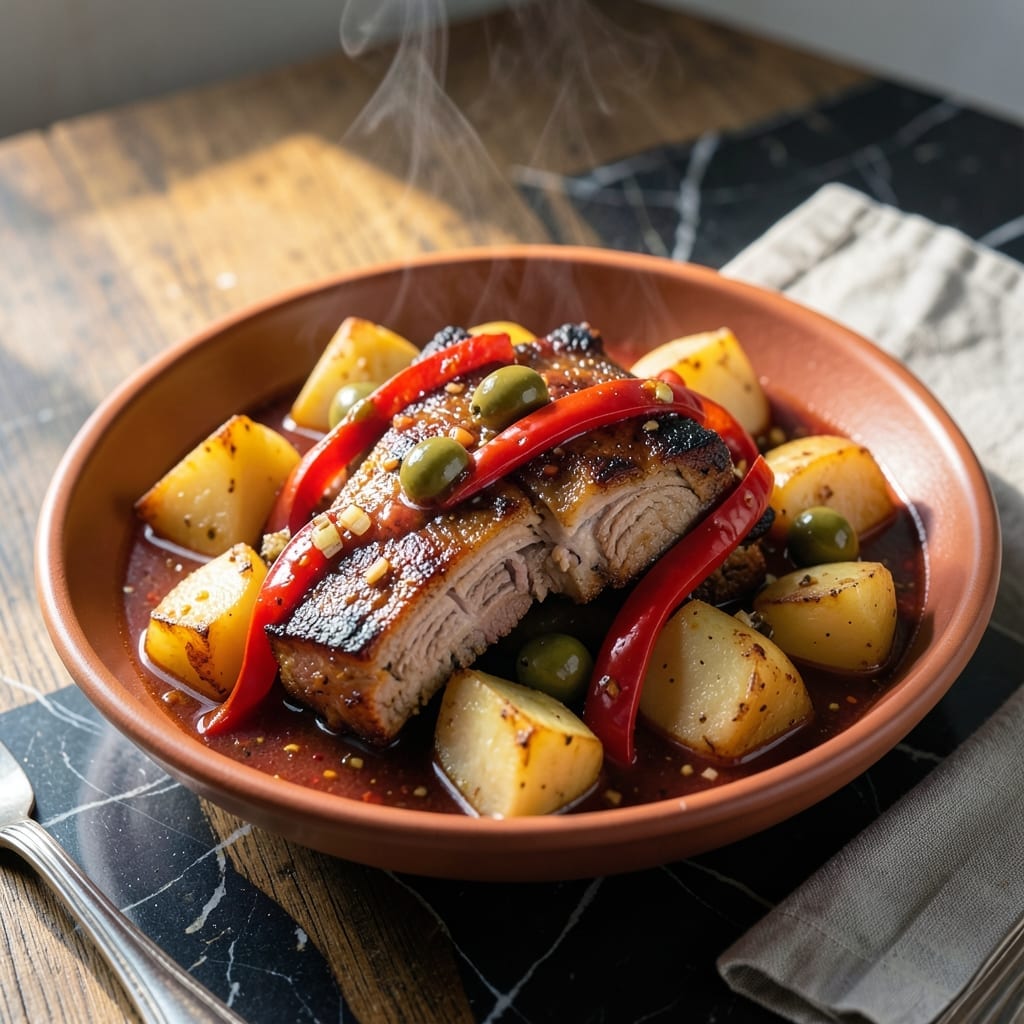
This Filipino pork rib stew brings my grandmother’s kitchen to life through its rich tomato sauce and tender meat. The slow cooking process transforms simple ingredients into a deeply flavorful dish.
Traditional caldereta relies on a few key techniques: browning the pork well, building layers of flavor in the sauce, and letting it simmer until fork-tender. I’ve refined her method to ensure consistent results every time.
The combination of olives, potatoes, and bell peppers creates a hearty, satisfying meal that’s perfect for family gatherings. Each bite delivers the comforting warmth of a home-cooked classic.
Serve it with steamed rice to soak up every last bit of the savory sauce. Here’s how to make it right.
Ingredients for Kalderetang Baboy Recipe Filipino Pork Ribs Caldereta
Traditional Filipino ingredients create this rich, savory pork rib stew with deep layers of flavor.
| Ingredient | Amount | Notes |
|---|---|---|
| Pork Ribs 🥩 | 2 lb | Bone-in, cut into serving pieces |
| Tomato Sauce 🍅 | 2 cups | Quality canned recommended |
| Potatoes 🥔 | 3 whole | Yukon Gold or russet, peeled and cubed |
| Red Bell Pepper 🌶️ | 1 whole | Seeded and sliced into strips |
| Green Olives 🫒 | ½ cup | Pitted and halved |
| Onion 🧅 | 1 whole | Yellow or white, diced |
| Garlic Cloves 🧄 | 6 cloves | Minced for depth of flavor |
| Liver Spread 🍖 | ¼ cup | Optional but traditional for richness |
| Tomato Paste 🍅 | 2 tbsp | For concentrated tomato flavor |
| Soy Sauce 🫕 | 2 tbsp | All-purpose or light variety |
| Vinegar 💧 | 1 tbsp | White or cane vinegar |
| Bay Leaves 🍃 | 2 pieces | Dried, for aromatic depth |
| Salt 🧂 | 1 tsp | Adjust to taste during cooking |
| Black Pepper 🌶️ | ½ tsp | Freshly ground preferred |
| Olive Oil 🫒 | 2 tbsp | For browning pork ribs |
[recipe_ingredient_scaler]
The pork ribs are central to authentic caldereta. Bone-in pork ribs provide the best texture and flavor, and Costco or your local butcher will have the freshest cuts. Look for ribs with good marbling—this ensures tenderness after the long simmer. The liver spread, while optional, is a hallmark of traditional caldereta and adds a rich, velvety depth to the sauce that’s hard to replicate.
No liver spread? Chicken liver pâté works as a substitute, or omit it entirely for a simpler version. The green olives can be swapped for capers at half the quantity if you prefer a more briny note. If tomato paste isn’t on hand, tomato ketchup at a 1:1 ratio adds sweetness and color, though the flavor profile will shift slightly. Fresh tomatoes can replace canned sauce in a pinch (use 4-5 medium tomatoes, peeled and blended).
This stew improves overnight as the flavors meld. It keeps well in the fridge for 4-5 days and freezes beautifully for up to 3 months. Reheat gently on the stove, adding a splash of water if the sauce thickens too much.
Why You’ll Love This Recipe
- One Pot Wonder: I just toss everything in—pork ribs, potatoes, even the bell peppers—and let it simmer while I set the table.
- Rich Tomato Depth: The tomato sauce soaks into the ribs, and those green olives add this briny pop that I didn’t know I needed until I tried it.
- Feeds a Crowd: I made this for my in-laws last weekend, and honestly, it stretched perfectly for eight with leftovers for my lunch the next day.
- Budget Stretcher: Pork ribs are affordable, the veggies are cheap, and it fills the house with this smell that makes everyone hover around the kitchen.
Step-by-Step Instructions for Filipino Pork Ribs Caldereta
Master the technique for this rich tomato-based stew with precise timing and layering.
Step 1: Brown the Pork Ribs and Build the Base
Heat the 2 tbsp Olive Oil in a large pot over medium-high heat. Pat the 2 lb Pork Ribs dry with paper towels to ensure proper browning. Working in batches, sear the ribs for 3-4 minutes per side until they develop a deep golden-brown crust. Remove the ribs and set aside.
In the same pot, sauté the diced 1 whole Onion for 3 minutes until translucent. Add the minced 6 cloves Garlic Cloves and cook for 1 minute until fragrant. Stir in the 2 tbsp Tomato Paste and cook for 2 minutes, allowing it to caramelize slightly for depth of flavor.
Step 2: Develop the Sauce and Simmer the Ribs
Pour in the 2 cups Tomato Sauce, 2 tbsp Soy Sauce, and 1 tbsp Vinegar. Add the 2 pieces Bay Leaves, 1 tsp Salt, and 0.5 tsp Black Pepper. Stir well to combine, scraping up any browned bits from the bottom of the pot.
Return the pork ribs to the pot, ensuring they are mostly submerged in the sauce. Bring the mixture to a boil, then reduce the heat to low. Cover and simmer for 1 hour, stirring occasionally. The ribs should become tender and start to absorb the rich tomato flavors.
Step 3: Add Vegetables and Liver Spread
After the pork has simmered, add the peeled and cubed 3 whole Potatoes, sliced 1 whole Red Bell Pepper, and halved 0.5 cup Green Olives. Stir in the 0.25 cup Liver Spread, which enriches the sauce with a velvety texture. Ensure all ingredients are well combined.
Cover the pot and continue simmering for an additional 20-25 minutes or until the potatoes are fork-tender and the pork ribs are falling off the bone. Stir occasionally to prevent sticking and promote even cooking.
Step 4: Adjust Seasoning and Finish
Taste the stew and adjust the seasoning if necessary. The potatoes should have absorbed the rich tomato and liver flavors, and the sauce should be thick and hearty. If the stew is too thick, add a splash of water or broth to reach your desired consistency.
Remove the 2 pieces Bay Leaves before serving. Let the stew rest for 5-10 minutes off the heat to allow the flavors to meld together. Serve hot with steamed rice, ensuring each portion includes tender pork, potatoes, and the flavorful sauce.
Pro Tips For Making Kalderetang Baboy Recipe Filipino Pork Ribs Caldereta
- Brown the Ribs: Sear the pork ribs in batches until deeply browned—this builds a rich flavor base that tomato sauce alone can’t achieve. I learned this the hard way when my first caldereta tasted flat.
- Peel the Potatoes: Cut potatoes into even, 2-inch chunks and peel them first so they absorb the sauce better without turning mushy. Sounds tedious, but it actually changes the outcome.
- Skip the Watery Sauce: Reduce the tomato sauce for 5-10 minutes before adding pork ribs to avoid a thin, watery caldereta. After burning three batches, I finally figured out timing matters here.
- Add Olives Late: Stir in green olives only in the last 10 minutes of cooking to keep them plump and intact. My grandmother swore by this, and she was right.
Best Sauces and Condiments for This Dish
Classic Filipino Pairings
I always serve this with steamed jasmine rice—the fluffy texture soaks up that rich tomato sauce perfectly. For extra authenticity, try garlic fried rice by sautéing 3 cloves minced garlic in 1 tbsp olive oil before adding cooked rice. 💛
Pickled Vegetables
Atchara (Filipino pickled papaya) cuts through the richness with its tangy crunch. You can find it at most Asian markets or make your own with shredded green papaya, ½ cup vinegar, and ¼ cup sugar. It adds a refreshing contrast to each bite.
Spicy Condiments
For heat lovers, sambal oelek or Sriracha adds a nice kick. I keep a small dish of chopped siling labuyo (bird’s eye chili) on the table for those who want extra spice. Just ½ tsp transforms a single serving.
Creamy Toppings
A dollop of macapuno coconut strings on top adds sweetness that balances the savory stew. Alternatively, toasted garlic bits (fried in 2 tbsp oil until golden) provide a crunchy, aromatic garnish.
Beverage Pairing
An ice-cold San Miguel beer or calamansi juice (made with 4-5 calamansi fruits and 2 cups water) complements the meal beautifully. The citrus cleanses your palate between bites. 🍺
Nutrition Facts
Frequently Asked Questions
Can I use boneless pork instead of ribs?
Yes, but bone-in ribs add more flavor to the stew. If using boneless, reduce cooking time by 15-20 minutes to prevent overcooking. The meat may not be as rich without the bones.
Why does the recipe call for liver spread?
It’s a traditional Filipino touch that gives the sauce its signature velvety richness and depth. You can omit it for a lighter version, but the flavor won’t be as authentic.
How do I prevent the sauce from turning too sour?
Taste as you go! If the vinegar taste is too strong, add 1 tsp sugar or extra tomato sauce to balance. The sauce should be tangy but not overpowering.
Can I make this in a slow cooker?
Brown the pork first, then transfer everything to a slow cooker. Cook on low for 6-7 hours or high for 3-4 hours. Add potatoes during the last 1 hour.

Trained in classic French technique but raised on slow-cooked ribs and spicy rubs, she blends culinary skill with smoke and soul.
- Recipe for Dumplings in Crock Pot: Fluffy Pillows with Minimal Effort - October 3, 2026
- Recipe For Diced Pork In Slow Cooker: Melt-In-Your-Mouth Tenderness All Day - October 3, 2026
- Recipe for Crock Pot Lasagna Using Ravioli: No-Boil Cheese Layers - October 3, 2026